Best Office Chairs No Arms: Top Picks for 2026

A lot of home offices in Southern Oregon weren't built as home offices. They're corners of bedrooms, a stretch of wall in the living room, or a small spare room that has to do double duty. That's usually when people start looking at office chairs no arms. A full-size task chair can feel oversized fast, especially when it bumps the desk, blocks a file cabinet, or crowds a walkway.
We've seen that choice go both ways. For some people, an armless chair is exactly right because it tucks in cleanly, moves easily, and keeps a small workspace from feeling crowded. For others, the lack of arm support becomes a problem after long hours at a computer. The difference usually comes down to how you work, how long you sit, and whether the chair gives enough support in the places that matter most.
Why Choose an Armless Office Chair
In smaller Rogue Valley homes and apartments, footprint matters. An armless chair often solves a simple but common problem. You want a chair that slides all the way under the desk when the workday ends, instead of sitting out in the room like another piece of bulky furniture.
That's one reason these chairs keep showing up in home office setups. They're visually lighter, easier to reposition, and less awkward in tight spaces. If your desk is tucked near a window, in a guest room, or along a hallway wall, that simpler profile can make the room work better day to day.
There's also a long-term reason to think carefully before choosing one. Office workers spend about 17,000 hours annually in their chairs, which makes the choice between an armed and armless design important for comfort and health over time, according to Millers at Work's office chair research.
Where armless chairs make the most sense
Armless chairs usually fit best for people who value movement and space over all-day arm support. That includes:
- Compact home offices where every inch counts
- Shared rooms where the desk area shouldn't dominate the space
- Shorter work sessions like paying bills, answering emails, or creative projects
- Tasks that need freedom of movement such as sketching, sewing, or playing guitar
Practical rule: If the room feels crowded before you even sit down, an armless chair deserves a serious look.
Many shoppers also start with style and budget, then realize layout should come first. A chair can look great online and still be too wide, too bulky, or too rigid for the room. If you're building a better workspace from scratch, these home office furniture ideas can help you think through the whole setup, not just the chair.
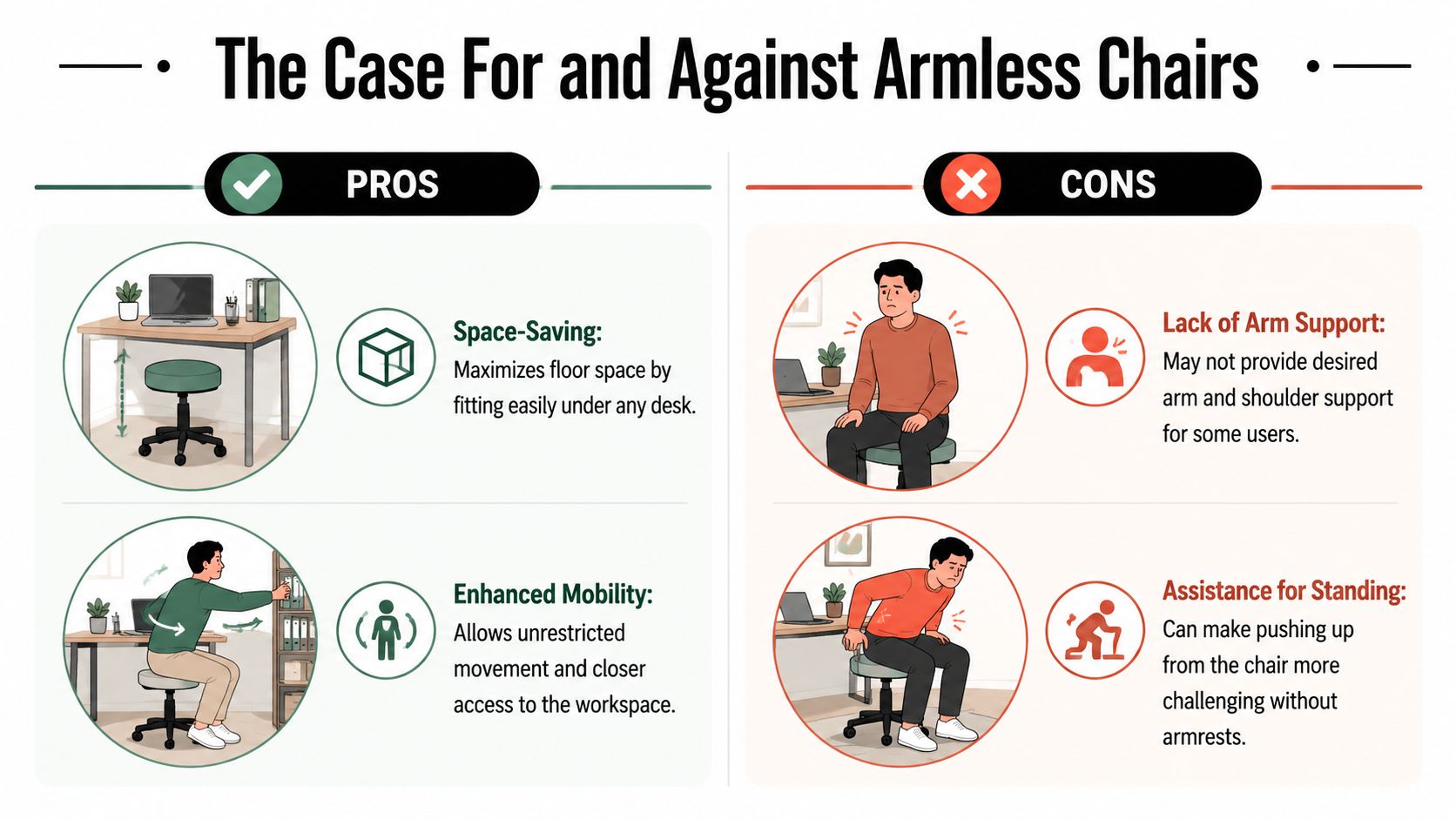
The Case For and Against Armless Chairs
An armless chair is neither automatically better nor automatically worse. It's a trade-off. The best choice depends on whether you need mobility and a smaller footprint more than you need forearm support during long desk sessions.
Armless vs armed office chairs at a glance
| Feature | Armless Chairs | Armed Chairs |
|---|---|---|
| Floor space | Easier to tuck under desks and fit into tighter rooms | Usually take up more visual and physical space |
| Mobility | Easier to pivot, slide in, and move around quickly | Armrests can limit some side movement |
| Desk access | Lets you sit closer to some desks | Arms can bump desk edges or prevent a close fit |
| Upper-body support | No built-in place to rest forearms | Supports arms and can reduce strain during longer sessions |
| Standing up | Less leverage when pushing up from the seat | Armrests can help with getting in and out |
| Best fit | Small offices, occasional use, flexible tasks | Long desk hours, support-focused users |
What works well
The strongest argument for armless chairs is usability in tight spaces. If you turn often, switch tasks, or need to roll from one side of the desk to the other, they feel less restrictive. They also tend to suit people who hate feeling boxed in by a chair.
That extra freedom can be useful in real work. Some people edit video, handle paperwork, sew, draw, or move between keyboard work and side surfaces throughout the day. In those setups, armrests can become obstacles instead of support.
What often goes wrong
The biggest downside is support. Research shows workers in ergonomic environments are 17.5% more productive, but armless chairs may not provide the support needed for that gain during prolonged use without good posture, according to this analysis of armless office chairs.
That doesn't mean every armless chair is a bad chair. It means the margin for error is smaller. If the seat is too flat, the back too weak, or the user sits for long stretches without breaks, people often start leaning forward, shrugging their shoulders, or perching at the edge of the seat.
A chair without arms asks more from your posture. If the rest of the chair isn't doing its job, your back and shoulders will notice first.
A second issue is buying from a product page that hides the details. A lot of frustration comes from not knowing the seat shape, back height, or adjustment range before purchase. This guide on how to read furniture product descriptions and buy with confidence is useful if you're trying to sort solid options from generic listings.
Ergonomics and Finding Your Perfect Fit
If you're considering office chairs no arms for daily use, the chair itself has to do more work. Without armrests, you need the back, seat, and adjustment points to keep you in a healthy position. That's why two armless chairs can look similar and feel completely different after an hour.
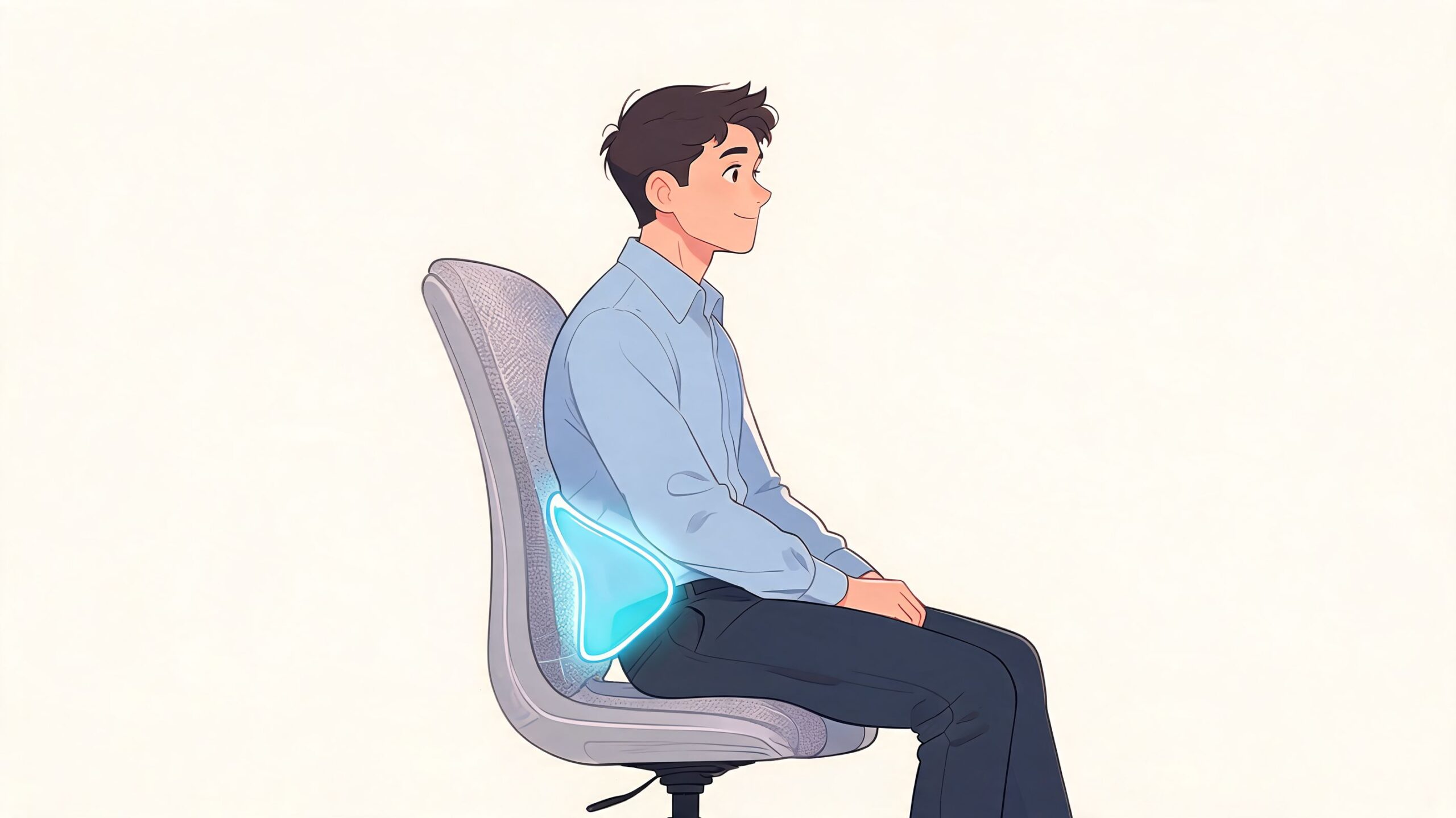
Start with lumbar support
Lower back support is the first thing to check. If the chair back doesn't meet the natural curve of your spine, you'll tend to collapse into the seat or scoot forward. Neither position holds up well through a full workday.
Look for:
- A shaped backrest that supports the lower back instead of sitting flat
- Adjustability so the chair fits your body rather than forcing you into one position
- A seat height that keeps feet planted instead of dangling or over-bending the knees
Check seat depth and desk position
Armless designs can help with how you sit at the desk. Ergonomic studies show they can improve pelvic tilt adjustments, help users sit closer to the desk, and support more varied postures that may reduce fatigue during long sessions, according to InStockChairs' review of chairs with and without arms.
That benefit only shows up when the seat fits. If the seat is too deep, you'll slouch to reach the backrest. If it's too shallow, you won't feel supported through the legs and hips.
A quick fit test helps:
- Sit all the way back.
- Place your feet flat on the floor.
- Check whether the chair supports your lower back.
- Make sure there's a small gap between the seat edge and the back of your knees.
- Pull close to the desk and notice whether your shoulders stay relaxed.
What to feel for: Your shoulders should drop naturally, your lower back should feel supported, and you shouldn't need to perch forward to reach the keyboard.
Test the chair like you actually work
Online shopping often falls short because the right chair for one person may feel wrong to another, even when the specs look good. Sit in the chair the way you really work. Lean in. Type. Pivot. Reach to the side. Stay there long enough to notice pressure points.
If you're comparing models for shared workspaces or planning around multiple users, this overview of ergonomic office seating for teams from Cubicle By Design is a helpful outside resource.
It also helps to compare armless options against more support-focused seating, especially if you already know your back is particular. A closer look at office chairs with lumbar support can help you separate sleek-looking chairs from supportive ones.
Ideal Use Cases for an Armless Chair
Some chairs make sense on paper but not in real life. Armless chairs are the opposite. Their best uses are very practical, and they tend to shine in rooms where a larger chair feels clumsy.

Small-space home offices
This is the clearest fit. Armless chair models average 22 to 24 inches in width compared with 28+ inches for armed versions, saving 15 to 20% more desk and floor space, which matters for the 62% of U.S. renters and new movers furnishing compact home offices, according to Wayfair's armless office chair category data.
In practical terms, that can be the difference between a workspace that feels usable and one that feels cramped. A chair that tucks in cleanly also makes a guest room or living area feel less like an office after hours.
Flexible task zones
Armless chairs are good for work that involves frequent turning, side-reaching, or shifting posture. Common examples include:
- Craft and hobby stations where your arms need room to move
- Vanity or writing desks that double as occasional workstations
- Reception or side desks where someone sits for shorter periods
- Shared family work areas where different people rotate through the same spot
Secondary seating
Not every chair needs to carry an all-day workload. Sometimes the smartest use for an armless chair is as a second chair. It can serve as a pull-up seat for another person at the desk, a compact chair in a bedroom workspace, or an occasional chair for admin tasks.
That's also why some people keep one armless chair even when their primary desk chair has arms. The two chairs do different jobs.
If your work pattern changes throughout the week, the best chair might not be the one designed for a fixed eight-hour desk routine.
People who often prefer them
Certain users consistently lean toward armless designs because the open sides feel better in practice. Musicians, for example, often don't want armrests interfering with instrument position. Some people also prefer the easier in-and-out movement, especially when they dislike twisting around a chair frame.
The key is honesty about use. If you're answering emails, taking calls, and doing light computer work, an armless model can be a strong match. If you're planted at a desk all day, support becomes the bigger priority.
Styles Materials and Unique Finds at Gates
Armless doesn't have to mean plain. In fact, some of the most visually clean office setups use chairs without arms because the silhouette stays lighter and less bulky. That matters when the workspace is part of a bedroom, living room, or open-plan space where the chair is always visible.
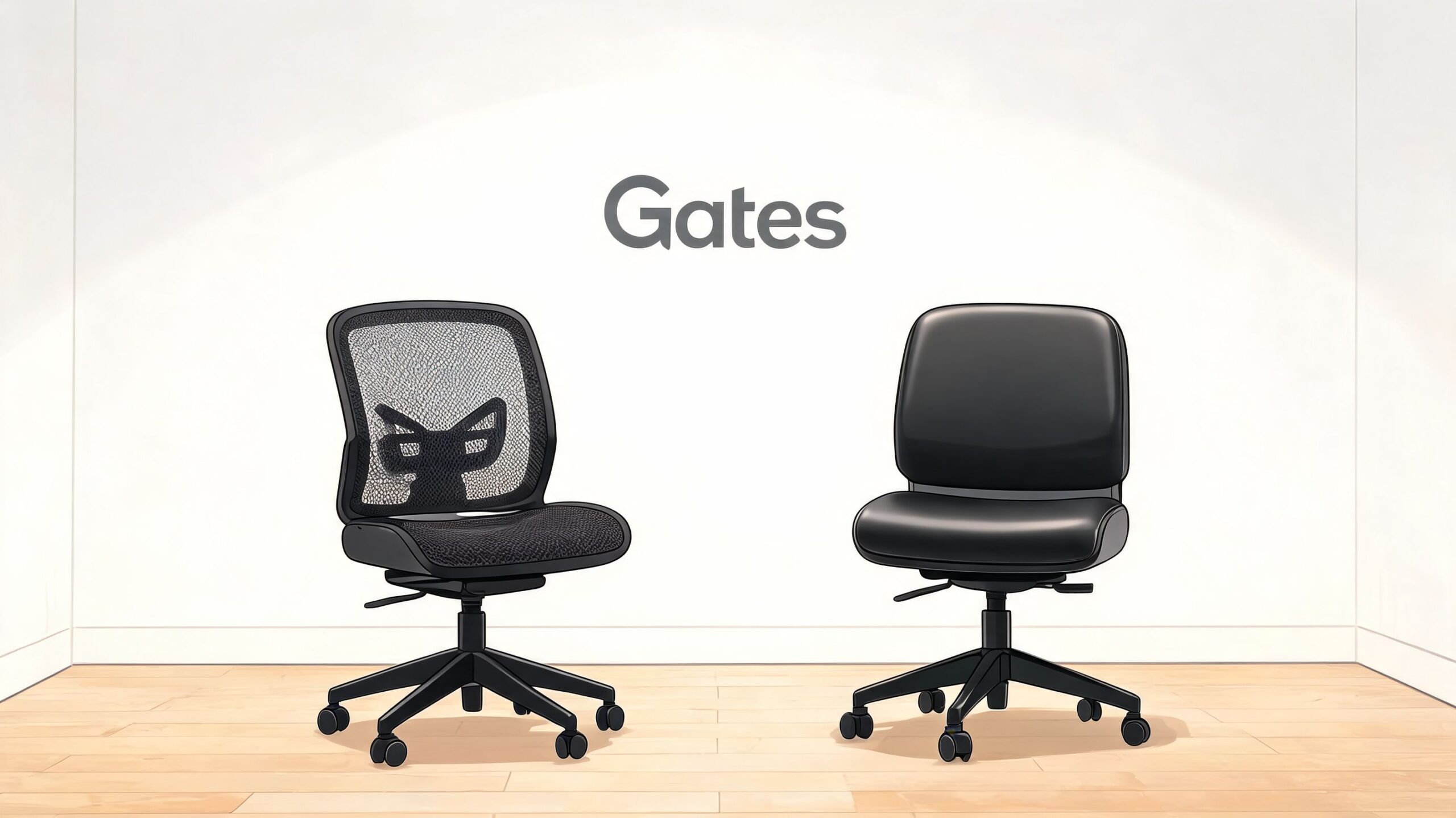
Material changes the feel
The same armless shape can feel casual, refined, modern, or warm depending on material.
- Mesh works well when you want airflow and a lighter visual profile.
- Fabric upholstery softens the look and often blends better into bedrooms or multipurpose rooms.
- Leather or leather-look finishes create a cleaner, more formal style.
- Wood accents can make the chair feel less corporate and more integrated with the home.
This matters more than many people expect. If a home office chair looks too utilitarian, people often end up disliking the whole room. A better material choice can make the workspace feel intentional instead of temporary.
Why minimalist designs are getting attention
There's also a broader style shift behind these chairs. The post-2025 rise in “minimalist ergonomics” has seen 30% year-over-year sales growth in armless task chairs, yet many retailers still don't address how they work with standing desks or hybrid home office setups, according to Home Depot's armless swivel chair trend context.
That trend makes sense locally because many Southern Oregon workspaces are hybrid by necessity. A chair may need to look good beside a reclaimed desk, tuck under a counter-height work surface, or move between rooms as needs change.
Better-looking chairs still need practical upholstery
Style should never make upkeep harder than it needs to be. If you're narrowing choices by finish, this guide to upholstery materials is useful for thinking through wear, cleaning, and long-term use.
For shoppers who want more character than a standard black task chair, that's where unique inventory matters. A teak accent, reclaimed wood desk pairing, or one-off design can keep the office from feeling generic. Trusted brands like Ashley and Flexsteel often cover the practical side well, while more distinctive pieces bring personality into the room.
How We Help You Find the Right Chair
The biggest mistake people make with armless office seating is treating it like a simple style decision. It's really a fit decision. Since 1946, that's where our approach has stayed the same. George Gates built this business on Service and Value, and that still means helping people choose what works in daily life, not just what looks good in a photo.
In a 30,000 sq. ft. showroom in Grants Pass, people can test the differences. That matters because support is personal. One shopper may love the freedom of an armless chair, while another realizes in two minutes that they need more structure for long computer sessions. Sitting in the chair answers that question faster than a page of product copy ever will.
What support looks like in practice
We try to make the process easier in a few concrete ways:
- Real comparison shopping with different chair profiles, materials, and comfort levels in one place
- Flexible payment options through Gates Easy Pay, including $0 down, 6-month interest-free, and no-credit-needed options
- White-Glove Delivery with professional assembly instead of a box left at the door
- A broader furniture context so the chair fits the room, not just the desk
That last part gets overlooked. A chair choice usually connects to the bigger buying journey. If you're balancing comfort, layout, budget, and timing, this article on understanding the furniture buying journey from first research to final decision is a helpful read.
For many Southern Oregon households, the right answer isn't the flashiest chair. It's the one that fits the room, supports the body well enough for the task, and arrives without turning setup into another weekend project.
Frequently Asked Questions About Armless Chairs
Can an armless chair work for a full workday
It can, but only for the right person and the right chair. If you work long hours at a desk, the chair needs strong lower-back support, proper seat depth, and good adjustment. Even then, some people do better with arm support because it helps reduce upper-body fatigue over time.
If you're considering one for all-day use, test it thoroughly. Sit the way you normally work, not the way you pose in a showroom.
Can you add armrests later
Usually, that's not the best plan. Most armless chairs aren't designed for aftermarket armrests, and adding them can change how the chair feels or functions. If arm support matters, it's better to buy a chair engineered with arms from the start instead of trying to retrofit one.
Are armless chairs a good idea if you already have back pain
Sometimes, but caution matters here. People with existing back pain usually need to focus less on the chair's compact profile and more on support, fit, and posture. Some armless designs can work well if the lumbar support is strong and the chair fits your body correctly, but many people with chronic discomfort do better with a more supportive task chair.
When back pain is already part of the picture, don't choose based on appearance first. Choose based on how your body feels after sitting.
Are they better for small rooms
Often, yes. They tend to tuck under desks more easily and keep a room from feeling crowded. That's one of the clearest reasons people choose them.
Who should probably skip them
If you spend most of the day typing, rely on arm support, or need help pushing up from a seated position, an armed chair is often the safer choice.
If you're comparing office chairs no arms and want to feel the difference in person, visit Gates Home Furnishings in Grants Pass. Since 1946, we've served Southern Oregon with George Gates' promise of Service and Value. You can test seating in our 30,000 sq. ft. showroom, explore trusted brands like La-Z-Boy, Flexsteel, Ashley, and Beautyrest, and shop one-of-a-kind Unique Finds in reclaimed wood and teak. We also offer Gates Easy Pay with $0 down, 6-month interest-free, and no-credit-needed options, plus White-Glove Delivery with professional assembly and haul-away. Visit our Grants Pass showroom or browse our collection online.