Transitional Style Sofas: A Guide for Southern Oregon Homes

A lot of Southern Oregon households end up in the same spot. One person likes the warmth of classic furniture. Another wants a cleaner, lighter room that doesn't feel heavy or dated. Then the sofa search starts, and every option seems to lean too formal, too modern, or too trendy.
That's where transitional style sofas make sense.
They give a room balance. The shape feels familiar and comfortable, but the details stay cleaner and easier to live with. For homeowners in Grants Pass, Medford, Central Point, Ashland, and across the Rogue Valley, that middle ground often solves the main problem better than chasing a strict design label.
Families have been making these decisions in Southern Oregon for generations, and the same concern keeps coming up. A sofa isn't a small purchase. It has to fit the room, fit the household, and still feel right after the paint color, rug, or coffee table changes. That's why transitional style sofas keep coming up in real homes, not just showroom displays.
Table of Contents
- The Perfect Sofa for a Timeless Home
- What Defines a Transitional Style Sofa
- How to Choose the Right Transitional Sofa
- Styling Your Room with a Transitional Sofa
- The Gates Difference Finding Your Sofa in Southern Oregon
- Your Transitional Sofa Questions Answered
The Perfect Sofa for a Timeless Home
You walk into your living room and can already see the problem. The space has character. Maybe it is a Craftsman home in Ashland, a ranch in Medford, or a newer open layout in Grants Pass. You want a sofa that feels comfortable every evening, but you also do not want one piece deciding the style of the whole room for the next ten years.
That is where a transitional sofa earns its place.
A good transitional sofa gives a room a steady starting point. It works with older wood furniture, cleaner-lined tables, softer textiles, and updated lighting without making any of them feel out of place. In plain terms, it behaves like a reliable backdrop. It helps the room feel pulled together while still leaving space for your own taste to show up.
That point is especially helpful here in the Rogue Valley. Many homes already mix eras without trying to. A family may have a favorite heirloom table, a newer lamp they love, and art collected over time. A sofa with too much ornament can fight that mix. A sofa that is too stark can make the room feel cold.
A transitional sofa usually lands in the middle in the best way.
A sofa tends to last longest in a home when it gives the room structure and still leaves room for change.
That balance is why this style stays relevant. It feels settled, not stiff. Current, not trendy. If you have ever compared older, more detailed rooms with cleaner, newer ones, this guide to contemporary and traditional design styles helps show why the middle ground feels so natural for many households.
Why this style works for real life
Some sofas look impressive for a weekend and demanding for the next several years. Transitional sofas usually avoid that trap because they tend to offer:
- Balanced proportions that feel welcoming instead of formal
- Everyday comfort that suits reading, napping, and gathering
- Style flexibility that works with both classic and updated pieces
- A quieter visual presence that keeps the room from feeling crowded
There is another reason people keep returning to this style. It gives you options.
A transitional sofa can be the canvas, not the finished painting. That is a big difference. Left alone, a neutral sofa can drift into "safe but boring." Paired with personal layers, it becomes something much more interesting. A vintage chest, a bold rug, a sculptural lamp, or one of our Unique Finds can give the room character without forcing you to replace the sofa later.
That is often the smartest path for homeowners who want a room to grow with them. The sofa stays dependable. The personality comes from what you place around it.
For many Rogue Valley neighbors, that is the sweet spot. You get a piece that feels easy to live with now and easy to personalize over time.
What Defines a Transitional Style Sofa
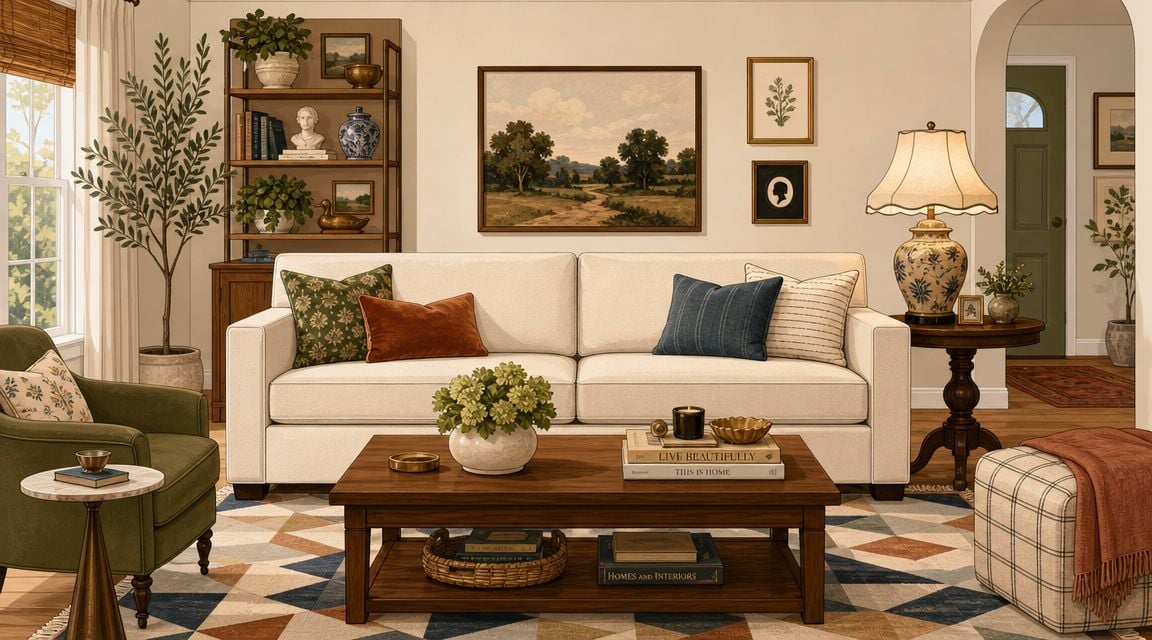
A transitional sofa is easiest to understand as a classic recipe with a modern twist. It keeps the comfort and familiarity people often want from traditional furniture, then trims away the extra ornament that can make a piece feel formal or dated.
That's why the style can confuse shoppers at first. It doesn't shout its identity the way a tufted formal sofa or a sharp-edged modern sofa does.
The look in simple terms
Most transitional style sofas combine a few visual cues:
- Clean overall lines with some softness
- Gentle curves or shaped arms instead of harsh angles
- Limited ornamentation so the piece feels quieter
- Precisely fitted upholstery that looks neat without feeling stiff
The result is a sofa that looks polished but still approachable.
A helpful way to think about it is this. Traditional sofas often speak in full paragraphs. Modern sofas often speak in short, clipped sentences. Transitional sofas sound more like a calm conversation.
For anyone sorting out the difference between older and newer looks, this comparison of contemporary vs. traditional design styles can help put the sofa style in context.
Why neutral doesn't mean plain
One of the clearest design traits is color. Transitional-style sofas are typically built around a neutral, low-ornamentation visual language such as whites, creams, grays, and muted tones, which helps them bridge traditional and contemporary rooms and gives them broader decor compatibility and a longer perceived service life, according to Wikipedia's overview of Transitional Style.
That sounds abstract, but the practical meaning is straightforward. A cream sofa doesn't fight with a walnut coffee table. A soft gray sofa can work with black accents, warm wood, or layered textiles. A beige or muted taupe sofa can shift with the room as seasons, paint, and accessories change.
Practical rule: If the sofa has to work through multiple room updates, quieter color usually gives more freedom than a loud pattern.
That doesn't mean every transitional sofa looks the same. Texture does a lot of work here. A woven fabric, subtle boucle-like surface, or softly heathered upholstery can add interest without pushing the piece into a trend.
Common details that confuse shoppers
People often ask whether transitional means formal. Usually, it doesn't.
It can include details like:
| Feature | What it usually means in a transitional sofa |
|---|---|
| Arms | Rolled, sloped, or softly squared |
| Back shape | Supportive but visually simple |
| Legs | Exposed or concealed, usually understated |
| Fabric | Neutral and textured more often than boldly patterned |
The easiest test is visual balance. If a sofa feels too ornate for a modern room, it's probably more traditional. If it feels too severe for a cozy home, it's probably more modern. Transitional sits comfortably in between.
How to Choose the Right Transitional Sofa

A transitional sofa earns its place by fitting your daily life first and your style plan second. The shape may be flexible, but the choice should still be specific to your room, your routine, and the way your household relaxes.
That is especially true in Southern Oregon homes where one living room often does several jobs. A sofa may need to anchor conversation, handle movie nights, leave a clear path to the kitchen, and still feel polished enough for guests. Guidance on seat depth, firmness, and size matters more than style labels alone, as highlighted in this discussion about space-conscious sofa planning.
Start with the room before the fabric
The room sets the rules.
A sofa can have the right color and still feel too large, too deep, or awkward in the traffic path. Before looking at upholstery, measure the wall, note nearby doors and windows, and pay attention to how people move through the space. In a narrower room, even a few extra inches of depth can make the whole layout feel cramped. In an open floor plan, a sofa may need enough presence to hold its own without looking oversized.
Older homes around established neighborhoods often bring tighter floor plans and smaller entry points. Newer homes may give you more length to work with, but they still need balance. A long sofa in a wide room can look right. The same piece in a modest living room can take over.
If you want help comparing lengths, depths, and layout options, this ultimate sofa buying guide for your living room is a helpful next step.
Test comfort the way real life uses it
Comfort is easier to judge in person because the body notices details a photo cannot show. Seat height affects whether your feet rest naturally on the floor. Seat depth changes whether you lounge comfortably or feel like you are reaching for the back cushion. Cushion firmness shapes how supported you feel after twenty minutes, not just the first ten seconds.
Try the sofa the way your household lives. Sit upright if you read or visit often. Lean back if the room is for evening TV. If more than one person will use it daily, have more than one person try it.
A large showroom in Grants Pass makes side by side comparison simpler because you can move from one silhouette and seat feel to another without guessing from a screen. That matters with transitional sofas in particular. Two pieces can look similar at a glance and feel completely different once you sit down.
Sit the way your household lives. Don't perch on the edge for ten seconds and call it a test.
Pay attention to construction and upkeep
A transitional sofa is often chosen for its staying power, so the inside matters as much as the outline. Good support helps the sofa keep its shape. Practical fabric helps it keep working in a home with pets, kids, guests, or everyday use.
Check for a frame that feels steady when weight shifts. Notice whether the cushions spring back or stay compressed. Ask how the fabric cleans and how often cushions should be rotated. Those are the small ownership details that affect whether a sofa still feels good a few years from now.
If you already have an older sofa with tired seats, this complete guide to fixing sagging furniture can help you spot the support issues that tend to show up over time.
One more point often gets missed. Transitional style is the safe middle only if you leave it there. The better approach is to choose a sofa with solid proportions and a versatile fabric, then treat it like a base layer you can personalize with art, wood tones, pillows, and one-of-a-kind accents. That is how a transitional sofa becomes a canvas, not a compromise, and how a Rogue Valley home ends up feeling collected rather than cautious.
Styling Your Room with a Transitional Sofa
You bring home a transitional sofa in a soft neutral fabric. It looks good, fits the room, and feels comfortable. Then a common question shows up. How do you keep the room from feeling careful instead of personal?
The answer is to treat the sofa like the backdrop in a favorite photo. It sets the scene so the pieces around it can show more character.
Start with the sofa, then build contrast around it
A transitional sofa usually has balanced lines and a fabric that plays well with other finishes. That makes it easier to personalize than many people expect. Instead of asking the sofa to do all the visual work, let it hold the room together while texture, shape, and patina do the storytelling.
Here is a practical way to build the room:
- Choose a calm sofa color such as cream, taupe, gray, or another muted shade
- Add natural warmth with wood tables, woven accents, or a leather ottoman
- Bring in texture through pillows, throws, and a rug with visible depth
- Use one standout piece with age, shape, or bold material to keep the room from feeling flat
That standout piece matters. In many Rogue Valley homes, it is the difference between a room that feels finished and one that feels like it came straight off a showroom card.
Use Unique Finds to give the room its own personality
This is where transitional style becomes more than a safe middle ground. A well-chosen sofa gives you flexibility. Your Unique Finds give the room identity.
A gray sofa next to a reclaimed wood console feels warmer and more collected. A cream sofa beside a darker teak cocktail table gains depth. A quiet sectional can also handle a patterned chair, a sculptural lamp, or art with strong scale because the sofa is not competing for attention.
That is why transitional style works so well for homeowners who like a timeless base but do not want a room that looks predictable.
A transitional sofa should calm the room, not flatten it.
If you want help pairing different looks without making the space feel disconnected, see these tips on how to mix furniture styles. You can also find living room ideas at Joey'z Shopping and use them as a starting point for your own mix of classic pieces and one-of-a-kind accents.
The goal is not perfect matching. The goal is a room that feels like your home. That is the core strength of a transitional sofa. It gives you a steady foundation, then leaves plenty of room for the pieces that carry history, texture, and personality.
The Gates Difference Finding Your Sofa in Southern Oregon

Southern Oregon shoppers often want more than a sofa on a screen. They want to sit on it, compare fabrics, ask practical questions, and know what happens after purchase.
That's where local experience matters.
A local approach built on service and value
Founded in 1946, Gates Home Furnishings grew from George Gates Jr.’s promise of “Service and Value.” That history matters because it still matches what furniture buyers need most. Clear guidance, real product knowledge, and help narrowing down what fits a specific room.
The showroom in Grants Pass gives homeowners and renters a chance to compare comfort in person rather than guessing from product photos. For someone furnishing a home near downtown Grants Pass, moving into Medford, or updating a space elsewhere in the Rogue Valley, that hands-on step can save a lot of second-guessing.
Shoppers who want more flexibility in shape and finish can also review options for getting started with custom design sofas.
Support that continues after the sale
The buying decision doesn't end when the order is placed.
A few practical details stand out:
- Gates Easy Pay includes $0 down, 6-month interest-free options, and no-credit-needed choices
- White-glove delivery means professional in-home setup instead of a boxed drop-off
- Assembly support helps the room come together correctly from day one
- Mattress haul-away adds convenience for households also updating sleep products
That combination tends to matter most for busy families, older homeowners, and anyone who doesn't want to wrestle a large piece through the front door alone.
A transitional sofa is supposed to make a home easier to live in. The purchase process should do the same.
Your Transitional Sofa Questions Answered
Are transitional style sofas still a smart long-term choice
Yes, they usually are.
A transitional sofa tends to stay useful because it avoids extremes. It is not overly ornate, and it is not so sharp or minimal that it feels cold a few years later. For many Rogue Valley homes, that middle ground gives you room to repaint, swap rugs, bring in family pieces, or add something unexpected without feeling like the sofa suddenly clashes.
That flexibility is a key long-term advantage. A transitional sofa gives you a steady base, then your personality does the rest. That is where Unique Finds can keep the room from feeling safe but flat. A reclaimed wood table, a carved accent cabinet, or a one-of-a-kind teak piece can give the space character while the sofa keeps everything grounded.
What upholstery works best for daily use
The best fabric depends on who lives in the home and how the room gets used.
If you have kids, pets, or regular company, focus on upholstery that cleans up well and holds its shape. If the sofa is going in a quieter sitting room, you may have more freedom to choose texture first. Performance matters, but feel matters too. A sofa can look right and still be wrong if nobody enjoys sitting on it.
For a practical breakdown of fabric choices, durability, and care, see this guide to upholstery materials for everyday living.
Should a transitional sofa be firm or soft
Start with how you live.
A firm seat usually works well for reading, visiting, and getting up easily. A softer, deeper seat fits households that stretch out for movies or afternoon naps. Many shoppers are really choosing between support and sink-in comfort, and neither one is universally better.
The easiest way to sort that out is to sit with your feet flat on the floor and notice where your body lands. If you feel perched, it may be too firm or shallow. If you have to climb out of it, it may be too deep or soft.
How can a neutral sofa stay interesting over time
A neutral sofa stays interesting when it acts like the background of a good room, not the whole picture.
Color can come from pillows, art, throws, and area rugs. Interest can also come from shape and material. That is why transitional sofas pair so well with Unique Finds. The sofa gives you calm. The accent pieces give you personality. A live-edge table, an aged chest, or a distinctive lamp can keep the room personal instead of predictable.
How should a transitional sofa be cleaned
Always start with the care instructions for that specific fabric.
After that, the basics are simple. Vacuum regularly, blot spills quickly, and use cleaning methods that match the upholstery type. Households with heavy daily use should ask these questions before buying, not after delivery. A beautiful fabric is only a good choice if you can realistically maintain it.
For anyone in Grants Pass, Medford, Ashland, Central Point, or the wider Rogue Valley who wants a sofa that feels comfortable, flexible, and easy to personalize, Gates Home Furnishings offers a practical next step. Visitors can test comfort in the Grants Pass showroom, explore Unique Finds in reclaimed wood and teak, review financing options, or browse the collection online before making a final decision.