Shop Top Office Chairs High Seat Height for 2026


You sit down to work for the day, answer a few emails, and before lunch your legs feel awkward, your shoulders creep up, or your lower back starts talking back. A lot of people blame the desk, the keyboard, or the long hours. Often, the trouble starts lower, right at the seat.
We've seen this for decades in family furniture stores. Someone says, “I need a better office chair,” but what they really need is a chair that sits at the right height for their body and their desk. That matters even more in home offices, where people are working from spare bedrooms, kitchen corners, and converted guest rooms.
Your Guide to Finding the Perfect Chair Height
A common story goes like this. Someone starts working from home with a chair that looked fine in the store or worked well enough at the dining table. A few weeks later, they notice their feet don't sit quite right, or their knees feel cramped, or they keep scooting forward because the chair never feels settled.
That's where seat height becomes the hidden issue.
Most standard office chairs fall in the 16 to 21 inch range, and that setup doesn't fit everyone. In fact, standard office chairs in that range fail to properly accommodate 10 to 20% of the population, and people over 6'5" often need 23 to 25 inches to avoid excessive knee flexion and the lower back pain that affects 40% of tall office workers using standard chairs, according to Eureka Ergonomic's seat height guide.
For a lot of folks, the chair isn't “bad.” It's just wrong for their build.
We've also learned that comfort isn't only about the chair. The whole workspace matters. If you're trying to reduce noise and distractions in a compact home office, this look at UK workspace acoustic pods offers useful ideas for creating a calmer work zone around your seating setup.
A chair should let you feel planted, not perched or folded up.
That's especially important when you're buying online and trying to judge size from photos. If you're comparing models from home, our guide to using online furniture photos to make smarter buying decisions can help you spot proportions that are easy to miss on a product page.
The good news is that this isn't complicated once you know what to look for. The right office chairs high seat height options don't just sit taller. They fit better.
What High Seat Height Really Means
When people hear office chairs high seat height, they often picture one thing. A chair that goes up farther than average.
That's only part of it.
A high seat height is really about the relationship between three things:
- Your body
- Your desk or work surface
- The chair's adjustment range
Why the standard range exists
The familiar 16 to 21 inch seat height range didn't appear by accident. It was formalized by BIFMA standards around 1980, influenced by designs like the first pneumatic cylinder chair from 1947, which was built for the 29 to 30 inch desks common at the time, as outlined in Ergonow's chair height history.
That helps explain why so many chairs still feel built around one “average” setup. The furniture world inherited a standard that worked for many people, but not all people.
Think of it like shoe sizing
Chair height works a lot like shoes. A number by itself doesn't tell you whether the fit is right. A size can be technically correct on paper and still feel wrong once you stand in it.
A chair can reach a high number and still miss the mark if:
- Your feet don't rest flat
- Your knees lift too high or bend too sharply
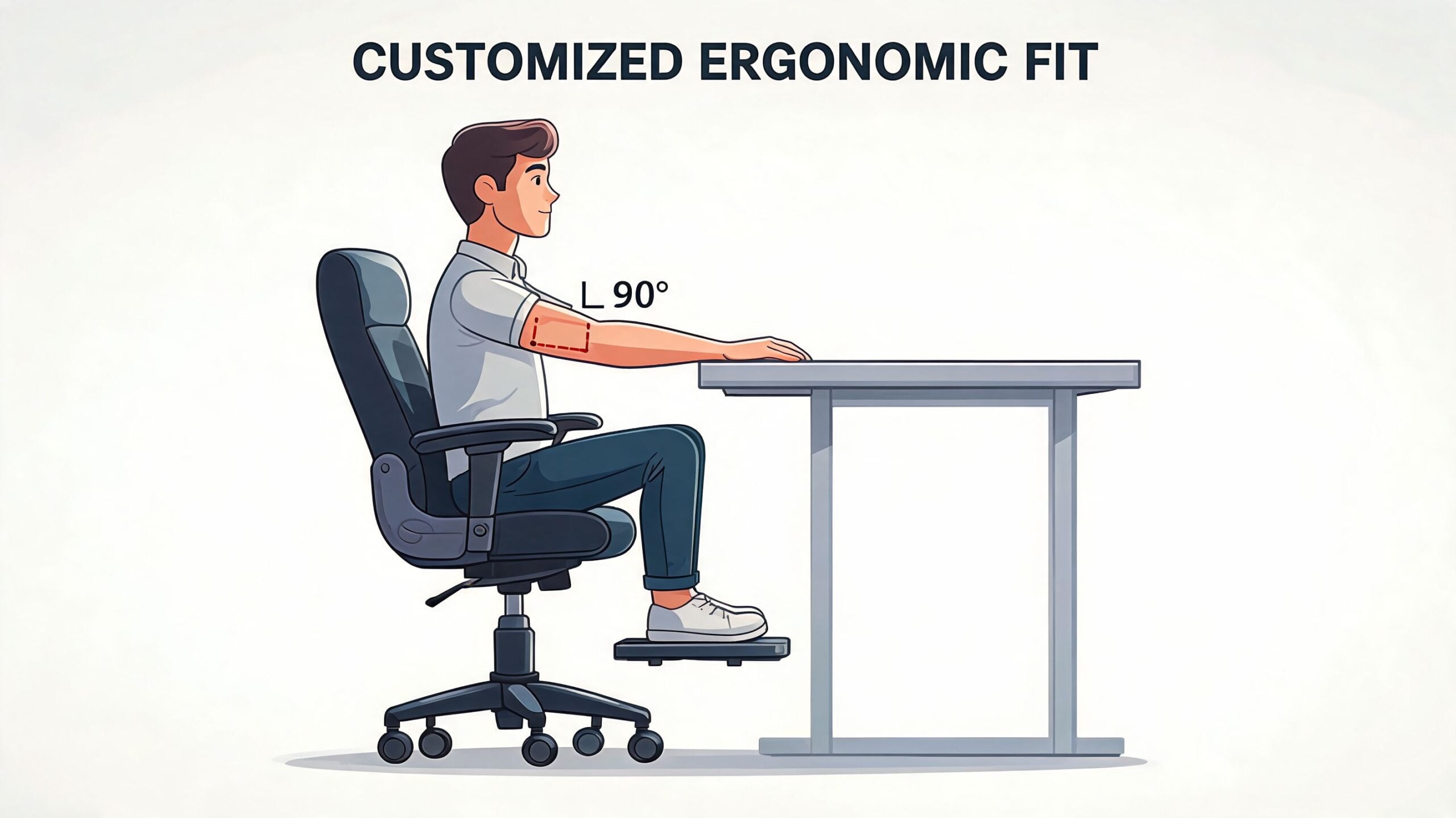
- Your elbows don't meet the desk naturally
- You feel pressure at the front edge of the seat
That's why “higher” isn't automatically “better.”
The best chair height is the one that lets your body relax into the work, instead of bracing against the furniture.
What correct height feels like
When a chair is adjusted well, you usually notice the absence of strain before anything else. Your feet feel supported. Your thighs feel settled. Your shoulders stop climbing.
That grounded feeling matters more than the marketing term on the tag.
How to Measure for Your Perfect Fit
The easiest way to shop smarter is to measure yourself before you start comparing chairs. You don't need special tools. A tape measure and a few minutes will do the job.
Start with your body
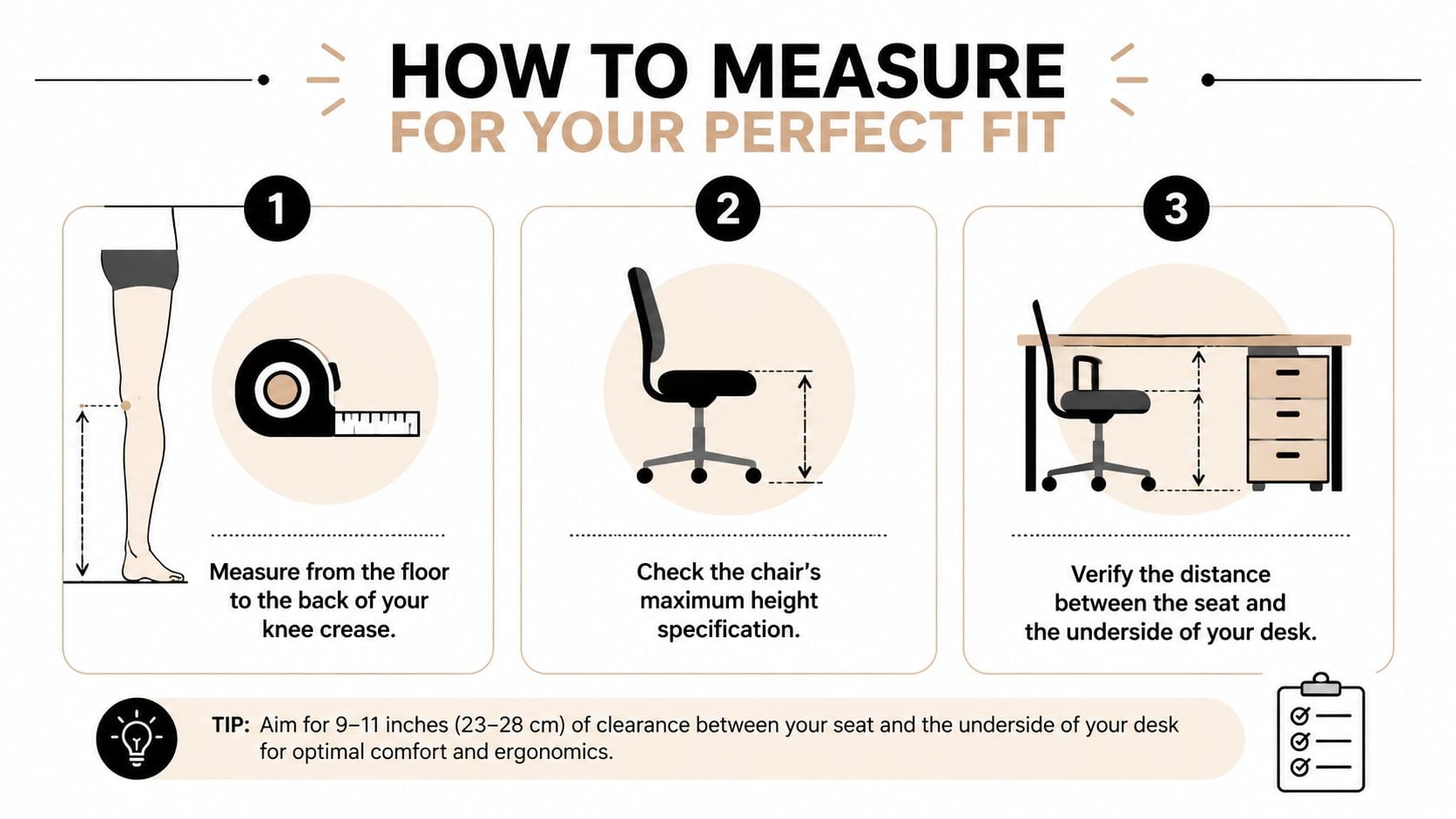
Sit on a firm surface with your feet flat on the floor. Measure from the floor to the back of your knee crease. That's your popliteal height, even though individuals rarely use that term in daily life.
This measurement gives you a practical starting point for chair height. If the seat sits much higher than your body can support comfortably, your legs and back usually tell you pretty quickly.
Here's the simple feel test:
- Feet flat. Your heels and forefoot should rest comfortably.
- Thighs supported. Your legs shouldn't dangle or press hard into the seat edge.
- Knees easy. You shouldn't feel folded up.
Then measure your desk
Next, measure from the floor to the underside of your desk or keyboard area. That tells you how much room you have once the chair is raised.
A lot of people discover the desk is part of the problem. They raise the chair to fit their arms, then their feet lose support. Or they lower the chair for their legs, then their shoulders hunch to reach the work surface.
For a broader measuring checklist, our guide on how to measure furniture is a helpful companion.
Use height ranges as a starting point
The numbers below are best used as a rough shopping guide, not a final answer. Body proportions vary, and leg length matters as much as overall height.
| User Height | Suggested Seat Height Range |
|---|---|
| 4'10" to 5'2" | 14 to 16 inches |
| 5'3" to 5'11" | 16 to 19 inches |
| 6'0" to 6'4" | 19 to 22 inches |
| 6'5"+ | 23 to 25+ inches |
The ranges above are drawn from the height guidance summarized in the verified research set, including the seated fit ranges discussed in the earlier ergonomic sources.
Practical rule: Adjust the chair to your body first, then see whether the desk supports that position. Don't force your body to match a fixed desk if there's another way to solve the setup.
Don't forget the real-world test
Once you have a target range, check the product listing for the chair's maximum seat height, not just the average or lowest setting. Then ask one more question that gets missed all the time. When the seat is raised, can you still sit all the way back with your arms at a comfortable working position?
That's where numbers stop and fit begins.
The Ergonomics of Proper Seat Height
Bad seat height doesn't just feel annoying. It changes how your body carries weight while you work.
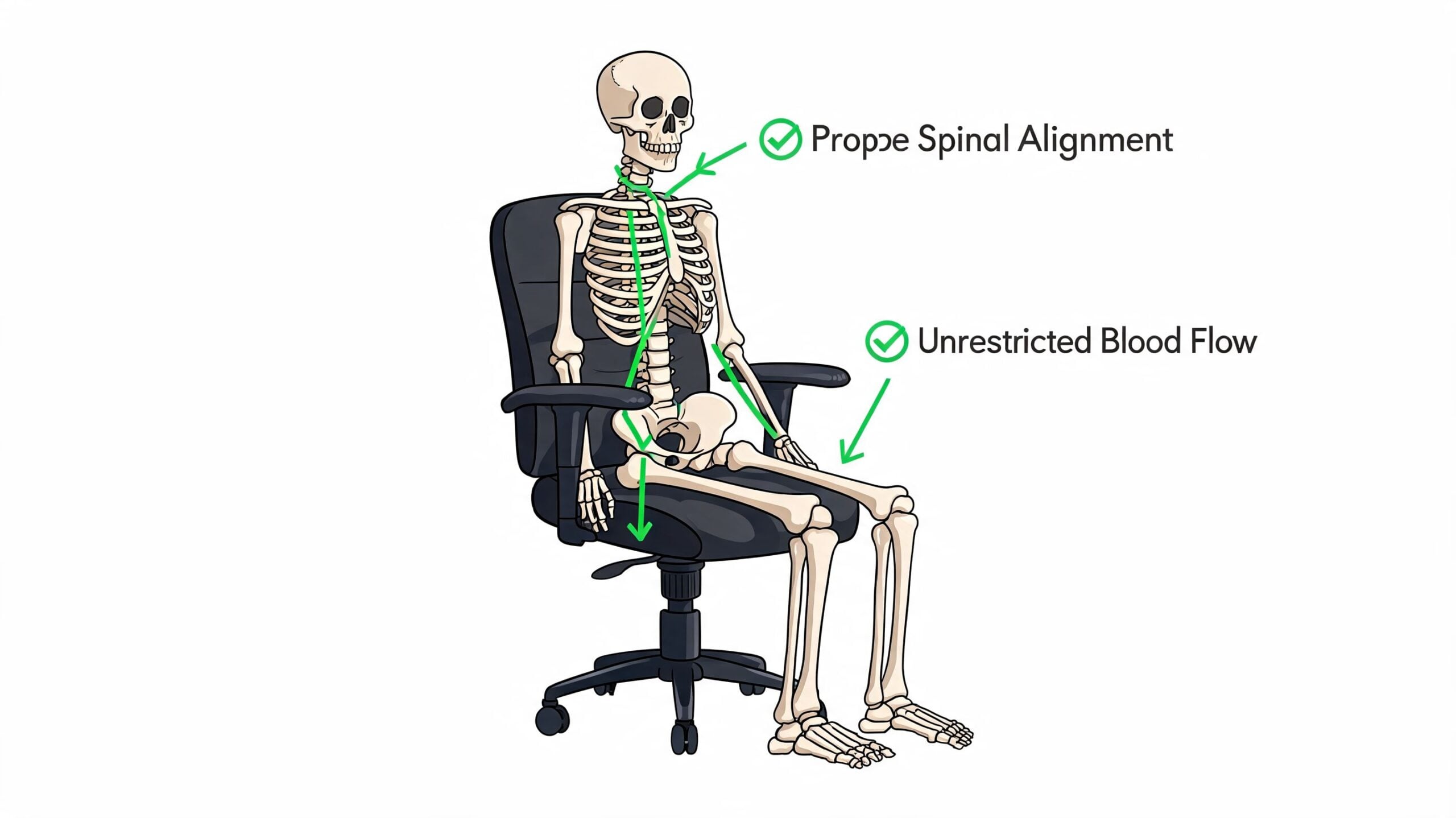
When the seat is too high, the front edge of the chair can press into the underside of your thighs. When the seat is too low, your hips and spine can roll into a strained position. Both can leave you tired long before the workday ends.
What happens when the chair is too high
This is one of the clearest ergonomic warning signs. If a chair's seat height exceeds the user's popliteal height by more than 5 cm, it can increase thigh compression, potentially reducing blood flow by up to 20% and increasing lumbar flexion, according to the EWI Works overview of chair standards.
In plain language, that means the chair can press where it shouldn't and push your lower back into a less stable posture.
Common clues include:
- Pressure behind the thighs
- Feet that barely touch
- A habit of sliding forward
- Low back fatigue after sitting
What happens when the chair is too low
A low chair often creates the opposite problem. Your knees rise, your hips tuck under, and your upper body leans forward to meet the desk. People often describe this as feeling “scrunched.”
That posture can lead to shoulder tension, neck tightness, and a feeling that you can't settle into the backrest.
If you're trying to improve your whole desk setup, not just your chair, Peak Physical Therapy's posture guide is a practical resource that pairs well with a seating check.
The body should feel supported, not suspended
A well-set chair helps your body share the load. Your feet support part of you. The seat supports part of you. The backrest supports part of you.
For readers comparing support features, our article on office chairs with lumbar support can help you think about back support as part of the same fit equation.
Good posture at a desk rarely comes from “sitting up straight” by force. It usually comes from furniture that lets the body stop fighting gravity.
Common Uses for High Seat Office Chairs
Not everyone who needs a taller chair is especially tall. That's where some of the confusion comes from.
A higher seat can solve very different problems depending on the room, the desk, and the person using it.
The tall remote worker
A tall person at a standard chair often looks fine from across the room. Sit in that same chair for hours, though, and the trouble shows up in the knees, hips, and back.
This shopper usually needs more than “a chair that goes a bit higher.” They often need a chair built for longer legs, a taller back, and a seat that still feels stable at the upper end of the adjustment range.
The standing desk user who doesn't want to stand all day
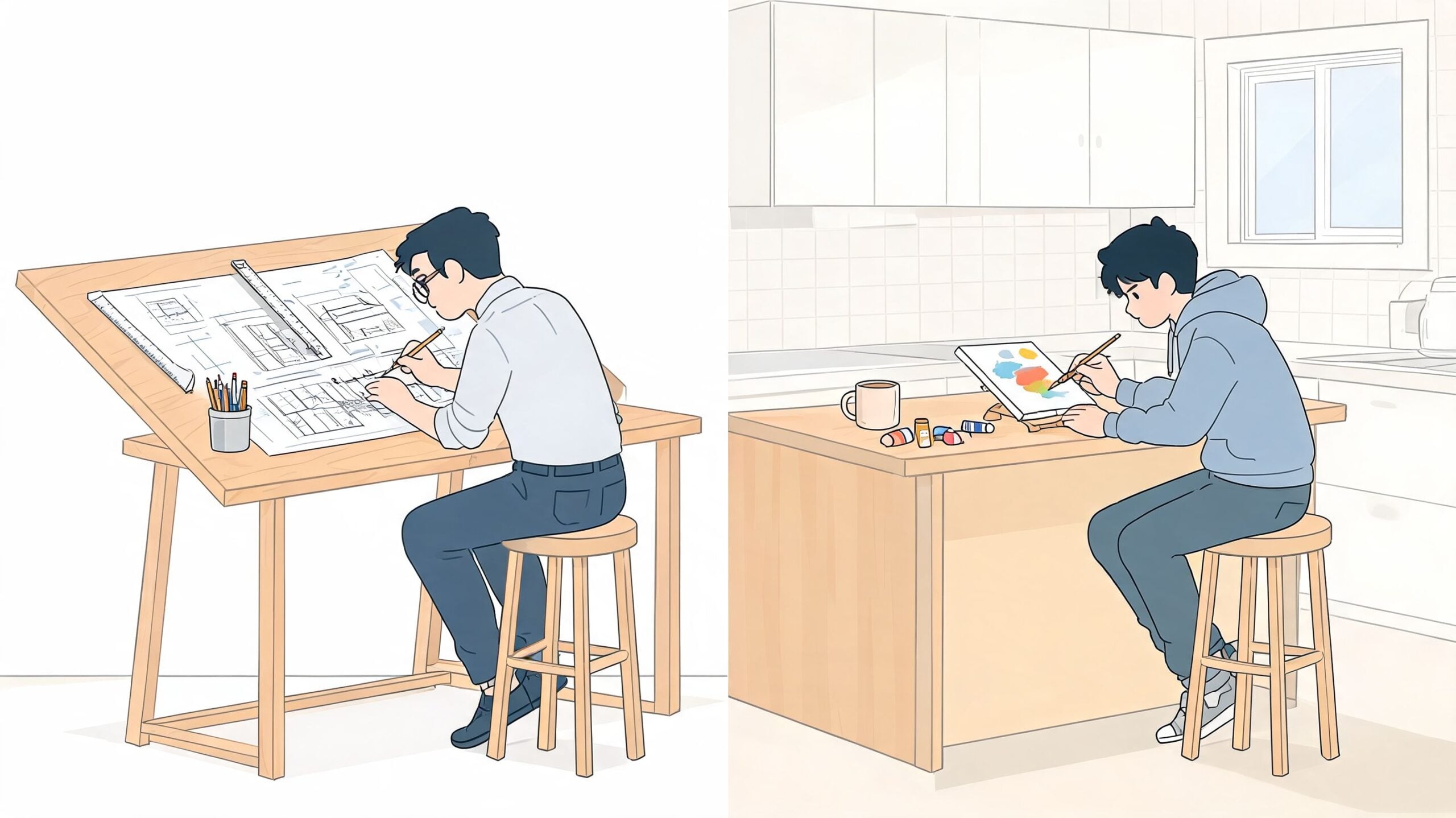
Many people raise a desk for standing work and then realize they do not want to be on their feet nonstop. A higher office chair or drafting-style chair gives them a perch that matches the raised surface better than a standard desk chair would.
That setup works well for people who alternate between standing, sitting high, and moving around.
The artist, maker, or hobbyist
High work surfaces aren't limited to office jobs. We hear from people using raised tables for sketching, sewing, model building, and craft work.
For them, the wrong chair can create a constant reach upward. The right chair lets the hands work where they should without shrugging the shoulders.
The comfort-focused household
Some buyers want a seating position that makes getting in and out easier. That's a different conversation from task ergonomics, but it matters in daily life.
If that's part of your broader search, this article on assistive technology for home independence gives helpful background on supportive seating options people consider at home.
For households trying to make one room serve many purposes, our guide to multifunctional home office furniture can help you think through how the chair fits the whole room, not just the desk.
Finding Your Chair at Gates Home Furnishings
Numbers help. Sitting in the chair helps more.
That's especially true with office chairs high seat height models, because the right fit depends on what the chair feels like when you're in it. A listed maximum height might look promising online, but that doesn't tell you whether the seat supports your thighs well, whether the back hits in the right place, or whether the whole chair feels steady when raised.
The detail many tall shoppers miss
One of the biggest mistakes we see is focusing on height and overlooking seat depth. A high seat is ineffective if the seat depth is too shallow, especially under 18 inches, because it doesn't support the thighs properly and can lead to leg overhang and poor circulation, as noted in the verified guidance from this seat depth discussion.
That's why fit has to be tested as a whole, not one number at a time.
A better in-store check looks like this:
- Raise the seat until your feet and knees feel right.
- Sit all the way back and notice whether your thighs are still supported.
- Reach the desk height you use most and see whether your shoulders stay relaxed.
- Stay seated for a few minutes instead of deciding in ten seconds.
The chair that feels good for thirty seconds isn't always the one that feels good by mid-afternoon.
Why testing in person still matters
A showroom visit solves problems that product specs can't. You can compare a standard office chair against a higher-range model right away. You can feel whether a deeper seat helps or hurts. You can notice if the chair encourages you to perch at the edge instead of settling back.
That's especially useful if you're choosing between task chairs, drafting-height seating, or supportive home office models with a larger frame. If rolling mobility matters too, our guide to office chairs on wheels can help you think through movement and floor use along with seat fit.
Since 1946, Gates Home Furnishings has served Southern Oregon with the kind of hands-on guidance George Gates built his business on: Service and Value. In our 30,000 sq. ft. showroom in Grants Pass, shoppers from Medford, Central Point, Ashland, and across the Rogue Valley can test comfort in person instead of guessing from a screen. We carry trusted names like La-Z-Boy, Flexsteel, Ashley, and Beautyrest, and our floor also includes Unique Finds in reclaimed wood and teak if you're building out a full office with more character than a big-box setup.
Once you find the right fit, we make the practical side easier too. Gates Easy Pay includes $0 down, 6-month interest-free, and no-credit-needed options. Our White-Glove Delivery team doesn't just drop boxes at the curb. We handle professional setup and assembly in your home, and for mattress purchases we can also provide haul-away.
Visit Gates Home Furnishings to test office seating in person at our Grants Pass showroom, or browse our collection online if you're shopping from anywhere in Southern Oregon. If you've been dealing with cramped knees, dangling feet, or a chair that never feels quite right, we'd love to help you find a better fit built on George Gates' promise of Service and Value.