Modern Cabinet for Living Room: Shop Top Styles

You’re probably looking at a blank wall, a crowded media setup, or that corner where books, chargers, baskets, and game controllers keep collecting. The room may already have a good sofa and rug, but it still feels unfinished.
That’s often where a modern cabinet for living room use makes the biggest difference. It gives the eye a place to land, gives your stuff a place to go, and helps the room feel intentional instead of improvised.
We’ve seen that need grow well beyond trend talk. The global indoor cabinet market was valued at USD 1.68 billion in 2024 and is projected to reach USD 2.34 billion by 2032, driven by demand for furniture that blends style and function, especially where space is limited, according to Data Bridge Market Research’s indoor cabinet market report. That tracks with what many homeowners and renters already know firsthand. Storage has to work harder now.
Finding the Perfect Modern Cabinet for Your Living Room
A good cabinet solves more than one problem at once. It should store what you use, fit the scale of the room, and support the look you want without taking over.
That sounds simple, but it’s where many shoppers get stuck. A cabinet can look perfect online and still feel too bulky, too shallow, too glossy, or too small once it lands in the room.
Start with the job, not the finish
Before you think about wood tone or hardware, ask one question.
What do you need this cabinet to do every day?
Your answer usually falls into one of these buckets:
- Hide clutter: remotes, charging cables, kids’ toys, blankets, paperwork
- Support media: soundbar, router, gaming console, vinyl setup
- Display personal pieces: framed photos, pottery, books, travel finds
- Anchor the room: fill a long wall, balance a sectional, soften an empty corner
If you skip this step, it’s easy to buy a cabinet for its look and then get annoyed by it a week later.
Practical rule: Choose the function first. Style is easier to adjust around a useful piece than usefulness is to force into a decorative one.
Think of the cabinet as a room tool
A modern cabinet isn’t just storage. In a living room, it often acts like one of these:
- a visual base under a TV
- a low divider in an open layout
- a side piece behind a sofa
- a vertical storage tower that pulls the eye upward
That’s why proportions matter so much. The right cabinet makes the room feel settled. The wrong one can make everything around it feel off balance.
Modern doesn’t mean cold
Some people hear “modern” and picture stark white boxes with no personality. In real homes, modern usually means clean lines, simpler shapes, and less ornament. It can still feel warm if you bring in texture, natural wood, matte finishes, or a mixed-material piece.
If you’re still building your room from the ground up, this guide on how to choose living room furniture is a helpful next step because the cabinet should relate to your sofa, chairs, and tables, not float as a separate idea.
The best choice usually feels easy to live with
That’s the test we like most. Not “Is it dramatic?” Not “Is it trending?” But “Will this piece make daily life smoother?”
If the answer is yes, you’re on the right track.
Exploring Modern Cabinet Styles and Types
Some shoppers use “cabinet” as a catch-all term, but the shape of the piece changes how it works in the room. Once you know the main types, the decision gets much easier.
Sideboards and credenzas
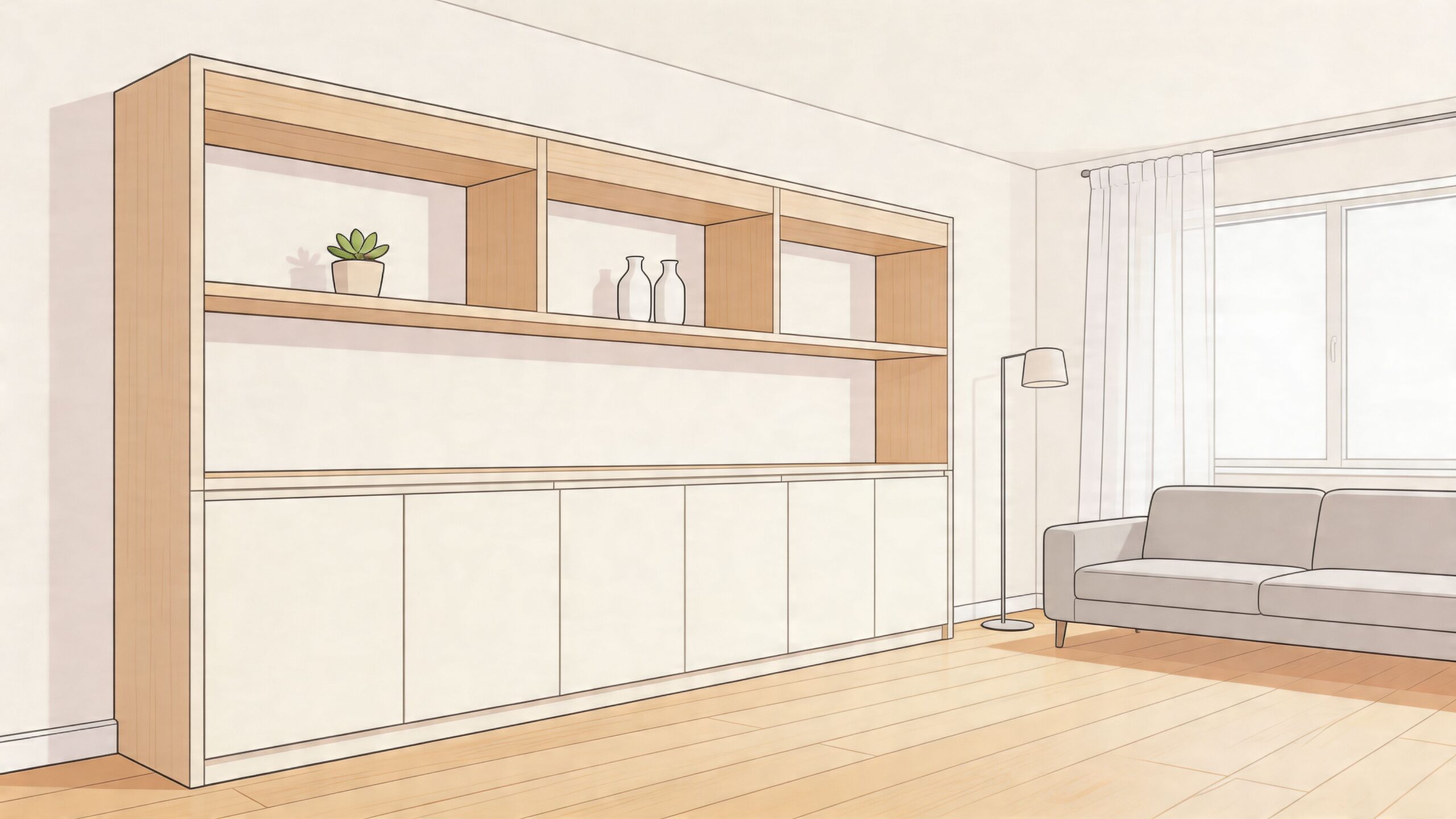
These are the low, horizontal pieces many people picture first. They usually sit along a wall and offer a broad top surface with doors, drawers, or both below.
They work well when you want the cabinet to feel grounded rather than towering.
A sideboard or credenza is often a smart fit for:
- Under artwork: the low profile leaves room above
- Behind a sofa: useful in open layouts where the sofa floats
- Along a longer wall: helps stretch the room visually
- Under a window: if the height works with the trim and sill
If your room already has a tall bookshelf or fireplace, a lower cabinet can balance that vertical weight.
Media consoles
A media console is built with electronics in mind. It may still look like a sideboard, but the function is different.
The best ones make room for:
- Components: streaming boxes, game systems, speakers
- Cord routing: so cables don’t spill behind the unit
- Airflow: important for electronics that generate heat
- Remote access: glass, open sections, or useful door design
A media console is usually the right answer when your TV wall feels messy. It turns a cluster of devices into one organized zone.
If your living room does double duty as movie room, family room, and work zone, media storage should be part of the cabinet decision from the start.
Display cabinets
These are for the items you want seen, not hidden. Glass-front doors, open shelves, or a mix of display and concealed storage give them a lighter presence.
They’re a strong option if you have:
- books you want to show off
- collectibles that need a home
- art objects or ceramics
- a small bar setup
- seasonal decor you rotate
The catch is maintenance. Open or glass display asks for editing. If you prefer a calm, tucked-away look, too much visible storage can start to feel busy fast.
Accent cabinets
Accent cabinets are the utility players. They can go near an entry, beside a fireplace, in a dead corner, or on a short wall where a full media console would feel oversized.
They often work when you need one specific fix, such as:
| Cabinet type | Best for | Watch out for |
|---|---|---|
| Accent cabinet | Small spaces, corners, flexible storage | Can feel undersized on a large wall |
| Credenza | Long walls, low visual profile | May not offer enough height for display |
| Media console | TV zones and electronics | Needs smart cable planning |
| Display cabinet | Collectibles and styled storage | Requires regular tidying |
Accent cabinets also tend to be the most playful category, often featuring unusual finishes, texture, carved fronts, or mixed materials without overwhelming the whole room.
If you’re comparing cabinet shapes and construction details, this article on what to look for when buying chests, dressers, and cabinets can help you spot the differences that matter in everyday use.
One style can still do two jobs
You don’t always have to choose between “storage cabinet” and “display cabinet.” Many of the best modern pieces mix open shelving, drawers, and doors.
That hybrid layout is often the sweet spot. You get a clean look, but you still have a place for the less photogenic parts of real life.
A Guide to Modern Cabinet Materials and Finishes
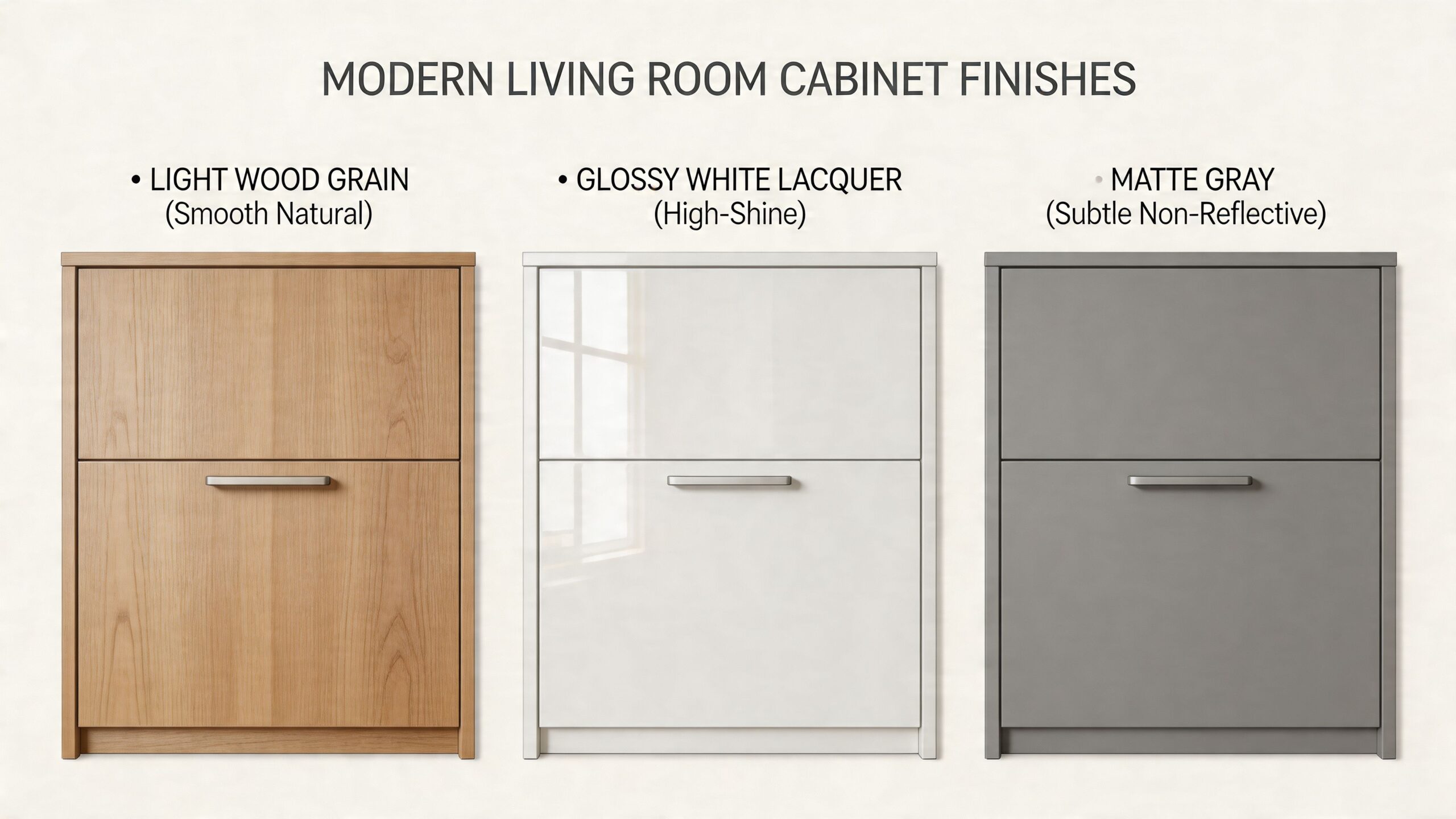
The material tells you a lot about how a cabinet will age, how much care it needs, and what kind of personality it brings into the room. Two cabinets can have a similar silhouette and feel completely different because of what they’re made from.
Solid wood and reclaimed character
If you want warmth, depth, and a cabinet that tends to look better as it settles into the home, solid wood is often the benchmark. Grain variation gives it movement. Small marks and tonal shifts usually add character rather than read like flaws.
Reclaimed wood and teak bring a different kind of appeal. They don’t look machine-perfect, and that’s the point.
These materials often suit homeowners who want:
- a cabinet that softens a sleek room
- visible texture and natural variation
- a piece that feels collected, not mass-produced
- something with enough visual presence to stand alone
Reclaimed wood can be especially helpful in living rooms that feel too flat. A modern shape in a rustic or weathered material creates balance.
Veneer, engineered wood, metal, and glass
High-quality veneer can be a practical choice when you want a consistent finish and a cleaner price point. It can deliver a wood look with a more uniform surface, which some shoppers prefer in contemporary spaces.
Engineered wood varies a lot in quality. The key is not to dismiss it automatically, but to check how the piece is built and finished.
Metal and glass usually play supporting roles. They can sharpen the look of a cabinet and make it feel lighter, especially in smaller rooms.
Here’s a simple way to compare common options:
| Material | What it does well | Best fit |
|---|---|---|
| Solid wood | Warmth, durability, natural depth | Long-term use, layered interiors |
| Reclaimed wood or teak | Character, uniqueness, texture | Statement pieces, earthy modern rooms |
| Wood veneer | Consistency, value, polished appearance | Clean-lined modern settings |
| Metal accents | Crisp contrast, industrial edge | Urban, minimalist, mixed-material rooms |
| Glass panels | Lightness, display, visibility | Collectibles, styled storage, airy rooms |
The finish changes the mood
Finish matters almost as much as material.
A matte finish tends to feel relaxed and current. It hides fingerprints better than a glossy surface and often works well in family spaces.
A glossy finish reflects more light and can look sharp in a contemporary room, but it also shows smudges more easily.
A natural or oil-rubbed finish lets wood grain stay front and center. That usually reads warmer and less formal.
Ask yourself what kind of maintenance you’re comfortable with. That answer can be more useful than asking what looks best under showroom lighting.
A cabinet should look good on an ordinary Tuesday, not just when it’s freshly dusted.
Don’t stop at the surface
Hardware and interior construction matter. A cabinet can have a beautiful exterior and still disappoint you every time you open it.
Quality modern cabinets often include drawer systems rated to hold 75 pounds, full-extension glides, and soft-close hinges that meet KCMA standards. Those features can extend cabinet lifespan by 30 to 40 percent compared with standard hardware, according to the Standard Cabinet Specifications reference.
That matters in a living room more than people expect. Drawers may end up holding heavy books, electronics, board games, or media accessories. Full-extension glides help because you can reach the back of the drawer instead of losing things in a dark corner.
What to check in person
When you’re shopping, open everything.
Look for these signs:
- Smooth drawer travel: no sticking or side wobble
- Steady doors: no sagging or uneven gaps
- Shelf confidence: little flex under normal pressure
- Finished interior surfaces: easier to clean and nicer to use
- Consistent touch points: handles, pulls, hinges, and edges should all feel deliberate
If you want a deeper primer on wood types and how they affect longevity and style, this guide on choosing the right hardwood for longevity and style is worth reading before you commit.
How to Measure and Position Your Living Room Cabinet
Most cabinet mistakes happen before the cabinet arrives. Not because the piece is poorly made, but because the space wasn’t mapped carefully enough.
Many homeowners struggle with sizing because online retailers often don’t offer much help on proportion, room layout, or how the cabinet should relate to nearby furniture, as reflected in this accent cabinet shopping category and identified sizing content gap.
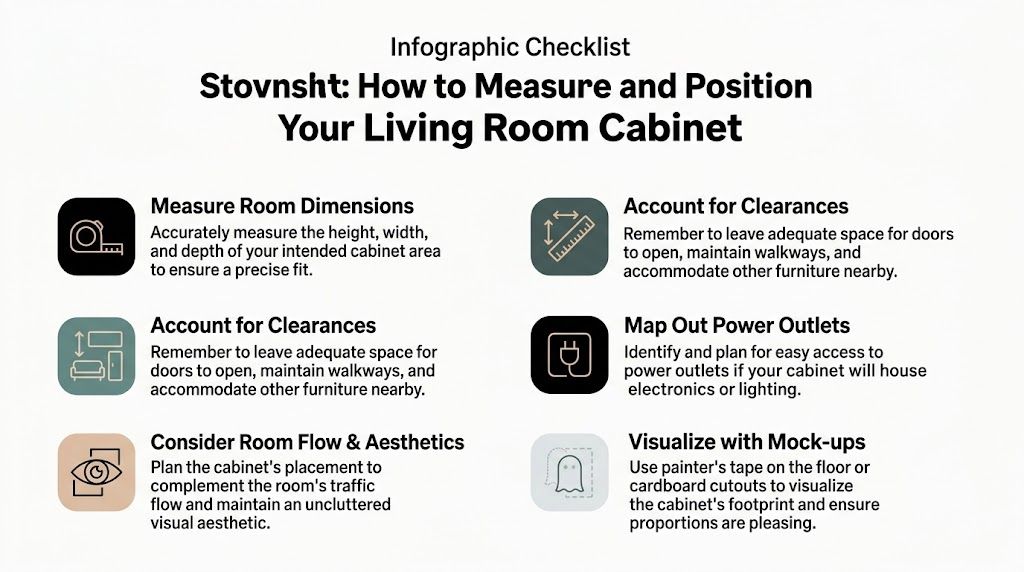
Measure the room first, then the wall, then the path
People often jump straight to the wall width. That’s important, but it’s only one piece.
Start with three layers:
Room dimensions
Know the overall length and width of the room. If you need a reference point while sketching ideas, these standard living room dimensions can help you compare your space to common layouts.Cabinet zone dimensions
Measure the actual wall or placement area. Include height, width, and usable depth.Delivery path
Check doorways, stair turns, hall width, and any tight entry points.
A cabinet that fits the wall but can’t move through the front door is a frustrating surprise.
Focus on breathing room
A cabinet should feel like it belongs there, not like it’s pressing against everything around it.
Leave space for:
- Doors and drawers to open fully
- Walking paths to stay clear
- Visual margin on each side
- Outlet access if the cabinet holds electronics
- Baseboards and trim that may affect flush placement
If the piece is crammed wall to wall, the room usually feels smaller even if the cabinet technically fits.
Good placement test: Stand in the doorway and look at the cabinet area. If the piece would be the first thing your eye crashes into, it’s probably too large or too tall for that spot.
Match the cabinet to nearby furniture
Proportion matters more than exact formulas.
A few reliable guidelines help:
- A media cabinet usually looks best when it extends beyond the TV on both sides rather than stopping short.
- A cabinet near a sofa should relate to the sofa’s scale. If the sofa is long and low, a tiny cabinet can look accidental.
- A tall cabinet works best when the room needs vertical emphasis or when floor space is limited.
- A low cabinet helps the room feel wider and calmer.
If your room already has a lot of height, such as tall shelving, drapes, or a strong fireplace wall, another tall unit may feel repetitive. A lower cabinet can create balance.
Mock it up before you buy
This is one of the easiest tricks and one of the most useful.
Use painter’s tape on the wall and floor to mark:
- width
- depth
- height
- swing space for doors
Cardboard boxes can also help you preview bulk. It’s a rough method, but it quickly reveals whether the cabinet feels graceful or oversized.
A careful measuring process saves returns, dents, and disappointment. If you want a practical walkthrough for measuring furniture more generally, this step-by-step guide on how to measure furniture can help you catch details people often miss.
Optimizing Storage and Function in Your Cabinet
The most common cabinet regret isn’t usually style. It’s choosing a layout that doesn’t match daily life.
Shoppers often face a trade-off between looks and practicality, with too little guidance on how cabinet styles manage clutter, support media devices, or balance display with concealed storage, as noted in this modern cabinet shopping gap around aesthetics and functionality.
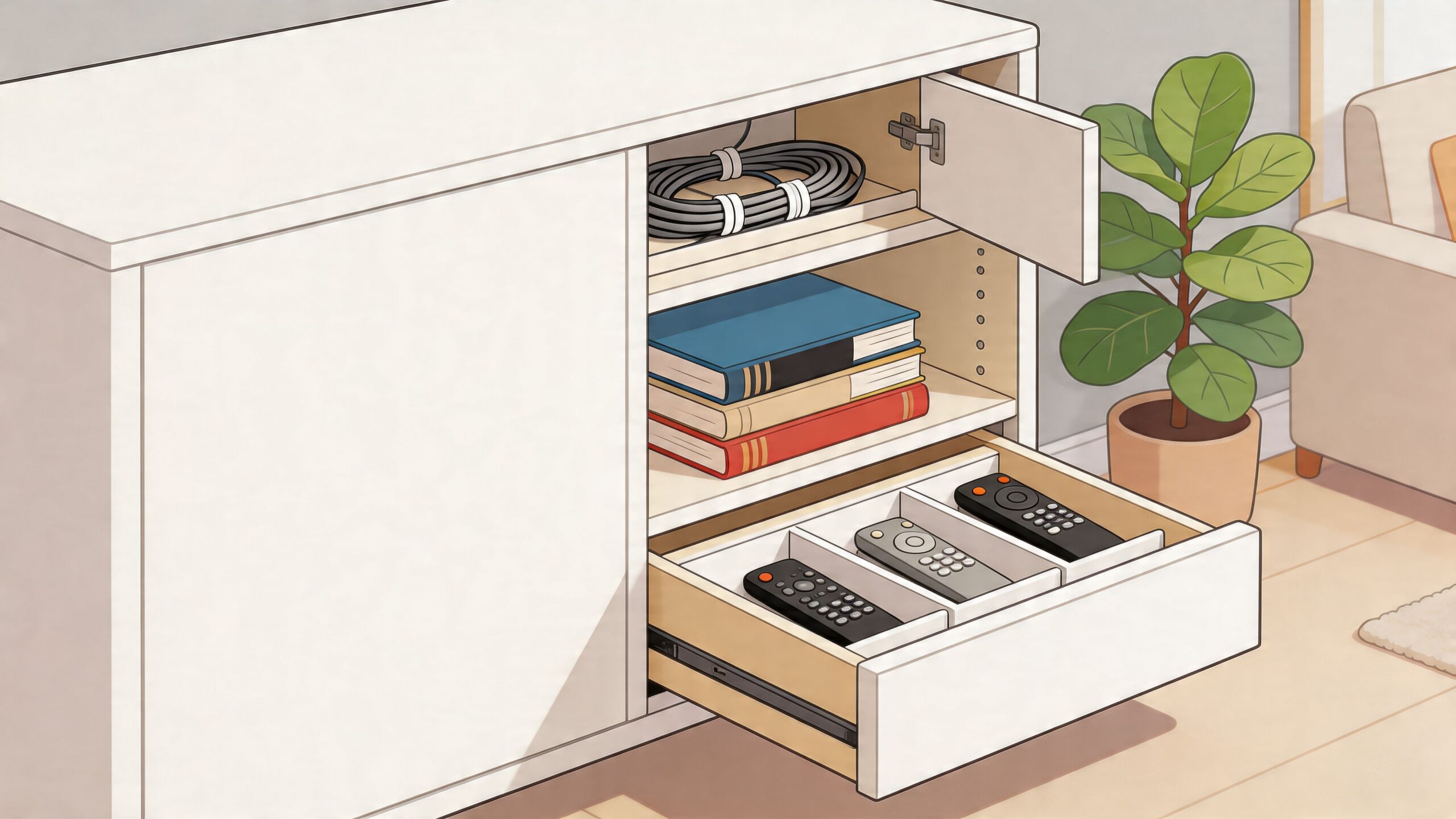
Open storage versus closed storage
Open shelving looks airy. It also asks you to be disciplined.
Closed storage looks cleaner because it does the visual work for you. It hides the ordinary things that make a room feel crowded.
Here’s the honest trade-off:
| Storage type | Strength | Limitation |
|---|---|---|
| Open shelves | Easy access, decorative display, lighter appearance | Dust, visible clutter, constant editing |
| Closed doors | Hides mess, calmer look, family-friendly | Less display opportunity |
| Drawers | Great for small loose items | Can waste space if too shallow |
| Mixed layout | Best balance for most homes | Requires more intentional planning |
For many living rooms, the mixed layout wins. A little open space keeps the cabinet from feeling heavy. Enough closed storage keeps the room from feeling exposed.
Match the cabinet to your real habits
A cabinet should fit your household, not an idealized version of it.
If you’re choosing for a specific lifestyle, think in scenarios.
For families with kids
Closed doors and sturdy drawers usually make life easier. They hide toy overflow, craft supplies, and all the little things that multiply in a family room.
For pet owners
A cabinet with less open lower shelving often stays neater. Pet hair and chewable items are less visible and easier to manage.
For collectors
Glass-front sections can protect objects while still displaying them. This works especially well for ceramics, books, or meaningful keepsakes.
For remote workers
A cabinet can hold chargers, notebooks, a printer, and work gear so the room shifts back to “living room” after the workday ends.
Media storage needs special thought
A cabinet near electronics should do more than look good.
Look for:
- Cord access: so wires don’t bunch awkwardly behind the piece
- Shelf flexibility: useful when devices change over time
- Ventilation space: important for consoles and media equipment
- Remote-friendly design: open sections, mesh, or glass where needed
If your room is tight, it helps to study a few practical small living room storage ideas before choosing cabinet layout. The best ideas usually combine vertical thinking, hidden storage, and fewer but smarter pieces.
Some of the best living room cabinets don’t store more things. They store the right things in the right way, so the room feels easier to use.
Don’t underestimate maintenance
Function includes upkeep.
Highly styled open shelves can look beautiful, but they also ask for dusting and regular rearranging. Closed storage is less expressive, yet often more realistic for busy households.
If you’re torn, ask yourself this: do you enjoy styling shelves, or do you just admire them in other people’s homes?
That answer will usually point you to the right cabinet layout.
For more ideas on organizing living room pieces around real routines, this guide to living room storage solutions can help you think beyond the cabinet itself and plan the room as a whole.
Budgeting and Caring for Your Modern Cabinet
A cabinet can be a small finishing touch or a major anchor piece. Either way, it’s worth treating as an investment in how the room works every day.
U.S. demand for residential cabinets was forecast to rise 4.6 percent annually, reaching $17.3 billion by 2023, driven by homeowners wanting more and larger cabinets for multifunctional spaces, according to Woodworking Network’s cabinet industry facts and figures. That says something important. People aren’t buying cabinets just to fill a wall. They’re buying them because storage has become part of how a home functions.
What you’re paying for
Price differences usually come down to a few practical factors.
- Material quality: solid wood and reclaimed pieces usually cost more than lower-cost manufactured alternatives
- Construction details: better hardware, smoother drawers, and stronger joinery often show up in the price
- Finish work: layered finishes, texture, and specialty treatments take more effort
- Design distinctiveness: unusual silhouettes and one-of-a-kind looks often sit at a higher tier
The key is knowing which upgrades matter to you. If the cabinet will hold heavy items and get daily use, construction quality deserves real attention. If it’s more decorative, the finish and scale may matter most.
How to stretch your budget wisely
Not every room needs the most expensive piece in the store.
A smart budget approach often looks like this:
- Spend more on the cabinet that anchors the main wall
- Save on secondary pieces that can be simpler
- Choose timeless shapes over novelty
- Prioritize function you’ll use weekly
That last point matters. Hidden cord access, adjustable shelves, and better drawers can be worth more than a trend-driven front detail you may tire of.
Basic care keeps the piece looking better longer
Modern cabinets don’t usually need complicated upkeep, but a few habits help.
- Dust regularly: especially open shelving and textured fronts
- Use the right cleaner: gentle products are safer than harsh sprays
- Protect the top surface: trays, felt pads, and coasters reduce wear
- Watch direct sun: some finishes and wood tones can shift over time
- Open and close gently: even good hardware lasts longer with less strain
If your cabinet has wood character, small signs of use may become part of its appeal. If it has a painted or glossy finish, prevention matters more because marks tend to show sooner.
A well-chosen cabinet should feel attainable, useful, and easy to live with. Budget matters, but value matters more.
Your Southern Oregon Partner for Modern Furnishings
A lot of Southern Oregon living rooms have to do more than one job. In the same space, you might watch a game, help with homework, host family, and still want the room to feel calm after its many uses. A modern cabinet can help hold that balance, but only if the piece fits your room and your routine, not just the style on the tag.
That is one reason local shopping still matters. Big-box stores can show you a photo and a few dimensions. They usually do not help much with important questions, like whether a cabinet will crowd a walkway, sit too tall under a window, or leave enough room for a lamp, speakers, or a basket of blankets.
We have worked with families across Grants Pass, Medford, Central Point, Ashland, and the Rogue Valley for generations. Since 1946, when George Gates Jr. founded our family business on the promise of “Service and Value,” we have tried to help people choose furniture the same way we would help a neighbor standing in our showroom and asking for honest advice.
In our 30,000 sq. ft. showroom in Grants Pass, you can compare cabinets in person and get a better read on scale. A cabinet on a screen can look balanced, then feel oversized in a real home with lower ceilings, a tight entry path, or an open living room that connects to the kitchen. Seeing the piece up close helps you judge depth, door swing, drawer function, and finish color under normal light.
We also carry more than standard catalog styles. Alongside trusted names such as Flexsteel, Ashley, and La-Z-Boy, shoppers often come to us for our Unique Finds, including reclaimed wood, teak, and one-of-a-kind statement pieces. Those options can be especially helpful if you want a modern room to feel warm and lived-in, instead of flat or overly uniform.
Budget matters too.
If you are trying to get the right cabinet without forcing a compromise, Gates Easy Pay offers $0 down, 6-month interest-free, and no-credit-needed options. That gives you more room to choose the size, storage layout, and finish that works in your home. Our White-Glove Delivery team also handles assembly and placement, so the cabinet ends up where it belongs and functions the way it should from day one. We even offer mattress haul-away when needed.
For shoppers near downtown Grants Pass, throughout Medford, or anywhere across the Rogue Valley, that is what local service should feel like. Helpful, practical, and personal.
Visit Gates Home Furnishings to browse our collection online or stop by our Grants Pass showroom to compare modern cabinets in person, explore our Unique Finds, and get the kind of neighborly guidance George Gates built this business on back in 1946.