Your Therapeutic Mattress Guide for Better Sleep

Some mornings start with a stiff back, a sore shoulder, or that foggy feeling that says sleep happened, but recovery didn't. Around Grants Pass, Medford, and across the Rogue Valley, plenty of people know that routine. They went to bed tired, slept for hours, and still woke up feeling like the mattress worked against them.
That's usually the moment when the conversation changes. The question stops being “Do I need a new bed?” and becomes “What kind of mattress will help?” A therapeutic mattress enters the picture right there. Not as a miracle cure, and not as a fancy label, but as a sleep surface designed to support the body more intentionally.
Since 1946, George Gates' promise of Service and Value has shaped how sleep questions are handled in Southern Oregon. People don't need more confusing mattress jargon. They need plain answers about pressure relief, support, long-term comfort, and what will still feel good after the first few months.
Table of Contents
- Tired of Waking Up Tired and Sore
- What Makes a Mattress Therapeutic
- Exploring Therapeutic Mattress Technologies
- Who Can Benefit from a Therapeutic Mattress
- How to Choose the Right Mattress for You
- An Affordable Investment in Your Health
- Your Sleep Questions Answered
Tired of Waking Up Tired and Sore
A neighbor in Southern Oregon might describe it like this. The mattress still looks fine, but mornings tell a different story. Getting out of bed takes a minute longer. The low back feels tight. One hip complains after sleeping on the same side too long. By midmorning, the body loosens up, but the pattern keeps repeating.
That kind of sleep problem is frustrating because it doesn't always feel dramatic. It feels gradual. A person starts changing pillows, stretching more, or blaming age, stress, or an old injury. Sometimes those things play a role. Sometimes the sleep surface is part of the problem too.
A mattress should do more than provide a place to lie down. It should help the body settle into a position that supports rest instead of adding strain overnight. That's where a therapeutic mattress can make sense. It's built with the goal of better alignment, better pressure handling, and less overnight stress on joints and muscles.
People looking for practical waking up tired solutions often discover that sleep quality isn't just about bedtime habits. The mattress, pillow, room temperature, and sleep posture all work together.
A mattress doesn't have to be worn out to be wrong for the body using it.
That's why a simple self-check helps. A person who isn't sure whether the bed is contributing to the problem can use a quick sleep quality assessment to look at patterns like morning pain, restless sleep, and whether comfort fades through the night.
For families around Grants Pass and Medford, this is usually less about buying something trendy and more about solving a daily problem. Better sleep changes how the whole day feels.
What Makes a Mattress Therapeutic
A standard mattress can feel comfortable in the showroom and still miss the mark at home. A therapeutic mattress is different because its job isn't just softness or firmness. Its job is to support the body in a way that reduces strain while a person sleeps.
Support that does a job
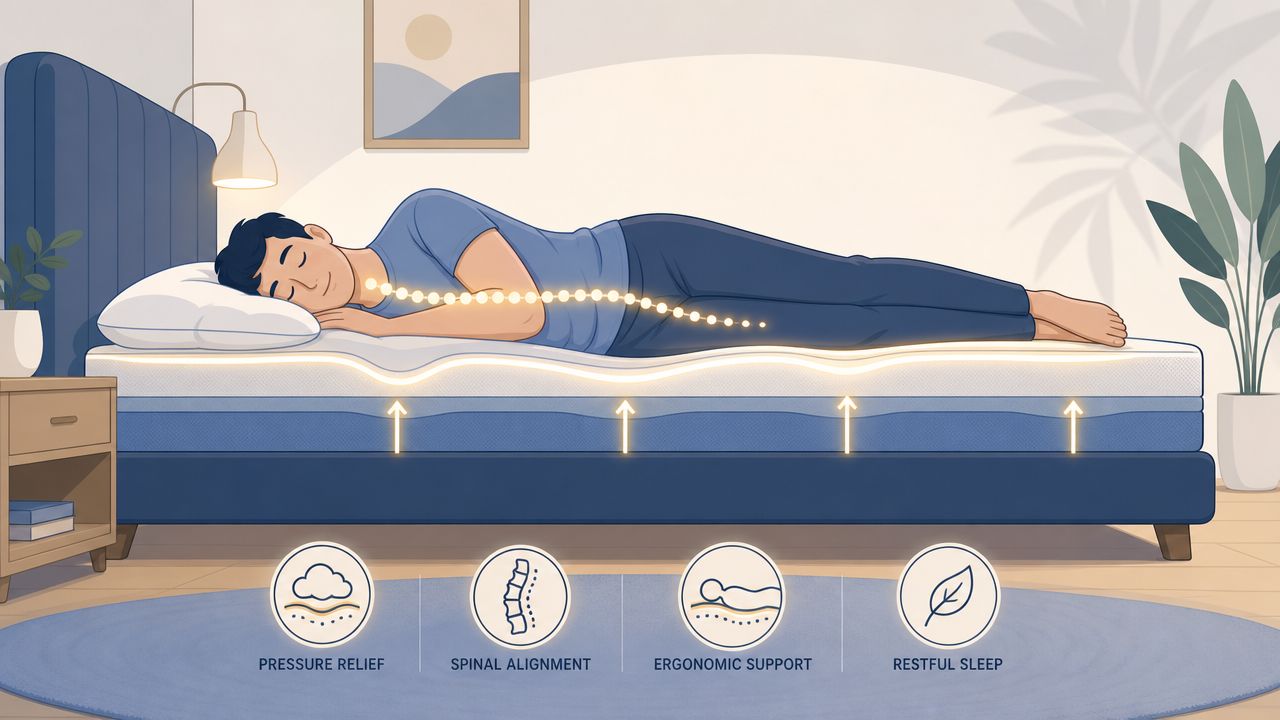
One easy way to think about it is this. A basic mattress often acts like an off-the-rack fit. It may work reasonably well for many people, but it isn't tuned for pressure points, posture, or mobility needs. A therapeutic mattress acts more like a support tool. It's built to manage where the body sinks, where it stays lifted, and how evenly weight is distributed.
That matters for people who wake up with soreness in the shoulders, hips, lower back, or neck. If the mattress lets heavier parts of the body drop too far, the spine can twist out of a more neutral position. If it pushes back too hard in the wrong spots, pressure builds where the body needs cushioning.
Why pressure relief matters
A therapeutic mattress is often engineered as a pressure-redistribution surface to reduce shear and friction. For example, a 5-zone foam design can vary support under different body regions to lower peak pressure at bony prominences, which is a key factor in reducing discomfort and skin breakdown risk for less mobile sleepers, as described in Drive Medical's therapeutic support surface details.
In plain language, that means the mattress shouldn't treat the whole body the same. Shoulders, hips, and legs don't need identical support. A well-designed therapeutic mattress changes how it responds across the surface so the sleeper gets cushioning where pressure tends to build and stability where posture needs help.
A few practical features matter more than marketing words:
- Zoned design: Different parts of the mattress support different parts of the body.
- Published weight capacity: This helps show whether the mattress is built to perform under real use.
- Material clarity: Foam type, coil type, and layer purpose tell more than a vague comfort label.
- Safety standards: Fire-safety compliance matters, especially in care-focused settings.
People sorting through comfort choices can also compare what helps with pain and pressure relief in a more focused way by reviewing this guide to the best mattress for pressure relief.
Practical rule: If a mattress only talks about plush comfort and never explains support, pressure redistribution, or construction, it may not be offering much therapeutic value.
Exploring Therapeutic Mattress Technologies
A therapeutic mattress works a lot like a good pair of work boots. From the outside, several models may look similar. The difference is in what is happening underneath your body hour after hour, year after year.
Foam and zoned comfort
Foam gets attention because it can cushion pressure points well, especially around the shoulders and hips. That matters for side sleepers and for anyone who wakes up feeling like one area of the body took all the force during the night.
Still, foam quality and foam behavior are not all the same. Some foams hug the body more closely and respond slowly. Others feel springier and make it easier to change positions. In a therapeutic design, the goal is not merely a soft surface. The goal is targeted pressure relief paired with support that keeps heavier parts of the body from sinking out of alignment.
That is where shoppers often get tripped up. A mattress can feel comfortable for five minutes in a showroom and still fail to support the body for eight hours. If you are weighing different material types, our guide on innerspring vs memory foam mattress differences can help you sort out how contouring and support play out at home.
Hybrid construction and deeper support
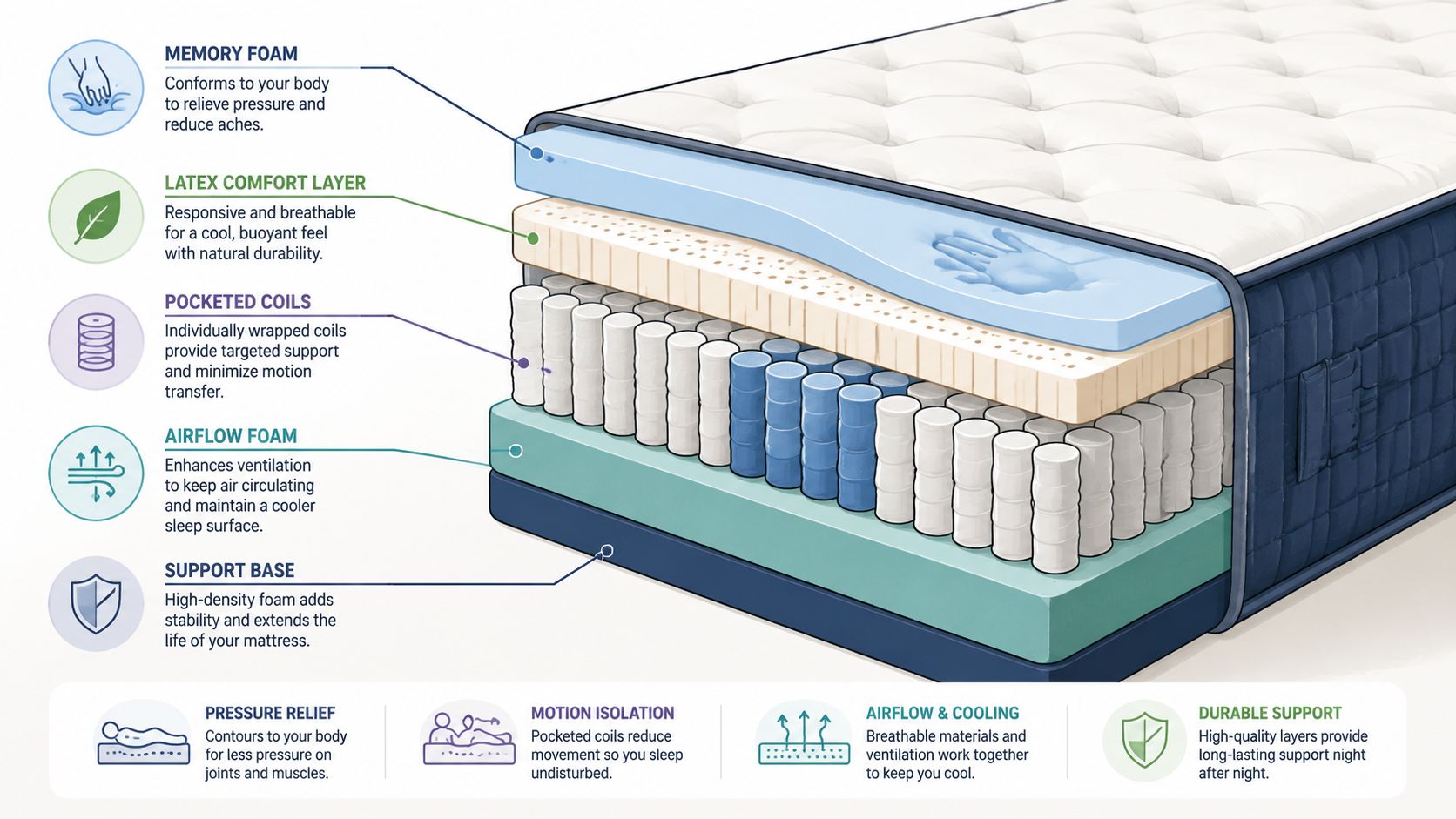
Hybrid mattresses are popular in this category for a practical reason. They split the work between comfort materials near the top and a coil system underneath.
The top layers help cushion joints and reduce concentrated pressure. The coil unit underneath helps keep the spine on steadier footing and usually allows more airflow through the bed. For many Southern Oregon sleepers, that combination makes sense because it addresses two common complaints at once. They want relief at the surface, but they do not want the bed to feel mushy or short-lived.
This is also where long-term decision-making matters. A therapeutic mattress should keep doing its job after months and years of regular use, not just during the first few weeks. In a hybrid, the quality of the coils, the density of the foams, and the way the layers are arranged all affect whether the mattress continues to support the hips, waist, shoulders, and lower back as intended.
A simple comparison can help:
| Mattress build | What it usually helps with | What to watch closely |
|---|---|---|
| Foam-focused | Close contouring and pressure relief | Whether it feels too enveloping or warms up too much for the sleeper |
| Latex-style feel | Responsive support and easier movement | Whether the comfort level feels too firm at the shoulder and hip |
| Hybrid | Surface cushioning, deeper support, and airflow | Coil quality, foam durability, and whether the feel stays consistent over time |
The key is matching the build to the person. A lighter side sleeper may need enough give to avoid shoulder pressure. A back sleeper with lumbar discomfort often does better with steadier support through the midsection. A combination sleeper usually needs a surface that cushions without making movement a struggle.
How adjustable bases fit in
An adjustable base can improve comfort for some sleepers, but it does not replace proper mattress support. It is better to think of it as a partner to the mattress, not the main source of therapy.
For example, raising the head can help someone who has trouble resting flat. Lifting the legs may ease pressure for another sleeper. Those changes only help if the mattress can flex without bunching, losing support, or feeling unstable near the edges.
That is why compatibility matters. A mattress should bend cleanly, recover its shape, and still hold the sleeper in healthy alignment after the base moves. In real homes around Southern Oregon, those details affect daily life more than marketing terms do. Bed height, ease of getting in and out, and how the setup works in the room all play a part in whether the bed feels restorative night after night.
Who Can Benefit from a Therapeutic Mattress
A therapeutic mattress isn't only for hospitals or medical recovery rooms. In the United States, demand is being driven by the increasing prevalence of chronic conditions and the growing popularity of home healthcare, which shows these mattresses have moved beyond facility use and into everyday home life, according to the U.S. therapeutic bed market report.
Everyday sleepers with everyday pain
One group that often benefits is made up of people who don't think of themselves as having a “special sleep need” at all. They're side sleepers with aching shoulders. Back sleepers with tight lower backs. Active adults whose bodies don't recover as easily as they used to. Parents who spend all day on their feet and notice that the bed no longer feels like relief.
These sleepers usually don't need gimmicks. They need a mattress that handles pressure points and keeps the body from settling into awkward positions.
A few examples make this more concrete:
- The side sleeper with hip pain: This person often needs more cushioning at the shoulder and hip without losing support through the waist.
- The back sleeper with stiffness: This sleeper usually needs steady support under the lumbar area so the midsection doesn't sink excessively.
- The combo sleeper: This person often benefits from a surface that's responsive enough to move on without fighting the mattress.
People recovering or aging at home
Therapeutic mattresses also matter for people whose sleep needs changed because of surgery, reduced mobility, or aging in place. Around Ashland, Central Point, and Medford, many families are helping parents or relatives stay comfortable at home longer. For them, getting the bed right affects more than sleep. It affects ease of movement, comfort while resting, and how manageable daily life feels.
When someone spends more time in bed, mattress performance stops being a luxury issue and becomes a comfort and care issue.
This is also where edge support, ease of repositioning, and stable surface feel become more important. A mattress that's too soft may feel pleasant for five minutes but difficult to move on all night. A mattress that's too hard may create pressure that makes rest feel broken and shallow.
The people who benefit most are often the ones whose current bed leaves them feeling worse in the morning than they did at bedtime.
How to Choose the Right Mattress for You
You lie down in the store for three minutes and think, “This feels nice.” Then you spend the next six months waking up with the same sore shoulder or tight lower back. That happens because a mattress is not judged by its first impression. It is judged by what your body feels after six or seven hours in one position.
That is the practical side of choosing a therapeutic mattress. The goal is not to chase the plushest surface in the showroom. The goal is to find a bed that keeps your body supported night after night, and still does that well a few years from now.
Why softer is not always better
Softness and support are not the same thing. A sofa can feel soft too, but no one wants to sleep there every night for back relief. A therapeutic mattress needs enough give to reduce pressure, plus enough underlying support to keep your spine in a healthier line while you rest.
Body type changes that equation. Sleep position changes it too.
A side sleeper usually needs more cushioning at the shoulder and hip. A back sleeper often does better with steadier support through the middle of the body. A stomach sleeper usually needs to be careful about too much sink, especially through the hips. A lighter person may experience a mattress as firmer than expected, while a heavier person may compress the same comfort layers to a greater degree.

If the words soft, medium, and firm have ever felt vague, that is because they are. They describe a feel, but they do not tell the whole story of how a mattress will perform for your body. A good starting point is this mattress firmness guide for different sleep positions and body types, which helps narrow your choices before you test beds in person.
A simple way to test before buying
A better decision usually comes from a short routine, not a quick guess.
Lie down the way you sleep
If you sleep on your side at home, test on your side. If you sleep on your back, stay there long enough to let your body settle. Sitting on the edge tells you very little about overnight support.Stay put for a few minutes
Foam and quilted layers need a little time to respond. The first few seconds often tell you how a mattress feels. The next few minutes tell you more about whether it fits your body.Check the area that usually hurts first
For one person, that is the shoulder. For another, it is the hips or lower back. Start with the spot that tends to complain at home, because that is often where a poor fit shows up fastest.Notice whether your body feels level and settled
You are not looking for a stiff, flat-board sensation. You are looking for even support, without a feeling that one area is dropping too far or twisting out of line.Roll over and get up
This matters more than shoppers expect. A mattress may feel comfortable while lying still but frustrating if every turn takes effort. That is a real quality-of-life issue for combination sleepers, older adults, and anyone with stiffness.
For shoppers in Grants Pass, seeing several constructions side by side can make those differences easier to spot. Gates Home Furnishings has a large showroom with a dedicated mattress gallery, so people can compare support feels in a more grounded way instead of relying on a label alone.
One more practical point gets overlooked. Mattress size affects daily comfort too. A bed that is too narrow can crowd a couple or limit natural movement. A bed that is too short can leave taller sleepers curling up more than they should. The right therapeutic mattress has to fit your body, your sleep habits, and your room, not just feel good for a moment in the store.
The best long-term choice usually feels a little less dramatic than shoppers expect. It is the mattress that keeps your body in a better position, lets you move without a struggle, and still feels supportive after the newness wears off.
An Affordable Investment in Your Health
A therapeutic mattress sits in an unusual category. It's a comfort purchase, but it also affects recovery, mobility, and how a person feels every morning. That's why the smartest buyers don't focus only on how the bed feels on day one.
Think past the first week
A key question is whether the mattress keeps delivering support after the honeymoon period. A useful rule is to watch for symptoms of decline rather than waiting for total failure. Persistent sagging, growing heat retention, and waking pain can all be signs that the mattress is no longer performing the way it should, as noted in this discussion of mattress durability and replacement symptoms.
That's an important shift in thinking. Plenty of mattresses don't “die” all at once. They fade. The support softens unevenly. Pressure relief changes. A person starts sleeping around a problem instead of on a solution.
A buyer can protect against that by asking a few grounded questions:
- What is the support core made of: Foam density language may be limited in retail, but construction details still matter.
- How does the edge feel under weight: Weak edges often show wear and instability sooner.
- Does the mattress still feel balanced after time on it: Short testing can reveal whether comfort is only surface-deep.
- Will the retailer explain the build clearly: If construction is hidden behind vague labels, comparison gets harder.
The right question isn't just “Does this feel good tonight?” It's “Will this still support the same body after regular use?”
Making the purchase easier to manage
Cost matters, especially for families balancing home updates, healthcare expenses, or a move across Southern Oregon. Flexible financing can remove enough pressure to let the buyer choose the right fit instead of the quickest compromise.
That's where Gates Easy Pay can help with $0 down, 6-month interest-free options, and no-credit-needed plans. Delivery matters too. A therapeutic mattress is rarely something a household wants left in a box at the front door. White-glove delivery, professional setup, and old mattress haul-away make the transition simpler, especially for seniors or anyone replacing a hard-to-manage bed.
George Gates' Service and Value still matters. A mattress purchase doesn't end at checkout. It ends when the bed is in place and the sleeper can use it.
Your Sleep Questions Answered
A lot of mattress decisions come down to the practical questions that people ask after they've narrowed the options. Those questions are usually less about trends and more about daily life at home.
Do therapeutic mattresses need a special base
Sometimes yes, sometimes no. It depends on the mattress construction and whether the sleeper wants an adjustable setup. Foam and hybrid models often work well on supportive platforms or adjustable bases, but compatibility should always be confirmed before purchase.
The key is simple. The mattress needs even support underneath it. If the base allows uneven flex, gaps, or poor center support, the mattress may not perform the way it was designed to.
How long does the break-in period feel different
A new therapeutic mattress often feels a little different from the showroom model for a while. Materials settle. Covers relax. The sleeper's body also adjusts to a new support pattern, especially if the old mattress had been sagging.
That adjustment is one reason broader sleep habits still matter. People trying to improve rest often benefit from reviewing broader wellness basics alongside mattress changes, such as the practical habits covered in Seven Oaks Dentistry's sleep advice. Helpful routines at home can also be found in this guide on how to improve sleep quality naturally.
Can supportive options show up in an outlet section
Yes, they can. Outlet inventory changes quickly, so the exact options vary. But for shoppers who want supportive comfort at a lower price point, it can be worth checking what's available rather than assuming therapeutic features only appear in premium-floor models.
The bigger picture is that this category isn't small or limited to institutions. The global therapeutic bed market is estimated at $6.08 billion in 2024 and projected to reach $9.46 billion by 2034, with home care representing 25% of the market, according to Global Insight Services' therapeutic bed market report. That shift reflects how strongly therapeutic sleep solutions have moved into residential homes.
For households across Grants Pass, Medford, Ashland, and the wider Rogue Valley, a therapeutic mattress is often less about buying a specialty item and more about making a better everyday decision. The right support can help with pressure relief, posture, movement, and long-term comfort. Since 1946, that's the kind of practical problem-solving tied to George Gates' promise of Service and Value.
For anyone ready to compare supportive sleep options in person, Gates Home Furnishings offers a chance to test comfort in a 30,000 sq. ft. showroom in Grants Pass, with mattress guidance, flexible Gates Easy Pay financing, and white-glove delivery that includes setup and haul-away. While visiting, shoppers can also explore Unique Finds in reclaimed wood and teak alongside trusted brands such as La-Z-Boy, Flexsteel, Ashley, and Beautyrest. Visit the Grants Pass showroom or browse the collection online to start finding a mattress that supports better sleep for the long run.