Best Mattress for Hot Sleepers: A 2026 Oregon Guide


A lot of people around Grants Pass, Medford, and the wider Rogue Valley tell us the same thing. They fall asleep tired, then wake up warm, restless, and irritated because the bed itself seems to hold onto heat.
That problem gets worse in summer. A day of dry Southern Oregon heat can linger into the night, and some evenings bring enough humidity that the bedroom feels stuffy even when the thermostat says otherwise. If your mattress traps warmth under your shoulders, hips, and back, you don’t just feel hot. You sleep lighter, toss more, and wake up feeling like you never settled in.
We’ve helped local families sort through that frustration for a long time. Since 1946, when George Gates Jr. built this business on a promise of Service and Value, we’ve believed a mattress should solve a problem, not create a new one. Cooling comfort is one of those problems that deserves plain answers.
An End to Sleepless Nights in Southern Oregon
A hot sleeper usually doesn’t need more marketing. They need relief that makes sense.
Maybe that sounds familiar. You go to bed comfortable enough, but a few hours later the mattress feels warm under your body. You flip the pillow, kick off the blanket, shift to the other side of the bed, and hope that cooler patch lasts. It usually doesn’t.
In Southern Oregon, that experience can be tricky to judge from online reviews alone. National lists often talk about “cooling” as if every climate behaves the same way. It doesn’t. Grants Pass, Central Point, Ashland, and Medford can have warm stretches that make a mattress feel very different in a real bedroom than it did in a generic product test.
That’s why the best mattress for hot sleepers isn’t just about chasing the coldest-sounding material. It’s about understanding how a mattress handles airflow, moisture, support, and body contact over a full night.
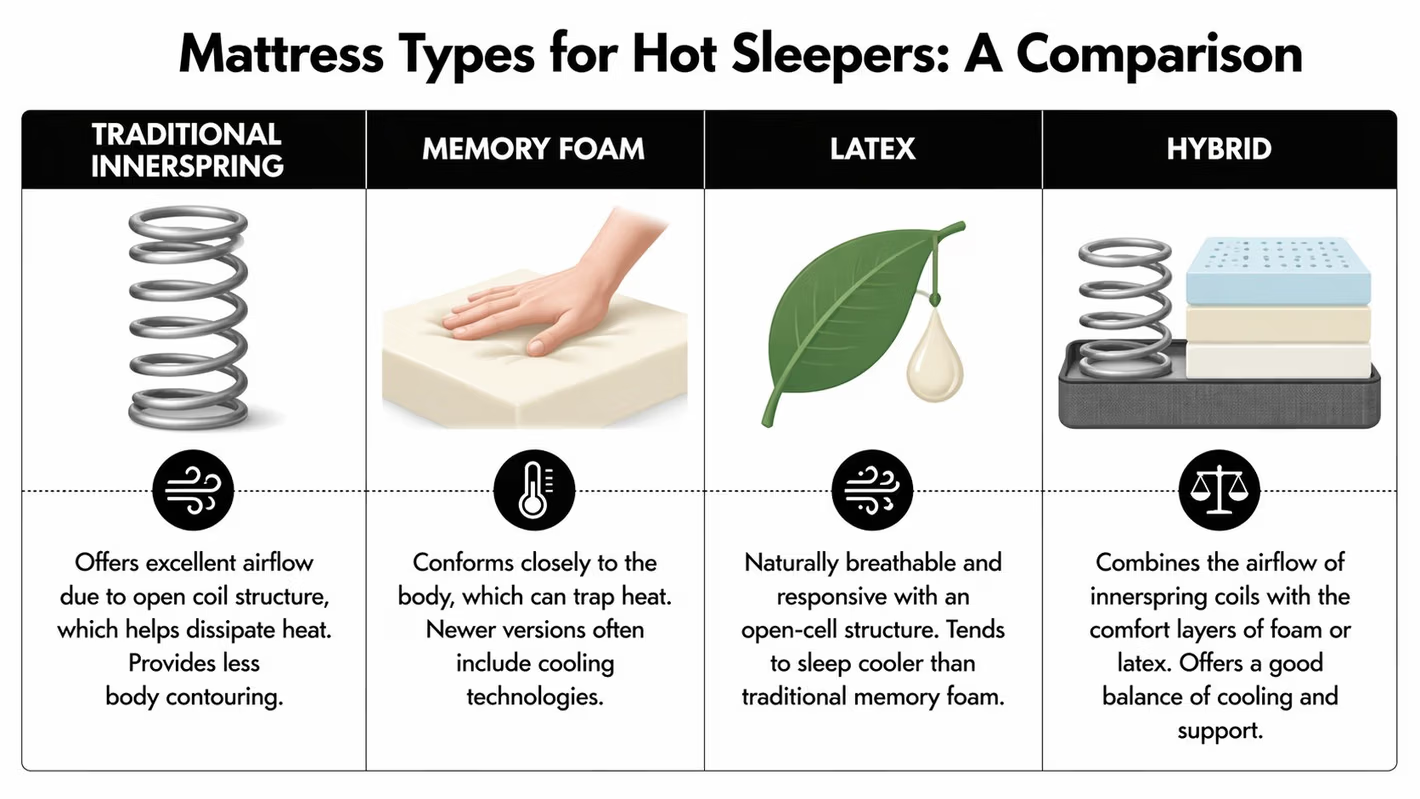
Here’s a quick comparison before we dig into the details:
| Mattress type | Cooling strength | Main trade-off | Often works well for |
|---|---|---|---|
| Traditional innerspring | Strong airflow through open coils | Less body contouring | People who want a breezier, firmer feel |
| Memory foam | Pressure relief and close contouring | Can hold more warmth | Sleepers who need cushioning and choose newer cooling foams carefully |
| Latex | Naturally breathable and responsive | Feel is springier than memory foam | Hot sleepers who want pressure relief without deep sink |
| Hybrid | Balance of airflow and comfort layers | Cooling depends on the top materials used | Many side, back, and combo sleepers |
We’ll keep this practical. No mystery terms, no vague promises, and no assuming one mattress works for everyone. A side sleeper in Medford who runs warm may need something different from a back sleeper in Grants Pass who wants stronger support and less sink.
The coolest mattress on paper can still feel wrong if it lets you sink too deeply, because trapped body contact is part of what makes a bed feel hot.
That’s the part many shoppers miss. Cooling isn’t only about surface fabric. It’s about the whole build, and how that build works with your body all night long.
Why You Sleep Hot and How Your Mattress Can Help
Your body doesn’t stop regulating temperature when you fall asleep. It keeps trying to release excess heat, and your bed becomes part of that process.
If the mattress lets air move, your body has an easier time shedding warmth. If the mattress hugs tightly and holds heat near the surface, you’re more likely to wake up sweaty or uncomfortable. That’s why the mattress under you matters just as much as the room around you.

Heat retention versus heat release
Think of your mattress as either a place where heat escapes or a place where heat lingers.
Dense foams tend to hold onto warmth longer because they reduce airflow around your body. Coil systems and more breathable materials create open pathways where warmth can move away instead of building up under your torso. That doesn’t mean foam is automatically bad, but it does mean the structure matters.
People often get confused here because “soft” and “cool” are not the same thing. A mattress can feel plush at first touch and still trap heat after a few hours. Another mattress can feel more buoyant or responsive and stay more comfortable through the night because air keeps moving through it.
If you want a deeper primer on how foam changes feel and heat behavior, our guide to what a memory foam mattress is and how it works helps explain why some foam beds feel cozy while others feel stuffy.
Why the Rogue Valley changes the conversation
Southern Oregon adds another wrinkle. Some nights are dry and warm. Others carry enough humidity that moisture becomes part of the problem.
Existing reviews often ignore how humidity changes mattress performance. ASTM humidity simulations discussed here indicate that some all-foam options with closed-cell moisture barriers can outperform certain hybrids in RH>70% conditions by as much as 15%, which is a good reminder that “coils are always cooler” is too simple for real-life shopping.
That matters in the Rogue Valley because a mattress doesn’t live in a lab. It lives in your bedroom, with your windows, your bedding, your sleepwear, and the weather outside.
What a mattress can actually do
A cooling mattress doesn’t “chill” the room. What it does is reduce the reasons you overheat in bed.
Look for these signs of better temperature control:
- Air can move through the core. Coils and ventilated materials help warmth disperse.
- The comfort layer doesn’t hold too much heat at the surface. This matters most around the shoulders, hips, and lower back.
- The bed limits moisture buildup. When moisture lingers, the bed can feel clammy even if it isn’t technically hot.
- The support keeps you from sinking too much. More sink often means more trapped contact and less airflow.
A mattress helps most when it keeps you supported on the bed, not swallowed by it.
That’s why two people can lie on the same model and report different temperatures. The heavier sleeper may sink farther into the comfort layers. The side sleeper may have more body contact at the shoulder and hip. The stomach sleeper may notice a warm chest area if the top foam is too dense.
Once you understand that, the best mattress for hot sleepers gets easier to find. You stop shopping by buzzword and start shopping by construction.
Comparing Mattress Types for Hot Sleepers
The first big decision is construction. At this stage, people usually narrow the field too quickly.
Some shoppers write off all foam. Others assume every hybrid sleeps cool. Both shortcuts can lead you to the wrong bed. The better approach is to understand what each mattress type usually does well, where it tends to struggle, and how that fits your sleep style.
Traditional innerspring
If your top priority is airflow, innerspring deserves a serious look. Consumer Reports’ mattress testing found that traditional innerspring mattresses trap less heat than nearly 80 percent of other mattresses rated, largely because open coil systems allow more air circulation than dense foam beds.
That’s the classic strength of this category. More open space inside the mattress means less opportunity for warmth to stay bottled up beneath you.
What people like:
- Noticeable airflow that often feels easier for hot sleepers
- A more lifted, on-the-bed feel
- Quicker movement if you change positions often
What to watch:
- Less contouring around shoulders and hips
- A firmer, springier feel that not everyone loves
- Cooling alone doesn’t guarantee comfort if pressure relief is too limited
For some back and stomach sleepers, a traditional innerspring can be enough. For many side sleepers, it can feel cooler but not cushioned enough.
Memory foam
Memory foam earns strong loyalty for pressure relief. It molds around the body, softens impact at pressure points, and can feel very soothing. The trade-off is that close contouring can reduce airflow around the body.
That’s where hot sleepers get frustrated. A foam bed may feel wonderful for ten minutes in a showroom, then feel warmer after several hours of body contact.
Still, it’s too broad to dismiss all foam beds. Some use better covers, more breathable surface materials, or designs that manage moisture more effectively in certain conditions. The key is to ask how much foam is used, where it sits in the stack, and whether the support under it keeps you from sinking excessively.
Good fit for:
- Side sleepers who need pressure relief
- People with sharp pressure-point discomfort
- Shoppers who prefer less bounce and more contour
Less ideal when:
- You already know deep sink makes you overheat
- You want maximum airflow
- You sleep hot and humid at the same time
Latex
Latex usually feels different from memory foam the moment you lie down. It’s more responsive, a little springier, and less likely to create that slow-sinking cradle effect.
That can help with cooling because you maintain a bit more space around the body instead of being wrapped closely by the comfort layer. Latex also tends to appeal to shoppers who want pressure relief without the stuck feeling some foams create.
A few practical notes:
- Latex feels buoyant, not melty
- Movement is easier, which combo sleepers often appreciate
- Pressure relief is there, but the sensation is different from memory foam
Latex can be a smart middle ground for hot sleepers who still want comfort at the surface. It isn’t automatically the answer for everyone, but it often solves the “I need cushioning, but I can’t stand sleeping hot” problem.
Hybrid
Hybrid mattresses combine a coil support core with comfort layers on top, often foam or latex. In real-world shopping, that makes them one of the most versatile categories because they can balance support, pressure relief, and breathability.
The phrase “hybrid” covers a lot of ground, though. A hybrid with thick dense foam on top may feel warmer than a simpler build with more breathable materials. So the category matters, but the exact recipe matters more.
Our detailed look at hybrid mattress vs memory foam differences can help if you’re stuck between those two paths.
If you want one broad rule, it’s this. The more a mattress combines airflow below with manageable surface contour above, the better chance it has of helping a hot sleeper.
A side by side view
| Type | How it usually feels | Cooling tendency | Best caution |
|---|---|---|---|
| Innerspring | Lifted, springy, simpler surface | Often very breathable | May not cushion enough for side sleepers |
| Memory foam | Close-conforming, pressure-relieving | Often warmer unless carefully engineered | Deep sink can trap heat |
| Latex | Responsive, buoyant, gently contouring | Usually more breathable than traditional foam | Feel may be too lively for some |
| Hybrid | Balanced support plus comfort layers | Often strong, but depends on top materials | Don’t assume every hybrid is cool |
The trade-off that matters most
A lot of mattress buying mistakes happen because shoppers chase one feature and ignore the rest.
Choose only for cooling, and you may end up on a bed that leaves your shoulder sore. Choose only for softness, and you may end up in a bed that warms up around you by midnight. The best mattress for hot sleepers usually lives in the middle, where support, airflow, and pressure relief all pull in the same direction.
That’s also why online rankings can only take you so far. They’re useful for learning categories, but they can’t tell you how much sink your body creates, how sensitive you are to trapped warmth, or how your sleep position changes pressure and airflow.
Decoding the Latest Cooling Mattress Technologies
Cooling features sound impressive in ads, but they’re easier to judge once you know what each one is supposed to do.
Some technologies are built for first-touch coolness. Others aim to move heat away over time. The strongest designs usually combine surface cooling with airflow deeper in the mattress, rather than relying on a single trick.

Phase change materials and gel layers
Phase change materials are designed to absorb and release heat as your body temperature changes. In plain language, they help smooth out temperature spikes so the surface doesn’t feel as stuffy as the night goes on.
Gel-infused foams work a little differently. They’re often used to reduce the heat-holding tendency of foam near the top of the mattress. They can help, but they work best as part of a full system rather than as a standalone promise.
A useful real-world example is the TEMPUR-ProBreeze Medium Hybrid listed here, which shows the kind of layered cooling approach shoppers often compare when they want both contouring comfort and airflow support.
Breathable covers and moisture-wicking fabrics
The cover is the first thing your body touches, so it changes the feel right away. Materials like Tencel and other breathable fabrics can help move moisture away from the skin and reduce that muggy, sticky sensation.
It's easy for some shoppers to get misled. A cool-to-the-touch cover can feel great for the first few minutes, but the deeper materials still determine how the bed behaves at 2 a.m. Surface feel matters. Core airflow matters more over the long run.
Zoned coils and airflow channels
Coils do more than support the body. In cooling mattresses, they also create room for air to move through the core instead of leaving heat bottled up beneath dense layers.
Some newer hybrids use zoned coil systems, meaning the support changes across different parts of the mattress. That can help with alignment and cooling at the same time, especially if stronger support under the midsection keeps you from sinking too far.
One of the clearer examples comes from Sleep World’s review of the Casper Snow hybrid, which says it delivers over 12 hours of active temperature regulation, can lower surface temperature by up to 7°F, and uses zoned coils that provide up to 25% more airflow than standard innersprings.
Not all cooling tech feels dramatic in the first minute. The better sign is whether the mattress still feels steady and breathable several hours later.
Copper, perforation, and open-cell design
You’ll also see terms like copper-infused foam, perforated foam, and open-cell construction.
These all point toward the same goal. They’re trying to reduce heat buildup by helping materials breathe or conduct warmth away more effectively than dense, closed foam. On their own, these features don’t guarantee a cool mattress. Combined with a breathable cover and supportive coil system, they can make a meaningful difference.
A simple way to read a spec sheet is this:
- Surface feature means how the mattress feels at contact
- Foam design affects how much heat the comfort layer tends to hold
- Coil structure affects how much air moves through the mattress
- Support zoning affects how much you settle into the bed
If a mattress only talks about one cooling feature, be cautious. The strongest models usually solve the problem from more than one angle.
Our Recommendations for Your Sleep Style and Body Type
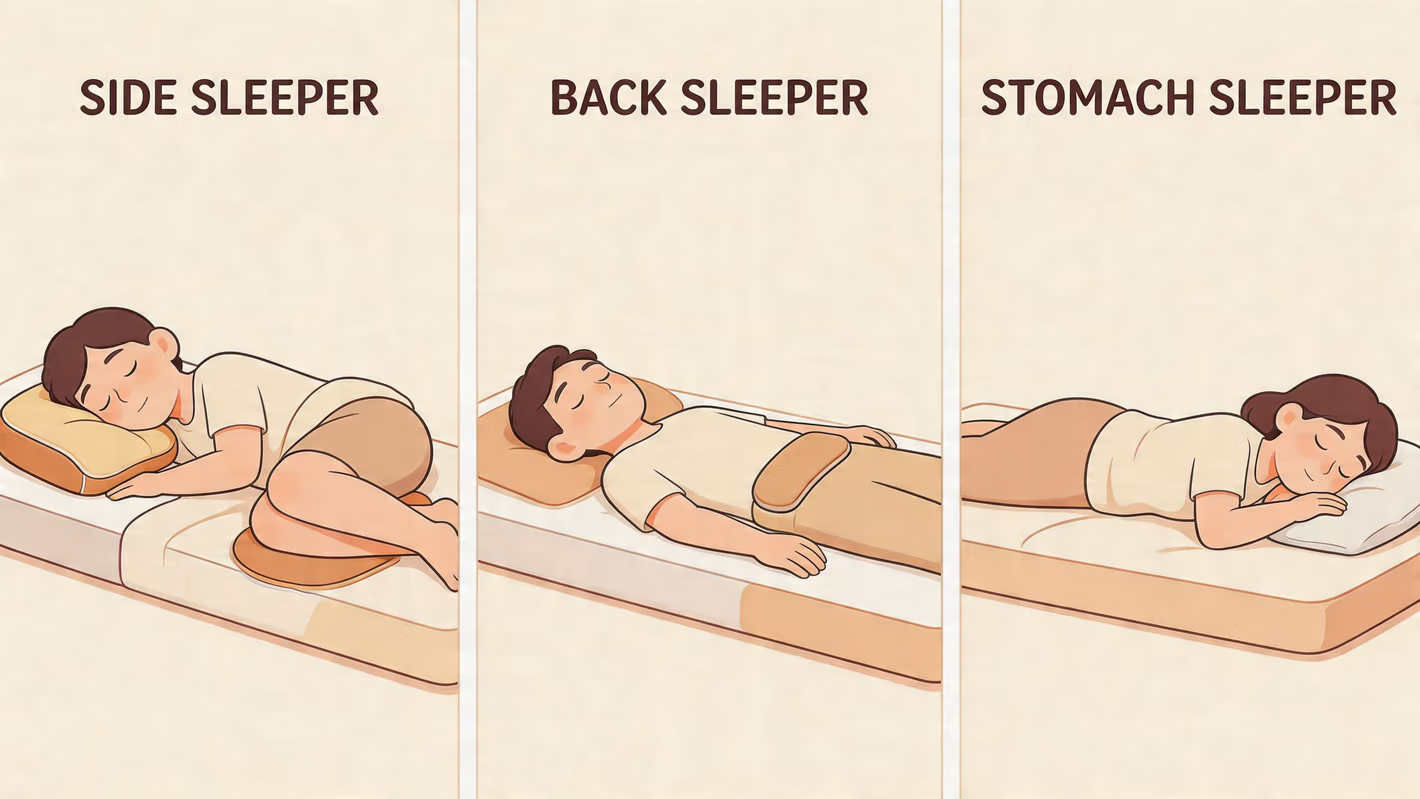
The best mattress for hot sleepers changes once we factor in how you sleep. Position and body type affect how much of your body touches the mattress, how much you sink, and where heat tends to collect.
That’s why one cooling mattress can feel perfect to your neighbor and wrong for you.
Side sleepers
Side sleepers usually need the most pressure relief at the shoulder and hip. The challenge is finding that cushioning without building a warm pocket around those pressure points.
For many side sleepers, hybrids are a practical starting place because they can cushion the upper body while still allowing airflow through the coil base. NapLab’s testing of over 360 mattresses found hybrid models dominating cooling performance, with the Saatva Classic scoring 9.68/10 for heat dissipation, which helps explain why this category is so often recommended for hot sleepers.
If you sleep on your side and run warm, focus on:
- Enough give at the shoulder
- Support that prevents deep sagging at the hip
- Breathable materials near the surface
If you want help narrowing by build and pressure needs, our guide on which mattress is right for your body type is a useful next step.
Back sleepers
Back sleepers often do well on beds with balanced support and moderate contour. You usually don’t need as much sink as a side sleeper, and that can help with cooling.
A firmer hybrid, responsive latex model, or supportive innerspring can work well here, especially if the bed keeps your midsection lifted instead of letting it settle into a warm trough. If you wake up hot on your back, the issue is often too much foam under the torso.
A good checkpoint:
- If your lower back feels unsupported, the bed may be too soft
- If your shoulder blades and hips feel jammed, it may be too firm
- If your back feels sweaty in one zone, the comfort layer may be holding heat there
Stomach sleepers and combo sleepers
Stomach sleepers usually need firmer support to keep the midsection from dipping. That’s important for alignment, but it also helps cooling because less sink usually means less trapped heat.
Combo sleepers need ease of movement. A mattress can test well for cooling and still frustrate you if it’s hard to change positions. Responsive hybrids, latex designs, and some innersprings tend to work well because they let you move without fighting the bed.
For hot sleepers who change positions a lot, easy movement is part of temperature control. If you can’t shift comfortably, you stay in the warm spot longer.
Body type matters more than most shoppers expect
Body type affects mattress temperature because it changes compression. More compression can mean more surface contact and less airflow.
In broad terms:
- Lighter sleepers often need enough cushioning to avoid pressure points, but they may not compress the mattress sufficiently to activate its support correctly if it’s too firm.
- Average-build sleepers usually have the widest range of workable options, especially in hybrids.
- Heavier sleepers often benefit from stronger support systems that keep the body lifted and reduce deep heat-trapping sink.
In-person testing is valuable. In our 30,000 sq. ft. showroom in Grants Pass, people can compare how the same cooling concept feels in different builds instead of guessing from a product page. We also carry recognizable brands such as Beautyrest, alongside other mattress lines, so shoppers can feel the difference between materials rather than trying to decode every spec online.
For residents coming from Medford, Ashland, Central Point, or nearby parts of the Rogue Valley, that hands-on testing often clears up confusion quickly. A mattress can sound right on paper and still feel too enveloping, too firm, or too warm once your body is on it.
Building Your Complete Cooling Sleep System
A mattress is the foundation, but it’s not the whole sleep climate. Plenty of people buy a cooler mattress and then accidentally cancel out the benefit with the wrong protector, heavy bedding, or a base that limits airflow.
Cooling works best when every layer helps the same goal.
Start with the layers touching your body
Your sheets and pillowcase affect temperature right away. Breathable fabrics can help your skin feel drier and less sticky, especially on warm Southern Oregon nights.
Your mattress protector matters just as much. A protector that seals too tightly can hold heat and moisture at the surface. If you’re rebuilding your setup, our guide to bedding, mattress protectors, and comforters can help you avoid turning a breathable bed into a warmer one.
For people who aren’t ready to replace a mattress yet, it can also help to compare cooling mattress toppers and pads so you can see how add-on layers may change airflow and surface feel before you commit to a full mattress purchase.
Think about long-term cooling, not just first-week cooling
This is a point many reviews skip. A mattress that feels cool at first doesn’t always stay that way once materials settle and compress.
NCOA’s cooling mattress resource notes that top-rated mattresses can lose 25-40% of their cooling performance after 18 months due to foam compression and cover pilling, while organic latex hybrids can retain up to 90% of their cooling efficacy long-term. That’s a strong reminder to look at durability, not just showroom feel.
Don’t forget the bed underneath the mattress
The base under the mattress can affect airflow too. A setup that allows some circulation underneath the mattress can support the cooling design of the bed itself.
The room also matters visually and physically. An airy bedroom tends to feel calmer and cooler than a crowded one. That’s one reason some homeowners like incorporating natural materials and lighter-feeling furniture around the bed. In our showroom, people often pair bedroom sets with Unique Finds in reclaimed wood and teak to create that more open, grounded feel without making the room feel heavy.
A complete cooling system usually includes:
- A breathable mattress build that fits your body and sleep position
- Sheets and pillow materials that don’t trap warmth
- A protector that guards the bed without smothering airflow
- A base or frame that supports circulation and stability
- A plan for durability so the cooling feel lasts beyond the break-in period
That last point matters. Long-term comfort isn’t only about the mattress model. It’s also about how well you maintain the whole system around it.
Experience the Gates Difference in Grants Pass
Buying a mattress online can be convenient. It can also be a guessing game, especially if you sleep hot and need more than a catchy cooling label.
Since 1946, we’ve tried to do this the way George Gates Jr. intended, with Service and Value that feels personal and practical. For a hot sleeper, that means helping you figure out whether the issue is too much sink, the wrong comfort material, poor airflow, or a full bedding setup that’s working against you.
That hands-on approach matters when you’re comparing premium cooling designs. Sleep Foundation’s cooling mattress roundup highlights models like the Helix Midnight Luxe for features such as a Tencel cover and gel-infused foams, and that’s the kind of technology shoppers often want help evaluating in person so they can balance cooling with support.
Our showroom in Grants Pass gives you room to test that difference instead of guessing from your phone. Inside, you can compare mattress feels, bedroom furniture, and complete setups from well-known names like Beautyrest, Ashley, La-Z-Boy, and Flexsteel. If you’re furnishing more than a mattress, it’s also a place to spot those one-of-a-kind reclaimed wood and teak Unique Finds that don’t look like every other bedroom in town.
We also know budget and logistics matter.
- Gates Easy Pay gives shoppers flexible financing options, including $0 down, 6-month interest-free, and no-credit-needed paths.
- White-Glove Delivery means we don’t just drop boxes at the curb. Our team handles setup, assembly, and mattress haul-away.
- Gates Care Shield adds peace of mind for the everyday wear that can shorten the life of a sleep surface.
If you’re coming from Grants Pass, Medford, Central Point, Ashland, or elsewhere in the Rogue Valley, the goal is simple. We want you to leave with a mattress that feels cooler for the right reasons and fits your body, your room, and your budget.
If you’re ready to sort out the best mattress for hot sleepers without guessing, visit our Grants Pass Showroom or browse our collection online. We’re here to help you find a cooler, more comfortable night’s sleep with the same local Service and Value we’ve offered since 1946.