Mobility Chairs for Seniors a Complete Buying Guide


A lot of families start this search the same way. A parent still wants to make coffee, watch a favorite show, answer the door, and stay part of daily life at home, but standing up has become harder, walking is tiring, or a standard recliner just doesn't give enough support.
That's when mobility chairs for seniors stop being an abstract category and become a practical home decision. The chair has to feel safe, fit the room, support the body well, and still belong in the home like any other piece of furniture.
In Southern Oregon, that question comes up often in households from Grants Pass to Medford, Central Point, and Ashland. Since 1946, the standard set by George Gates Jr. has been simple: Service and Value. That same mindset matters here. A mobility chair isn't just about mechanics. It's about helping someone stay comfortable, capable, and confident in the place they know best.
Table of Contents
- Gaining Independence with the Right Support
- Understanding Your Mobility Chair Options
- Key Features Beyond Basic Comfort
- The Perfect Fit A Measurement and Safety Checklist
- Your Partners in Comfort The Gates Difference
- Caring for Your Investment and Next Steps
Gaining Independence with the Right Support
A senior in the Rogue Valley might say the same thing many people say at the start of this process. They don't want to be “taken care of” more than necessary. They want to get up safely, move through the living room, enjoy lunch at the table, and settle in comfortably for their evening rest without asking for help every time.
That's why the right chair can change more than a seating arrangement. It can give back a piece of daily routine.

A chair can support daily life
The need is larger than many families realize. The World Health Organization's wheelchair services guidance states that in May 2023, 80 million people worldwide, or about 1% of the world's population, are likely to require a wheelchair to assist mobility. For older adults, the same WHO resource notes that people over 65 are four times more likely to use a wheelchair than younger adults.
Those numbers help explain why so many households are looking for practical support that still feels dignified and home-friendly.
A mobility chair can be part of that answer. In some homes, that means a lift chair that helps with standing. In others, it means a powered indoor chair that lets someone move through the kitchen and living room while staying seated. For another person, it may mean a more supportive recliner setup that reduces strain during the hours they spend reading, resting, or visiting with family.
A good mobility chair shouldn't make life feel smaller. It should make everyday tasks feel more manageable.
Families often find it helpful to think of these chairs as part of a comfort plan, not just a medical purchase. A chair may work alongside better lighting, a safer rug layout, grab bars, or accessible bathroom renovations that make bathing and toileting easier at home.
Mobility support works best with home planning
Confusion usually starts when people assume “mobility chair” means only one thing. It doesn't. Some chairs help with sit-to-stand movement. Some focus on support and recline positioning. Some are meant to move around the home.
The most useful starting point is this: what part of the day is hardest right now?
- Standing up from a seated position: A lift-style chair may help.
- Sitting for long periods without pain or fatigue: Support and fit matter most.
- Moving room to room indoors: A powered mobility option may make more sense.
- Resting better in the living room or bedroom: Chair and sleep setup should work together.
For families already comparing seating options, this guide on the most comfortable recliner for seniors can help clarify what comfort features tend to matter most in day-to-day use.
Understanding Your Mobility Chair Options
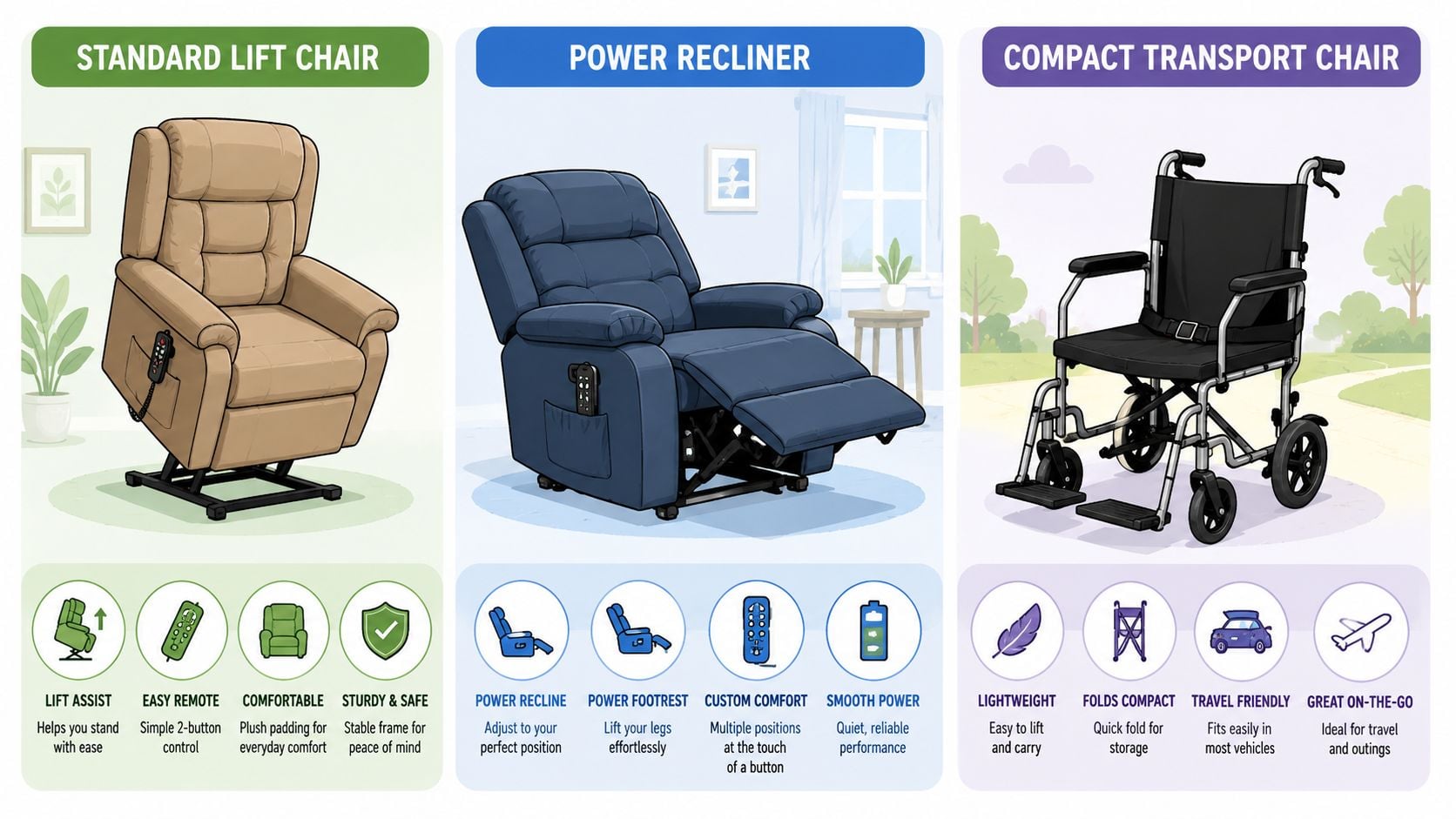
A lot of Rogue Valley families use the phrase "mobility chair" as if it means one specific product. In real homes, it usually means one of three different jobs. A chair may help someone stand up. It may help them settle into a safer resting position. Or it may help them move through the house while seated.
That point of confusion is common, especially when a chair needs to function like living room furniture and daily support at the same time. The right choice should fit the person's body, the room, and the routine.
Lift chairs and power recliners
A lift chair looks much like a traditional recliner, but the base raises and tilts forward to help with sitting down and standing up. For a senior with sore knees, reduced leg strength, or unsteady balance, that motion can reduce the strain of the hardest part of the day. The chair is doing some of the work the legs would normally have to do alone.
A power recliner solves a different problem. It changes position with a motor, which can make it easier to adjust for reading, watching television, or resting without a lot of pushing and scooting. Some models offer excellent comfort and support, but they do not always include the full stand-assist motion of a lift chair. Families sorting through those differences often benefit from this guide to power lift recliner chair options for seniors.
A simple comparison helps:
| Chair type | Main job | Best fit for |
|---|---|---|
| Lift chair | Helps a person rise to standing and sit down more safely | Someone who struggles getting in and out of a chair |
| Power recliner | Adjusts seated comfort with powered positioning | Someone who needs easier recline changes and support |
| Supportive stationary seating | Provides stability and comfort without powered movement | Someone who needs a dependable, upright seat |
For local shoppers, Gates Home Furnishings offers lift seating in its showroom, which gives families a chance to compare seat height, cushion feel, arm support, and control placement in person. That matters because a chair can look right online and still feel awkward once someone tries to get in and out of it.
Some families also notice that sitting comfort and sleeping comfort affect each other. A person who spends long periods resting in a chair may also benefit from understanding the key features of adjustable beds, especially if swelling, back tension, or frequent position changes continue into the evening.
Indoor powered mobility chairs and transport styles
Another category is built for movement inside the home. These chairs are less like recliners and more like practical indoor seating that travels with the user. They can help with daily tasks such as moving from the bedroom to the kitchen, reaching a bathroom safely, or staying seated during parts of dressing and grooming.
The home itself becomes part of the fitting process.
A wide chair may be comfortable in an open family room and frustrating in a narrow hallway. A tight turning radius matters more in older homes with smaller rooms. Battery life matters more for someone who plans to use the chair throughout the day, not just for a few short trips. Weight capacity matters because the chair should support the person with room to spare, not just meet a technical minimum.
Transport-style chairs serve another purpose. They are generally meant for shorter moves with help from a caregiver, not for independent daily use around the house. That distinction saves families from buying a chair that solves the wrong problem.
A few questions usually bring the options into focus:
- Is the main problem standing up, or getting from room to room?
- Will the chair stay in one spot, or travel through the home every day?
- Will a family member assist often, or does the user need more independence?
- Should the chair blend with the rest of the furniture, or can it look more clinical?
Those answers tend to separate a chair that merely fills space from one that significantly supports life at home.
Key Features Beyond Basic Comfort
Soft padding gets the most attention, but it's rarely the feature that determines long-term success. Families often choose a chair because it feels pleasant for five minutes. Problems tend to show up after a week of daily use, when posture slips, transfers feel awkward, or the controls are frustrating.
A mobility chair has to support the body over time, not just welcome someone into the seat.
Posture matters as much as padding
Clinical review literature on wheelchair seating explains that standard sling-style seating can contribute to a slumped posture, while individually configured seating with contoured cushions and back supports can improve alignment, pressure distribution, and energy-efficient mobility. It also notes the value of trunk and lateral supports for people who can't maintain posture on their own, as discussed in this clinical review of seating posture and support.
That matters in plain household terms because poor alignment often leads to familiar complaints:
- Sliding forward in the seat
- Leaning to one side
- Needing frequent repositioning
- Back, hip, or shoulder fatigue
- Pressure discomfort after sitting too long
A chair may look generously cushioned and still fail the user if the pelvis isn't stable and the back isn't supported well.
The goal isn't just comfort. The goal is supported sitting that doesn't wear the person out.
Many shoppers are often surprised. They expect to compare upholstery and color first. In reality, the more important questions are whether the seat encourages upright posture, whether the back support matches the user's shape, and whether the arm height makes transfers easier rather than harder.
Features that reduce everyday friction
Several practical details make a mobility chair easier and safer to live with.
- Easy controls: Buttons should be simple to understand and simple to reach. If a remote feels confusing in the showroom, it won't get easier at home.
- Smooth movement: The lift or recline action should feel steady, not abrupt. Sudden movement can be unsettling for someone with limited balance.
- Stable arm support: Strong arms and a sensible arm height help with pushing up and settling down.
- Cleanable upholstery: Homes with pets, snacks, grandkids, or daily use need fabrics and finishes that can handle real life.
- Battery backup for powered functions: If a chair relies on electricity for key movement, backup power is worth asking about before purchase.
A household also has to think beyond the user's body. The chair will live among side tables, lamps, throw blankets, walking paths, and sometimes oxygen tubing or other support items. A bulky chair that interrupts the room can create new hazards.
That's one reason a furniture-store mindset is useful here. The right mobility chair should function well, but it should also work as part of the room. It needs enough clearance to move, enough support to be used daily, and a style that doesn't make the whole space feel clinical.
For families thinking long term, asking about finish care and available protection plans can also help. Daily seating takes daily wear.
The Perfect Fit A Measurement and Safety Checklist
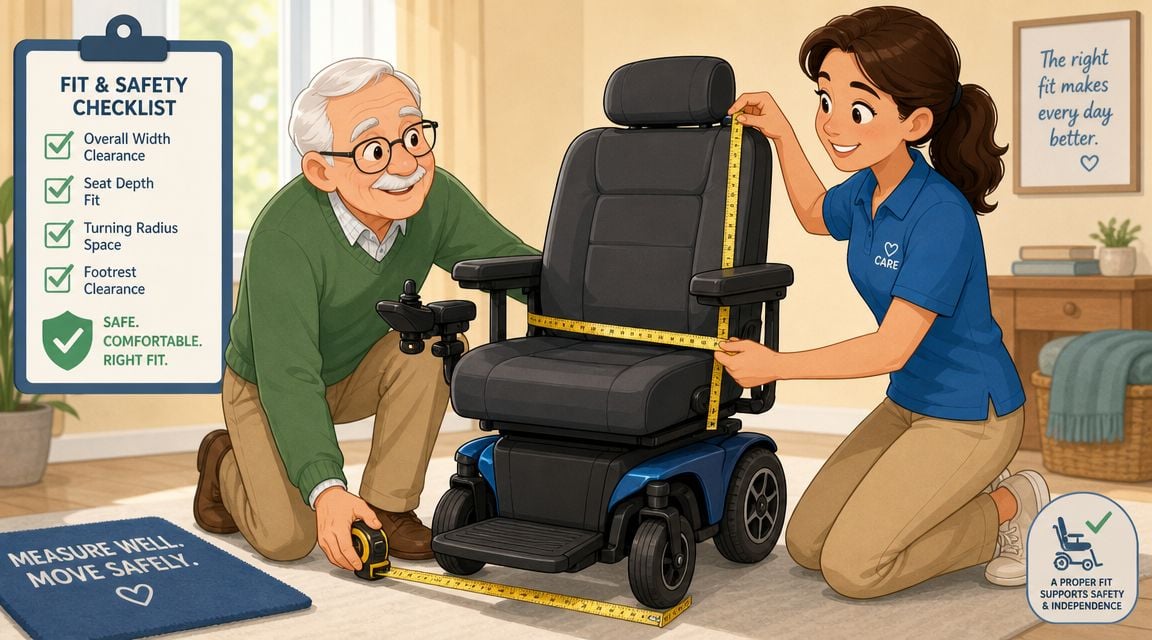
Fit problems are common, and most of them can be prevented before the chair ever enters the house. People naturally focus on color, style, or whether the seat feels soft. The better first question is whether the chair matches the person's body and the home's layout.
Both measurements matter equally.
Body measurements that guide the fit
Expert fitting guidance recommends measuring hip width and adding 1 to 2 inches for seat width, measuring buttock-to-knee length and subtracting 1 to 2 inches for seat depth, and setting seat height so the feet rest flat with knees at about 90 degrees, according to this wheelchair fitting guide for seniors.
That sounds technical, but the logic is simple.
- Too narrow: Hips get squeezed and transfers become harder.
- Too wide: The body shifts, leans, and loses stable support.
- Too deep: The seat presses behind the knees and encourages slouching.
- Too shallow: The thighs don't get enough support.
- Too high or too low: Feet dangle or knees rise awkwardly, which affects balance and comfort.
A quick body-fit checklist helps:
- Check seat width. There should be a little room, but not excess side-to-side space.
- Check seat depth. The user should sit back fully without the seat edge pressing into the back of the knees.
- Check foot position. Feet should rest flat when appropriate for the chair type.
- Check arm support. Arms should rest comfortably without shoulders lifting.
- Check head and back support. The chair should support natural posture, not force a slump.
A chair that feels roomy in the showroom can feel unstable after an hour at home.
For anyone shopping in person, a practical companion resource is this guide on how to measure furniture, which helps families think through both product dimensions and home access.
Home measurements families often miss
A chair can fit the body and still fail the house.
This happens often in older homes and apartments around Southern Oregon, especially where hallways are tight, bathrooms are compact, or living rooms have sharp corners. Consumer guidance on lightweight electric wheelchairs notes turning-radius needs in the 20 to 33 inch range and mentions that many homes need about 32 inches of clearance, which is why doorway and room planning can't be skipped, as noted in this home-fit guide for lightweight electric wheelchairs.
Measure these before making a decision:
- Doorways: Don't guess. Measure the narrowest opening.
- Hallways: Note pinch points near trim, corners, or furniture.
- Bathroom entries: These are often tighter than people expect.
- Turning areas: Look at the kitchen, bedroom, and living room where direction changes happen.
- Recline clearance: A chair that extends backward needs room behind it.
- Path obstacles: Rugs, cords, baskets, pet beds, and side tables all count.
The safest purchase is usually the one tested against a real floor plan, not a mental picture.
Your Partners in Comfort The Gates Difference
Buying a mobility chair isn't like buying an accent chair online and hoping for the best. This decision holds greater importance. The chair has to fit the person, suit the room, and work safely from day one.
That's why local, in-person help matters so much for this category.

Why in-person testing changes the decision
A mobility chair can look right in a photo and still be wrong in person. The seat may be too deep. The remote may be awkward. The lift motion may feel too quick. The arm height may not support a steady transfer.
That's where a physical showroom becomes valuable. In the 30,000 sq. ft. Grants Pass showroom, families can sit, test movement, compare support, and get a much clearer sense of what works in real life. That's especially helpful for shoppers from Medford, Central Point, Ashland, and across the Rogue Valley who want confidence before committing to a major comfort purchase.
The showroom experience also lets people compare mobility seating with the rest of the home. A chair doesn't exist in isolation. It needs to coordinate with nearby tables, lighting, traffic flow, and overall comfort. Some households also appreciate seeing other furniture options at the same time, including Unique Finds made from reclaimed wood and teak that can make a room feel personal rather than pieced together.
Gates carries familiar home brands such as La-Z-Boy, Flexsteel, Ashley, and Beautyrest, which helps build trust for shoppers who want recognizable names along with local guidance.
Delivery setup and payment options matter too
Many people underestimate what happens after the purchase. A mobility chair may be heavy, powered, awkward to maneuver indoors, or complicated to place correctly. That's one reason delivery service matters.
With professional in-home setup, a family doesn't have to wrestle a large chair through the front door or figure out placement alone. The value is practical: assembly gets handled, setup gets checked, and the chair is positioned where it can be used safely. More detail on that process is available in this overview of white-glove delivery service.
Some stores drop off boxes. Full setup service helps a family start using the chair right away.
Budget is another source of hesitation, especially when mobility needs arrive unexpectedly. Gates Easy Pay addresses that with $0 down, 6-month interest-free options, and no-credit-needed programs. For many families, that flexibility makes it easier to choose the chair that fits the person instead of settling for the one that only fits the moment.
That combination of showroom testing, flexible payment options, and professional delivery reflects the same promise George Gates Jr. built the business on in 1946: Service and Value. For a comfort purchase tied this closely to safety and independence, that old promise still holds up.
Caring for Your Investment and Next Steps
A mobility chair earns its place through daily use. It helps with routine, rest, and safety, so it makes sense to treat it like an investment rather than a temporary purchase.
Good care doesn't need to be complicated. It needs to be consistent.
Simple habits that help a chair last
A few simple practices go a long way:
- Keep the chair clean: Wipe spills promptly and follow care guidance for the specific upholstery.
- Protect moving areas: Don't let cords, blankets, or clutter collect around powered parts or footrests.
- Use it as intended: A mobility chair works best when it's used for its designed purpose, not as a step stool, storage spot, or rough transfer surface.
- Check comfort changes early: If the user starts sliding, leaning, or avoiding the chair, reassess the setup instead of assuming discomfort is normal.
- Review warranty coverage: Before a problem shows up, it helps to understand what's covered and how service works through this guide to furniture warranties.
A household may also benefit from keeping the area around the chair simple. Stable side tables, clear walking paths, and good lighting make any mobility setup easier to use.
Choosing with confidence
The right choice usually comes from combining three things. The first is body fit. The second is room fit. The third is day-to-day lifestyle.
A chair might need to help with standing. It might need to support long seated hours without fatigue. It might need to move through tight hallways or blend into a comfortable living room instead of looking out of place. When those needs are considered together, the decision gets much clearer.
Mobility chairs for seniors work best when they're chosen with patience. That means testing support, measuring carefully, planning the room, and making sure the home setup supports the person instead of forcing the person to adapt to the chair.
For families looking for thoughtful seating, lift chairs, supportive recliners, and professional guidance, Gates Home Furnishings offers a practical next step. Visit the Grants Pass showroom to test comfort in person, talk through fit and room layout, and explore flexible payment through Gates Easy Pay, or browse the collection online from anywhere in Southern Oregon.