Decorating on a Budget: A Southern Oregon Home Guide


A lot of households in Grants Pass, Medford, Central Point, and Ashland are staring at the same room right now and thinking the same thing. The sofa still works, the walls aren't terrible, but the space doesn't feel finished, comfortable, or pulled together. The budget feels tight, so the room stays in limbo.
That's usually where expensive mistakes start. People buy a few cute accessories, then a lamp, then a sale item they didn't plan for, and suddenly the money is gone before the room's real problems are solved.
Decorating on a budget works better when the spending is deliberate. It's not about buying the cheapest thing in sight. It's about deciding what matters, what can wait, and what changes the room most. That mindset has become mainstream. The global home décor market was valued at USD 650 billion in 2022 and is projected to reach USD 820 billion by 2027, with North America accounting for over 30% of sales, according to this home décor market overview.
Est. 1946, the Gates family has served Southern Oregon on George Gates' original promise of Service and Value. That promise still fits this topic perfectly. A beautiful home doesn't require careless spending. It requires a plan, a little restraint, and the confidence to buy the right things in the right order.
Table of Contents
- Your Beautiful Home Is Within Reach
- Create Your Smart Decorating Plan
- Prioritize Purchases for Maximum Impact
- Smart Shopping in Southern Oregon
- High-Impact Hacks with Paint and Textiles
- Finishing Touches and Financial Flexibility
Your Beautiful Home Is Within Reach
A room doesn't need a full overhaul to feel better. Most spaces need fewer random purchases and more discipline. That's especially true for renters and homeowners across the Rogue Valley who want a home that feels collected, not cobbled together.
George Gates built this business in 1946 on a simple promise: Service and Value. That idea still holds up. Good budget decorating isn't about chasing trends. It's about helping families make smart choices that look good now and still make sense later.
Start with the room that bothers the household most
The first rule is simple. Pick one room.
Don't split the budget across the whole house. That's how people end up with six half-finished spaces. If the living room feels tired every evening, start there. If the bedroom feels empty and mismatched, start there.
A single focused room creates momentum. It also makes it easier to avoid emotional spending.
Practical rule: The room that creates the most daily irritation should get the first dollar.
For households that need structure before they spend, these practical steps for budgeting are useful because they push spending decisions into categories instead of impulse buys. That's the right frame of mind for decorating on a budget.
Use a budget like a design tool
A budget isn't the enemy of a beautiful room. It's the filter that keeps the room from turning into a pile of disconnected purchases.
That means defining the room's job in one sentence before shopping begins. A bedroom might need to feel calmer. A living room might need to seat family comfortably and still look polished when guests come by. A guest room might need storage first and style second.
A lot of shoppers also do better when they begin with complete-room thinking instead of random item hunting. Looking at affordable bedroom furniture sets can help households see how coordinated foundational pieces create order before the smaller decorative layers come in.
Use this short decision filter before anything goes in the cart:
- Function first. Does the room need better seating, better sleep, better storage, or better lighting?
- Visual weight next. What's the biggest unfinished-looking surface in the room?
- Decor last. If the room still lacks personality after the main pieces are in place, then accessories earn a place.
That's how a modest budget starts acting like a designer's budget.
Create Your Smart Decorating Plan
Good rooms rarely happen by accident. They're planned. That matters even more when every dollar has a job.
Set the cap before shopping starts
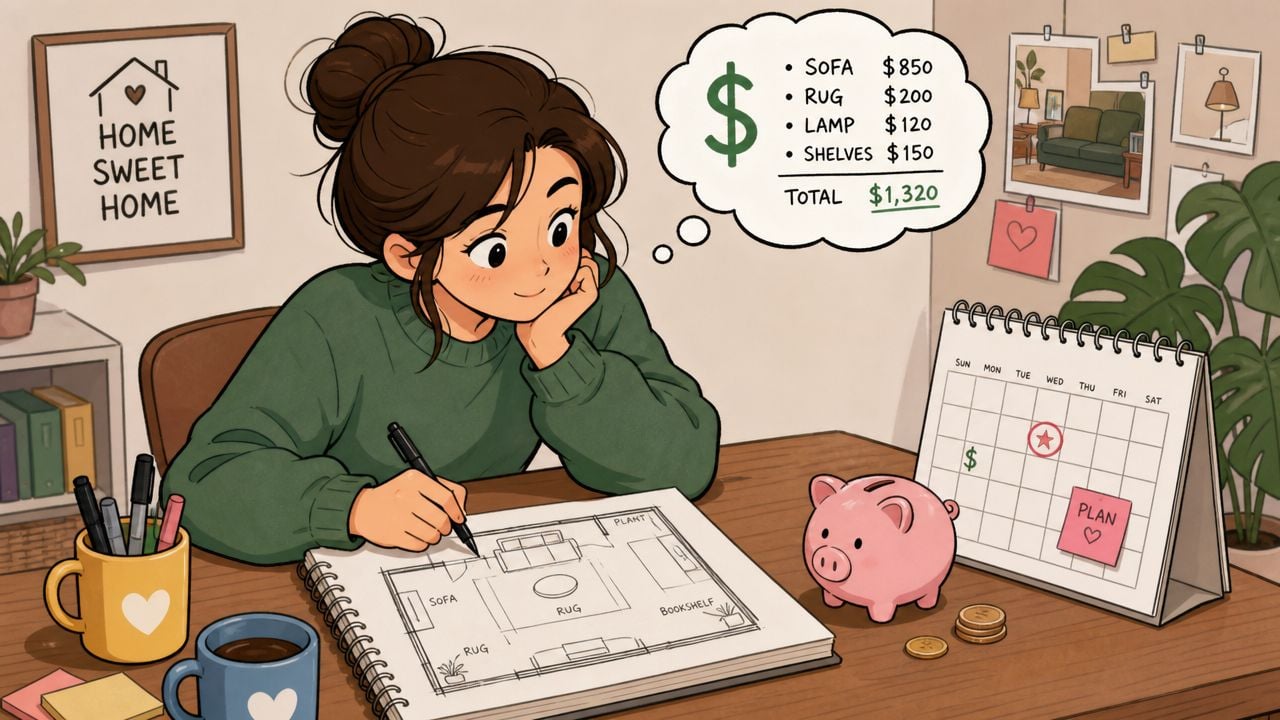
Start with a hard ceiling. Not a hopeful number. A real number.
Then break the room into categories before looking at products. A proven workflow is to allocate funds by category, with examples such as 10% for wall treatments and 15% for labor, so the budget doesn't get drained by low-impact purchases before major furniture is handled, as outlined in this home décor budget workflow.
That category-first method works because it forces priorities.
Here's a clean planning checklist:
- Write the total cap down. If it isn't written, it isn't real.
- List the room categories. Furniture, lighting, rugs, wall treatments, accessories, and any labor.
- Mark must-have items. These are the pieces the room can't function without.
- Create a wait list. Nice-to-have decor belongs here, not in the opening round of spending.
Build categories before picking products
People overspend when they shop item by item. Designers don't work that way. They think in layers.
A room usually comes together in this order:
| Category | What it does | Buy timing |
|---|---|---|
| Major furniture | Sets comfort, scale, and function | First |
| Rug or flooring layer | Grounds the room visually | Early |
| Lighting | Fixes mood and usefulness | Early |
| Wall treatments | Adds structure and softness | Middle |
| Accessories | Personalizes the room | Last |
That order saves money because it prevents decorative clutter from eating the budget.
Buy the bones first. If the bones are wrong, the room won't feel right no matter how many small pieces are added.
Households that want more structure before buying can also use this room design starting guide to organize measurements, goals, and priorities. Planning isn't glamorous, but it's what keeps decorating on a budget from becoming redecorating twice.
Prioritize Purchases for Maximum Impact
Here, individuals either save money intelligently or waste it beautifully.
Buy the pieces people live on and around
The budget should go to the things the household touches, sees, and uses every day. Experts advise focusing budget spending on the largest surfaces in a room, including upholstery, rugs, walls, and tables, because those elements shape the daily experience of the space most strongly, as noted in this budget decorating guidance on room surfaces.
That means a decent sofa matters more than a pile of trendy cushions. A sturdy dining table matters more than decorative centerpieces. A supportive mattress matters more than a stylish bench at the foot of the bed.
This is also where testing matters. Comfort can't be judged from a thumbnail image. In a 30,000 sq. ft. showroom in Grants Pass, shoppers can sit down, compare support, and feel the difference across brands such as La-Z-Boy, Flexsteel, Ashley, and Beautyrest. That's especially useful for comfort-driven purchases like recliners, sofas, and mattresses.
Save later categories for later
Small decor isn't bad. It's just usually early.
The room feels expensive when the scale is right, the seating is comfortable, the rug fits, and the table has presence. Once those are in place, smaller pieces can stretch the personality of the room without carrying the burden of fixing it.
Use this simple split:
Worth spending on
- Sofas and sectionals. They carry the room visually and physically.
- Dining tables. They anchor daily routines and gatherings.
- Mattresses and beds. Comfort isn't optional.
- Large rugs. Too-small rugs make a room look skimpy fast.
Smart places to hold back
- Throw pillows. Easy to swap later.
- Small lamps. Useful, but not before core lighting is solved.
- Tiny wall art. It often clutters instead of finishes.
- Accent decor. Nice after the room works, not before.
Some rooms benefit from one standout piece instead of five fillers. A reclaimed wood console, teak cabinet, or bold dining table can do more for a room than a scatter of low-cost decor. In such situations, statement furniture pieces earn their keep. One piece with shape, texture, or character can anchor the whole look.
A room starts to look polished when at least one substantial piece has real presence.
Smart Shopping in Southern Oregon
Budget shopping shouldn't mean buying everything from one place or in one style. The sharpest rooms usually mix sources.

Use the hybrid method
The hybrid method is the practical answer for decorating on a budget. The massive growth of mass-market furniture chains and outlet channels since the early 2000s has made this mix-and-match approach standard practice, as described in this discussion of budget decorating's retail shift.
In plain terms, that means this:
- Buy the core item from a reliable furniture source.
- Pick up supporting accents secondhand, on clearance, or over time.
- Add one distinctive piece so the room doesn't look generic.
That approach works well in Southern Oregon because homes vary so much. A newer subdivision home near North Valley doesn't need the same mix as an older bungalow closer to downtown Grants Pass or a compact rental in Medford.
A Rogue Valley example that works
A sensible local shopper might start with a solid sofa or bedroom foundation, then look for baskets, mirrors, side pieces, or frames through secondhand channels. For people who enjoy treasure hunting, this guide to Oregon discount bins can be a helpful side resource for small household finds.
Then comes the part many rooms are missing. Character.
One option that fits this article naturally is Gates Home Furnishings, where shoppers can pair clearance values from the outlet with Unique Finds such as reclaimed wood and teak pieces. That combination works because a room often needs one item with soul, not a dozen pieces that all look interchangeable.
A smart Southern Oregon shopping pattern often looks like this:
- First stop. Lock in the room's main function with the right sofa, bed, mattress, or dining set.
- Second pass. Fill practical gaps such as lighting, occasional tables, or a rug.
- Final layer. Add one-of-a-kind texture through a reclaimed wood or teak accent, then stop before the room gets crowded.
That's how a budget room ends up feeling collected instead of cheap.
High-Impact Hacks with Paint and Textiles
Once the major pieces are right, the fastest visual upgrades usually come from paint and fabric. Not more furniture.

Paint what the eye lands on first
Paint is cheap compared with replacing furniture, but it only works when it's used strategically.
Skip the impulse to paint everything. One focal wall can be enough. A painted interior door can sharpen a plain hallway or bedroom. An old side table or dresser can gain a second life with the right color and hardware.
Good paint moves usually target these spots:
- The main focal wall. Behind the sofa, bed, or dining table.
- A forgotten piece of furniture. Especially if the shape is good but the finish feels dated.
- Trim or a door. Helpful when the room needs contrast more than color saturation.
The eye notices contrast before it notices accessories.
For households that want more color without committing to a full paint project, this guide on how to add color to your home without painting offers another route through textiles and accents.
Textiles finish the room faster than accessories
Textiles do a lot of heavy lifting. Rugs define zones. Curtains soften hard edges. Throws and pillows change seasonally without requiring major spending. In open living spaces, fabric also helps one area feel intentional instead of floating.
A few strong textile choices usually beat a pile of small decor.
Consider this comparison:
| Textile choice | What it fixes |
|---|---|
| Area rug | Makes furniture groupings feel connected |
| Curtains | Adds height, softness, and privacy |
| Throw blanket | Introduces texture quickly |
| Pillow covers | Changes the palette without replacing furniture |
The key is restraint. Don't buy ten patterns just because they're affordable. Pick a clear direction. If the room already has visual weight from wood tones or a statement table, let the textiles support that instead of fighting it.
Ashley and similar accessible furniture-and-decor brands often make this layer easier because textiles can refresh a room without touching the major furniture budget. A new rug and curtain set can pull together pieces the household already owns and make the whole room feel intentional again.
Finishing Touches and Financial Flexibility
A lot of rooms don't need more stuff. They need better arrangement, better lighting, and a payment plan that doesn't create regret.
Fix the layout before buying more decor
One of the hardest parts of decorating on a budget is handling small or multi-use rooms. That challenge is especially common in Southern Oregon homes where living rooms pull double duty as media rooms, guest areas, or catch-all family spaces. A key solution is using proportionally scaled furniture and visual anchors such as lighting or a single statement piece to define the room, as discussed in this small-space decorating perspective.
That means avoiding oversized furniture in awkward rooms and resisting the urge to fill every corner.
A better approach looks like this:
- Create one focal point. A floor lamp, console, or strong artwork wall can organize the room.
- Respect walking paths. Tight rooms feel worse when furniture interrupts movement.
- Let one piece do the talking. In an angled or L-shaped room, one statement item often anchors the layout better than many small objects.
Lighting matters just as much. Overhead lighting alone usually makes a room feel flat. Layered light from floor lamps, table lamps, and natural light control creates warmth and definition, especially in rooms that work hard all day.
For homeowners tackling adjoining spaces, kitchen-adjacent dining zones, or visual transitions into remodel areas, this guide to kitchen tiles for homeowners can help with finish choices that support the same budget-conscious mindset.
Use financing carefully and on purpose
Financing is useful when it helps households buy the right foundational pieces now instead of settling for replacements they'll redo soon. It's a tool, not a permission slip to overbuy.
The practical use case is simple. Put financing toward the durable items that shape comfort and function first. Keep the accessories on a tighter leash.
For shoppers who need payment flexibility, furniture financing options can make higher-priority purchases more manageable through $0 down, 6-month interest-free, and no-credit-needed paths. That's most helpful when the budget has already been planned and the household knows exactly which purchase comes first.
The service side matters too. White-glove delivery saves time, prevents setup headaches, and keeps heavy pieces from becoming a DIY problem. Professional assembly and mattress haul-away are a real extension of George Gates' 1946 promise of Service and Value. Boxes left on a porch don't create a finished room. Proper setup does.
Ready to make decorating on a budget feel simpler and more intentional? Gates Home Furnishings has served Grants Pass and the broader Rogue Valley since 1946, with a 30,000 sq. ft. showroom where shoppers can test comfort in person, explore La-Z-Boy, Flexsteel, Ashley, and Beautyrest, and browse outlet values plus reclaimed wood and teak Unique Finds. Visit our Grants Pass Showroom, conveniently accessible for shoppers from Medford, Central Point, Ashland, and across Southern Oregon, or browse our collection online.