Upholstery Stain Removal: A Practical Guide by Fabric

A child tips a cup at the kitchen table, purple juice runs off the armrest, and the whole room freezes for a second. That's the moment when most upholstery damage happens. Not from the spill itself, but from the rushed grab for the nearest cleaner bottle.
Upholstery stain removal works best when the fabric makes the decisions first. A stain on microfiber, linen, wool, velvet, leather, or a blended performance fabric is not the same problem. Southern Oregon families from Grants Pass to Medford often learn that the hard way after scrubbing one small spot into a larger ring, rough patch, or faded area.
At Gates Home Furnishings, Est. 1946, that old promise from George Gates still matters: Service and Value. That means practical advice, not panic advice. It also means helping households protect the sofas, recliners, and sectionals they live on, whether they came in to test comfort in the 30,000 sq. ft. Grants Pass showroom or were drawn to the Unique Finds collection of reclaimed wood and teak pieces that make a room feel personal.
Why Upholstery Stain Removal Starts With the Fabric
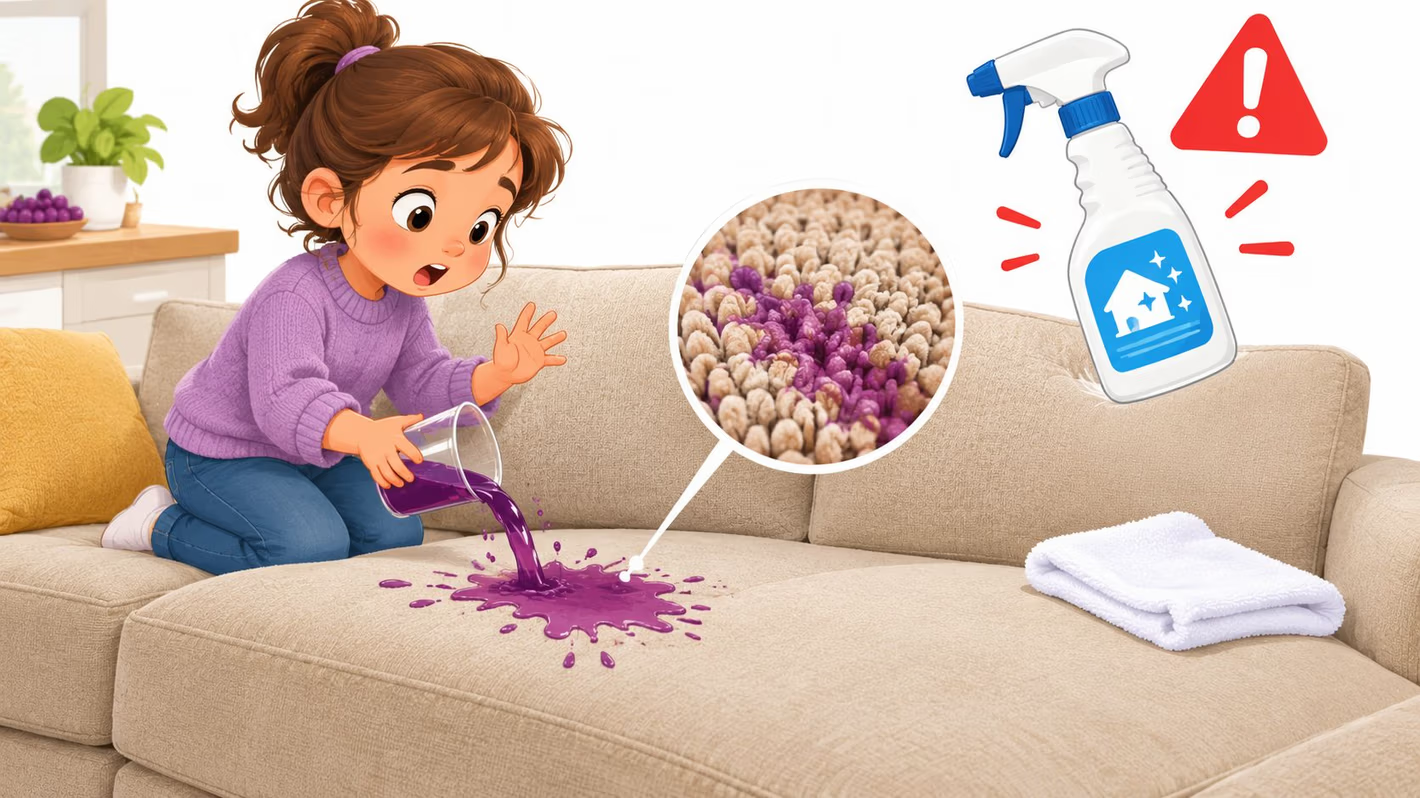
The first rule is simple. Don't choose the cleaner before identifying the fabric.
Professional upholstery standards take that same position. The IICRC upholstery standard says cleaners should identify the fabric, check the label, and follow the right cleaning method before treating stains, and upholstery care labeling is also recognized in textile guidance for upholstered furniture through ISO-related labeling practice in the same standards discussion in ANSI/IICRC S300 upholstery guidance. That's not academic theory. It's how minor spills stay minor.
Fabric changes the risk
Cotton and linen can absorb quickly. Wool can react poorly to aggressive chemistry. Velvet can show pile distortion and marks. Rayon and silk can punish over-wetting. Microfiber and polyester usually give more room for safe spot work, but only if the cleaning code allows it.
A water-based drink on a water-sensitive fabric can leave a ring even after the color is gone. On a more forgiving synthetic, that same spill may lift cleanly with gentle blotting and proper drying.
Practical rule: If the fabric is unknown, delicate, vintage, or textured, the gentlest method should always go first.
What to look for before touching the stain
Start with the obvious clues:
- Feel the surface: Smooth synthetics often respond differently than fuzzy, brushed, or plush weaves.
- Check the weave: Loose natural-looking weaves usually need less moisture, not more.
- Notice the finish: Performance fabrics and tightly woven synthetics often handle everyday cleanup better than delicate decorative fabrics.
Households shopping for a replacement sofa or trying to understand what they already own can get a good grounding by reviewing upholstery material basics.
This fabric-first mindset prevents the expensive mistake. It keeps a fresh stain from turning into a texture problem, a color problem, or a reupholstery problem.
Reading the Cleaning Code on Your Furniture Tag
Most furniture tags are tucked under a seat cushion or attached near the deck under the cushions. That small white tag matters more than the cleaner bottle in hand.
Cleaning codes tell the fabric's tolerance. They don't identify the stain itself. A coffee spill and a grease spot need different treatment, but the code decides what category of cleaner is even allowed to touch the upholstery in the first place.
Upholstery Cleaning Codes at a Glance
| Code | Meaning | Safe Cleaners | Avoid |
|---|---|---|---|
| W | Water-based cleaners are safe | Mild water-based upholstery solutions | Solvents unless specifically needed and tested |
| S | Solvent-only | Solvent-based or dry-cleaning products | Water |
| WS | Water-based or solvent-based cleaners are allowed | Either class, chosen carefully by stain type | Over-wetting or untested products |
| X | Vacuum only | Dry vacuuming only | Water and solvents |
Those code meanings are widely used as the first decision filter in upholstery care, as outlined in upholstery cleaning code guidance.
The decision rule that saves fabric
Match the cleaner class to the code first. Then match the treatment to the stain.
That means:
- W fabrics: start with water-safe methods.
- S fabrics: stay in the solvent category.
- WS fabrics: choose based on stain chemistry, not convenience.
- X fabrics: stop at vacuuming unless a trained cleaner takes over.
For readers who want another plain-English breakdown before tackling a spot, Top Cleaners guide to upholstery codes is a useful companion.
A tag is not decoration. It's the shortest path between a successful cleanup and a damaged cushion.
Households comparing modern easy-care seating should also review performance fabric furniture options, because some fabrics are built for messier real life than others.
The Pretreatment Sequence Every Spill Needs
Most stain mistakes come from doing the right action in the wrong order. Upholstery stain removal needs a sequence. Skip it, and the stain often spreads deeper or wider.
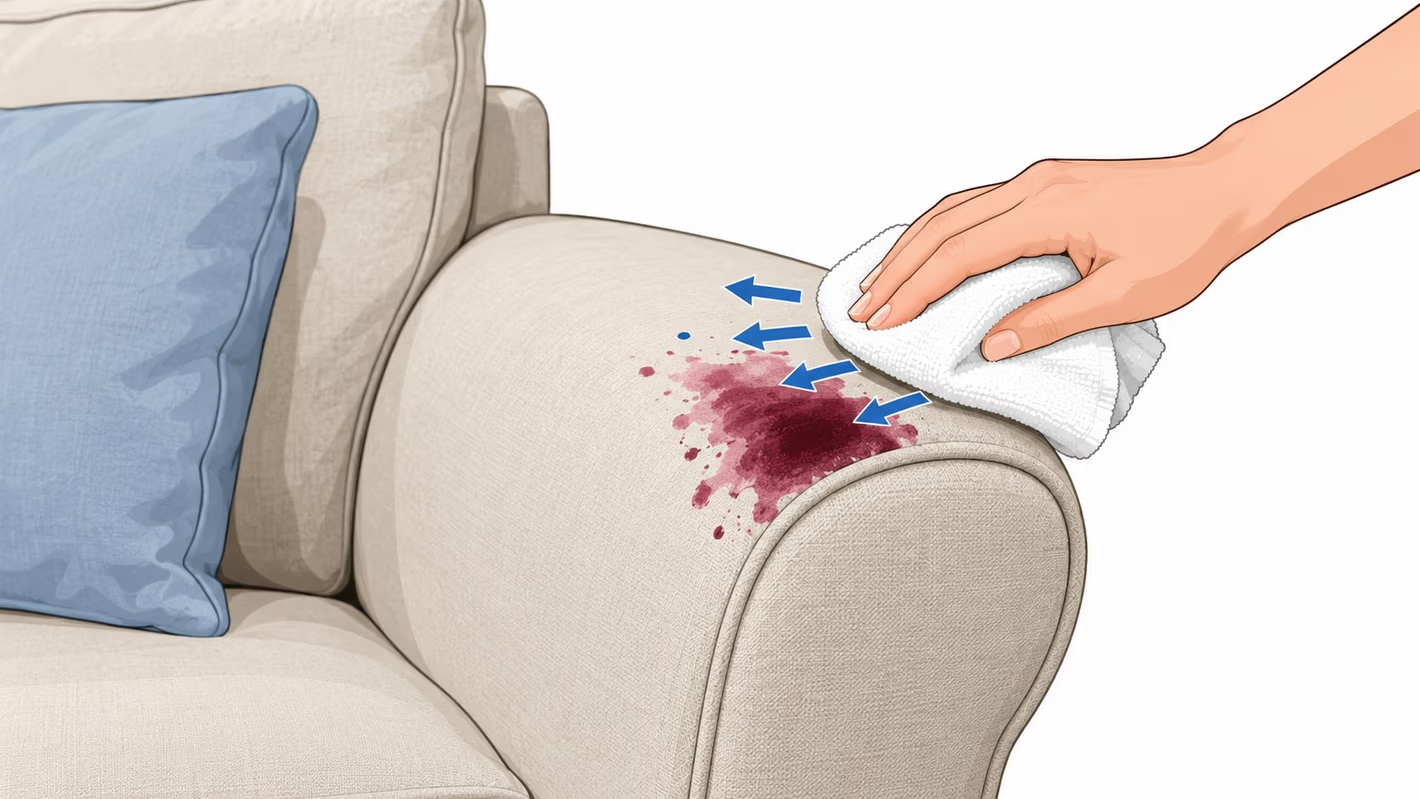
The five-step pretreatment routine
Blot first
Use a clean white cloth. Press, lift, and repeat. Work from the outside inward so the stain doesn't creep into clean fabric.Lift solids carefully
If food, mud, frosting, or anything thick is sitting on the surface, use a spoon or dull edge to scoop it away. Don't mash it into the weave.Vacuum dry debris
Loose grit, crumbs, and dried particles should come out before moisture is introduced. Otherwise, they turn into slurry and work deeper into the pile.Spot-test in a hidden area
Hidden-area testing is strongly recommended, especially if the tag is missing or the furniture is older. Watch for color transfer, pile change, residue, ring formation, seam distortion, odor release, backing softening, and drying behavior according to hidden-spot upholstery testing advice.Use the least aggressive solution first
A small amount of mild, pH-neutral dish soap mixed with distilled water is often the safest starting point on water-safe fabrics after a clean test.
Why this order works
Vacuuming before wetting keeps dry debris from becoming mud. Testing before treating catches the ugly surprises. Blotting instead of rubbing protects the face of the fabric and the nap.
A lot of the same discipline applies to fabric surfaces beyond the living room. Readers who like process-driven cleaning will recognize the same careful sequencing in this practical piece on how to deep clean your car interior.
Don't scrub a wet stain. That's how a spill becomes a permanent part of the upholstery.
One more caution belongs here. Oversaturation can drive the stain deeper, and soap residue can attract new soil and leave the fabric looking dingy, based on upholstery care guidance in this stain removal overview.
Matching the Stain to the Right Household Solution
Stain removal isn't guesswork. It's a matching problem. The stain type matters, the fabric family matters, and the cleaning code still stays in charge.
Recent stain research points in a useful direction: enzyme-based detergents performed best on protein-based stains, surfactant solutions worked best on oil stains, and vinegar with baking soda was only moderately effective on mild stains, according to fiber-specific stain cleaning research. That lines up with what furniture owners see at home. The right chemistry helps. The wrong chemistry wastes time and can set the problem deeper.
Stain Type vs. Fabric Type Best Household Solution
| Stain Type | Natural Fibers | Synthetics | Leather | Blends |
|---|---|---|---|---|
| Coffee or tea | Mild water-based blotting if code allows. Keep moisture light. | Mild soap solution often works well. | Damp cloth only, then dry promptly. | Start with the gentlest water-safe option if code allows. |
| Wine or juice | Controlled blotting. Tannin stains need quick response. | Blot promptly and repeat in light passes. | Keep liquids minimal. Test carefully. | Treat quickly and avoid soaking seams. |
| Grease or butter | Dish soap only if code allows water-based cleaning. Otherwise stop and reassess. | Surfactant-based soap usually works better than plain water. | Use leather-safe cleanup only. | Match cleaner to both stain and code. |
| Blood or milk | Enzyme cleaner is usually the better household option if the code and test permit. | Enzyme cleaner often outperforms soap. | Avoid aggressive chemistry. Use specialized leather care. | Go slow. Protein stains can spread with excess moisture. |
| Ink or crayon | High risk for spreading or dye transfer. Test first and use minimal agitation. | Some synthetics release better than naturals, but spot testing is mandatory. | Professional help is often safer. | Mixed fiber content can react unevenly. |
Five common stain families
Water-based drinks
Think coffee, soda, and diluted spills. On W or WS fabrics, water or mild soapy water is generally the safe starting point.Oil-based messes
Butter, body oil, salad dressing, and greasy food need surfactant help more than plain water.Protein stains
Milk, pet accidents, blood, and food proteins usually respond better to enzyme cleaners than ordinary soap.Tannin-heavy marks
Juice, tea, and wine can leave stubborn color. Speed matters, and repeated gentle blotting usually beats one aggressive pass.Dye stains
Ink and crayon can move fast and spread faster. These are the stains that punish impatience.
Multiple upholstery guides agree on the basics: water-based stains are generally treated with water or mild soapy water on W or WS fabrics, oil-based stains usually call for solvent-based cleaning on S or WS fabrics, and blotting beats rubbing every time in this upholstery cleaning reference.
Pet households should also think ahead, not just react after the accident. Choosing pet-friendly furniture fabrics can make future stain response much less stressful.
Why Speed and Chemistry Change Everything
Fresh stains are easier because they haven't had time to settle, oxidize, and migrate. Old stains are different work.
Timing changes outcomes in a measurable way. Independent stain-removal reporting cites ISSA research showing fresh stains have about a 95% removal success rate, dropping to about 60% after 24 hours in this upholstery timing discussion. That gap is exactly why fast action beats heroic action.
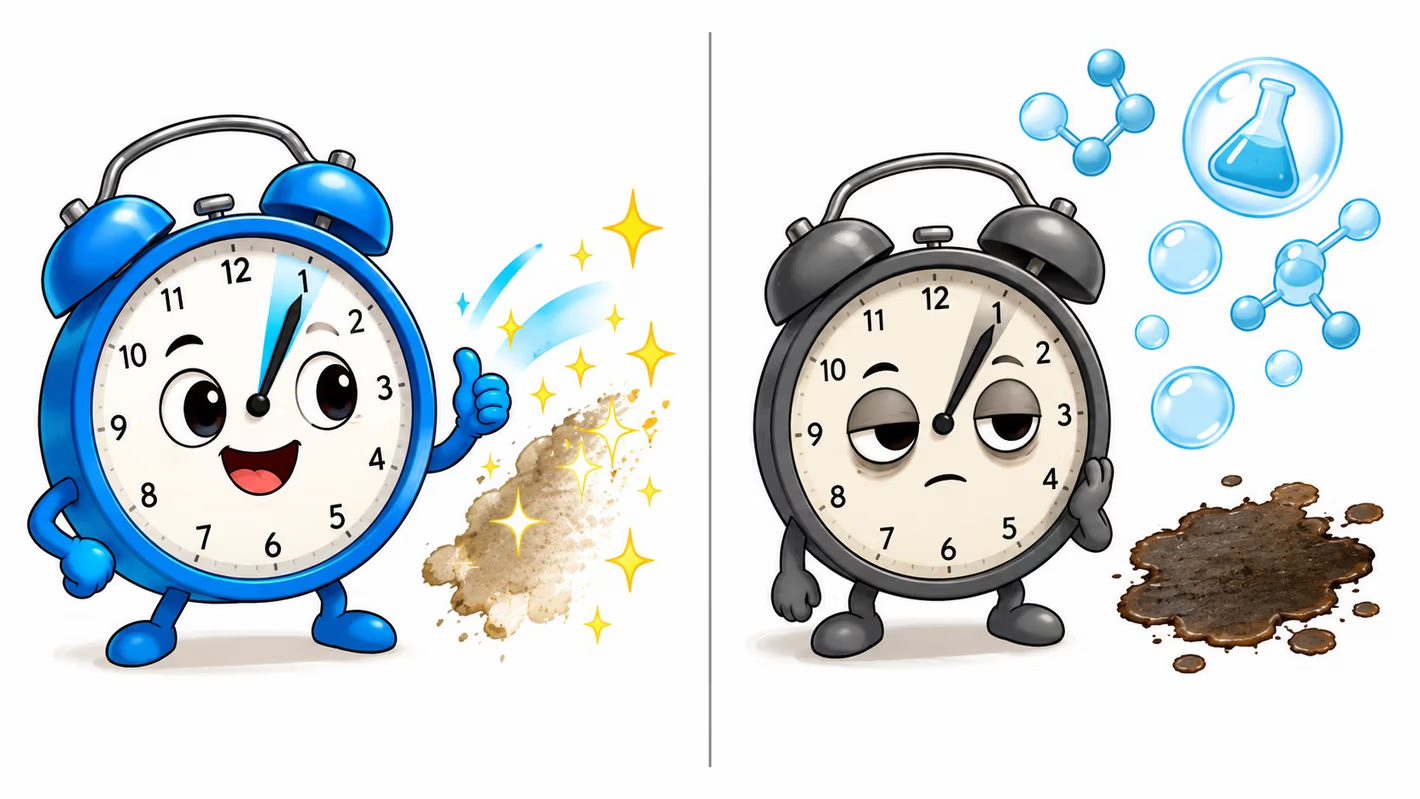
What changes as a stain sits
A fresh spill usually sits on the surface or just below it. That gives blotting and targeted cleaning a chance to lift it out.
Give that same spill time, and several things can happen:
- Air exposure can alter the stain.
- Body pressure from sitting can push it deeper.
- Repeated rubbing can fray the surface.
- Residual moisture can create a ring or odor problem.
The habits that preserve the cleaning window
- Blot immediately
- Keep the cloth lightly damp, not wet
- Rinse between blots when needed
- Avoid heat while the stain is still active
Recent textile-cleaning research also shows that embedded or aged stains often need different treatment altogether, including lower-abrasion methods and specialty approaches, rather than repeated household scrubbing in this review of advanced stain removal methods.
If there's one variable households can control, it's speed. Not cleaner strength. Not elbow grease. Speed.
Drying and Deodorizing Without Damaging the Fabric
A spot isn't finished when the stain lightens. It's finished when the fabric dries evenly, smells clean, and feels like itself again.
That's where a lot of do-it-yourself upholstery stain removal falls apart. People clean the visible mark, then leave behind moisture, residue, or roughened pile.
Drying without rings
Allow the area to fully dry before repeating treatment. Fast, room-temperature air movement is the safe play. A fan works better than a hair dryer because forced heat can set residue and stress natural fibers.
Guidance on upholstery care also warns that drying behavior itself can reveal hidden problems, and lingering moisture can contribute to rings or backing damage in this upholstery drying and code reference.
Deodorizing the right way
Try the lightest option that fits the stain and fabric:
- Baking soda for dry surface odor: Let it sit on fully dry, code-appropriate fabric, then vacuum thoroughly.
- Vinegar misting in limited cases: Only on appropriate fabrics and only after testing. Keep it minimal.
- Enzyme treatment for pet odor: Better suited for organic residue than perfume-style deodorizers.
Lingering odor usually means lingering residue or lingering moisture. Covering the smell doesn't solve the problem.
Restoring the look after cleaning
A cleaned spot can still look off if the pile dries unevenly.
Use these finishing steps:
- Brush microfiber gently: Move in one direction to realign the nap.
- Fluff cushions: This helps prevent compressed lines where moisture dried.
- Wait before replacing throws or covers: Trapped moisture is how mildew and recurring odor start.
Households dealing with motion seating should use the same caution on recliners, especially around seams and mechanisms. This guide on how to clean a recliner is worth keeping handy.
Prevention, Professional Help, and Long-Term Care
The best stain strategy starts before the spill. Upholstery that gets regular light care usually handles accidents better than neglected upholstery with dust, body oil, and old residue already sitting in the fibers.
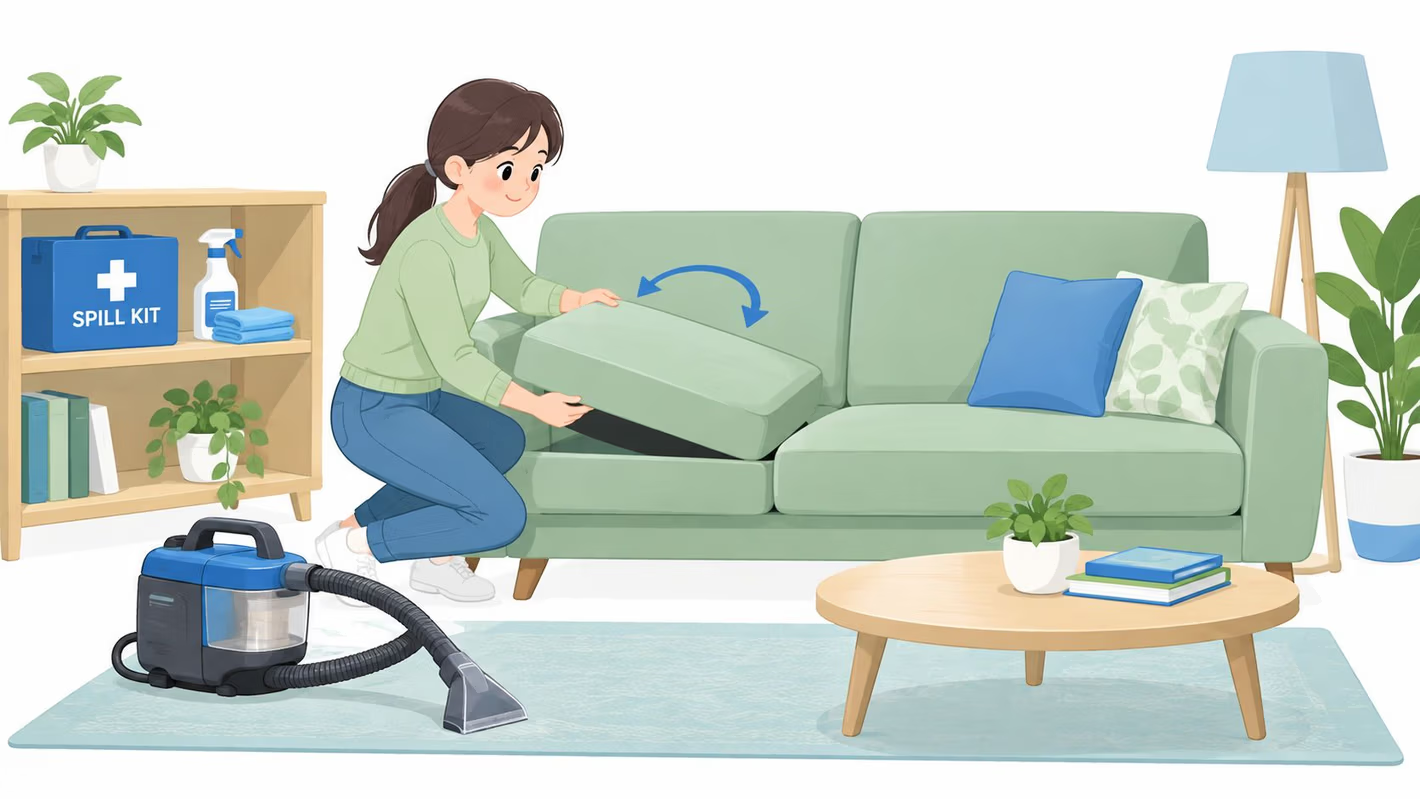
The habits that actually help
- Rotate seat cushions: This spreads wear and helps fabrics age more evenly.
- Vacuum with an upholstery attachment: Low suction is usually enough.
- Keep a stain kit nearby: Clean white cloths, a spoon, and a code-safe cleaner beat a frantic search.
- Use washable throws in pet zones: Easier to wash a throw than rescue a favorite seat.
- Trim pet nails: Fewer snags, fewer punctures, fewer weak spots around spills.
A furniture protection plan can also buy time. One practical option is fabric furniture protection coverage, which is designed to create a barrier that slows absorption and supports fast response after accidental spills.
When to stop the DIY cycle
Some stains need a professional on the first day, not the fifth attempt.
Call for skilled help when:
- The stain is larger than a dinner plate
- The fabric is X-coded
- The piece is vintage, antique, or delicate
- Dye transfer is suspected
- There are several unknown spots
- The stain is old and buried deep in the cushion structure
Professional standards matter here too. Stain-removal performance is commonly evaluated with reflectance-based testing that measures the fabric before staining, after staining, and after cleaning, turning results into a quantifiable comparison in ASTM D4265 stain removal testing guidance. That's a reminder that proper cleaning isn't guesswork when it's done well.
For readers curious how service providers explain deep upholstery restoration in another market, this overview of best upholstery cleaning service Birmingham AL gives a useful look at when routine spot cleaning isn't enough.
At Gates Home Furnishings, that same long-view approach goes back to Est. 1946 and George Gates' promise of Service and Value. Families in Grants Pass, Medford, Central Point, Ashland, and across the Rogue Valley don't just need stain advice. They need furniture that fits real life, from durable everyday sectionals to recliners, mattresses, and one-of-a-kind Unique Finds in reclaimed wood and teak. They also need practical support like Gates Easy Pay with $0 down, 6-month interest-free, and no-credit-needed options, plus white-glove delivery that includes professional setup instead of box drop-off and mattress haul-away when needed.
For households dealing with stain-prone sofas, family recliners, or a full room refresh, Gates Home Furnishings offers fabric-friendly furniture guidance, protection options, major brands like La-Z-Boy, Flexsteel, Ashley, and Beautyrest, and a 30,000 sq. ft. Grants Pass showroom where comfort can be tested before buying. Visit the Grants Pass showroom or browse the collection online to find upholstery that's easier to live with and easier to keep looking right.