Elevate Your Space with One of a Kind Home Decor


You know the feeling. The sofa is fine. The coffee table is fine. The lamps are fine. But the room still looks like it came straight off a showroom floor with the personality edited out.
That’s where many get stuck. They don’t need more stuff. They need one piece with a point of view. A weathered teak cabinet. A reclaimed wood console with saw marks that tell a story. A sculptural accent table that breaks up all the safe choices. One of a kind home decor changes a room faster than another matching set ever will.
We’ve seen this for generations in Southern Oregon homes. Since 1946, families have been building homes around pieces that mean something, not just pieces that fill space. George Gates started with a simple promise of Service and Value, and that still happens to be the right approach for unique decorating too. Good guidance matters because buying one special piece is exciting, but buying the wrong special piece is expensive.
Some homes in Grants Pass, Medford, and across the Rogue Valley have clean modern bones. Others have older layouts, odd corners, low windows, or slanted walls that make standard furniture feel awkward. The right one-of-a-kind piece doesn’t fight those quirks. It gives them purpose.
If you’re also mixing materials, handcrafted surfaces can help. For example, if you’re pairing reclaimed wood with bold flooring or a statement backsplash, this ultimate guide to cement tile is worth a look because it shows how handmade surfaces bring depth without making a room feel overdesigned.
Beyond the Big Box – Creating a Home with Character
Big-box furniture solves a practical problem. It helps you fill a room fast. It does almost nothing for character.
That’s why so many homeowners end up with spaces that look polished but forgettable. The scale may be right, the colors may coordinate, and the room still feels flat. A home starts to feel personal when at least a few pieces look collected instead of ordered from page 14 of the same catalog.
What character actually looks like
Character isn’t clutter. It isn’t filling every corner with vintage odds and ends. It’s choosing pieces that carry visual weight and a sense of history.
That usually means looking for decor that has one or more of these traits:
- Visible material character such as grain variation, natural knots, old joinery, or hand-finished texture
- A shape that breaks the pattern of predictable rectangles and matching suites
- A story behind it whether it’s reclaimed wood, handcrafted teak, or a statement object with age and patina
- A reason to stay in your home for years instead of one season
A room with one memorable piece almost always feels better than a room with ten interchangeable ones.
Why homeowners are moving this direction
People want homes that reflect who they are. That shift isn’t just anecdotal. The global personalized home decor market was valued at USD 163.8 billion in 2023 and is projected to reach USD 330.6 billion by 2034, according to Future Market Insights on the personalized home decor market.
That doesn’t mean every room needs to be dramatic. It means buyers are tired of generic. They’re choosing pieces with identity.
The strongest rooms usually follow a simple pattern:
| Room element | Keep it simple | Make it memorable |
|---|---|---|
| Upholstery | Neutral sofa or sectional | Accent chair or reclaimed side table |
| Dining room | Clean-lined dining chairs | Statement dining table or sideboard |
| Entry | Functional rug and lighting | One unusual console, bench, or mirror |
| Bedroom | Calm bedding and core furniture | Distinctive nightstand, bench, or chest |
A lot of people overcomplicate this. Don’t. Start with one anchor piece, then let the rest of the room support it.
The Art of the Hunt – Discovering Your Unique Find
Finding one of a kind home decor takes patience. It also takes discipline, because “different” and “good” are not the same thing.

The first mistake people make is shopping with only a category in mind. “I need wall decor.” “I need an end table.” That mindset leads to filler. Hunt for function, yes, but also hunt for presence. Ask which piece can change the room.
Consumer demand is moving the same way. In the broader home decor market, large furniture purchases increased by 4 percentage points to 41 percent in 2024, showing stronger interest in statement pieces that define a room’s character, according to Statista’s home decor market outlook.
Shop like a curator, not a collector
When you walk a showroom or browse a curated collection, use this filter:
Stop at the piece that interrupts your pattern
If everything in your home is smooth, matched, and safe, the right reclaimed wood cabinet will grab you immediately. Pay attention to that reaction.
Check whether it solves a design problem
A teak bench might warm up an empty hallway. A narrow chest might fix a dead corner. A chunky carved stool might add texture to a room full of upholstery.
Picture it next to what you already own
The best unique pieces don’t need a full room redo. They should enhance what’s already there.
Walk away for ten minutes
If you’re still thinking about it, that usually means something. The forgettable pieces don’t stay with you.
What to look for in a local treasure hunt
A serious search beats endless scrolling. In a 30,000 sq. ft. showroom in Grants Pass, you can compare scale, wood tone, finish, and craftsmanship in person. That matters more with reclaimed wood and teak than it does with mass-produced decor, because no two pieces read exactly the same in real light.
If you want a shortcut to pieces with personality, browse Unique Finds and one-of-a-kind home decor. That kind of collection helps you skip the generic inventory and focus on reclaimed wood, teak, and statement pieces that don’t look copied and pasted.
Don’t ignore the outlet mindset
Budget shoppers often assume unique means expensive. That’s not always true.
Sometimes the smartest move is to hunt in an outlet setting where inventory turns quickly and the best piece is the one that happens to be there today. You’ll need to decide faster, but that’s part of the advantage. You’re not shopping for something anyone can reorder next month.
Practical rule: If a piece is one of a kind and fits your room, hesitation is usually more expensive than decisiveness.
The hunt should feel selective, not random. You’re not gathering decor. You’re editing your home.
Spotting Quality in Reclaimed Wood and Teak
A one-of-a-kind piece earns its spot by being built well first and interesting second. In our showroom, I tell shoppers the same thing every week. Character should show up in the wood grain, the patina, and the shape of the piece. It should not show up as wobble, sagging, or sloppy construction.
What good reclaimed wood should show you
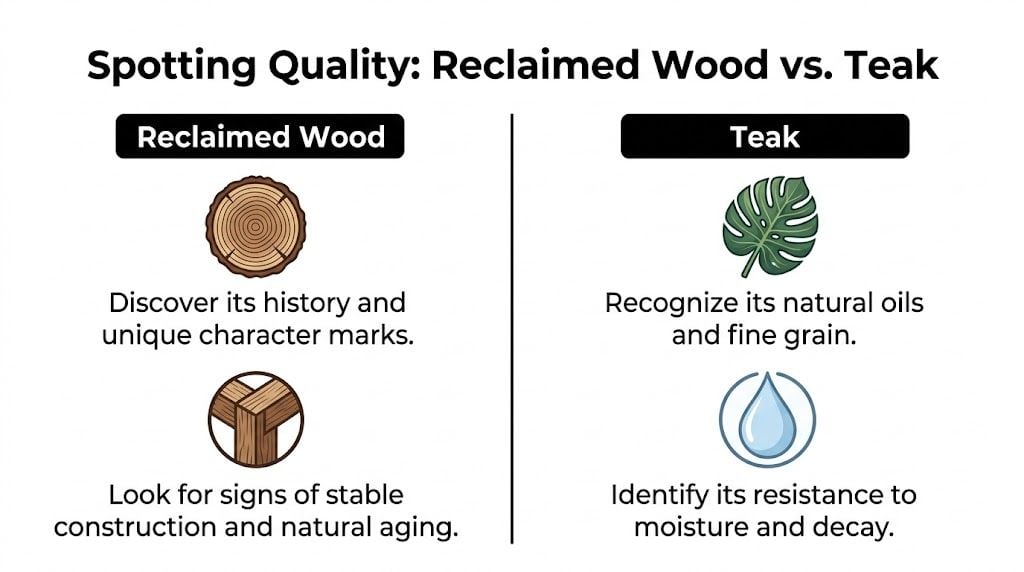
Reclaimed wood needs history and structure. Old nail holes, filled cracks, color variation, and visible saw marks can all add depth. Loose joinery, active splitting, soft spots, and uneven tops cut the life of the piece short.
Start with your hands, not the price tag. Open the drawers. Press on the corners. Grab the top and give it a firm shake. A quality piece feels settled and solid.
Check these details:
- Joinery should be tight. Drawers should glide without scraping, doors should hang straight, and legs should stay put when you test them.
- The top should work as a surface. Texture is fine. Cupping, rocking, and major warp are not.
- The finish should protect the wood without burying it. A heavy, plastic-looking coat usually hides too much and rarely improves age.
- The back and underside should match the care shown on the front. Corners, supports, and hidden panels expose shortcuts fast.
What sets teak apart
Teak has a different personality. The grain is usually more refined, the color reads warmer, and the wood carries a natural richness without needing distressing tricks. It also handles moisture better than many woods, which makes it a smart choice for buyers who want a statement piece that still works hard.
A good teak piece should meet a simple standard.
| Quality check | What you want to see |
|---|---|
| Grain | Consistent pattern with natural variation |
| Surface | Smooth, touchable, and not coated in a thick gloss |
| Construction | Tight seams, steady frame, square lines |
| Weight | Solid feel with no racking or wobble |
Teak works especially well if you want one strong accent that can clean up a room instead of making it feel busier.
Use the wood to solve a problem
Unique furniture shines in rooms that standard furniture never fits well. A lower teak console can make a sloped wall look intentional. A reclaimed chest can give a narrow nook some purpose. A compact carved bench can finish a hallway that always looked incomplete.
Design advice for awkward corners often falls back on filler. Add a basket. Add a plant. Add a small chair. That approach is easy, but it rarely gives the room any backbone. A better answer is a well-built piece with enough presence to anchor the spot and enough quality to justify keeping it for years.
If you want to compare real options in person, browse reclaimed wood furniture near you. Seeing the grain, finish, and construction side by side trains your eye much faster than scrolling photos.
Wall decor can play the same role in a tight or overlooked area. If you want a bold accent to pair with wood furniture, discover unique football wall art.
Buy the piece that respects the material. Leave the one that hides weak construction behind a rustic finish.
Character versus defect
This distinction saves people from bad purchases.
Good character includes patina, repaired hardware marks, tonal shifts, and grain movement that came with age. Defects include movement in the frame, water damage, fresh cracking, major twist, and corners cut in the build.
That is the standard I trust on a showroom floor in Southern Oregon, and it holds up once the piece gets home. If the wood is honest and the construction is sound, you will enjoy it longer and regret it less.
Measure Twice Style Once – Fitting Unique Pieces in Your Home
The biggest fear with one of a kind home decor isn’t taste. It’s fit.
People find the perfect reclaimed console or sculptural chair, then freeze because they’re not sure it will work at home. That hesitation is common. Up to 30% of homeowners abandon a redecorating project because they lack skills or confidence, and augmented reality can mitigate that by 70%, according to ConvertCart’s analysis of home decor conversion behavior.
Start with the floor, not the catalog
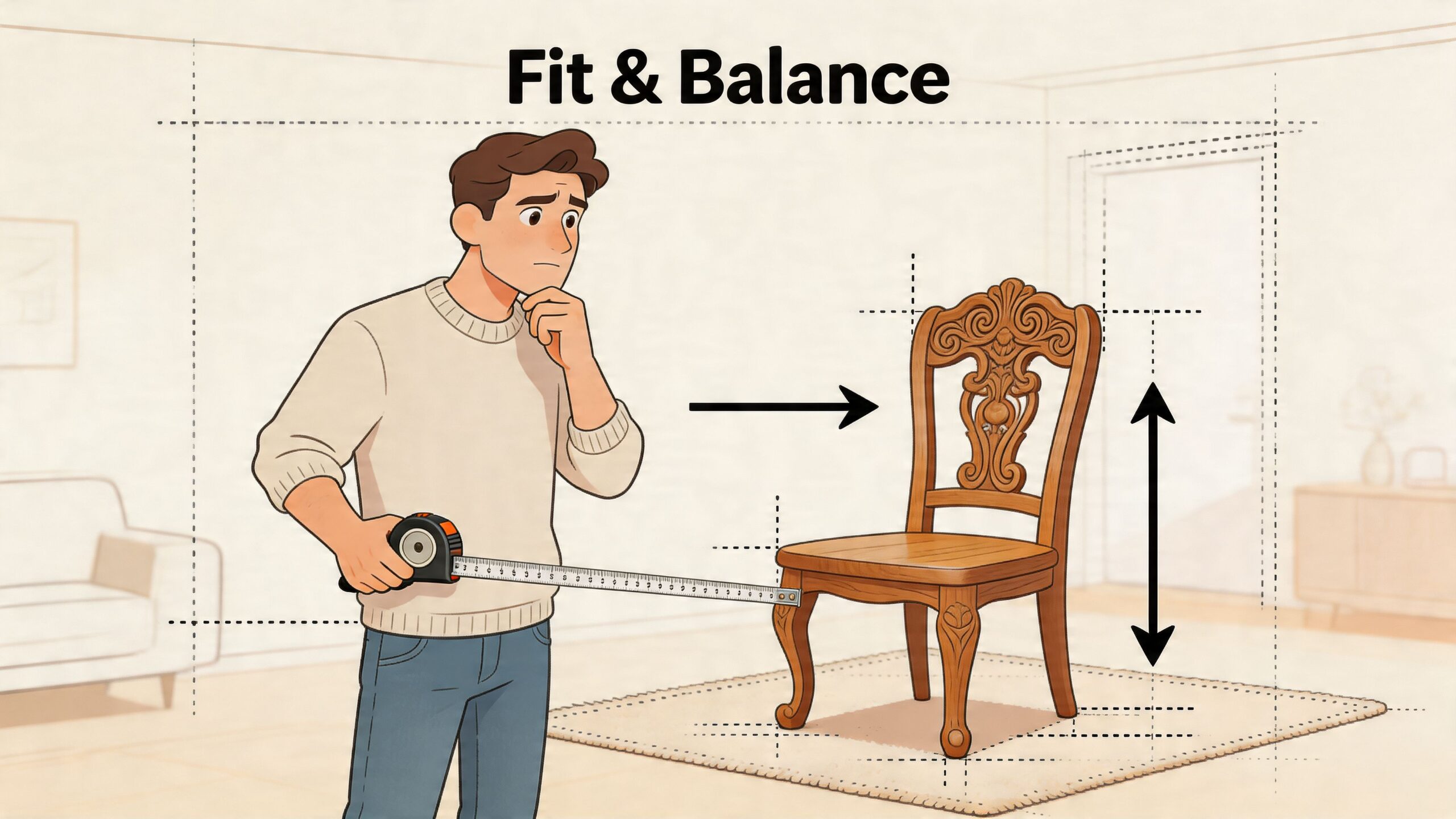
Most measurement mistakes happen because shoppers focus only on width and ignore footprint, height, and traffic flow.
Do this instead:
- Tape the outline on the floor with painter’s tape so you can feel the footprint in the room
- Measure the path in including front door, hallway turns, stairwells, and tight entry points
- Check height against windows, art, and sight lines so the piece doesn’t crowd the room visually
- Leave breathing room around statement pieces so they read as intentional, not cramped
A reclaimed wood dining table may technically fit, but if it leaves no room to move around it, it’s the wrong table.
Visual weight matters as much as measurements
A piece can be small and still feel heavy. Dark wood, thick legs, dense carving, and solid silhouettes all increase visual weight. In compact homes, especially older Southern Oregon houses with quirky layouts, that matters.
Use this quick comparison:
| If your room has… | Choose… |
|---|---|
| Low ceilings | Lower, longer pieces |
| Narrow walls | Open-base or leggy designs |
| Heavy upholstery | Lighter accent decor with texture |
| Minimal texture | Richer wood grain or carved surfaces |
If you’re styling a game room, office, or den, wall art can help balance heavier furniture. For example, if you want something playful but still distinctive, you can discover unique football wall art that adds personality without taking up floor space.
Bring evidence, not guesses
Photos beat memory every time. If you’re shopping in person, bring:
- Room photos from multiple angles
- Basic wall and floor measurements
- Dimensions of nearby furniture
- A note on what the piece needs to do
That last one matters. Is the piece supposed to store things, soften a corner, add warmth, or anchor the room? Function narrows your decision fast.
For a cleaner measuring checklist, this guide on how to measure furniture before you buy is useful to keep handy.
Don’t ask, “Can I fit it?” Ask, “Will it fit and still let the room breathe?”
AR tools can help, and they’re getting better, but even simple low-tech planning still works. Tape on the floor. Photos on your phone. Honest judgment about scale. That’s how you avoid buying a great piece for the wrong room.
Making It Yours with Easy Financing and Delivery
A lot of buyers don’t miss out on unique pieces because of style. They miss out because the buying process feels harder than it should.
That’s a mistake. If a piece is right, the path to getting it home should be simple.
Financing should remove friction, not add stress
For budget-conscious shoppers, one-of-a-kind decor from local outlets can be 30 to 50% cheaper than major online marketplaces, and flexible no-credit-needed financing fills an important gap for renters and new homeowners, according to Paste Magazine’s look at underrated decor sources.
That’s why financing matters. Not because people are shopping irresponsibly, but because good homes are built over time and cash flow matters.
The strongest financing options are the ones that are clear and practical:
- $0 down when you want to move now instead of waiting
- 6-month interest-free options for buyers who want structure without extra cost if paid in full in the promotional period
- No-credit-needed options for renters, younger buyers, or anyone rebuilding
If you want to compare what those paths look like, review furniture financing options before you shop. Clarity helps you decide faster when the right piece appears.
Delivery is part of the purchase
Unique furniture often has weight, shape, and finish details that don’t tolerate sloppy handling. That’s why delivery isn’t a small detail. It’s part of whether the purchase feels worth it.
Curbside drop-off is fine for a box of basics. It’s the wrong approach for a one-of-a-kind teak cabinet, a reclaimed dining table, or a statement bed. Professional delivery, in-home placement, assembly, and old mattress haul-away save time and reduce the risk of damage to both the item and your home.
Here’s the simple version:
| Delivery type | What you deal with |
|---|---|
| Basic drop-off | Lifting, packaging, setup, disposal |
| White-glove delivery | Placement, assembly, cleanup, less stress |
If you’ve invested in a special piece, don’t finish the job with a folding knife and a sore back.
Service still matters
Old-school retail still beats anonymous checkout pages. A good local team can help you line up purchase timing, financing, delivery, room access, and setup in one conversation.
That’s not flashy. It’s just useful. And useful wins.
The best one of a kind home decor buying experience doesn’t end when you say yes. It ends when the piece is in the right room, assembled correctly, and looking the way you hoped it would when you first spotted it.
Caring for Your Treasured Find
A one-of-a-kind piece deserves real care from day one. Reclaimed wood and teak are tough, but they are not immune to bad habits, cheap cleaners, or a sunny spot that bakes the finish every afternoon.
Start with a routine you will keep. Dust with a soft, dry cloth. Clean only when needed with a wood-safe product. Wipe spills fast, especially water rings, wine, and anything oily. Keep the piece out of direct sun if you can, and do not let moisture sit on the surface.
That simple routine prevents most of the problems we see in-store.
Real wood should look lived with, not neglected. A few light marks are normal and often add character. What you want to avoid is dryness, buildup, fading, and warped boards. Those problems usually come from overcleaning, soaking the surface, or using silicone-heavy polish that leaves residue and dulls the finish over time.
Here is the rule I give customers in Southern Oregon. If you would not want the product on your own hands for the next hour, do not put it on your table.
Some homes need more protection than others. Dining tables, coffee tables, and bedroom pieces in busy households take a daily beating from kids, pets, homework, drinks, and dropped keys. In those cases, extra coverage like Gates Care Shield makes sense because it helps with the wear that comes from actual life, not showroom life.
For the basics, keep this guide on how to care for wood furniture handy. It gives you clear, practical steps without the usual fluff.
Good furniture earns its place over time. If you choose it carefully in the showroom, get it home the right way, and maintain it with a little consistency, it will keep its character for years and still look like something worth talking about.