Find The Best Mattress For Sleep Apnea In Grants Pass


If you're reading this after another rough night, you're not alone. A lot of people in Grants Pass, Medford, Central Point, Ashland, and across the Rogue Valley start their mattress search for the same reason. They wake up tired, their partner says the snoring was worse, and they begin to wonder whether the bed is helping or making things harder.
Sleep apnea is a medical condition, not just a comfort issue. Still, your mattress can affect how your body rests, how easily you reposition, and whether your airway stays in a better alignment through the night. The best mattress for sleep apnea won't replace medical care, but it can become an important part of a better sleep setup.
At our family business, we've spent generations helping Southern Oregon neighbors make practical comfort decisions at home. Since 1946, George Gates' promise of Service and Value has guided how we talk with customers. We believe people make better choices when they understand the why behind them.
Understanding Sleep Apnea and Its Impact on Your Rest
Sleep apnea means your breathing repeatedly becomes restricted or stops for short periods while you sleep. A simple way to think about it is a garden hose with a bend in it. Water still wants to move through, but the kink gets in the way. With sleep apnea, your airway can narrow or collapse enough that airflow drops off.
That breathing disruption pulls you out of deeper sleep again and again, even if you don't fully wake up and remember it the next morning. Many people notice the effects as morning headaches, dry mouth, brain fog, irritability, or that heavy exhausted feeling that coffee doesn't seem to fix.
The basic types in plain language
There are a few forms of sleep apnea, and readers often get tripped up here because the names sound more technical than they need to be.
- Obstructive sleep apnea is the most familiar type. The airway gets physically blocked or narrowed during sleep.
- Central sleep apnea involves the brain and breathing signals. The issue isn't only blockage.
- Complex sleep apnea is a mix of the two.
If you're still trying to understand adult sleep apnea, that overview can help make the diagnosis language easier to follow before you focus on mattress choices.
Why a mattress matters more than people expect
A mattress doesn't treat the root cause of sleep apnea on its own. What it does do is influence your posture, pressure points, and movement through the night. Those factors matter because body position can either help keep the airway more open or make collapse more likely.
The biomechanical relationship between mattress firmness and airway obstruction is critical for sleep apnea management, according to this explanation of mattress support and airway compression. Memory foam can contour to the body and help maintain spinal alignment, but too much softness can let the body sink enough to compress or block airways, while too much firmness can create discomfort and restlessness.
A mattress for sleep apnea should support your posture without trapping you in it.
That point matters in real life. If your shoulders ache, your hips feel jammed, or your lower back sags, you're more likely to toss, roll flat onto your back, or wake up often. None of that helps breathing.
What people often confuse
Many shoppers use firmness and support as if they mean the same thing. They don't.
- Firmness is how the bed feels at first contact.
- Support is how well it keeps your spine in a healthier alignment over several hours.
A mattress can feel soft on top and still support you well. Another can feel firm at first and still let your body settle in the wrong places.
If you're unsure what your current bed is doing to your sleep posture, our sleep quality assessment guide is a useful starting point. It can help you connect your symptoms to what you're feeling on the mattress each night.
The real takeaway
Sleep apnea affects breathing, but it also affects recovery. When your sleep keeps fragmenting, your body misses out on the deep, steady rest that helps you wake up clear-headed. The best mattress for sleep apnea is one that works with your body position, not against it.
The Foundation of Better Sleep Key Mattress Features
Once you know your mattress can affect posture and breathing, the next question is simple. What should you look for when you test a bed?
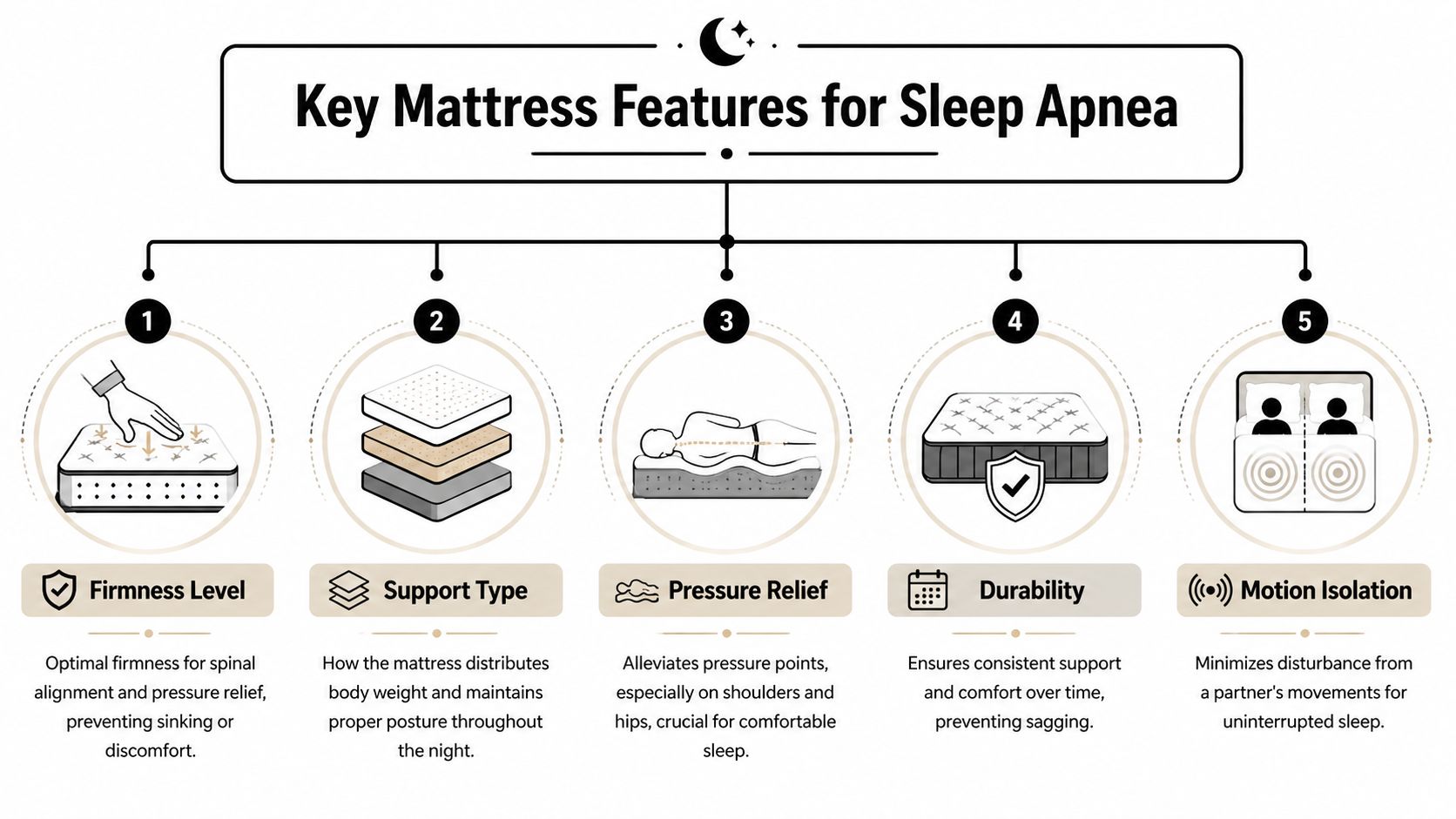
For sleep apnea, we tell people to focus on five areas. Not because marketing labels matter, but because your body will feel each one by the end of the night.
Firmness and support aren't the same thing
A lot of shoppers assume they need the hardest mattress they can find. That's usually not the right move. If a bed is too soft, your torso can sink too far. If it's too hard, your shoulders and hips may never settle enough for comfortable side sleeping.
A mattress firmness guide can help you translate those labels into something practical, especially if you've been comparing beds online and every brand seems to define "medium" differently.
Pressure relief helps you stay in the better position
If side sleeping feels best for your breathing but hurts your shoulders, you won't stay there long. That's where pressure relief comes in. Materials that cushion your shoulder and hip can make it easier to remain on your side instead of drifting into a less helpful position.
This is why the best mattress for sleep apnea often lands in the medium-firm range with some contouring comfort near the top. You need enough give for the curves of the body, but not so much that alignment breaks down.
Practical rule: If a mattress feels comfortable for five minutes but leaves your midsection dipping lower than the rest of your body, keep looking.
Materials change how the mattress behaves
Not all mattress materials solve the same problem.
| Material | What it often does well | What to watch for |
|---|---|---|
| Memory foam | Contours closely and relieves pressure | Can feel too sinky if it's overly soft |
| Latex | Feels buoyant and breathable | Has a more lifted feel that some people need time to adjust to |
| Hybrid | Blends contouring comfort with coil support and easier movement | Performance depends on how the layers are built |
| Pocket spring | Allows micro-adjustments with less broad bounce than old-style innerspring | Comfort depends heavily on the top layers |
Memory foam can be a strong option when it supports the spine and reduces pressure on the throat and shoulders. Latex and hybrid designs often appeal to sleepers who want support but don't want to feel stuck. Pocketed coils can also make repositioning easier through the night.
Cooling isn't just about comfort
Heat can fragment sleep, and fragmented sleep is already a problem for people with sleep apnea. Cooling features matter more than many shoppers realize.
According to Sleep Doctor's review of mattress features for sleep apnea, heat retention disrupts sleep architecture, while gel-infused memory foam absorbs and dissipates body heat and zoned latex improves airflow. That makes cooling a therapeutic variable for people who deal with night sweats or overheating, not just a luxury add-on.
Here are the cooling details worth checking in a showroom:
- Gel-infused foam helps move heat away from the body.
- Breathable cover fabrics can change how warm the surface feels when you first lie down.
- Latex comfort layers usually allow more airflow than dense solid foam.
- Coil systems in hybrids create room for air to circulate through the mattress core.
Durability and motion control matter, too
A sleep-apnea-friendly mattress still needs to hold its shape. If the bed develops body impressions, the support you liked in the store may not be the support you get later. Sagging can change your alignment enough to make your setup less effective.
Motion isolation matters if you sleep with a partner. Apnea often affects both people in the room, even when only one person has the diagnosis. If one sleeper shifts often, gets up, adjusts equipment, or changes position, the other person needs a surface that doesn't turn every movement into a wake-up call.
The best mattress for sleep apnea isn't just "soft" or "firm." It's a bed that balances posture, pressure relief, temperature control, and movement in a way your body can live with.
Choosing the Right Mattress for Your Sleep Position
The best mattress for sleep apnea depends heavily on how you sleep now, and in some cases, how you should try to sleep instead. Position changes how your airway, neck, shoulders, and spine line up on the bed.
For many people, it's here that mattress shopping finally starts to make sense.
Side sleeping usually gives you the strongest advantage
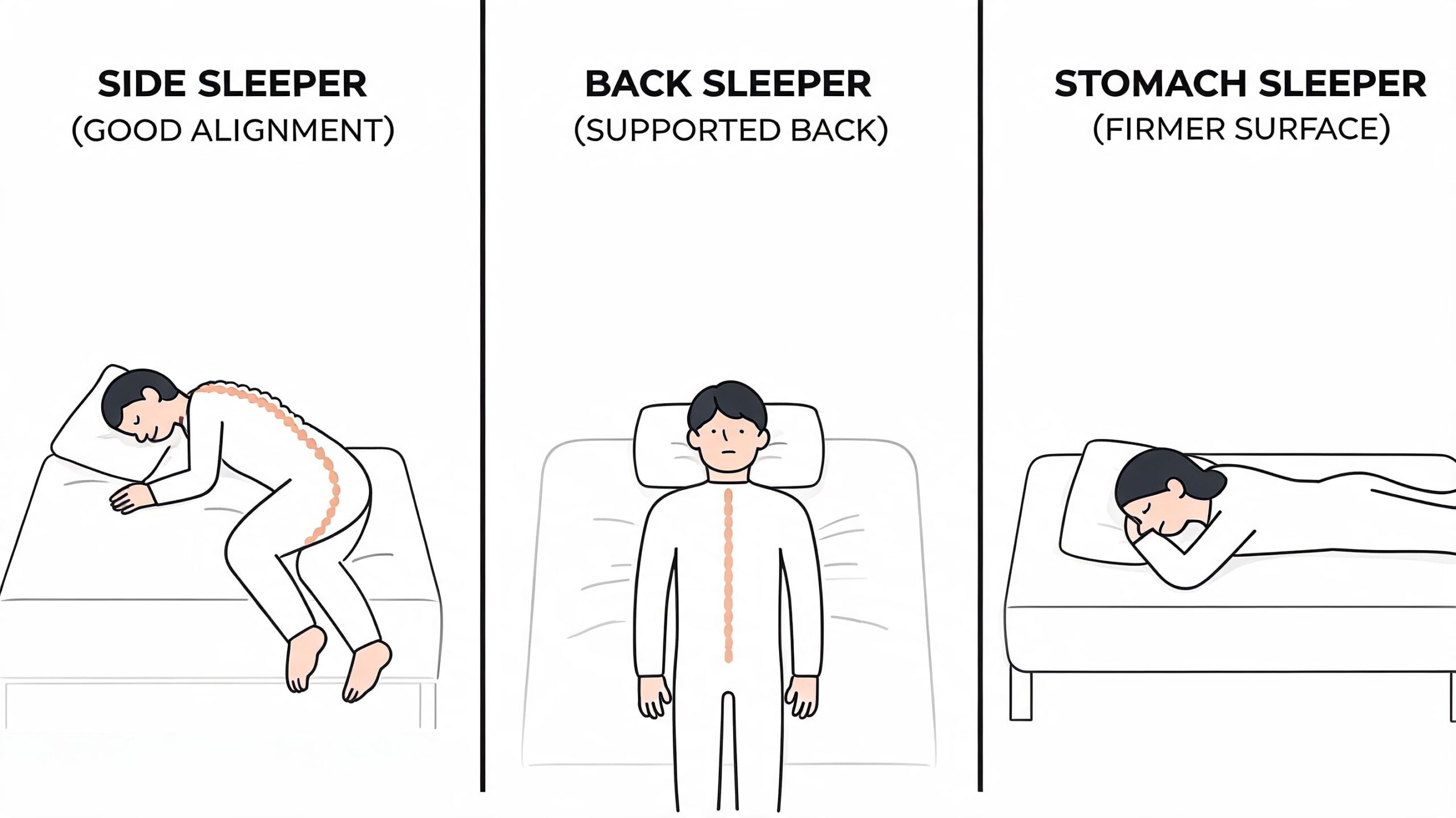
If you have sleep apnea, side sleeping is usually the first position to discuss with your doctor and the first one to test for comfort on a mattress. It tends to help keep the airway more open than back sleeping.
According to Sleepopolis' review of sleep position and mattress fit for sleep apnea, side sleeping on a zoned medium-firm mattress can reduce sleep apnea severity and can cut apnea-hypopnea index scores by 25 to 54% compared to back sleeping. The same review notes that sleepers under 130 pounds often do better with softer zones for pressure relief, while sleepers over 230 pounds generally need firmer support to prevent excess sinkage.
That gives side sleepers a clear target. Look for a mattress that:
- Cushions the shoulder and hip so you don't feel jammed
- Supports the waist and midsection so your spine stays more neutral
- Lets you reposition easily without fighting the bed
- Feels medium-firm overall rather than plush and saggy
Back sleeping needs more caution
Some people can't fall asleep on their side. If you're a back sleeper, mattress selection gets more delicate because your body position is less forgiving for sleep apnea.
A back sleeper usually needs enough support to keep the hips from dropping and the chest from settling into a posture that encourages airway narrowing. A mattress that's too soft can make that problem worse. A supportive hybrid or a firmer comfort build often makes more sense than a plush all-foam feel.
Back sleeping may feel comfortable at first because pressure is spread out, but comfort and airway support aren't always the same thing.
Stomach sleeping is usually the hardest fit
Stomach sleeping can create its own set of problems. It often twists the neck and can flatten the natural curve of the lower back. For people with sleep apnea, it also tends to be a difficult position to pair with consistent airway comfort.
If you're a stomach sleeper, the most practical path is often to test whether a supportive mattress and pillow change can help you move toward a side-leaning position. This doesn't happen overnight for everyone, but many sleepers can make that transition more comfortably with the right setup.
Body weight changes the feel
The same mattress won't feel the same to every person. Weight changes how much you sink into the comfort layers and how much support you get from the core.
A simple comparison helps:
| Sleeper profile | What often feels better |
|---|---|
| Under 130 lbs | Slightly softer surface feel, especially for side sleeping |
| Average build | Medium-firm balance of contour and support |
| Over 230 lbs | Firmer support to prevent sinking and loss of alignment |
This is one reason buying a mattress only from online descriptions can be frustrating. "Medium-firm" may sound right on paper, but your body weight and sleep position decide whether it feels right.
A practical way to test in person
When you lie on a mattress, don't just ask, "Is this comfortable?" Ask better questions.
- Can your shoulder settle without pain if you're on your side?
- Does your waist feel supported, or is there a gap?
- Does your torso sink too far compared with your legs?
- Can you roll from side to side without effort?
Those answers tell you more than a showroom label ever will. For sleep apnea, the right position and the right mattress have to work together.
Advanced Sleep Solutions Adjustable Bases and Pillows
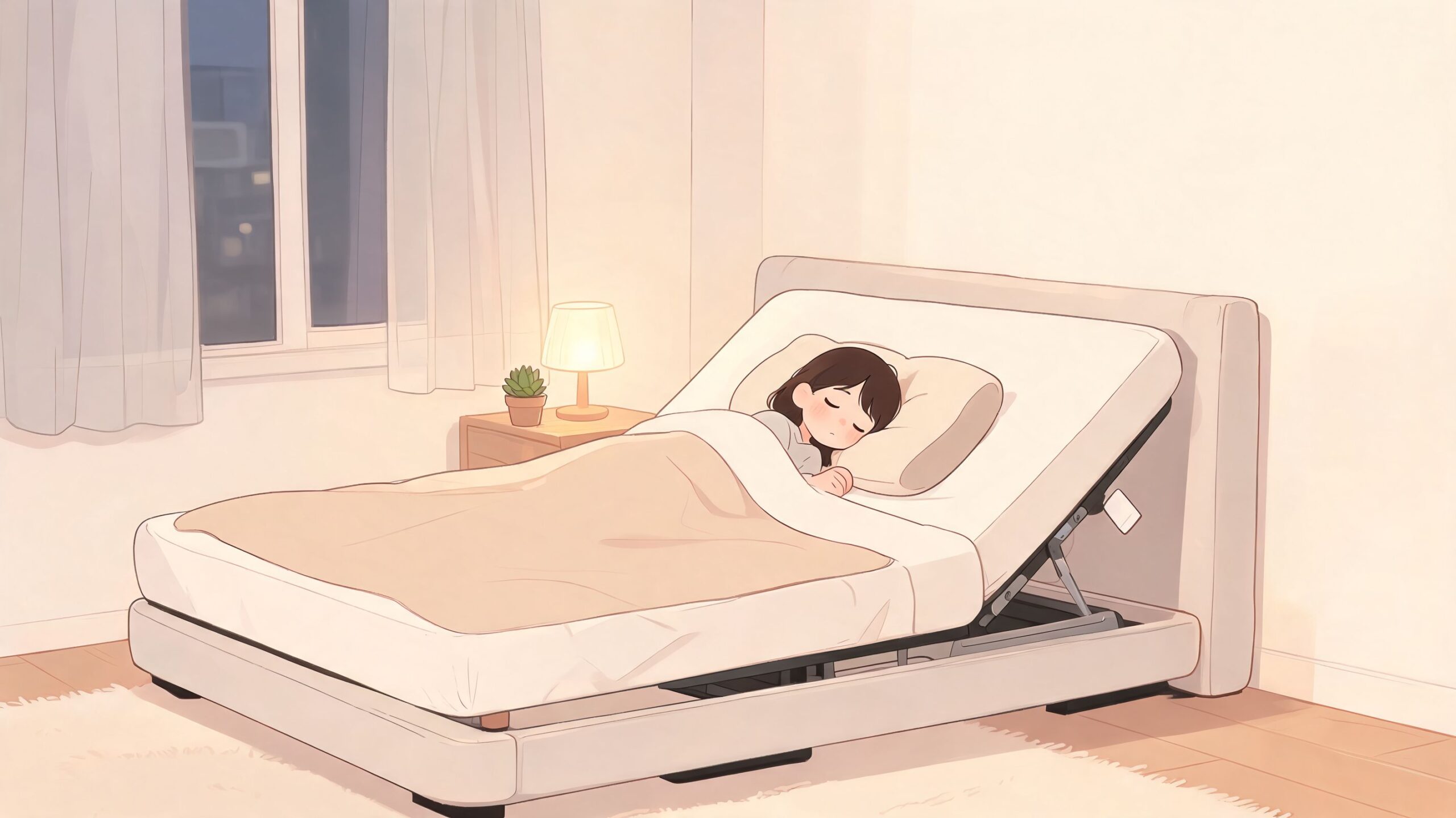
A mattress matters, but a sleep system often matters more. For many people with sleep apnea, an adjustable base and the right pillow can improve how the whole body rests. That's especially true when flat sleeping makes breathing feel harder.
Why elevation can make a difference
Raising the head and upper torso can help gravity work in your favor. Instead of letting tissues settle backward as easily, elevation may help reduce compression in the airway for some sleepers.
That's one reason adjustable bases come up so often in sleep-apnea conversations. They give you the ability to test a flatter position, then a slightly inclined one, and notice what changes in comfort, breathing, and snoring.
For people with more complex mobility or recovery needs, some readers also compare adjustable sleep setups with medical-style options. If that's part of your search, reviewing Affinity Home Medical hospital beds may help you understand where lifestyle adjustable bases and clinical bed systems differ.
CPAP comfort is a real mattress issue
Many articles stop at firmness and forget about the people sleeping with a CPAP mask. That's a mistake. Mask fit, hose movement, and partner disturbance all interact with the bed surface.
According to this discussion of CPAP setup and partner disturbance, 50 to 70% of CPAP users report sleep disruption, and softer memory foam can contribute to airway issues or mask leaks during shifts. The same source notes that medium-feel pocket spring mattresses can allow micro-adjustments without excessive motion transfer, which may reduce partner wake-ups.
That can help answer a common question: why might a very soft bed feel cozy at first but work poorly with CPAP? Because too much sink can change head, neck, and mask position when you roll.
If you use CPAP, test the mattress for movement, not just softness. You want stable support with enough responsiveness to change position without losing alignment.
Pillows finish the alignment picture
The pillow you use can either support the mattress choice or fight against it. A pillow that's too tall can tilt the head awkwardly. One that's too flat may leave the neck unsupported.
What usually works best depends on sleep position:
- Side sleepers often need a pillow with enough loft to fill the space between shoulder and neck.
- Back sleepers usually need a lower, supportive profile to avoid pushing the chin down.
- Adjustable base users may do better with a pillow that compresses and adapts as the bed angle changes.
Our guide to choosing the perfect pillow can help you narrow that down before you test options in person.
Think in systems, not single products
The best mattress for sleep apnea works better when the rest of the setup supports it. Mattress, pillow, bed base, and CPAP habits all affect whether your body can stay comfortable in a position that helps breathing.
That's why we encourage people to stop thinking only in terms of "foam versus springs." The better question is whether the whole setup keeps you aligned, cool, and able to breathe more comfortably through the night.
The Gates Sleep Care Experience Finding Your Match in Grants Pass
A mattress search can feel confusing fast. One website says you need more contouring. Another says firmer is always better. Then you try to compare product names, reviews, trial periods, and cooling claims from a phone screen.
That confusion is exactly why so many local shoppers want to test the bed before deciding.
What trying mattresses in person changes
A 2026 review identified medium-firm mattresses as optimal for sleep apnea, with breathable tops, zoned support, and gel-infused foam highlighted as useful features. That same review notes that side sleeping can reduce apnea events by up to 50%, and it specifically says the Sleep Apnea Association review of mattress features for apnea can help shoppers focus on the specs that matter.
In real life, those specs are easier to understand when you can feel them. Zoned support isn't just a phrase when you can lie on your side and notice whether your shoulders relax while your midsection still feels supported. Cooling isn't abstract when you can compare one mattress cover to another.
How we help people sort through the noise
At Gates Home Furnishings, our Sleep Care process gives Southern Oregon shoppers a way to compare support, pressure relief, and adjustability in person rather than guessing from product descriptions. That's especially useful for people from Grants Pass, Medford, Central Point, Ashland, and surrounding communities who want to test what side-sleep support or a more responsive hybrid feels like.
We still operate with George Gates' 1946 promise of Service and Value in mind. That means conversation first. We ask how you sleep, whether you wake hot, if a partner is being disturbed, and whether an adjustable base might help. Then we help you compare options from trusted mattress brands in a way that feels practical, not pressured.
Why local testing beats blind guessing
Our 30,000 sq. ft. Grants Pass showroom gives people room to slow down and evaluate comfort without rushing. You can test mattresses, compare support feels, and look at complete bedroom setups in one stop. If you're updating more than the bed, many shoppers also enjoy browsing our Unique Finds, including reclaimed wood and teak pieces that add character to the room around the mattress.
A few practical details also matter when you're making a health-related purchase:
- Gates Easy Pay offers $0 down and 6 equal payments, along with interest-free and no-credit-needed options for qualifying shoppers.
- White-Glove Delivery means our team handles setup and mattress haul-away. We don't just leave a box at the door.
- You can also review the benefits of an adjustable base before you visit, so you'll know what features are worth trying on the floor.
The right mattress feels different when you test it with your actual sleep habits in mind, not just with a hand pressed into the surface.
For many neighbors in the Rogue Valley, that changes the whole process. It becomes less about buying a mattress and more about building a setup that supports better rest at home.
Beyond the Mattress Sleep Hygiene and When to See a Doctor
The mattress matters, but daily habits still shape how well you sleep. A few simple routines can make your sleep environment more stable and give any mattress a better chance to do its job.
Habits that support better rest
Use this short checklist:
- Keep a consistent sleep schedule so your body isn't guessing when to power down.
- Make the bedroom cool, dark, and quiet to reduce unnecessary wake-ups.
- Limit alcohol close to bedtime if it seems to worsen snoring or restless sleep.
- Replace old pillows when they stop supporting your neck and rotate your mattress as recommended.
- Review your routine with our sleep hygiene tips for a better night's sleep if your room and schedule still aren't helping.
Know when home changes aren't enough
A mattress can support better posture and comfort. It can't diagnose sleep apnea, measure oxygen, or replace treatment from a medical professional.
Talk with a doctor if you have symptoms such as loud snoring, gasping, choking awake, severe daytime fatigue, morning headaches, or if your partner notices long pauses in breathing. If CPAP hasn't worked well for you, it may also help to find non-CPAP sleep apnea options so you can discuss alternatives with a qualified provider.
Sleep should leave you restored. If it keeps leaving you drained, it's worth getting answers.
Start Your Journey to Better Sleep with Us
Sleep apnea can make nights feel long and mornings feel even longer. The good news is that your sleep setup can play a meaningful role in comfort, posture, and how well you rest. For many people, the best mattress for sleep apnea is one that supports side sleeping, keeps the spine aligned, manages heat, and works well with tools like adjustable bases and the right pillow.
We've been part of Southern Oregon homes since 1946, and George Gates built this business on Service and Value. That still shapes how we help people today. We want you to understand what you're testing, why it matters, and how to choose with confidence.
If budget is part of the decision, Gates Easy Pay can make a better sleep setup more manageable with flexible options. When you're ready, our White-Glove Delivery team can handle the setup and haul-away so the transition feels simpler from start to finish.
Ready to feel the difference for yourself? Visit Gates Home Furnishings in our 30,000 sq. ft. Grants Pass showroom to test mattresses in person, compare adjustable sleep setups, and explore bedroom pieces and Unique Finds for your space. If you'd rather start from home, browse our collection online and take the first step toward more comfortable, more confident sleep.