How to Haul Away Old Furniture in Grants Pass


That old sofa usually becomes urgent at the worst time. A new mattress is arriving tomorrow. A move across Grants Pass is already underway. A family member is downsizing, and the recliner that once felt worth keeping now just blocks the hallway.
That's a common Southern Oregon problem, not a rare one. The EPA's durable-goods data shows that furniture and furnishings generated 12.1 million tons of municipal solid waste in 2018, equal to 4.1% of total municipal solid waste, up from 2.2 million tons in 1960. In plain terms, households replace, move, pass down, donate, and dispose of a lot of furniture, and every bulky piece creates a real logistics job.
Around Grants Pass, Medford, Central Point, Ashland, and the rest of the Rogue Valley, the best option depends on a single question. Is the piece still useful, or is it worn out? That answer changes everything, from whether a charity may accept it to whether someone needs a truck, straps, and a dump run.
Table of Contents
- That Old Furniture Has to Go Now What
- Preparing Your Furniture for a Smooth Removal
- The DIY Haul Your Options in Southern Oregon
- Hiring a Local Hauler or Junk Removal Service
- The Reality of Donating or Recycling Furniture
- The Gates Solution New Furniture In Old Furniture Out
That Old Furniture Has to Go Now What
A lot of people stall out at the same point. The old couch is too heavy to move alone, too worn to feel proud of, and too big to ignore. It sits in the garage, on the porch, or in the spare room while the replacement decision gets delayed another month.
Sometimes the piece still has a little life left. In that case, a small repair may buy time. For readers trying to postpone replacement, these quick fixes for worn sofa support can help decide whether a sagging seat is fixable or whether it's time to move on.
For many households, though, the bigger issue isn't repair. It's clutter and timing. A bedroom set gets handed down, a guest bed needs to leave before company arrives, or a downsizing move leaves no room for a large dining table. That's where planning helps. The same kind of room-by-room thinking in these bedroom clutter solutions works for furniture removal too. Start with what must leave now, what can be donated, and what still needs a realistic backup plan.
Practical rule: If a piece is blocking a delivery, move, remodel, or estate cleanout, treat removal as part of the project, not an afterthought.
That mindset keeps people from counting on a “free” option that may not work. It also helps separate emotional attachment from logistics. A worn recliner may still hold memories, but if it's unsafe, stained, or difficult to move, the next decision should focus on safe removal.
Preparing Your Furniture for a Smooth Removal
Small prep work saves a lot of strain. Whether a household plans to haul away old furniture personally or hire help, the job gets easier when the piece is lighter, tighter, and easier to grip.
Make the piece lighter and safer
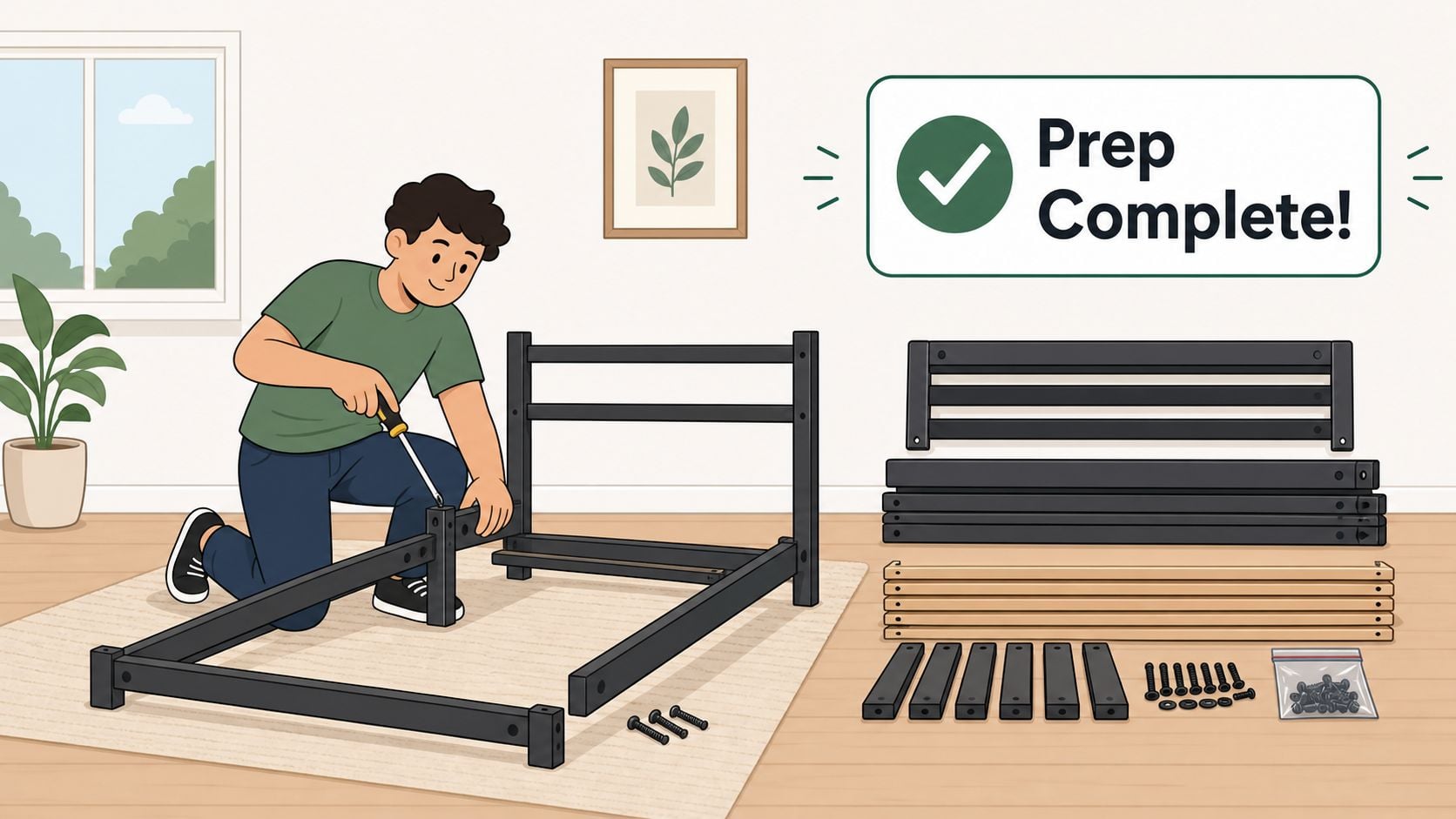
The best first step is to remove anything loose. Expert guidance in this furniture removal prep guide recommends removing drawers and shelves, bagging fasteners, taping that hardware to the main piece, and securing any moving parts with zip ties or string before transport.
That advice matters because most trouble starts with shifting weight. A dresser without drawers is easier to carry. A table with detached legs is easier to angle through a doorway. A bed frame with labeled hardware is easier to donate, reassemble, or sort later.
A useful checklist looks like this:
- Empty storage furniture: Take out linens, papers, cords, and anything hidden in drawers or cabinets.
- Remove detachable parts: Shelves, legs, headboards, and glass inserts should come off first when possible.
- Bag the hardware: Put screws, bolts, and brackets in one bag and attach it to the item.
- Secure doors and drawers: Zip ties or string keep them from swinging open mid-carry.
For large pieces, accurate measurements prevent a lot of frustration. These tips on how to measure furniture before moving it are especially useful when a sofa needs to clear a tight hallway or a bed frame has to come down a stairwell.
Protect the home on the way out
The furniture isn't the only thing at risk. Walls, trim, railings, and floors often take the hit during removal.
Wrap sharp corners with towels or bubble wrap. Put a blanket under heavy wood legs before sliding across hard flooring. Keep one person spotting turns through narrow doorways. If the item has recliner mechanisms or swing-out sections, tie them closed before lifting.
A slow, controlled carry beats a rushed scrape down the hall every time.
Staging also helps. Set smaller pieces near the exit first. Clear a path from room to truck. Prop open gates or doors if a pickup team is coming. Removal crews work faster when they don't have to stop and reorganize the room before they can start.
The DIY Haul Your Options in Southern Oregon
Saturday morning arrives, the old recliner is finally by the garage, and now the question gets very practical. Where, exactly, do you take it in Southern Oregon, and is the trip worth the trouble?
For some households, self-hauling is a perfectly reasonable choice. If you have a truck, one sturdy helper, and a clear place to drop the piece off, doing it yourself can work well for a small load. Around Grants Pass, that usually means checking county transfer options, local disposal rules, and whether a charity will accept the item before you lift a thing. That little bit of homework saves the kind of afternoon that ends with a full truck and nowhere to unload it.
When self-hauling makes sense
DIY furniture removal fits best when the job is simple and the destination is already confirmed.
- One manageable item: A nightstand, dining chair, or small table is a very different task from a sofa bed or oversized armoire.
- Straightforward access: Ground-floor pickups with short walks to the driveway are much easier on your back and your walls.
- Reliable help: Furniture often behaves like a stubborn mattress. It is awkward, hard to grip, and rarely cooperative in tight spaces.
- A real plan for drop-off: County sites, recycling options, and charity intake policies can vary by item condition and by day.
Some households also realize a usable piece may be worth selling instead of hauling. If a move is part of the reason you are clearing space, these tips for selling furniture when relocating can help you decide whether listing it is worth your time.
Checking local options first also keeps the job local in the best sense. We have always believed Southern Oregon families do well when they support local businesses that serve the community year after year, whether that means shopping, donating, or arranging disposal with people who know the area.
Considering the tradeoffs
DIY hauling can cost less out of pocket, but the full cost is usually measured in effort, time, and vehicle space. The dump fee is only one part of the picture. Fuel, tie-down straps, protective blankets, cleanup, and the possibility of a second trip all count too.
A simple comparison helps:
| Option | Best for | Main advantage | Main downside |
|---|---|---|---|
| Self-haul | One or two accessible items | You control the timing | Heavy lifting, loading, and disposal planning |
| Donation drop-off | Clean, usable furniture | Keeps a good piece in circulation | Acceptance depends on condition and staff capacity |
| Paid removal | Bulky, worn-out, or awkward pieces | Least work for the household | Higher direct cost |
The part many homeowners underestimate is volume. A dresser looks manageable in the bedroom, then takes up half the truck bed. A sectional often turns one dump run into two. Self-hauling works best when the piece is small, the route is short, and the drop-off answer is settled before the first lift.
That is why furniture replacement often becomes the easier solution. If you are already bringing in something new, having the old piece leave at the same time saves a lot of running around. Our family has helped Grants Pass area households sort through that decision for generations, and we have seen the same pattern again and again. A do-it-yourself haul sounds simple until the stairs, the truck space, or the transfer station rules get involved.
Hiring a Local Hauler or Junk Removal Service
A local hauler earns their keep when the furniture is too heavy to move safely, too awkward for the hallway, or not worth another round of planning. Around Grants Pass, that often means an old sleeper sofa, a broken recliner, or a dining set that has already given the family years of use. At that point, paying for help is less about convenience and more about avoiding a Saturday that turns into lifting, loading, and figuring out where the piece can legally go.

What a good booking process looks like
The best haulers keep the process plain and predictable. You show them what is leaving, they explain how pricing works, and pickup day does not come with surprises. As mentioned earlier, removal costs can vary quite a bit, which is why a clear estimate matters more than a low starting number.
It works a lot like hiring a mover for one very specific job. The company should ask what the item is, where it sits in the home, whether there are stairs, and how much space the load will take in the truck. Those details sound small, but they are often what separates an accurate quote from a frustrating one.
A solid crew usually does three things well. They confirm the scope before arrival. They show up on schedule. They tell you what happens to the furniture after it leaves your house, whether that means disposal, recycling when possible, or transfer to an approved facility.
For businesses, churches, and property managers clearing out several workstations or waiting-room pieces at once, this guide on how to streamline office furniture decommissioning can help with access planning and pickup coordination.
Questions worth asking before the truck arrives
A few direct questions can save you a lot of trouble. Furniture removal is like a dump run with labor attached. The labor is usually the part people forget to ask about.
- What does the quote include? Ask if loading, carrying, disposal, and cleanup are all part of the price.
- Will stairs, tight hallways, or long carry distances change the cost? These are common reasons estimates shift.
- Do you remove only furniture, or mixed household items too? Some companies separate those jobs.
- Where does the furniture go after pickup? That matters if you are trying to keep usable materials out of the landfill.
- Do I need to move anything ahead of time? Some crews want paths cleared, pets secured, and fragile decor taken off nearby tables.
Southern Oregon households often prefer hiring people who know the area, understand local disposal rules, and answer the phone like neighbors instead of a call center. That is one reason some families make a point to support local businesses in Southern Oregon when they need help at home.
Our family has helped folks in the Grants Pass area furnish and refurnish their homes for generations, and we have seen the same pattern many times. Once a replacement piece is already on the calendar, the easiest path is usually to have the old furniture leave at the same time. One trip in. One trip out. That keeps the house from turning into a waiting room for a couch nobody wants anymore.
A good estimate should answer the practical questions before pickup day, not after the furniture is already halfway to the truck.
The Reality of Donating or Recycling Furniture
A lot of people assume donation is the easy answer. Sometimes it is. But that only applies when the piece is clean, usable, and ready for a second home.
What donation-ready really means
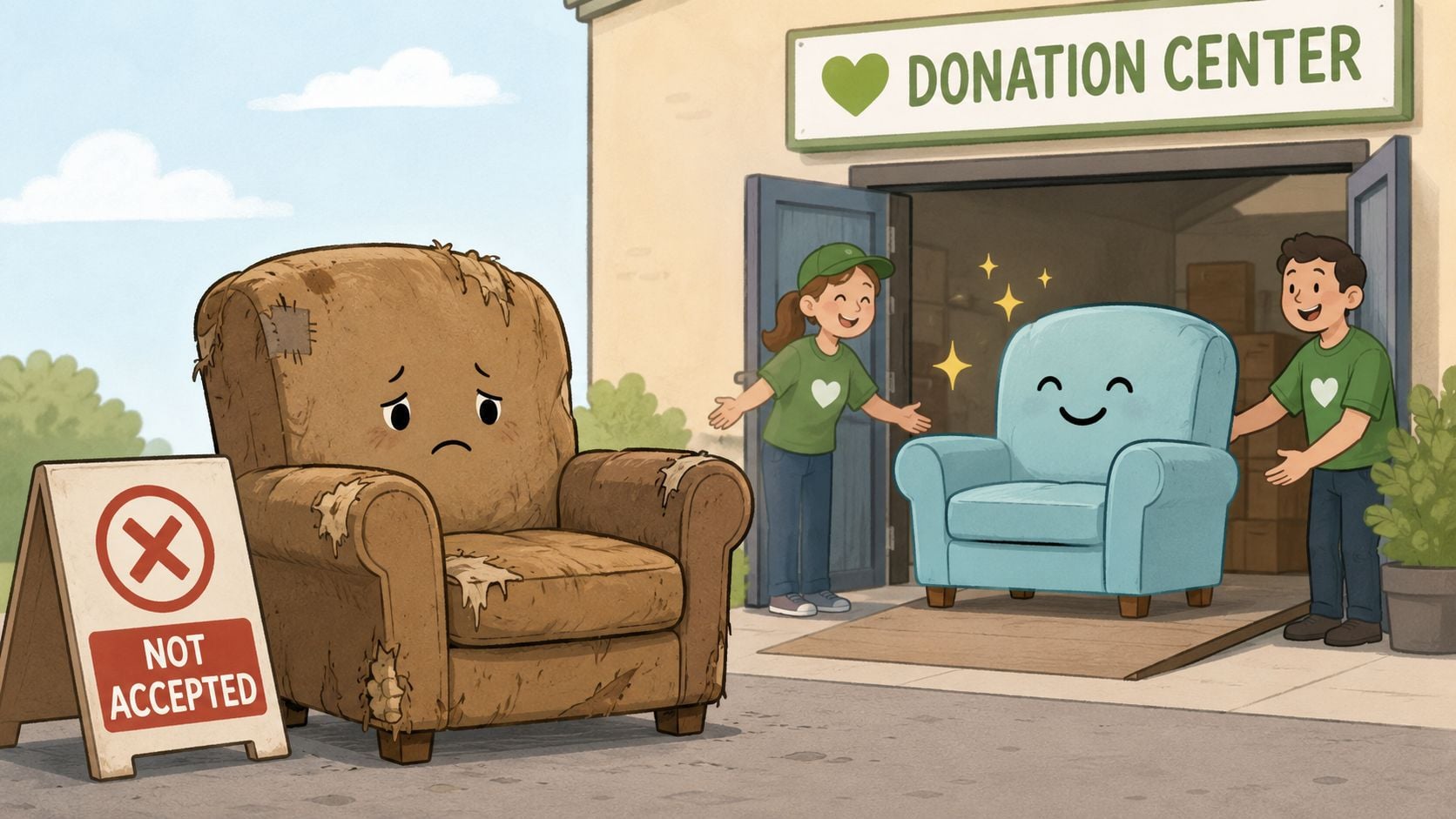
One of the biggest points of confusion is condition. This furniture donation pickup guide notes that many donation centers and free pickup services reject items with pests, mold, water damage, or major tears. That leaves a lot of real-world furniture out of the “free pickup” category.
A quick honest review saves time:
- Good candidate: Clean wood furniture, sturdy tables, usable dressers, or seating without major damage.
- Maybe accepted: Older pieces with cosmetic wear but solid structure.
- Usually rejected: Stained mattresses, broken recliners, sagging upholstered pieces with tears, or anything with odor, pests, or water damage.
That gap catches people off guard. A household may count on a charity pickup, only to find out the item doesn't qualify. Then the old sofa is still there, and the replacement schedule is already underway.
What to do with furniture that won't be accepted
If the item isn't donation-ready, there are still responsible next steps. Some parts may be recyclable, especially if the piece can be separated into wood, metal, or clean components. Other items will need paid haul-away or disposal through local waste channels.
For households that care about giving back, it also helps to separate two different ideas. Donating furniture is one thing. Supporting community organizations is another. People interested in local giving can learn more through these community donation efforts, even when a worn-out chair or damaged mattress can't be passed along.
“Free pickup” usually means “free if the item meets strict condition standards.”
That's why the best first question isn't “Who will take this?” It's “Would someone else reasonably want this in their home as it is today?”
The Gates Solution New Furniture In Old Furniture Out
The easiest time to solve old-furniture removal is when replacement is already happening. One delivery, one schedule, one crew, and one less bulky problem sitting in the house.

Why replacement is often the simplest path
That approach fits how many Southern Oregon households shop. A worn mattress doesn't just need disposal. It needs replacement, setup, and a room that's ready to use the same day. The same goes for a recliner that no longer supports well, a dining set that no longer fits the home, or a guest bed that has reached the end of its run.
When removal is coordinated with purchase and delivery, there's less chance of double work. There's no need to move the old item twice, no need to hunt for a truck after the new piece is chosen, and no need to guess whether a donation option will fall through at the last minute.
A smoother option for Southern Oregon homes
Since Est. 1946, Gates Home Furnishings has served Grants Pass and the broader Rogue Valley on George Gates Jr.’s original promise of Service and Value. That shows up in practical ways. The business offers a 30,000 sq. ft. showroom in Grants Pass where shoppers can test comfort in person, explore trusted brands like La-Z-Boy, Flexsteel, Ashley, and Beautyrest, and browse Unique Finds made from reclaimed wood and teak.
The service side matters just as much. Gates provides professional delivery that goes beyond dropping boxes, including assembly and mattress haul-away through its White-Glove approach. Readers who want the details can learn more about White-Glove delivery service. Flexible payment options also make replacement easier through Gates Easy Pay, with $0 down, 6-month interest-free, and no-credit-needed options available.
For households in Grants Pass, Medford, Central Point, Ashland, and across Southern Oregon, that combination often turns a stressful replacement into a cleaner one-step solution.
For a simple way to replace worn-out furniture without worrying about what to do with the old piece, visit Gates Home Furnishings in Grants Pass or browse the collection online. Southern Oregon shoppers can test comfort in the showroom, explore one-of-a-kind reclaimed and teak pieces, and get help arranging delivery, setup, and mattress haul-away with the neighborly service the store has been known for since 1946.