Caramel Leather Sectional: Your Ultimate Guide (2026)


You’re probably standing in your living room right now, looking at the sofa that’s done its job for years and wondering why the room still doesn’t feel finished. Maybe the color feels flat. Maybe the seating doesn’t work when family drops by. Maybe you want one piece that looks polished on a quiet Tuesday and still feels welcoming on a football Sunday.
That’s where a caramel leather sectional tends to win people over in Southern Oregon. It has warmth without feeling dark, structure without feeling stiff, and enough visual weight to anchor a room without making it look fussy. In homes from Grants Pass to Medford and Ashland, we see it work especially well with wood floors, painted millwork, mountain light, and the relaxed way people live in the Rogue Valley.
We’ve been helping families make these decisions since 1946, when George Gates Jr. built this business on a simple promise of Service and Value. That idea still matters. A sectional isn’t just about filling a corner. It’s about how you stretch out after a long day, where guests gather, and whether your living room finally feels like home.
The Timeless Appeal of a Caramel Leather Sectional
A caramel leather sectional has a way of making a room feel settled. Not heavy. Not trendy for a season. Settled.
We see that response a lot from homeowners who want a living room that feels casual enough for everyday use but still looks pulled together when company comes over. Caramel sits in a sweet spot between lighter tan tones and deeper brown leathers. It adds warmth, but it doesn’t swallow the room.
Why the color works so easily
Many people worry that leather will feel too formal or too masculine. Caramel usually solves that problem.
It brings in a sun-warmed, approachable tone that works with:
- Painted interiors like soft white, cream, greige, and muted sage
- Natural materials such as oak, walnut, reclaimed wood, jute, and linen
- Northwest light that can shift from bright afternoon sun to gray, rainy mornings
A black leather sectional can look dramatic. A very pale sofa can feel precious. Caramel usually lands right in the middle.
A good caramel leather sectional doesn’t ask the whole room to match it. It gives the room a starting point.
Why sectionals stay relevant
Sectionals have become a go-to choice because they solve real household problems. People want seating that supports movie nights, visiting relatives, after-school sprawl, and the occasional nap. One long sofa plus a chair can work, but a sectional often uses the room more efficiently.
Some modular designs also give homeowners more flexibility. For example, the Ashley Emilia Caramel Leather 5-Piece Sectional offers over 10+ configuration options through separate pieces that can be arranged in different ways, according to the Ashley Emilia product details.
That flexibility matters in Southern Oregon homes where floor plans vary a lot. A craftsman bungalow near downtown Grants Pass has different needs than a newer open-concept home outside Central Point.
Why local guidance still matters
A sectional can look perfect online and still feel wrong in person. Seat depth, arm height, scale, and leather finish all change the experience.
That’s why people still come in to test comfort, compare proportions, and see how caramel reads under real light. In our community, furniture shopping is still personal. It should be. You’re choosing a piece that will shape the room for years.
Understanding Leather Types and Caramel Tones
A caramel leather sectional can look simple at first glance. Then you sit down, run your hand across the arm, and realize two sofas in nearly the same color can feel completely different.
That usually comes back to two things. The leather itself, and the version of caramel used on the hide.
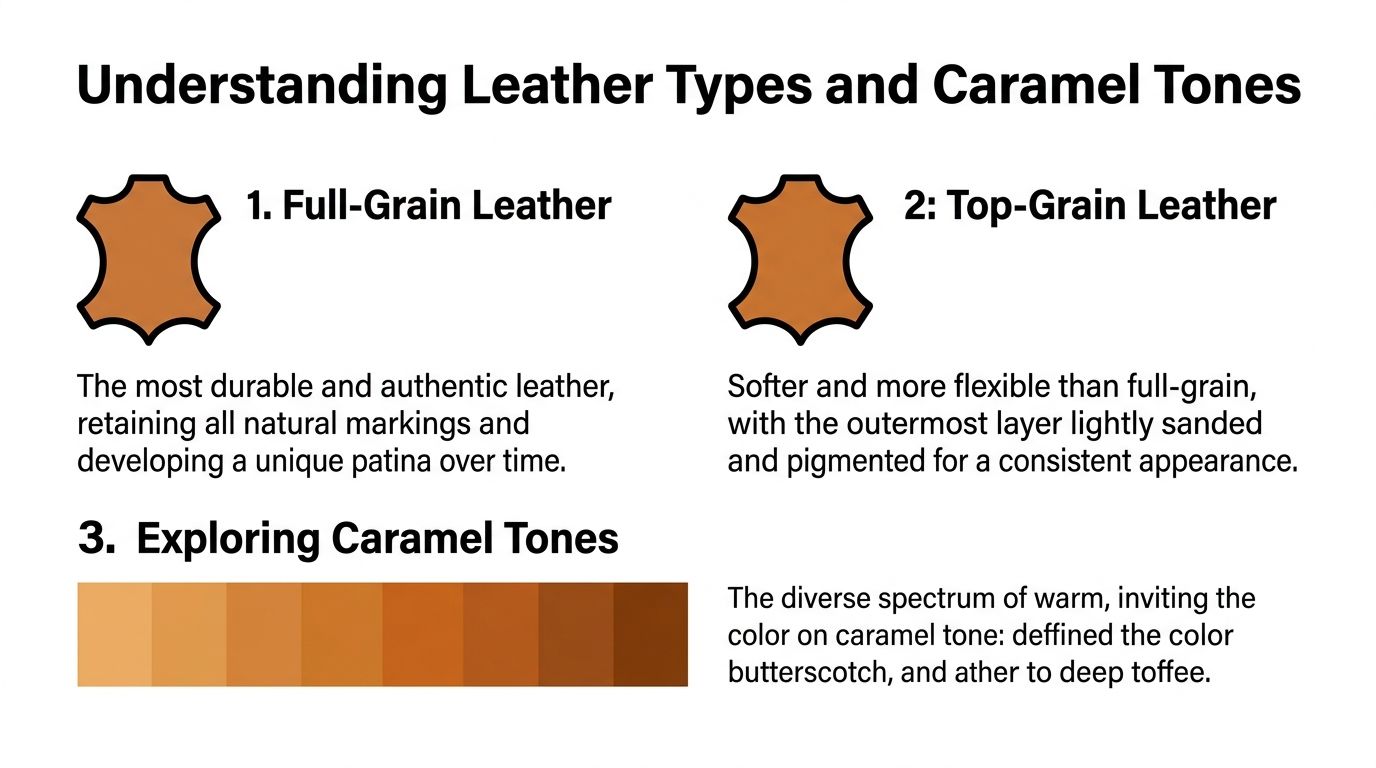
Full-grain, top-grain, and leather match
In our Grants Pass showroom, we often explain leather the same way we explain hardwood flooring. Oak, maple, and hickory are all real wood, but they wear, look, and age differently. Leather works the same way.
Here’s a plain-English breakdown:
| Leather type | What it means in plain English | What shoppers usually notice |
|---|---|---|
| Full-grain | The hide keeps its most natural surface | More markings, more variation, more character |
| Top-grain | The outer layer is lightly refined for a more even finish | A smoother feel and a more uniform appearance |
| Leather match | Real leather covers the main contact areas, with matching material on the outer sides and back | Lower cost while keeping leather where people usually sit and lean |
Top-grain is often the sweet spot for Southern Oregon households. It gives you real leather where comfort matters, but usually with a cleaner, more consistent look that works well in everything from a Rogue Valley farmhouse to a newer open-concept home in Medford.
Two caramel sectional examples often cited by national retailers use top-grain leather on body-touch areas with matched materials elsewhere, as noted earlier. This answers the two biggest buyer concerns at once. You get the feel of leather where your family uses the sofa, and you avoid paying for full leather in spots that rarely get touched.
Why leather terminology causes confusion
A lot of shoppers hear “genuine leather” and assume the question is settled. It is not that simple.
The better question is where the leather is used, how it is finished, and what the surface feels like day to day. A sectional is a high-contact piece of furniture. Your hands notice the arm pads. Your legs notice the seat deck. Your household notices very quickly whether the leather feels supple, dry, slick, or slightly grained.
If you want a broader explanation of fabric and leather choices, our guide to upholstery materials gives a helpful starting point.
Practical rule: Touch the seat, back, and arms first. Those are the surfaces that tell you the most about everyday comfort and wear.
Caramel is a color family, not a single shade
This is the part that surprises people.
“Caramel” sounds precise, but on a showroom floor it behaves more like a range than a fixed color. One sectional may read light and golden, almost like butterscotch. Another may shift deeper, closer to saddle, toffee, or a softer cognac brown.
That variation matters in Southern Oregon homes because our light changes so much through the year. A caramel sectional in a bright Jacksonville living room can look warmer and lighter by midafternoon. The same piece in a shaded family room in Grants Pass may read richer and browner for most of the day.
A few things influence how caramel shows up in real life:
- Natural light brings out brighter golden notes
- Lamplight tends to emphasize amber and brown
- Wall color can make the leather look warmer, calmer, or slightly orange
- Nearby wood tones can make the sectional appear lighter or deeper
What to check in person
Photos are useful, but leather is still a hands-and-eyes material.
Walk around the piece. Look at the inside arms, the seat cushions, and the back from the side, not only straight on. Sit for a minute. Good leather usually reveals itself the way a good pair of boots does. The surface, the flexibility, and the finish tell you more than the color name ever will.
Pay attention to these details:
- Surface consistency if you want a cleaner, more refined look
- Natural variation if you like more visible character in the hide
- Finish feel because some leathers feel buttery and soft, while others feel firmer and drier
- Tone depth so the sectional works with your floors, rugs, and wood furniture
Ashley, Flexsteel, and La-Z-Boy can all offer a caramel leather sectional, but they often land in different places on color, finish, and feel. The word “caramel” gets you into the right part of the conversation. Your home’s light, your hand, and your daily routine decide which version fits.
Planning Your Sectional Layout and Size
The fastest way to regret a sectional is to shop by photo alone. A caramel leather sectional might be the right style and still be the wrong fit if the chaise blocks a walkway or the corner lands in front of a window.
Start with the room, not the sofa.
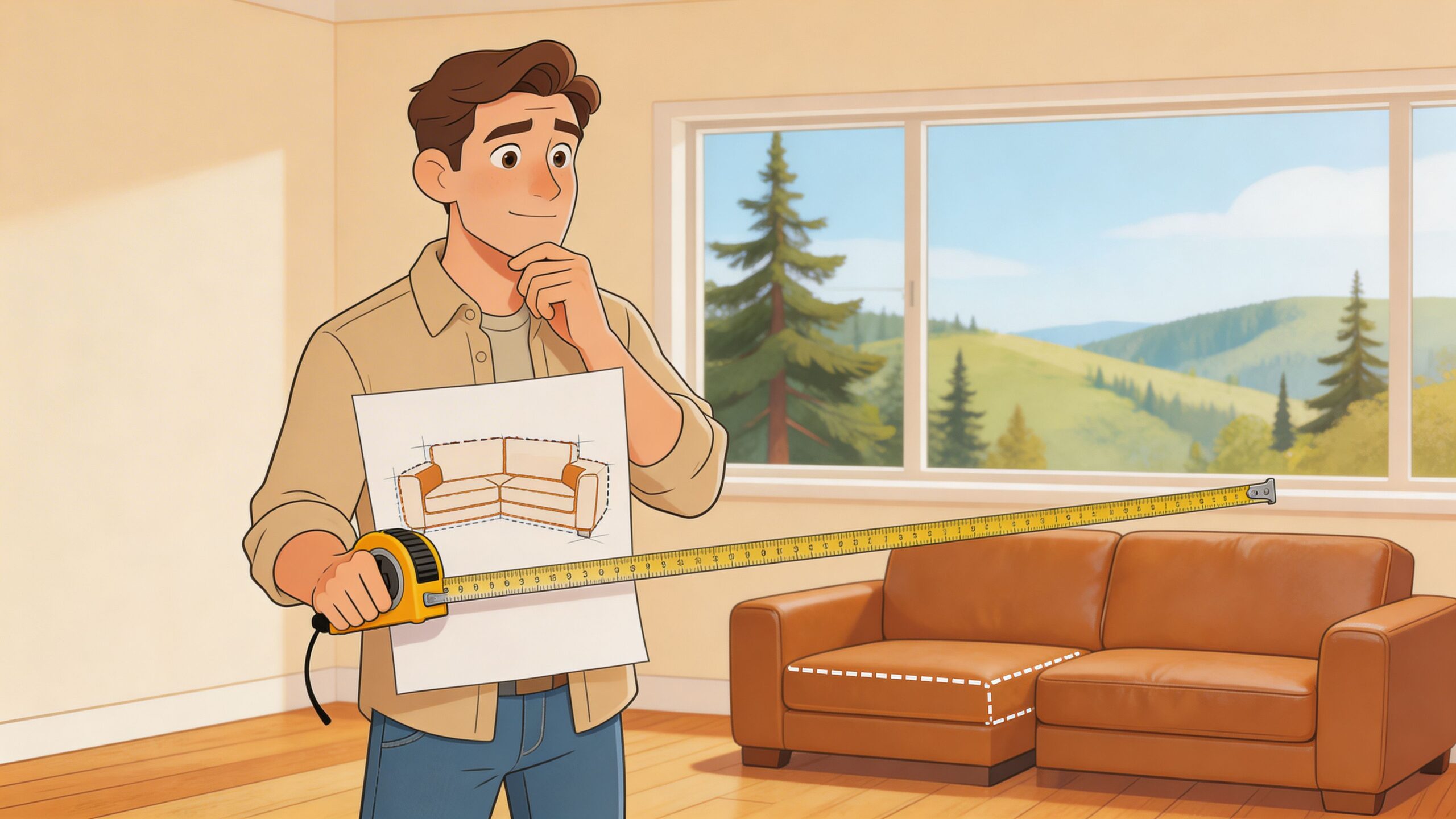
Measure the room the way people use it
Many people measure wall to wall. That’s a start, but it’s not enough.
You also need to think about how people walk through the room, where the TV sits, whether a coffee table needs to fit, and how close you want the sectional to fireplaces, sliders, or entry paths.
Use this quick process:
Mark the usable seating zone
Measure the part of the room where furniture can go, not just the entire room.Note every obstacle
Include vents, doors, floor outlets, windows, baseboard heaters, and traffic lanes.Decide what direction the room faces
Is the sectional anchoring the television area, framing a conversation space, or dividing an open floor plan?Map the return side
That’s the chaise or the perpendicular section. It’s the part most likely to interrupt circulation.
A taped floor outline helps more than people expect. Painter’s tape on the floor gives you a real sense of bulk before you buy.
Choose the layout that matches your household
Different layouts solve different problems. There isn’t one “correct” sectional shape.
L-shape for everyday versatility
This is the layout many homeowners choose first. It fits a wide range of living rooms and creates a clear seating zone without overwhelming the space.
It works well for:
- Open-concept homes where you want to define the living area
- Family rooms centered on a TV or fireplace
- Mixed seating needs where one side lounges and the other side supports upright sitting
Chaise sectional for smaller rooms
A chaise gives you the relaxed feel of a sectional without the footprint of a larger corner build.
This can be a smart choice for:
- Townhomes and tighter living rooms
- Apartments or rentals
- Rooms with one main lounging seat and limited side clearance
U-shape for large gathering spaces
This is the social layout. It suits households that host often or have a big family room.
It needs room to breathe, though. In many Southern Oregon homes, it works best in larger great rooms rather than traditional front living rooms.
If you have to squeeze sideways past a chaise every day, the sectional is too big, no matter how attractive it looks.
Don’t forget the path into the house
A sectional has to fit the room, but it also has to reach the room.
Before ordering, check:
- Front door width
- Hallways and stair turns
- Entry ceiling height if pieces must pivot
- Garage access if that’s the delivery path
Modular sectionals help because individual pieces are easier to move than one large assembled frame. That can matter in older homes around Grants Pass and Ashland where entries aren’t always generous.
Seeing scale in person matters
Online dimensions are useful. Sitting on real sectionals is better.
In a 30,000 sq. ft. showroom in Grants Pass, people can compare a compact sectional beside a deeper, lounge-style model and feel the difference immediately. They can test seat height, back support, arm shape, and how the caramel tone reads under interior lighting. For room-shape inspiration before you visit, this planning guide is helpful: https://gatesfurniture.com/sectional-sofa-layout-ideas/
A lot of layout stress disappears once you’ve physically walked around a few options. Photos flatten furniture. Real space tells the truth.
The Lasting Value of Investing in Leather
A lot of Southern Oregon shoppers reach this point in the decision and ask the same practical question. Is a caramel leather sectional really worth the higher price once real life starts happening on it?
That is the right question.
In homes around the Rogue Valley, a sectional is rarely just for looks. It becomes the place where grandkids pile in for a movie, where dogs claim the corner cushion, and where everyone ends up during a smoky summer evening or a rainy winter weekend. A piece that gets used that hard has to do more than look good on delivery day. It has to hold its shape, stay comfortable, and still fit the home a few years from now.
Where leather earns its keep
Leather appeals to buyers who are tired of seeing everyday life soak into fabric. For routine spills, crumbs, and dust, it is often simpler to wipe clean. It also tends to keep a neater outline over time, which matters if you want the room to look pulled together without constant fussing.
Construction still matters just as much as the cover.
A well-made leather sectional pairs durable upholstery with a supportive frame, good suspension, and cushions that recover well after daily use. This answers the two biggest buyer concerns at once. You are paying for the surface you see and the structure doing the hidden work underneath. Since 1946, that has been part of how we have helped families shop at Gates Home Furnishings. We look past the tag and ask how the piece will live in the home.
A balanced look at the tradeoffs
Leather is not automatically the right answer for everyone. Some homeowners prefer the softer hand of fabric. Some want a lower starting price. Others want bold pattern and color built right into the upholstery instead of added through pillows and rugs.
Here is the plain comparison:
| Consideration | Leather sectional | Fabric sectional |
|---|---|---|
| Cleanup | Usually easier for everyday wipe-downs | Often needs more frequent fabric care |
| Look over time | Can develop character with use | Can pill, fade, or crush depending on fabric |
| Upfront cost | Often higher | Often lower |
| Texture | Smooth and structured | Softer and more varied |
Neither column wins for every household. The better choice depends on how you use the room, how much upkeep you want, and whether you are buying for the next couple of years or for the long haul.
Who usually gets the best return from leather
Leather often makes the most sense for households that want one reliable anchor piece instead of a short-term style fix.
That usually includes:
- Busy family rooms with constant daily traffic
- Homes with pets when nails are kept trimmed and spills are cleaned quickly
- Buyers who want fewer replacements over the years
- Rustic-modern, farmhouse, and transitional homes that mix wood, stone, and warm finishes common across Southern Oregon
Caramel is especially useful here because it bridges a lot of local styles. It works with lodge-inspired homes outside Grants Pass, cleaner transitional spaces in Medford, and lighter, more collected interiors in Ashland. If you want help tying those finishes together, our guide to choosing a living room color palette that works with warm upholstery can help.
For very active households, some families also keep a throw or a removable waterproof sofa cover on the most-used seat during puppy training, potty training, or holiday gatherings.
A little prevention goes a long way.
Wipe spills promptly, keep the sectional out of harsh direct sun when you can, and do not let dust and grit sit in the seams. Those small habits matter because leather usually rewards steady care with a longer, better-looking life.
Value means more than sticker price
The cheapest sofa in the room is not always the least expensive one to own. If it loses support early, wears unevenly, or starts looking dated fast, the lower price stops feeling like a bargain.
A well-chosen caramel leather sectional often stays relevant through several phases of home life. Kids grow up. Floor colors change. Paint changes. Accent pillows come and go. Good leather usually adapts better than trend-driven upholstery because its warmth and texture already feel established, almost like hardwood flooring or a well-made dining table.
Special ordering becomes useful in these situations. If you find the right frame but need a different configuration, leather color, or cushion feel to make the investment make sense for your home, customization can protect the value of the purchase instead of forcing a compromise you will live with every day.
That long-view approach has been part of George Gates' promise of Service and Value since 1946. Help families choose furniture that still makes sense after the excitement of buying it has passed.
Styling Your Sectional for a Cohesive Look
A caramel leather sectional does a lot of the heavy lifting in a room. Once it’s in place, the rest of the space usually gets easier to decorate because the sofa has already established warmth, shape, and direction.
The mistake people make is treating it like it has to carry the whole room by itself. It doesn’t. It needs support from color, texture, and a few pieces with personality.
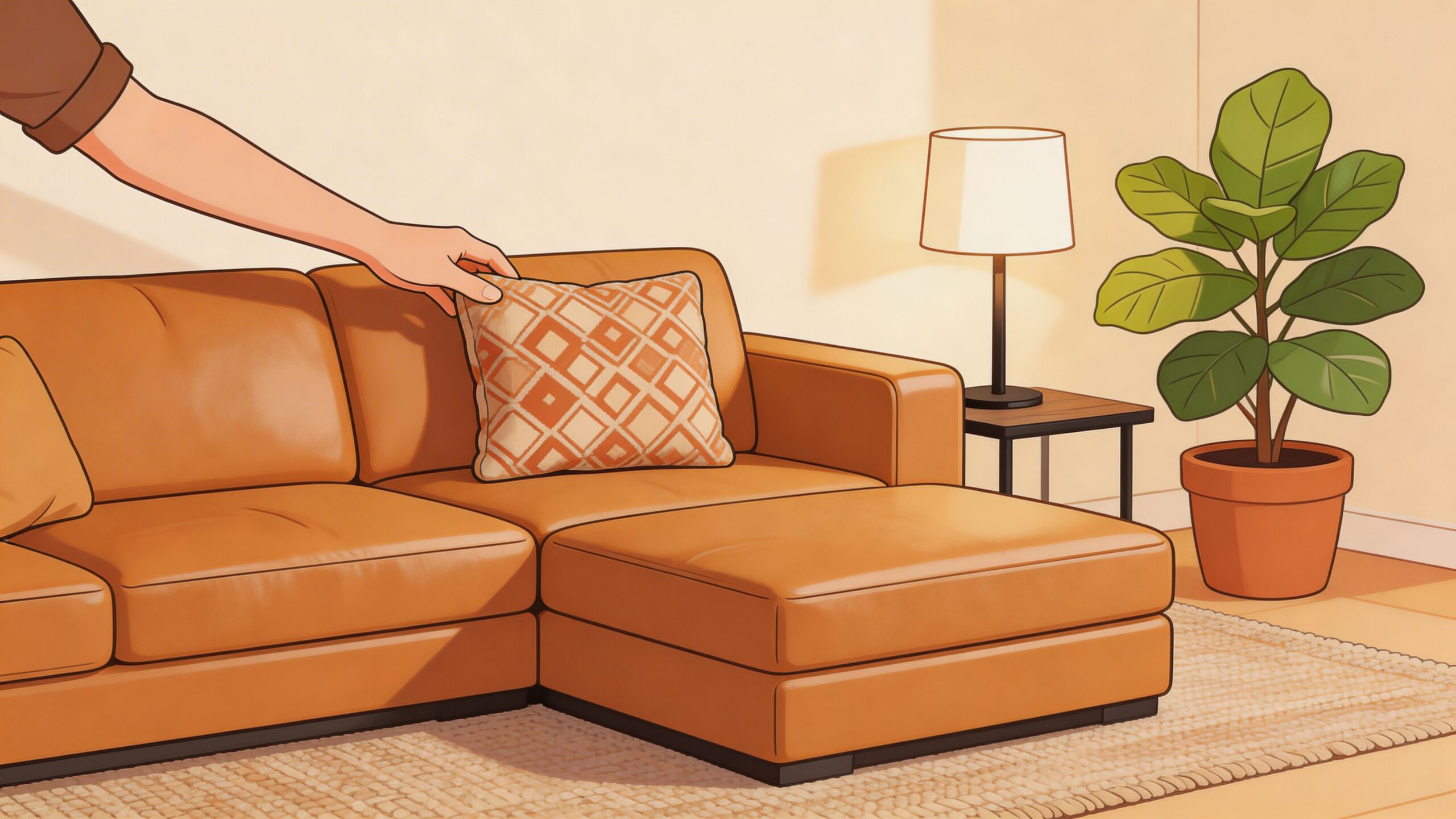
Colors that pair naturally with caramel
Caramel leather is warm, but it doesn’t force you into an all-brown room. In fact, the nicest spaces usually add contrast.
We often suggest these pairings:
- Deep blue for a grounded, polished look
- Forest green if you want a natural, collected feel
- Cream and oatmeal to keep the room open and light
- Charcoal or black accents for definition
- Muted rust or clay if you want a layered earth-tone palette
If you’re trying to choose wall color, rug color, and accent color together, this color planning guide can help: https://gatesfurniture.com/an-experts-guide-to-the-perfect-color-palette/
Texture is what keeps leather from feeling flat
Because leather already has a smooth surface, it benefits from contrast around it. That’s what gives the room dimension.
A few reliable combinations:
- Chunky knit throw over one corner
- Velvet or woven pillows in two or three complementary tones
- Wood coffee table with visible grain and age
- Nubby area rug to soften the floor line under the sectional
One of our favorite room stories is a caramel sectional paired with a reclaimed wood coffee table, a teak console, and a simple rug with quiet pattern. The room feels layered but not busy. That’s often where our Unique Finds come in. Reclaimed wood and one-of-a-kind teak pieces add the kind of character that keeps the room from looking copied from a catalog.
Art can sharpen the whole room
Many homeowners think caramel leather requires colorful art above it. Sometimes that works. Sometimes the stronger move is restraint.
A set of timeless black and white art pieces can give the wall enough contrast to balance the sectional without competing with its warm tone. That approach works especially well when the room already has wood, plants, and textured textiles doing the visual warming.
A caramel leather sectional usually looks best when at least one nearby element is cooler, one is softer, and one has visible natural texture.
A simple styling formula that works
If you want a room that feels finished but lived in, use this mix:
One anchor
The sectional is the anchor.One textural table
Reclaimed wood, stone, or another natural surface adds depth.Two pillow fabrics
Keep one smooth and one tactile.One dark accent
A lamp, frame, or metal base helps define the room.A little breathing room
Don’t crowd every edge with décor.
That last point matters. Leather already has presence. Let it show.
Custom Orders and Finding Your Perfect Match
A lot of Rogue Valley homeowners reach the same point in the search. They find a caramel leather sectional that feels close, but not quite right for the way they live. The color is right for the room. The scale is close. Then one detail throws it off, such as the chaise facing the wrong direction, the corner piece taking up too much walkway, or the seat depth feeling better for guests than for nightly lounging.
Special ordering becomes useful in these situations.
Why custom ordering helps
A sectional has to do two jobs at once. It needs to fit the room on paper, and it needs to fit your household in real life. Those are not always the same thing.
That is especially true in Southern Oregon homes, where floor plans vary so much. We regularly see open-concept newer homes in Medford, narrower living rooms in older Grants Pass houses, and great rooms around fireplaces or view windows throughout the Rogue Valley. A stock layout can work well, but a custom or special-order layout gives you more control over the details that shape daily comfort.
That can include size, orientation, number of pieces, leather option, and the way the sectional sits within your room instead of a generic showroom setup.
A modular sectional is a good example of why this matters. Some designs can be arranged in multiple ways, and some use stronger support systems and higher-quality leather in the areas that get the most contact, as noted earlier in the article. This answers the two biggest buyer concerns at once. Will it fit my life, and will it hold up?
The value of working through the choices
An experienced furniture team can save you from a mismatch that looks minor in the store and feels frustrating at home.
Arm width changes footprint more than many shoppers expect. Seat depth affects whether the sectional feels upright and supportive or relaxed and loungey. Back height changes how substantial the whole piece looks in the room. Modular pieces also give you a little insurance if your needs change later, such as adding seating, changing the room layout, or moving to a different house.
For homeowners who want help sorting through those choices, Gates Home Furnishings offers special-order guidance for custom sofas and sectionals.
What to decide before you order
You do not need every answer before you visit the showroom. It helps to know your starting point.
Room priority
Lounging, entertaining, TV viewing, or conversationConfiguration need
L-shape, chaise, or modular setupComfort preference
Upright and supportive, or deeper and more relaxedVisual goal
Clean-lined contemporary, transitional, or more rusticHousehold reality
Kids, pets, frequent guests, or a quieter space
The best custom order is not the one with the most options. It is the one that matches how you live, how your room is built, and how you want your home to feel at the end of a long Southern Oregon day.
Your Caramel Leather Sectional Questions Answered
Some questions come up in nearly every showroom conversation. They’re practical, and they should be.
A sectional is a major furniture choice, so people want to know how it cleans, how it lives with kids and pets, and what happens after the purchase.

How do you clean a caramel leather sectional
Routine care is usually straightforward. Dust and grit are more damaging than people think, so regular light vacuuming with a soft brush attachment helps.
For ordinary upkeep:
- Vacuum creases and seams so debris doesn’t grind into the surface
- Wipe gently with a soft cloth for day-to-day dust
- Use mild soap carefully when needed if the manufacturer allows it
- Avoid harsh cleaners unless they’re specifically made for your leather type
If you want a simple care refresher, this leather furniture care guide is useful: https://gatesfurniture.com/care-leather-sofas-furniture/
Is leather okay for homes with kids and pets
Usually, yes. The key is realistic expectations.
Leather handles normal family life well, but no upholstery is invincible. Sharp claws, ink, and neglected spills can damage any surface. In busy homes, we suggest quick cleanup habits, trimmed pet nails, and a throw blanket on the favorite seat if one spot gets constant use.
Will a caramel tone go out of style
Caramel has staying power because it behaves almost like a warm neutral. It can lean rustic, modern, transitional, or even a little mid-century depending on the table, rug, and lighting around it.
That flexibility is one reason homeowners keep coming back to it. If you repaint the walls or change the rug later, the sectional usually still works.
What if the budget is tight right now
A lot of households want quality, but they also need the purchase to fit the month-to-month budget.
That’s why Gates Easy Pay matters. It includes $0 down, 6-month interest-free options, and no-credit-needed programs. Those options can make a better long-term piece more accessible without forcing a rushed compromise.
What happens with delivery
This part often gets overlooked until moving day.
We believe delivery should mean more than dropping boxes at the curb. White-Glove Delivery includes professional setup and assembly, and mattress haul-away is available when needed. That’s especially helpful when a sectional has multiple pieces or your room requires careful placement.
Should I buy online or sit on one first
If you already know the exact model and have seen it before, online shopping can be convenient. But if you’re still comparing comfort, scale, and leather finish, in-person testing is worth the trip.
That’s why many Southern Oregon shoppers make time to visit our 30,000-square-foot showroom in Grants Pass. You can sit on different sectionals, compare brands like Ashley and Flexsteel, and see what caramel really looks like under showroom light instead of a phone screen.
If you’re narrowing down the right caramel leather sectional for your home, visit Gates Home Furnishings to test comfort in person in Grants Pass or browse the collection online. We’ve served Southern Oregon since 1946, and we’re still guided by George Gates’ promise of Service and Value.