Sectional Sofa with Storage: The Ultimate Buyer’s Guide


A sectional sofa with storage usually enters the conversation at the exact moment a living room starts working too hard. Blankets end up on chair backs. Board games slide under the coffee table. Pet toys, chargers, and remotes drift from one cushion crack to another. The room still looks fine from a distance, but living in it feels busy.
That's why this style has become such a practical choice. Sectionals are already the largest product type in the global sofa market, accounting for 28.76% of category value in 2025, and the dedicated sectional-sofa market is projected to grow at a 5.8% CAGR to reach $38.7 billion by 2034 according to Mordor Intelligence's sofa market report. Buyers aren't only choosing more seats. They're choosing furniture that helps a room stay functional day after day.
For Southern Oregon homes, that matters. A sectional sofa with storage can make a family room feel calmer without adding extra cabinets, baskets, or visual clutter. It can also create a better rhythm for daily life, especially in homes where one space has to handle lounging, hosting, homework, and movie nights.
Table of Contents
- Your Guide to a Clutter-Free Living Room
- Understanding Storage Sectional Designs
- Pros and Cons of Storage Sectionals
- Measuring Your Space for the Perfect Fit
- Choosing Quality Materials and Lasting Durability
- Your Purchase Experience at Gates
- Find Your Perfect Sectional Today
Your Guide to a Clutter-Free Living Room
You get home, drop your keys, and sit down for the evening. Then the little annoyances show up. A throw blanket is draped over one cushion, the remote has slipped out of sight, and the kids' things are gathered along the arm of the sofa because there is nowhere sensible to put them.

A sectional sofa with storage helps by putting the hiding place where the clutter starts. Blankets can go under the chaise. Controllers, chargers, and extra pillows can stay close at hand without staying in plain view. Instead of asking your living room to fit another cabinet or basket, the sofa does part of the work.
That matters in real homes because clutter is usually a convenience problem, not a character flaw. If putting something away takes two steps, people leave it out. If the storage is built into the seat, cleanup becomes much easier.
A good storage sectional works like a mudroom bench for the living room. It gives everyday items a home, but it also asks you to be realistic about what belongs there. Soft goods, movie-night extras, and guest bedding usually make sense. Heavy items, sharp toys, or anything you need ten times a day may be better stored elsewhere.
Color can also change how calm the room feels after the extra items are tucked away. If you are updating more than the sofa, this guide to colour psychology can help you choose fabric tones that support a quieter, more settled space.
Southern Oregon homes often ask one room to do several jobs. A living room may serve as the family gathering spot, TV room, reading corner, and occasional guest area all in the same week. In that kind of space, hidden storage is useful because it keeps the room flexible without making it feel crowded.
There is a trade-off, and it is worth understanding before you buy. Storage sectionals can be heavier than standard sectionals, and some designs are less convenient if you need frequent access to what is inside. The best choice is not only the one with the biggest compartment. It is the one that fits how your household lives, and how long you expect that furniture to serve you.
For shoppers who want the whole room to work better, these living room storage solutions can help you plan beyond the sofa and avoid stuffing every extra item into one piece of furniture.
Understanding Storage Sectional Designs
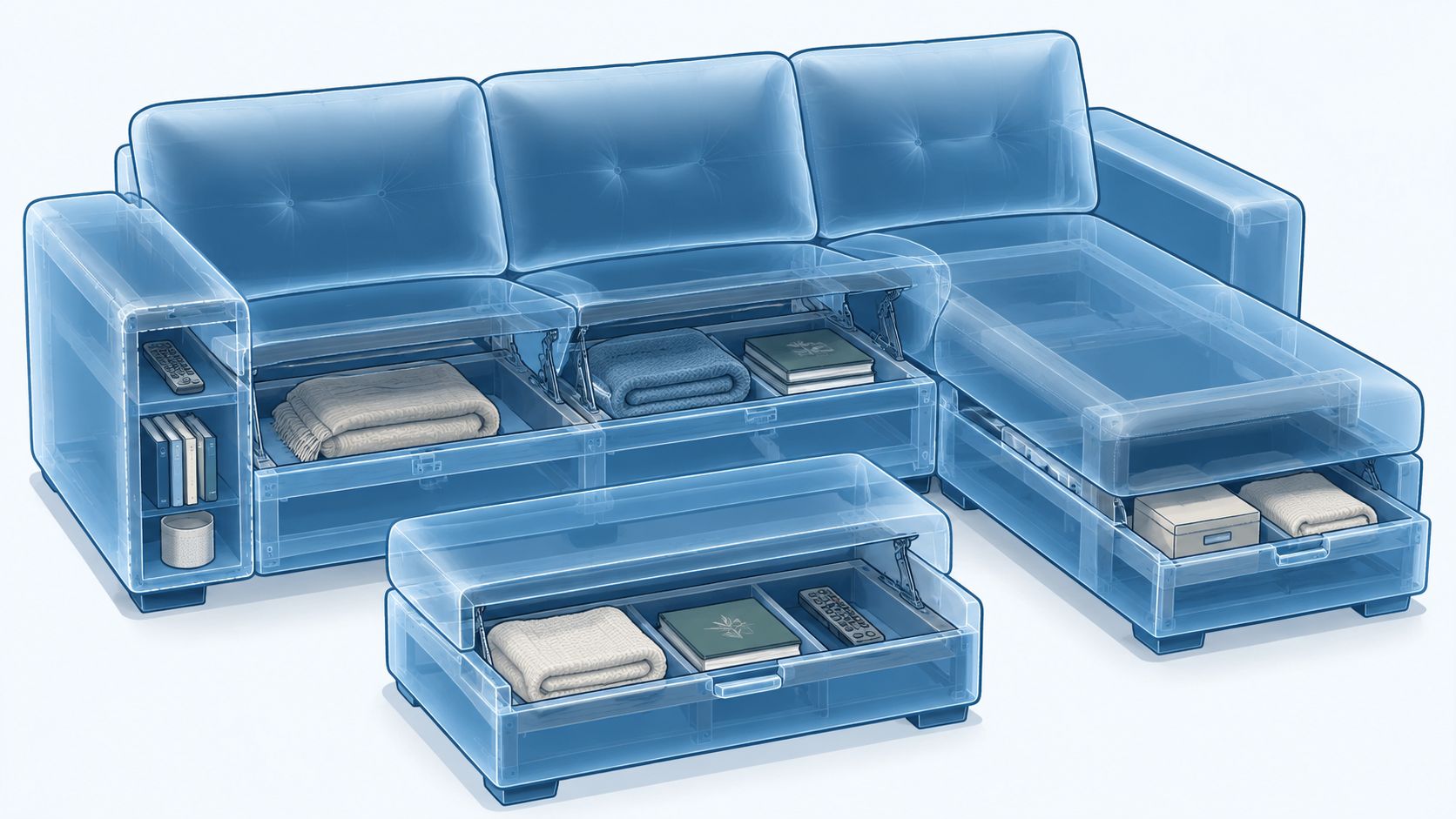
A storage sectional is really a few different furniture ideas under one name. One design gives you a single large compartment. Another spreads storage across several seats. A third adds a movable piece that can follow the room as your needs change. The best fit depends less on the label and more on your daily habits, your floor plan, and how often you want to open those compartments.
The lift-up chaise
Many Southern Oregon shoppers start here because the layout feels familiar. The chaise seat lifts like the lid of a blanket chest and reveals one deep storage area below.
This style works well for bulky items that are useful to keep nearby but do not need constant access. Extra throws, guest bedding, seasonal pillows, and board games are common examples. In a family room, it can be a tidy home for movie-night supplies. In a smaller house or townhome, it can reduce the need for a separate trunk or storage bench.
The trade-off is access. A deep compartment holds a lot, but the things at the bottom can get buried. If your household reaches for chargers, remotes, or toys several times a day, one large bin may feel less convenient than it sounded in the showroom.
Under-seat storage modules
Under-seat storage is more divided and more organized. Instead of one big compartment, several seats may each hold smaller items. That can make the sectional feel more like a row of shallow drawers than a single trunk.
For many families, this design is easier to live with day to day. Books, hobby supplies, kids' items, and device cords are simpler to sort when each category has its own spot. It also helps households that like to rearrange modular pieces over time, since the storage is built into more than one section.
There is a structural trade-off to keep in mind. Every storage compartment takes up space that would otherwise be part of the frame or support system. That does not mean the piece is poorly made. It means the construction details matter more. Hinge quality, panel thickness, and how the seat is reinforced all deserve a close look.
Storage ottomans and flexible pieces
A storage ottoman is the utility player of the group. It can serve as a footrest, an extra seat, a casual landing place for a tray, and a hidden compartment for smaller items.
That flexibility is especially useful in homes where one room has to shift roles during the week. A family might use the ottoman for toy storage in the afternoon, pull it closer for lounging at night, then clear the top for guests on the weekend. If you move furniture around often, this type of storage usually feels easier to handle than lifting a full chaise seat every day.
How the mechanism affects function
The opening method matters more than many shoppers expect. A lift-top chaise or ottoman should rise smoothly, stay open securely, and close without a hard drop. Seat cushions should stay aligned instead of sliding out of place each time the compartment is opened. Well-designed mechanisms also make it easier to use the storage you paid for, rather than avoiding it because it feels awkward.
A simple rule helps here. Store least-used bulky items in the deepest compartment. Keep daily-use items in the easiest-to-open spot.
If you are comparing layouts in person, pay attention to how the sectional feels after the third or fourth opening, not just the first. Good storage design should still feel practical after months of real use. For a broader checklist, five sofa sectional features worth noticing can help you compare comfort, function, and construction with a more trained eye.
Pros and Cons of Storage Sectionals
A storage sectional can make a living room feel calmer fast. Blankets disappear, toys have a home, and the room looks less crowded without adding another cabinet or trunk. For many Southern Oregon homes, that kind of built-in function is a practical win, especially when one room has to handle everyday family life and weekend company.
Still, storage is only helpful if the sectional stays comfortable and holds up well. That is the part shoppers sometimes miss. A storage seat has more parts, more movement, and a different internal build than a standard seat, so it deserves a closer look before you buy.
Where storage sectionals work especially well
The biggest benefit is simple. You get usable storage in a piece you already planned to own.
That can make a noticeable difference in open living rooms, smaller homes, and spaces that collect everyday items faster than expected. One hidden compartment can do the work of baskets, bins, or a small accent chest, which helps preserve walking space and keeps the room from feeling visually crowded.
They also suit households that need flexibility. A family might store throws in winter, board games during the school year, or guest bedding when relatives visit. If you are weighing several pieces that need to serve more than one purpose, this guidance on choosing multi-functional furniture for modern homes offers a helpful broader framework.
The trade-offs that matter over time
Storage sectionals are not automatically less durable, but they are less forgiving of weak construction. A regular seat can devote all of its structure to support and comfort. A storage seat has to share that job with hinges, lift hardware, and an open cavity inside. It works a bit like a bench with a lid. If the frame and mechanism are built well, it performs nicely. If they are not, the difference often shows up after repeated daily use.
Comfort can vary from seat to seat, too. The storage portion may feel slightly firmer or less consistent than the fixed seats nearby. That is not always a problem, but it is worth noticing in the showroom instead of discovering it after movie night becomes an every-night routine.
Access is another trade-off. Hidden storage sounds convenient, but some compartments are deep enough that small items get lost at the bottom. In that case, the space becomes more like a long-term holding area than a true daily-use organizer. If you are unsure how much extra room you need, a quick guide to self storage unit sizes can help you picture volume more realistically, even though the setting is different.
Questions that lead to a better choice
A good storage sectional should solve clutter without creating a new problem. Ask a few practical questions while you test one:
- Does the storage seat feel supportive enough for everyday lounging?
- Does the lid open smoothly and stay open safely?
- Can you reach the compartment without shifting half the room around it?
- Will your household use the storage often, or fill it once and forget it?
- Does the build feel solid at the corners, hinges, and seat base?
Those questions help separate a smart long-term purchase from a feature that only sounds good on the sales tag.
For many households, a storage sectional is a strong choice. The best ones reduce clutter, save floor space, and keep the room more usable day to day. The right purchase comes from balancing that convenience with honest attention to comfort, construction, and how your family will use it over the years.
Measuring Your Space for the Perfect Fit
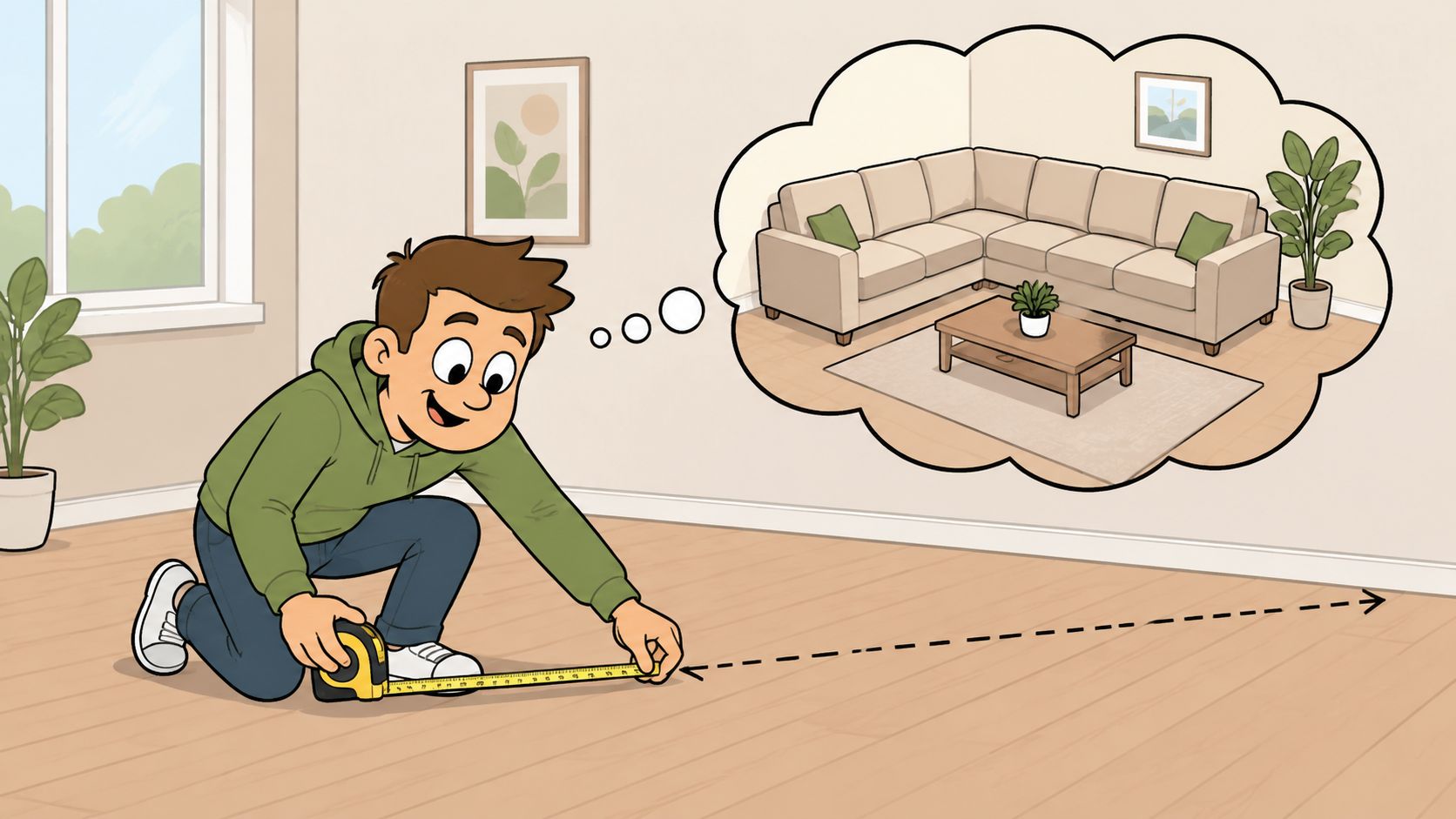
Saturday afternoon arrives, the delivery truck pulls up, and everyone is ready to settle a new sectional into the living room. Then the first turn in the hallway stops the whole plan. That kind of problem is more common than fabric regret, and it usually starts with a room measurement that ignored the path into the room.
Southern Oregon homes make this especially important. Older houses in places like Grants Pass often have narrow doorways, tighter halls, and sharper turns than newer construction. A sectional can fit the floor plan perfectly and still be a headache on delivery day.
Measure the room, then measure the route
Start where the sectional will live. Measure the wall length, note windows and floor vents, and leave enough open space for people to walk comfortably without brushing the chaise every time they cross the room. Painter's tape on the floor helps because it turns a furniture idea into something you can walk around.
Then measure the travel path from the entry door to the living room. Furniture delivery works a lot like moving a refrigerator. The final spot matters, but every doorway and corner on the way there matters too.
Check these areas carefully:
- Door openings: Measure width and height, and include trim.
- Hallways: Look for tight spots where a console table, railing, or wall return narrows the path.
- Corners and turns: A piece may clear the doorway but fail once it has to pivot.
- Stairwells: Ceiling slope, railings, and landings can limit what gets through.
A quick sketch helps many households avoid mistakes. So does taking photos of tricky doorways before shopping.
Storage changes the measuring math
A storage sectional needs a little more thought than a standard one. The outside footprint may fit your room, but the seat lids still need room to open, and the storage base can make the piece bulkier during delivery. That is one of the less glamorous trade-offs of built-in storage. You gain hidden space, but you also add weight, moving complexity, and sometimes a chunkier profile.
Capacity can be misleading too. Deep compartments sound generous in the showroom, yet they are only useful if they hold the items you plan to store. For anyone trying to picture volume more clearly, this guide to self storage unit sizes can help you compare dimensions with real household items. It is a practical way to decide whether you need room for blankets and board games, or just a place to hide the extra throws.
A measuring checklist that saves trouble later
Before you buy, confirm four things:
- Footprint: Tape off the full sectional shape on the floor.
- Chaise direction: Left-facing and right-facing layouts can change the room flow fast.
- Clearance: Leave space for coffee tables, recliners, and normal walking paths.
- Delivery path: Measure every opening twice, especially older doors and narrow turns.
If you want a more detailed step-by-step reference, this guide on how to measure furniture for your home walks through the process clearly.
Good measuring protects more than delivery day. It helps you choose a sectional that feels comfortable in real life, opens the way it should, and keeps your Southern Oregon home easy to live in for years.
Choosing Quality Materials and Lasting Durability
A storage sectional should earn its floor space for the long haul. The hidden compartment is useful, but its genuine evaluation occurs years later, when the seats still feel supportive, the fabric still looks respectable, and the lift-up storage still works without a struggle.
Start with the frame and seat feel
Storage adds moving parts and extra stress to the piece, so construction matters even more here than it does on a standard sofa. A well-built sectional should feel planted and consistent from seat to seat. If one cushion feels firm and another feels hollow, or if the corner seat seems weaker than the chaise, that is often a sign the support system is not evenly doing its job.
The easiest way to judge this in person is to use it like you would at home. Sit down normally. Shift your weight. Stand up from the edge cushion. Open the storage compartment and close it again. The piece should feel steady through all of that, almost like a good pickup truck door that shuts solidly instead of rattling.
Shoppers naturally notice fabric color first. Comfort and structure deserve first place.
Fabric has to fit the household, not just the showroom
A beautiful fabric can be the wrong fabric if it fights your daily life. In many Southern Oregon homes, the sectional has to handle a little of everything: afternoon sun, weekend guests, pets jumping up, kids dropping snacks, and blankets being pulled in and out of storage.
That is why material choice should match the room's real habits. Performance fabrics usually make sense for busy family rooms because they are easier to clean and tend to hold up better to repeated use. Leather can be a strong choice for some households too, especially if you want a surface that wipes down quickly and develops character over time. The trade-off is feel and maintenance. Some people love the look of leather but prefer the softer, warmer feel of fabric for long evenings on the sofa.
Pet owners have another layer to consider. Certain weaves grab fur and hold onto it like Velcro. Others release it much more easily. If that is a daily frustration in your house, this guide on how to manage pet fur on furniture can help you compare fabric behavior before you commit.
Why better construction usually costs more
Lower pricing can look appealing at first, especially when you are furnishing a whole room. But storage sectionals ask more from a sofa than a standard design does. The frame has to support seating and storage. The hinges or lift mechanisms have to keep working. The cushion support has to stay comfortable even with people sitting on lids or access panels over time.
That is why established manufacturers with a track record for comfort and sound engineering often matter in this category. You are not just buying extra storage. You are buying a piece that has to handle daily sitting, opening, closing, and shifting weight without wearing out too soon.
Furniture lasts longer when the materials, the mechanism, and the household habits all match.
One more honest trade-off is worth keeping in mind. A sectional with built-in storage may never feel quite as light or simple as a non-storage design built at the same price point. Some of your budget goes into the compartment and hardware. That can still be a smart investment, but only if the seating comfort and build quality remain strong enough for everyday life.
For a closer look at fabric types, wear patterns, texture, and cleaning needs, this guide to upholstery materials is a helpful next read.
Your Purchase Experience at Gates
A good buying experience starts before the order is written. You sit down, spot a sectional that looks perfect, then the true questions show up fast. What price range makes sense, how will it get into the house, and what kind of support is available after the sale if daily life leaves its mark on the fabric?
Start with a practical budget
Storage sectionals usually cost more than a similar sectional without compartments. That difference makes sense once you know what is built inside. You are paying for seating, upholstery, frame construction, and the added hardware and panels that make the storage usable year after year.
In general, entry-level models sit at the lower end of the range, while better-made pieces with stronger frames, upgraded fabrics, or sleeper functions move up quickly in price. That is why it helps to shop with a target in mind. A clear budget keeps the decision grounded in real life instead of in wishful thinking.
The goal is not to buy the cheapest storage sectional you can find. The goal is to buy the one that gives you dependable comfort, storage you will use, and construction that matches how your household lives.
Delivery and setup matter more than many shoppers expect
A storage sectional is not a lamp you carry in with one hand. It is a large, heavy piece with corners, connection points, and sometimes lift-up sections that need to sit level to work well. Professional delivery and setup can save a lot of strain and a lot of guesswork.
That matters in Southern Oregon homes, where room layouts are not always simple. Older homes may have tighter entryways. Newer homes may have open plans but specific traffic paths that still need to stay clear. A trained delivery team helps place the sectional where it fits the room and functions the way it should.
Seeing furniture in person helps just as much. Gates has served Grants Pass since 1946, and the showroom gives shoppers room to compare seat depth, arm height, storage access, and scale side by side. That kind of hands-on visit is useful because a sectional can look roomy in a photo and still feel too deep, too firm, or too bulky once you sit on it.
Payment options can help you buy for the long run
Furniture is one of those purchases where timing and budget do not always line up neatly. Flexible payment options can make it easier to choose a better-built sectional instead of settling for one that only solves the problem for a short time.
Gates Easy Pay offers options such as $0 down, interest-free promotional terms, and no-credit-needed plans. For first-time homeowners, growing families, or anyone replacing a worn-out sofa sooner than expected, that can make a durable choice more manageable.
There is also value in shopping with a store that has been helping local households for generations. The guiding idea at Gates has long been Service and Value. That shows up in the practical parts of the experience, from answering honest questions about trade-offs to helping customers find pieces that fit both the room and the routine.
If you want something with more personality after the main seating decision is made, the showroom also includes Unique Finds in reclaimed wood and teak, along with outlet and clearance pieces. That gives shoppers a chance to solve the storage problem first, then finish the room with character.
Find Your Perfect Sectional Today
A sectional sofa with storage works best when the decision is made with clear priorities. Storage style matters. Seat comfort matters. Measurements matter. Material quality matters just as much as the hidden compartment.
For Southern Oregon homes, the smartest choice is usually the one that fits the household's real routine. A family that needs fast toy cleanup may prefer easy-access seat storage. A couple in a smaller home may care more about preserving open floor space. A host who regularly has overnight guests may lean toward a sleeper with hidden compartments and stronger everyday organization.
The practical details shape the long-term result. Storage can reduce clutter and simplify daily life, but only if the sectional fits the room well, feels supportive, and holds up under normal use. That's why testing in person is still so valuable. Sitting on the corners, lifting the storage lid, checking the chaise direction, and walking around the footprint all reveal things that a product photo can't.
In Grants Pass, that hands-on step is easy to appreciate at a real showroom rather than from a screen alone. A large display floor lets shoppers compare scale, depth, fabric feel, and functionality side by side.
For anyone furnishing near downtown Grants Pass, the south side of town, or making the drive in from Medford, Central Point, Ashland, or elsewhere in the Rogue Valley, a thoughtful in-person test can turn a good guess into a confident purchase.
Visit Gates Home Furnishings to explore sectional options, test comfort in the 30,000 sq. ft. Grants Pass showroom, and get help from a family-owned team that's served Southern Oregon since Est. 1946. From Gates Easy Pay with $0 down, 6-month interest-free, and no-credit-needed options to white-glove delivery with professional assembly and mattress haul-away, the process is built around George Gates Jr.’s promise of Service and Value. Browse online or stop by 700 SW 6th St in Grants Pass to find the right sectional for the home.