Camel Colored Sectional: A Southern Oregon Buyer’s Guide


You’re probably here because your current sofa has reached that point. Maybe the cushions sag, the color fights your floors, or the room still doesn’t feel finished no matter how many pillows you buy. In Southern Oregon, we see this a lot in homes from Grants Pass to Ashland. People want a living room that feels warm, practical, and pulled together without looking stiff.
A camel colored sectional often solves that problem better than shoppers expect. It brings warmth without the heaviness of dark brown, and it feels softer and more flexible than a stark gray or bright white sofa. For many families, it lands right in the sweet spot between inviting and polished.
We’ve been helping local homeowners think through decisions like this since 1946, when George Gates Jr. built his business on a simple promise of Service and Value. That history matters because a sectional isn’t just a color choice. It’s a comfort choice, a room-layout choice, and often the piece that sets the tone for everything else around it.
Your Guide to the Perfect Camel Colored Sectional
A few weeks ago, a couple walked into our Grants Pass showroom after moving into a newer home outside town. They had wood floors, lots of natural light, two dogs, and one big disagreement. One wanted something light and airy. The other wanted something forgiving and grounded. A camel sectional turned out to be the answer because it gave them both.
That happens often. Camel sits in a very useful middle ground. It’s warmer than gray, less stark than cream, and less formal than a very dark leather sectional. In homes across the Rogue Valley, that balance matters because many living rooms do double duty. They host movie nights, visiting family, after-school lounging, and holiday gatherings all in the same space.
The challenge is that “camel” can mean different things to different shoppers. Some picture a rich saddle tone. Others imagine a softer tan or a golden neutral. Then the next question comes fast. Should it be leather or fabric? Left-facing or right-facing? Will it work with pets, kids, rustic wood, black metal, or painted built-ins?
That’s where most buyers get stuck.
If you’re still narrowing down the basics, our guide on what to know before buying a sectional is a helpful companion. It covers the foundation. What you’ll find here is the more specific conversation we’d have if you were standing with us in the showroom, looking at camel options and asking what works in a Southern Oregon home.
Why this color gets so much attention
Camel has a way of making a room feel finished, even before the accessories arrive. It works with wood tones, black accents, soft whites, greens, rust, navy, and even unexpected colors like plum or charcoal. That gives you breathing room if your style changes over time.
It also feels approachable. A camel colored sectional can look right at home in a farmhouse near Merlin, a Craftsman in Ashland, or a newer build in Medford with cleaner lines and larger windows.
Practical rule: If you want one sofa that can move with your style for years, camel is one of the safest starting points you can choose.
What we want you to feel by the end
Confident. Not rushed, not dazzled, and not talked into something that only looked good under showroom lights.
A good sectional should fit your room, your routines, and your tolerance for maintenance. Camel can absolutely do that. The rest comes down to choosing the right material, shape, and styling details for the way you live.
What Makes a Camel Sectional a Timeless Choice
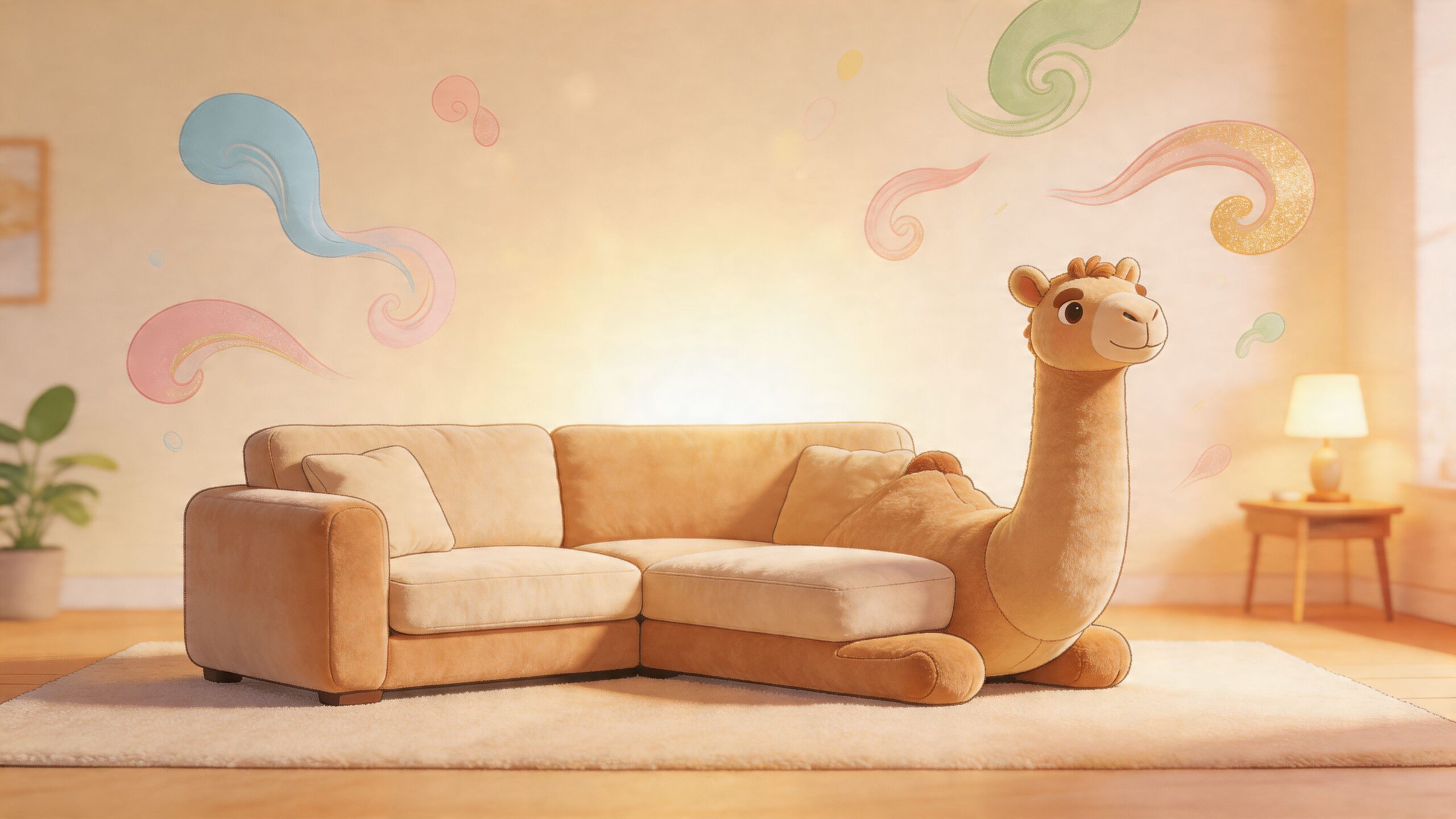
Walk into a Southern Oregon home with a lot of natural wood, a stone fireplace, and a dog stretched out in the living room, and a camel sectional usually looks like it belongs there. It brings warmth without feeling heavy, and it stays flexible if your style shifts over the years.
That staying power is the primary reason camel keeps showing up in well-lived-in homes. The color feels settled and welcoming. It also gives you more freedom than trend-driven shades that look dated once the room changes around them.
Camel is a neutral with warmth built in
A lot of shoppers hear "neutral" and picture gray, beige, or off-white. Camel sits in that family, but it has more life to it. You usually see a blend of tan, brown, honey, and soft golden undertones, which keeps it from feeling flat.
That matters in Rogue Valley homes. Many local spaces already have warm ingredients such as medium wood floors, alder or oak cabinets, brick hearths, woven rugs, and sunlight that changes character from morning to late afternoon. Camel tends to cooperate with those finishes instead of fighting them.
It also does a nice job of softening black metal accents and sharper architectural lines.
Timeless usually means adaptable
Furniture lasts when it can work in more than one version of your home. A camel sectional does that especially well. It can feel relaxed in a farmhouse outside Merlin, polished in a Craftsman in Ashland, or clean and current in a newer Medford build with taller windows and simpler trim.
A good way to picture it is this. Camel works like the leather boots or well-made jacket you keep reaching for because it fits almost everything around it. The room can change. The sectional still makes sense.
If you are still sorting out how the sofa will sit in your room, these sectional sofa layout ideas for different room shapes can help you see why a flexible color matters as much as the size.
Why the color keeps working year after year
Camel holds its place because it changes character based on what you pair with it.
- With black accents, it looks cleaner and more architectural.
- With reclaimed or natural wood, it feels grounded and easy.
- With cream pillows and throws, it turns softer and more layered.
- With deep green, rust, or navy, it gets richer and more dramatic.
That range is easy to miss at first. Shoppers often think they are picking one sofa color. In practice, they are choosing the backdrop for everything else in the room.
Camel gives you room to update the space without replacing the sofa.
Common confusion about undertones
Many homeowners often pause, and for good reason. Camel is a color family, not one exact shade.
Some camel sectionals read sandy and light. Others look closer to caramel or saddle tones. Sun exposure matters too. In a room with strong afternoon light, camel often looks warmer. In a shaded room, it can read more muted and earthy.
A simple guide helps:
| Camel tone | Best for |
|---|---|
| Lighter, sandy camel | Smaller rooms, airy spaces, softer palettes |
| Mid-tone camel | Most homes, broad styling flexibility |
| Rich caramel camel | Larger rooms, dramatic contrast, deeper wood tones |
The timeless part is not one perfect version of camel. It is the fact that the color stays natural, warm, and easy to live with. As long as it avoids looking overly orange, you are usually choosing a shade with staying power.
Choosing Your Perfect Material Leather vs Fabric
Choosing the right material is where a lot of smart sectional shopping happens. In our Grants Pass showroom, this is often the point where a Southern Oregon homeowner stops looking at swatches and starts picturing real life. The dog jumping up after a walk. The grandkids eating crackers during a movie. The afternoon sun pouring through west-facing windows in Medford or Central Point.
Two camel sectionals can have a similar color and a completely different day-to-day experience.
Leather brings character and structure
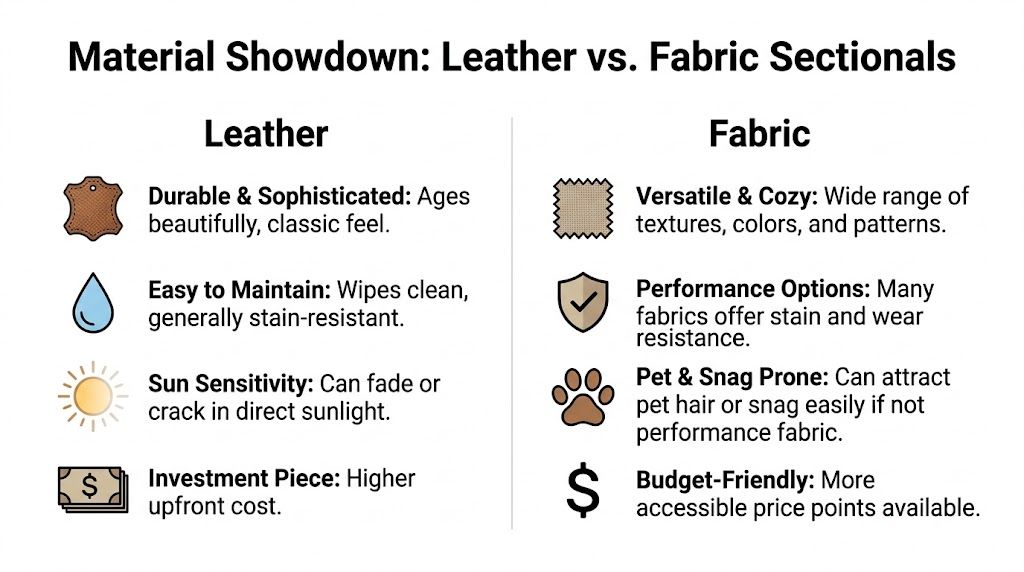
Camel leather usually appeals to shoppers who want a cleaner outline and a surface that changes over time in a pleasing way. A good leather sectional works like a well-made pair of boots. Early on, it looks crisp and polished. After years of use, it often looks more personal, not merely older.
Premium options can include full-grain or top-grain leather, and product details for this camel leather sectional also highlight comfort-focused features like power reclining and zero-gravity positioning. That matters for households that want their sectional to do more than just look good. It can also support easier lounging for older family members or anyone who spends long evenings reading, watching TV, or recovering after a long day on their feet.
Leather also has a practical side. Spills often stay on the surface long enough for a quick wipe, and pet hair usually brushes off more easily than it does on textured upholstery.
Leather is often a strong fit for shoppers who want
- Easy cleanup after snacks, drinks, or everyday messes
- A refined look with more shape and visual structure
- Less pet hair cling on the seating surface
- Natural aging that adds character instead of flattening the look
There are trade-offs. Leather can show claw marks, some finishes feel cooler at first touch, and households that want a plush, sink-in seat sometimes find it firmer than expected.
Fabric offers softness and flexibility
Fabric wins people over for a simple reason. It often feels relaxed the second you sit down.
That softness matters in family rooms across the Rogue Valley, especially in homes where the sectional is the main landing spot for movie nights, homework, weekend naps, and guests during the holidays. Camel fabric also tends to show more texture because the weave catches light across the cushions and arms. That extra texture can make the sofa feel more casual and layered, which works especially well in Southern Oregon homes with rustic wood floors, painted built-ins, or a mix of older and newer pieces.
Construction matters here as much as the surface. For example, many upholstered sectionals use engineered wood in the frame because it is designed for consistency and stability. The APA, The Engineered Wood Association, explains how engineered wood products are built for predictable performance and dimensional stability in changing indoor conditions, which is useful background for anyone comparing frame materials in upholstered furniture: engineered wood performance and stability.
Fabric also gives you a wider range of feel. A tightly woven performance fabric feels very different from chenille, velvet, or a nubby weave. If you want a broader primer before you commit, our guide to upholstery materials explained walks through how different upholstery options feel, wear, and clean.
Fabric is often a strong fit for shoppers who want
- A softer seat for stretching out and lounging
- More texture options to shape the look of the room
- A casual, welcoming feel that suits busy family spaces
- More price flexibility across styles and brands
Pet owners should pause here for a minute. Some weaves release hair fairly easily, while others grab onto it and advertise every shedding season. If that sounds familiar, it helps to read up on the best fabric for pet hair before you choose.
A side-by-side look
| Feature | Leather | Fabric |
|---|---|---|
| Feel | Smooth, supportive, structured | Soft, cozy, often more relaxed |
| Aging | Develops patina | Depends on weave and care |
| Pet hair | Usually easier to remove | Can cling in textured weaves |
| Visual style | Sleek, classic, refined | Warm, layered, approachable |
| Spill response | Often easier to wipe | Varies by fabric type |
What Southern Oregon families often miss
The biggest mistake is choosing for the fantasy version of home life instead of the actual one.
A family in Eagle Point with two dogs and school-age kids may be happier with leather because cleanup is faster. A retired couple in Ashland may prefer a soft performance fabric sectional because comfort during long evenings matters more than quick wipe-downs. A Jacksonville homeowner with lots of natural light may choose leather for its structure, then add softness with pillows and throws.
The better question is not which material is better overall. The better question is which material fits the way your household lives.
How to decide without overthinking it
Use these four questions in order:
- How do you use the sectional most days? Lounging points many shoppers toward fabric. Frequent snacking, pets, or easy cleanup often points them toward leather.
- What annoys you more? Visible crumbs and spills, or pet hair and surface texture.
- Do you want the sofa to soften the room or sharpen it? Fabric usually softens. Leather usually adds definition.
- Who is using it every day? Kids, pets, guests, and aging family members all change the right answer.
That process sounds simple because it is. The right material choice usually becomes clear once you match it to your habits, your room, and your tolerance for maintenance. In a local store, we can also walk you through real samples, explain how each surface feels, and arrange delivery and financing options that make the decision easier than guessing from a screen.
Sizing and Configuration for Rogue Valley Homes
Saturday evening in Grants Pass often looks the same. Someone carries in pizza, a dog cuts through the room at full speed, and one person heads from the kitchen to the hallway while everyone else tries to settle in. A sectional has to do more than look good in that moment. It has to leave enough room for real life to keep moving.
That is why sizing mistakes are usually traffic mistakes.
Homes across the Rogue Valley make this more interesting. A Craftsman in Ashland may have smaller rooms and tighter doorways. A newer Medford or Central Point home may have a wide open great room that needs the sectional to create shape and definition. A house outside Grants Pass might have one large family room where the sofa has to handle movie night, muddy paw prints, and extra guests all in the same week.
Start with movement, not sofa length
Many shoppers begin by asking, “Will an 8-foot sectional fit?” The better first question is, “Can people still walk through the room comfortably?”
A sectional works like a fence line for your seating area. Put it in the right place and it gives the room structure. Put one side too far forward and it interrupts everything around it.
Before you shop, mark the footprint on the floor with painter’s tape and then live with it for a few minutes. Walk from the entry to the kitchen. Pass by the coffee table. Sit down, stand up, and picture someone carrying laundry or a toddler. That quick test catches problems a tape measure alone can miss.
Use this simple check:
- Tape the full footprint. Include the chaise, corner, and arm depth.
- Leave walking space where people travel every day. Hallways are obvious. Shortcut paths across the living room matter just as much.
- Check what stays visible. Windows, the fireplace, and the TV wall should still feel open.
- Test the corner seat. Corners can feel cozy or cramped depending on the room width.
- Measure the entry path into the house. A sectional that fits the room still has to make it through the door.
Match the configuration to the room you have
An L-shaped sectional is the safest choice for many Southern Oregon homes. It gives you strong seating capacity without taking over the whole room, especially in a standard living room or one open corner of a great room.
A sofa with chaise often works better in narrower spaces. You still get one stretch-out seat, but the room stays easier to cross. That can be a smart pick for older homes in Ashland or Jacksonville where every foot matters.
A U-shaped sectional needs breathing room. In a large open-concept home, it can define the family zone beautifully. In a modest room, it can make the whole space feel boxed in.
Here is a practical shortcut:
| Room type | Often works best |
|---|---|
| Smaller living room | Compact L-shape or sofa-chaise |
| Open-concept great room | Larger L-shape or U-shape |
| Long, narrow room | Chaise sectional with careful orientation |
If you want a few visual examples before visiting the store, our guide to sectional sofa layout ideas shows how different shapes behave in real rooms.
Southern Oregon households should also think about use patterns
This part gets missed online.
A family with kids in Eagle Point may need an armless side or open end that makes it easier to move around during busy evenings. Pet owners in Merlin or Rogue River often prefer layouts that leave space beside the sectional for a dog bed instead of pushing the sofa wall to wall. Retired homeowners downsizing to a smaller place may want shallower seat depth, because a giant sectional can feel comfortable for ten minutes and tiring after an hour if your feet do not rest naturally on the floor.
Room size matters. Daily habits matter just as much.
Construction still matters after the sectional is in place
A sectional should fit well and hold its shape through changing seasons. Southern Oregon homes can feel dry in summer and more damp in cooler months, so frame quality and cushion support deserve a close look in person. That is one reason showroom shopping helps. You can sit on the corner seat, check whether the chaise feels supportive, and see if the back cushions spring back the way they should.
If you are considering camel leather, basic upkeep matters too. The same common-sense habits you see in a guide to leather clothing care also point to a larger truth for furniture. Leather looks better when it is treated with consistency instead of neglect.
Test the scale with your body, not just your eyes
Photos flatten everything. A sectional that looks balanced on a screen can feel oversized once you sit in it, especially if the arms are wide or the seat depth is deeper than expected.
That is why many Southern Oregon shoppers make the drive to our 30,000 sq. ft. showroom in Grants Pass. You can compare a compact chaise sectional with a deeper L-shape, sit in the corner seat, check the arm height, and decide what feels right for your home. Bring your measurements. We can help you sort through the options, talk through delivery to Medford, Ashland, Central Point, or beyond, and make the process simpler than guessing from a product photo.
Styling Your Sectional in Southern Oregon
A camel colored sectional does its best work when the rest of the room supports it instead of competing with it. The nice part is that camel plays well with many of the looks Southern Oregon homeowners already love. Wood, stone, linen, black accents, old rugs, newer clean-lined lighting. It all has a place.
What changes is the mood.
Modern rustic with reclaimed texture
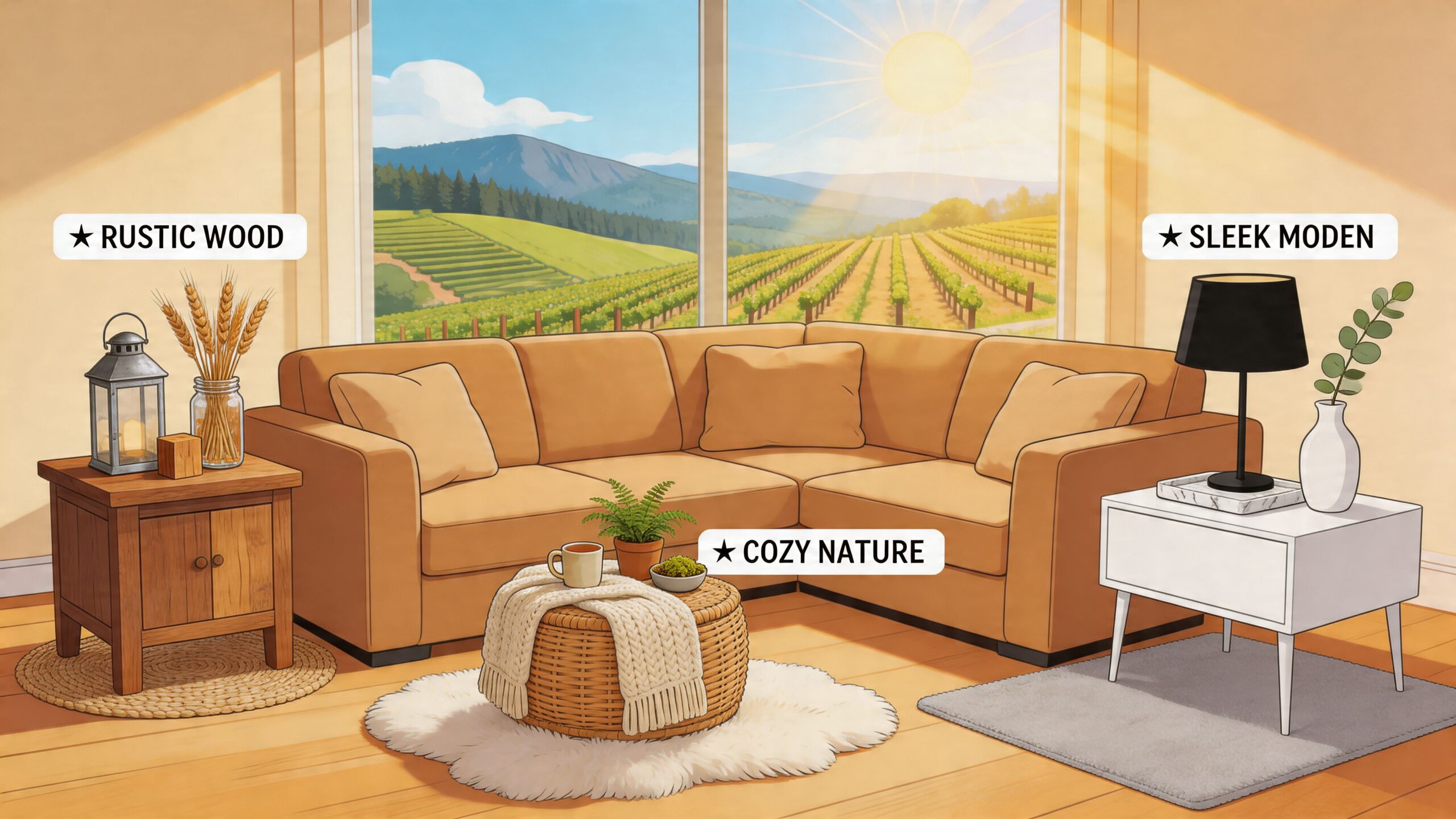
This is one of the easiest and most natural pairings in our area. A camel sectional with a reclaimed wood coffee table, a woven rug, and a few black metal accents feels rooted without feeling heavy.
We especially like this look for homes outside Grants Pass or in the broader Rogue Valley where people want warmth, but not full cabin style.
Try this mix:
- Coffee table in reclaimed wood or teak
- Rug with soft cream, rust, charcoal, or faded blue
- Pillows in earthy greens and textured neutrals
- Lighting with iron, bronze, or matte black finishes
Our Unique Finds are especially useful here because a one-of-a-kind wood piece keeps the room from feeling like it came from a catalog.
Cozy Craftsman with richer accents
A lot of older homes near downtown Ashland or established neighborhoods in Medford have architectural details that welcome color. In those spaces, a camel sectional can act as the neutral base while richer accents bring out the home’s character.
Think jewel tones, wood trim, warm lamps, and layered textiles.
A few combinations we like:
- Camel with deep olive and muted navy
- Camel with burgundy, brass, and cream
- Camel with forest green and patterned vintage-style rugs
Design note: Camel handles saturated accent colors well because it has enough warmth to soften them.
Clean and current for newer builds
In newer homes with larger windows and simpler trim, a camel sectional can keep a room from feeling too stark. Instead of leaning rustic, this version uses sharper contrast.
Picture a low-profile camel leather sectional with black-framed art, a pale rug, and a sculptural floor lamp. The room feels current, but still comfortable.
To pull that off:
- Keep the pillow palette restrained.
- Use one or two strong accent materials, like black metal or smoked glass.
- Add softness through drapery or a textured rug so the room doesn’t turn cold.
Family-centered and forgiving
Some rooms don’t need a “look” nearly as much as they need to work. If your living room is the heart of the house, style has to cooperate with daily life.
That usually means:
- Washable or easy-care layers where possible
- Rugs with pattern that hide everyday traffic
- Throws in mid-tones instead of bright white
- Accent tables sturdy enough for real use, not just display
Camel is strong here because it’s decorative without being precious. It still feels intentional when the room is lived in.
If you want extra help pulling all the surrounding pieces together, our guide on how to style a living room offers practical ideas you can adapt to your own home.
One thing that often helps
If you’re unsure whether your room needs more contrast or more softness, look down first. Floors and rugs usually tell you the answer.
If the floor is dark, a lighter rug can lift the sectional. If the floor is pale and the room feels washed out, bring in stronger wood tones and darker accents. Camel sits comfortably in the middle, so the supporting pieces decide the final personality.
Keeping Your Sectional Beautiful Care and Maintenance
Saturday afternoon in Southern Oregon often looks the same in a lot of homes. The dog jumps up after a walk, someone sets down a coffee cup without a coaster, and the sectional becomes command central for the rest of the day. A camel colored sectional can handle that kind of real life well, but it stays attractive longest when the care routine matches the material.
Color gets blamed for problems that usually come from neglect. Camel is forgiving compared with bright ivory or pure white because it softens the look of dust, light pet hair, and minor daily use. What it does not do is hide every spill, every oily handprint, or months of packed-in dirt.
Why camel sometimes makes buyers nervous
Shoppers around Grants Pass and the Rogue Valley often ask the same question in our showroom: will camel be hard to keep clean? The honest answer is that it depends less on the shade and more on the surface.
Here is the easy way to sort it out. Smooth leather works like a countertop. Most messes stay on top long enough for you to wipe them away. Textured fabric works more like a bath towel. If crumbs, fur, or spills sit too long, they settle into the fibers and take more effort to remove.
That difference matters in busy homes with kids, pets, or both.
Care habits that make a real difference
A sectional usually stays beautiful through small, boring habits repeated over time. That is the part people skip.
For fabric sectionals:
- Vacuum weekly with an upholstery tool, especially along seams and under the chaise cushion
- Blot spills right away with a clean cloth so moisture does not spread deeper into the weave
- Check the cleaning code before using a spot cleaner
- Rotate loose cushions if the design allows it, so one favorite seat does not wear out faster than the rest
For leather sectionals:
- Dust and wipe regularly with a soft dry cloth, or a slightly damp one if needed
- Condition on the schedule recommended by the manufacturer so the leather does not dry out
- Keep the sectional away from strong window sun when possible, especially in bright south-facing rooms
- Test any leather product first in a hidden spot
If you want a general primer on gentle leather upkeep, this guide to leather clothing care covers a few habits that also make sense for furniture.
Protection matters in real family rooms
Protection plans make the most sense when the sectional is going to be used hard. In Southern Oregon, that often means family movie nights, guests during the holidays, muddy paws in winter, and extra sunlight in summer. A good plan is less about fear and more about making daily use feel less stressful.
That is why many families ask about Gates Care Shield. It fits the kind of household where the sofa gets used every day and accidents are part of normal life. Buying the sectional and planning for its care at the same time usually leads to fewer regrets later.
The best care plan matches the way your home actually lives.
Simple maintenance by material
| Material | Best habit |
|---|---|
| Smooth leather | Wipe often, condition on schedule |
| Performance fabric | Blot fast, vacuum seams and corners |
| Textured woven fabric | Stay ahead of fur, dust, and crumbs |
One last practical tip. If your home runs busy, do not wait for the sectional to look dirty before cleaning it. Routine upkeep is a lot like sweeping a porch in the Rogue Valley. A little attention every week is easier than dealing with a season's worth of buildup all at once.
Your Purchasing Journey with Gates Home Furnishings
Buying a sectional should feel clear by the time you’re ready to commit. Not pressure-filled, not confusing, and not like you’re gambling on a giant box from the internet.
That’s where the full in-store experience matters. At Gates Home Furnishings, we’ve been serving Southern Oregon since 1946, and George Gates Jr.’s promise of Service and Value still shapes how we help customers make decisions. We want you to leave feeling certain you picked the right sectional, not just any sectional.

Start with real comfort testing
Photos can show color and shape, but they can’t tell you how a back cushion supports your shoulders or whether a chaise is too shallow for the way you like to lounge. In our 30,000 sq. ft. showroom in Grants Pass, you can test sectionals in person and compare styles from trusted names like La-Z-Boy, Flexsteel, Ashley, and Beautyrest across the store.
That matters for shoppers from Grants Pass, Medford, Central Point, Ashland, and throughout the Rogue Valley. A sectional is one of those purchases that gets easier once you sit in a few and feel the differences.
Look beyond the obvious pieces
A camel sectional often needs one or two supporting pieces to really come alive. That’s where our Unique Finds come in. Reclaimed wood tables, teak statement pieces, and one-of-a-kind accents help a room feel collected rather than copied.
Some shoppers also find exactly what they need in the Gates Outlet, where values change often and the selection moves fast. That can be especially useful if you’re furnishing a new home, updating a family room, or trying to stretch your budget while still buying something with real staying power.
Make the budget workable
Great furniture shouldn’t be reserved for one kind of buyer. Gates Easy Pay helps make a larger purchase more manageable with $0 down, 6-month interest-free options, and no-credit-needed financing choices.
For many households, that flexibility changes the conversation. It means you can choose the sectional that fits your space and lifestyle instead of settling for the quickest short-term answer.
Delivery should feel finished, not dumped on the porch
This is one of the biggest differences customers notice. We don’t just drop boxes at the curb.
Our White-Glove Delivery team handles professional in-home delivery, assembly, and setup. If you’re shopping mattresses too, we also offer mattress haul-away. That’s especially helpful in older homes, tighter entryways, or upstairs rooms where getting a sectional in place takes planning and care.
Good furniture service includes the last step, not just the sale.
A better buying process from start to finish
If you want a fuller look at how shoppers move from early research to final choice, our article on the furniture buying journey walks through the process in practical terms.
A camel colored sectional can be one of the smartest purchases you make for your living room. It’s warm, versatile, and long-lasting when you choose the right size, material, and style. The right partner makes that decision much easier.
Visit Gates Home Furnishings to test sectionals in our Grants Pass showroom, explore Unique Finds, ask about Gates Easy Pay, and schedule White-Glove Delivery anywhere across Grants Pass, Medford, Central Point, Ashland, and the broader Southern Oregon region. If you’d rather start from home, browse our collection online and then stop in when you’re ready to feel the difference in person.