Upholstery Protection Spray: A Southern Oregon Guide


A new sofa often feels perfect for about five minutes. Then real life returns. Coffee lands where it shouldn't, a child drops a snack into the cushion seam, or a dog hops up after a damp walk through the Rogue Valley.
That's when many homeowners start asking about upholstery protection spray. It sounds simple, but people usually want more than a quick yes or no. They want to know whether it works, whether it's safe for their fabric, and whether it's worth the upkeep on furniture they plan to live with for years.
For households settling into a new place, this kind of care question often comes up right alongside layout, style, and room planning. A practical companion read is this guide on furnishing a new home well from the start. Pet owners also tend to think about layered protection, and this piece on how to protect your sofa from pets in style offers useful ideas that pair well with fabric care.
Table of Contents
- Welcome Home Protecting Your New Furniture
- What Exactly Is Upholstery Protection Spray
- The Benefits and Realistic Limitations
- Choosing the Right Spray for Your Furniture Fabric
- Your Step by Step Application Guide
- DIY Spray vs Our Gates Care Shield Professional Plan
- Keeping Your Furniture Beautiful for Years to Come
Welcome Home Protecting Your New Furniture
A familiar scene plays out in homes across Southern Oregon. A family finds the right sofa, gets it into the living room, steps back, and immediately starts thinking about how to keep it looking that way. That instinct makes sense. Upholstered furniture sees daily use long before it ever looks “old.”

In Grants Pass, Medford, Central Point, and Ashland, the pattern is much the same. Recliners become movie seats. Accent chairs turn into reading corners. Sectionals become the place where guests sit, kids snack, and pets sneak naps when nobody's looking.
That's why upholstery protection spray keeps coming up in real conversations. It isn't glamorous, but it addresses a very practical concern. People want a little more time to blot a spill before it sinks in.
Upholstery protection spray works best when it's treated as part of regular furniture care, not as a magic shield.
For a family-owned business established in 1946, that kind of question fits George Gates Jr.’s original promise of Service and Value. Helpful advice matters most after the furniture is home and daily life begins.
Why this topic matters locally
Southern Oregon homes see a mix of dry dust, wet shoes, pets, children, and everyday entertaining. That combination makes fabric care less theoretical and more immediate.
A homeowner with a bright upholstered chair near a sunny window worries about preserving appearance. A renter with a busy sectional worries about spills during everyday use. Upholstery protection spray sits right in the middle of those concerns, because it's one of the first maintenance steps many people can take.
What Exactly Is Upholstery Protection Spray
Upholstery protection spray is a treatment applied to fabric so everyday spills have a harder time soaking into the fibers right away. On a sofa, recliner, or accent chair, that extra bit of resistance can give you a short but useful window to blot up the mess before it settles deeper into the upholstery.
A simple way to understand it is to picture morning dew on a waxed car hood. The water tends to bead instead of spreading out. Fabric protectors aim for a similar effect on upholstery fibers. They do not wrap your furniture in a plastic coating, and they do not make fabric waterproof. They change the fabric surface just enough that many liquids sit up longer instead of rushing inward.
That distinction matters.
In a Southern Oregon home, the main question is usually practical. What happens when iced tea tips over on a La-Z-Boy recliner in the family room, or a snack lands on a fabric chair from Unique Finds during a busy weekend get-together? A protectant can improve your odds in those first few seconds, which is often when stain prevention is won or lost.
How it works on the fabric
Fabric is made of tiny threads, and those threads have even smaller spaces between them. Without protection, liquid can travel into those spaces and spread through the weave. With a protectant in place, the fiber surface is treated so moisture is less likely to grab on quickly. That slows wicking and gives you more time to blot with a clean cloth.
That is the key job of the spray. Time.
Many homeowners hear the word “protection” and assume permanent stain proofing. That is where confusion starts. Upholstery spray helps with spill response. It does not stop every stain, and it does not prevent wear from daily use, body oils, pet claws, or sun exposure.
What today's products are really meant to do
Modern upholstery protectants are generally sold as routine home-care products for indoor textiles such as sofas, chairs, ottomans, and pillows. The goal is straightforward. Help fabric release common spills more easily during cleanup while keeping the look and feel of the upholstery as close to original as possible.
You may also notice that newer products are often discussed in terms of updated chemistry and lower-odor, home-use formulas. For most homeowners, the takeaway is simple. Read the label, match the product to the fabric, and treat the spray as a maintenance step rather than a one-time cure-all.
At Gates Home Furnishings, that is how we explain it to customers across Grants Pass and the Rogue Valley. Whether you are protecting a new motion sofa, a favorite reading chair, or a fresh living room set, upholstery spray works best as part of a bigger care plan. For shoppers who want that protection built into the purchase experience, that is also why options like Gates Care Shield can make sense.
Plain-language takeaway: upholstery protection spray helps spills bead and slow down on fabric, which gives you a better chance to clean them up before they turn into lasting stains.
The Benefits and Realistic Limitations
The biggest benefit is simple. Upholstery protection spray can improve a fabric's resistance to common spills, which helps preserve appearance on furniture that gets used every day.
For a Rogue Valley household, that may mean an easier cleanup after coffee on a recliner arm, splashed sparkling water on a dining chair seat, or muddy paw prints on a hallway bench. Even a short delay in absorption can make blotting more effective.
What it usually helps with
Independent review content shows that leading consumer sprays are mainly designed to guard against both water-based and oil-based spills on common household fabrics. That same review also found that performance among popular products can be quite similar overall, which is why fabric compatibility often matters more than dramatic differences between brands in this category, according to this comparison of fabric upholstery protectors.
That's useful because it shifts the buying question. Instead of asking which spray promises the biggest result, a smarter question is whether the product matches the upholstery material and the homeowner's maintenance habits.
What it won't do
A protectant is not a force field. It won't stop wear from friction, prevent tears, repair pulled threads, or save a cushion from heavy saturation if liquid sits too long.
It also won't remove the need for fast cleanup. If a spill is left in place, the fabric still has time to absorb it.
A few realistic limits matter most:
- Heavy spills can still soak through: A large volume of liquid can overwhelm the barrier.
- Some fabrics react differently: The same product may behave well on one weave and poorly on another.
- Appearance can change slightly: Some protectants may darken fabric a bit, especially if applied too heavily.
- Maintenance is part of the deal: The benefit fades with use, cleaning, and abrasion.
People usually feel disappointed by upholstery protection spray only when they expect permanent waterproofing. That isn't what the product is built to deliver.
This balanced view is the most useful one. For everyday homes, the spray can be worthwhile. It buys time, helps with routine mishaps, and may keep upholstery looking better between cleanings. It just needs to be treated as one layer of care rather than the whole plan.
Choosing the Right Spray for Your Furniture Fabric
The right spray depends less on marketing and more on the actual fabric on the furniture. A family sectional with a durable woven synthetic may be a reasonable candidate. A delicate accent chair with a textured weave deserves more caution.
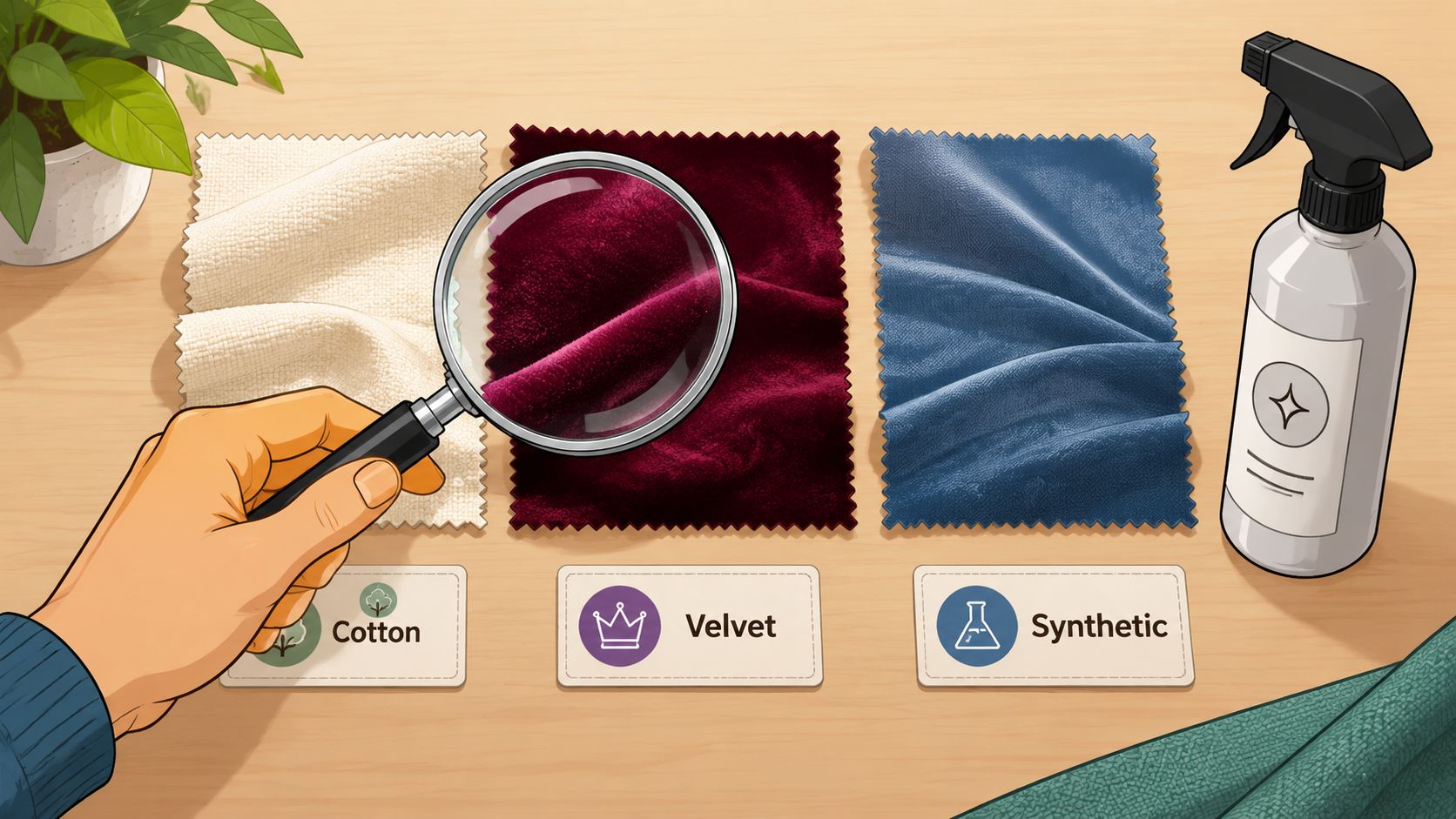
The safest approach starts with the manufacturer's care information. Cleaning codes, fiber content, and finish all matter. If that information isn't available, a careful test becomes even more important.
For readers comparing upholstery types more broadly, this guide on upholstery materials and how they behave helps frame the decision before any spray touches the fabric.
Start with the fabric itself
Some materials handle routine protectants better than others. Tightly woven everyday upholstery tends to be more forgiving than delicate, highly textured, or specialty fabrics.
An important instruction from consumer guidance is to test for colorfastness in a hidden area, since some protectants can slightly darken fabric. That same guidance also says these products should never be used on fabrics labeled with an “X” cleaning code, as explained in this overview of fabric and upholstery protector use.
That hidden test matters more than people think. A back corner, lower skirt edge, or underside area can reveal a lot before the visible seating surface is treated.
A practical screening checklist
- Check the cleaning code: If the tag shows X, skip the spray.
- Look at the weave: Nubby, open, or highly textured fabrics deserve extra care.
- Test out of sight first: Wait for the spot to dry fully before deciding.
- Think about the room: A formal chair in a low-use room may not need the same treatment as a daily-use sofa.
When extra caution makes sense
Mixed-material furniture deserves a slower decision. That's especially true for statement pieces that combine fabric with reclaimed wood, teak, or decorative trim. Overspray can affect nearby surfaces, and unusual upholstery may react differently than expected.
A more cautious approach also makes sense for:
- Light fabrics where darkening would be obvious
- Vintage or heirloom-style pieces
- Loose-weave accent seating
- Furniture with unknown cleaning history
Worth remembering: the more distinctive the fabric, the less wise it is to assume “one spray fits all.”
People often want a simple rule. The better rule is this. Match the product to the fabric, test before applying, and skip the spray altogether if the material or cleaning code raises doubts.
Your Step by Step Application Guide
Saturday morning in Grants Pass, the coffee is hot, the new sofa is finally in place, and someone notices a water ring from last night's glass. That is usually the moment homeowners stop thinking about furniture as a purchase and start thinking about it as something they want to protect well.
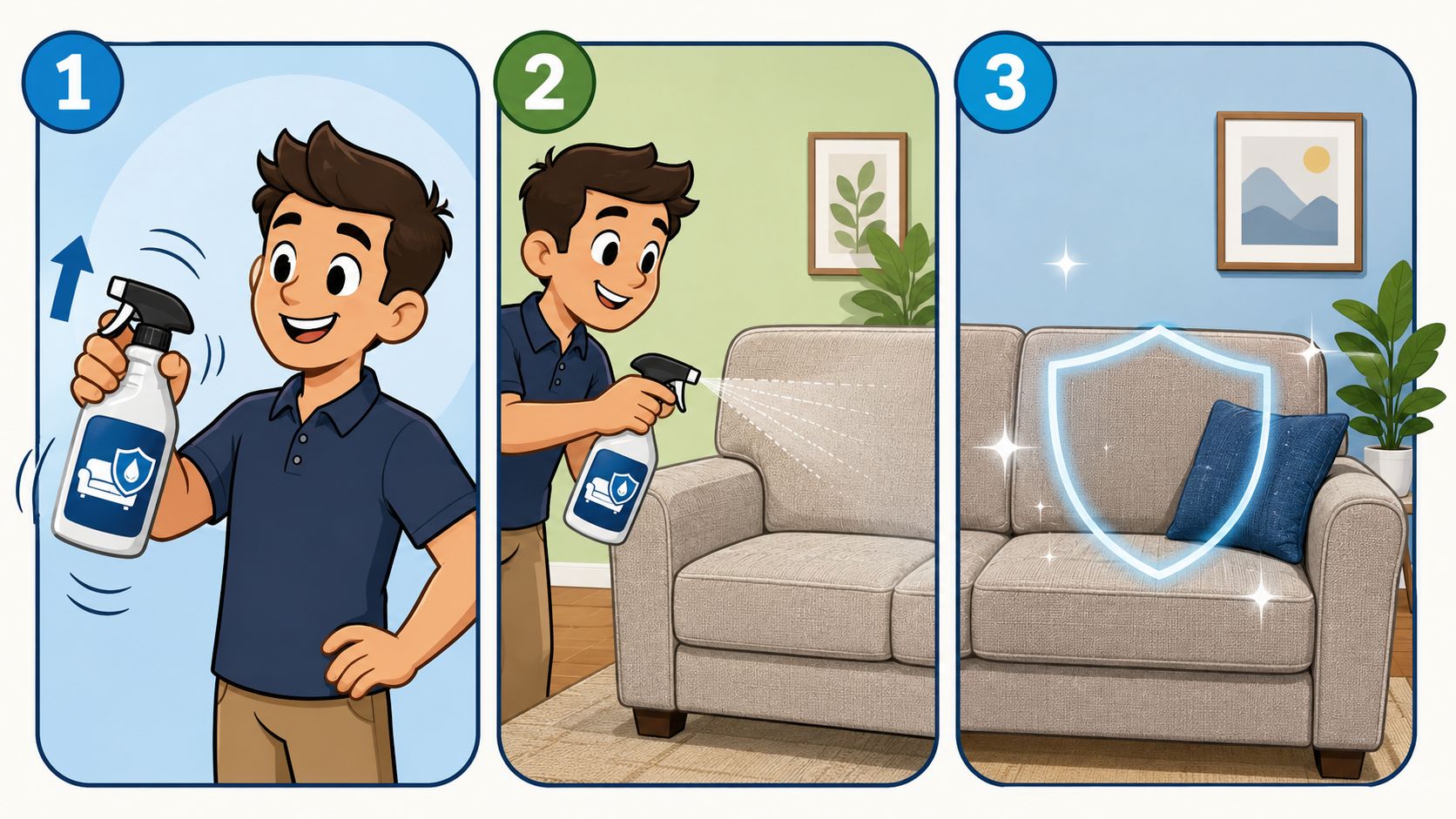
Good results come from good preparation. If the fabric is dusty, slightly oily, or still damp from spot cleaning, the spray can settle unevenly. That is one reason our team at Gates Home Furnishings encourages customers to pair protectant use with a regular care routine like this spring cleaning checklist for furniture care.
Before the first spray
Start with the piece completely clean and completely dry. A protection spray works a bit like a rain jacket for fabric. If you put that jacket over dirt or moisture, you trap the problem underneath instead of helping the surface.
Ventilation matters too. Open windows, turn on a fan if needed, and move nearby décor out of the way. Overspray can drift onto wood trim, metal legs, or accent tables, which is especially worth watching on mixed-material pieces like some statement chairs and specialty upholstery styles Southern Oregon homeowners often choose for cabins, family rooms, and vacation properties.
For a smooth setup, follow this order:
- Vacuum the fabric well: Pay attention to seams, welt cords, and under cushions.
- Treat any obvious spots first: Then wait until the area is fully dry.
- Read the label from start to finish: Different formulas call for slightly different methods.
- Protect the area around the furniture: A clean sheet or drop cloth helps catch drift.
- Test your hidden spot one more time if needed: That small pause can save a lot of regret.
How to apply it evenly
Use slow, controlled passes. Keep the can or sprayer at the distance recommended on the label, and apply a light coat across one section at a time. Seat cushions first is usually easiest, then inside backs, arms, and outer panels.
Two light coats are usually better than one heavy coat. A heavy pass can leave the fabric wetter than it needs to be, and wetter is not the same as better protected. A light first coat gives you a clearer view of coverage, much like applying a thin first coat of paint before deciding where a second pass is needed.
A simple rhythm helps:
- Work one panel at a time: Finish each area before moving on.
- Keep your hand moving: Pausing in one spot can leave dark, damp patches.
- Overlap slightly: That helps avoid missed strips between passes.
- Stop before the fabric looks soaked: You want even coverage, not saturation.
This matters on popular family-room pieces such as recliners and sofas, including the kinds of upholstery many Rogue Valley shoppers choose in La-Z-Boy collections and one-of-a-kind accent pieces from Unique Finds. Textures, seams, and tufting can hide dry spots, so a careful visual check is worth the extra minute.
Drying and the first day of use
Let the fabric dry fully before anyone sits down. If it still feels cool or damp to the touch, give it more time. Rushing this stage can flatten fibers, transfer residue, or leave the finish less even than it should be.
Keep pets and kids off the furniture until drying is complete. If you are treating a favorite reading chair or the main family sofa, plan the job for a time when the room can stay quiet for a while.
Homeowners who like to take a whole-home approach sometimes also read about professional rug protection in Birmingham to see how similar care ideas apply to other soft surfaces.
One last practical note from a store that has helped Southern Oregon families furnish their homes since 1946. If your furniture is a major investment, especially a daily-use sofa or recliner, careful application matters just as much as the product you buy.
DIY Spray vs Our Gates Care Shield Professional Plan
A DIY upholstery protection spray and a professional protection plan solve different problems. One helps with everyday spill resistance on the fabric surface. The other is better suited for people who want broader peace of mind around accidental damage and support after purchase.
Readers who want to review plan details directly can look at the Gates Care Shield protection options. For a related perspective on broader textile care beyond upholstery, this article about professional rug protection in Birmingham can help frame how homeowners think about layered protection across the home.
What a spray can do
A spray is practical for households that don't mind maintenance and want a first layer of defense. It's especially useful when the concern is a routine spill on a commonly used seat or arm.
Commercial protector guidance also shows how these products are built for measured, repeat application rather than permanence. One technical data sheet specifies dilution at 1 part concentrate to 8 parts warm water and coverage of about 200 ft² per ready-to-use gallon, with a recommendation for a second light coat for best results. Consumer guidance in the same product family advises reapplication after cleaning or about every six months for upholstery because abrasion, vacuuming, and cleaning wear down repellency, according to this commercial upholstery protector technical data sheet.
That maintenance requirement is the main tradeoff. A spray can help, but it asks the homeowner to keep up with it.
Where a broader plan fits better
Some buyers want more than surface repellency. They want help if real life goes beyond a spill and turns into a bigger accident.
That's where a professional plan stands apart. It isn't just about applying a product. It's about support when furniture faces the kind of damage a spray can't prevent.
| Feature | DIY Upholstery Spray | Gates Care Shield Plan |
|---|---|---|
| Main purpose | Helps resist everyday spills on fabric surfaces | Helps provide broader protection support for accidental damage scenarios |
| Application | Homeowner applies it | Professional plan managed through the protection program |
| Best for | Routine maintenance-minded households | Buyers who want longer-term peace of mind |
| Upkeep | Needs repeat application over time | Coverage follows plan terms rather than a re-spray routine |
| Limits | Won't address tears, punctures, burns, or structural accidents | Better suited when damage goes beyond spill resistance |
| Effort after purchase | Requires reading directions, testing, and reapplying | Simplifies protection for buyers who prefer support |
A spray is still a sensible first step for many homes. It's just not the same thing as full coverage.
A good rule is this. Use a spray for maintenance. Choose a protection plan when the goal is help with accidents that maintenance alone can't prevent.
Keeping Your Furniture Beautiful for Years to Come
A well-kept sofa rarely stays beautiful by accident. It stays beautiful because the owner notices the small things early. A little dust in the weave, a favorite seat getting more use than the rest, a spill that gets blotted right away instead of rubbed deeper into the fabric. Those small choices add up.
That matters in Southern Oregon homes, where furniture often has to handle a little of everything. Summer dust, rainy-day traffic, pets coming in from the yard, and busy family rooms all put wear on upholstery over time. A La-Z-Boy recliner in daily use will need a different care rhythm than an accent chair from our Unique Finds collection that mostly anchors a guest room.
Good care is steady care
Protection spray helps most when you treat it like one part of a longer routine, not a one-time fix. As noted earlier, reapplication may be needed from time to time based on the fabric, the product, and how heavily the piece is used. In plain terms, a sofa used every night asks for more attention than a chair used only on holidays.
A simple routine usually does the most good:
- Blot spills fast: Press with a clean cloth so the liquid lifts out instead of spreading.
- Vacuum upholstery often: Dust and grit act like fine sandpaper on fabric fibers.
- Share the seating: Rotating cushions and changing who sits where helps wear stay more even.
- Check the care tag before cleaning: The right cleaner for one fabric can harm another.
Fabric care works a lot like exterior paint on a house. You get the longest life when you keep up with maintenance before the surface looks worn out.
A practical long view
Some furniture goes through a season of transition. You may be repainting a room in Medford, remodeling in Grants Pass, or setting aside a loveseat until a child moves into a first apartment. During those stretches, stain protection is only part of the picture. Storage conditions, airflow, and how a piece is covered matter too. For that side of preservation, these Posch & Silva long-term storage insights are a helpful companion read.
It also helps to tie furniture care to the calendar. A seasonal check keeps small problems from turning into permanent ones. Our fall furniture maintenance checklist for Rogue Valley homes gives you an easy place to start.
The goal is not to keep furniture looking untouched. The goal is to help it age well while your family enjoys it. That has been the Gates Home Furnishings approach since 1946. We want Grants Pass and Rogue Valley homeowners to get real years of comfort and good looks from every piece they bring home, whether they choose a trusted recliner, a one-of-a-kind statement piece, or added peace of mind through Gates Care Shield.