Find Your Perfect Maple Dining Room Chair


A maple dining room chair often becomes part of daily life faster than people expect. It starts as a place to sit for dinner, then it’s where kids do homework, where guests linger over dessert, and where somebody always ends up with a second cup of coffee on a quiet morning.
That’s why the right chair matters so much. You’re not just choosing a wood finish or a silhouette. You’re choosing how your dining room will feel, how well your furniture holds up, and whether those chairs still look right years from now.
The Heart of Your Dining Room
In many Southern Oregon homes, the dining room does more than host meals. It handles holidays, game nights, birthday cakes, and the everyday rush between school, work, and evening routines. A good maple dining room chair earns its keep in all of those moments.

Maple has stayed popular for a simple reason. It balances a clean, welcoming look with the kind of toughness families appreciate once furniture sees real use. If your home style leans farmhouse, classic, or somewhere in between, maple usually fits without much struggle.
A lot of shoppers get stuck on one question right away. Is a dining chair really different enough from one wood species to another to matter? In practice, yes. The wood affects how the chair wears, how it takes stain, how visible the grain is, and how easily the chair blends with your table, flooring, and cabinets.
If you’re still shaping the room as a whole, this guide to dining room styles for different homes can help you narrow the overall direction before you choose chairs.
Why chairs carry so much of the room
A dining table usually gets the attention first, but chairs do much of the visual work.
- They set the tone. Slim ladder-backs feel different from broad, upholstered host chairs.
- They control comfort. A beautiful chair that feels awkward won’t get used gladly.
- They take the wear. Chairs are moved, leaned back in, bumped, and cleaned far more often than most tables.
A well-chosen maple dining room chair doesn’t just match the room. It supports the way the room gets used.
That’s what makes this category worth slowing down for. When the chair is right, the whole room feels settled.
Understanding Maple Wood Characteristics
People often hear that maple is “hard” or “durable,” but those words can feel abstract until you connect them to everyday use. Think of maple as the steady, dependable hardwood in the room. It doesn’t beg for attention, but it handles a lot.
What the hardness rating actually means
The most useful technical measure here is the Janka hardness rating. Solid maple wood is prized for dining chairs because it has a Janka hardness rating of 1,450 lbf, which exceeds beechwood at 1,300 lbf and oak at 1,200 lbf, helping it resist gouging and chipping in busy dining spaces, according to Lancaster Table and Seating.
If that scale sounds too technical, here’s the plain-language version. Harder wood tends to show fewer dents from everyday bumps. If a chair gets pulled across the floor, tapped by a vacuum, or used heavily by an active household, maple usually handles that wear with less visible damage.
For a broader look at wood behavior in furniture, this article on choosing hardwoods for longevity and style gives helpful context.
Grain, color, and finish
Maple also has a tight, fine grain, and that changes how it looks in a room. Oak often announces itself with stronger texture. Maple stays smoother and quieter. That makes it easier to pair with a wide range of interiors, especially if you want the chairs to support the room rather than dominate it.
Common finish directions include:
- Natural or light stains that keep the wood airy and casual
- Medium brown finishes for a classic dining look
- Darker stains when you want the shape of the chair to stand out more than the grain
That flexibility helps when a customer says, “I like the strength of wood furniture, but I don’t want anything too heavy-looking.” Maple is often the answer.
Why families like it
Maple works well for households that use their dining room every day, not just on holidays.
| Maple trait | What you notice at home |
|---|---|
| Fine, even grain | A cleaner, calmer look |
| Strong surface | Better resistance to everyday nicks |
| Flexible finishing | Easier to match different room styles |
Practical rule: If you want wood chairs that feel timeless without looking overly formal, maple is one of the safest choices.
It’s a wood that makes sense before it impresses. That’s part of its appeal.
Exploring Styles and Craftsmanship
Maple’s real charm shows up when you start looking at actual chair designs. The same wood can feel spare and architectural in one room, then warm and relaxed in another. That range is why it’s stayed relevant across generations of dining furniture.
Maple wood is a staple in Amish-crafted dining room chairs, available in classic Shaker, formal, and farmhouse styles, with both side chair and armchair options, as noted by DutchCrafters. That matters because shoppers often assume maple only works in simple country looks. It doesn’t. It can go neat and refined, or soft and rustic, depending on the build.
What style changes and what stays the same
A Shaker maple chair usually keeps lines clean. You’ll see straightforward legs, a modest back, and very little ornament. A farmhouse version might add a broader presence or a more relaxed finish. Formal versions can bring in upholstery, curved backs, or a darker stain that reads dressier.
The useful part is that the underlying wood still gives you a stable, durable base.
The style may change from one maple chair to the next, but good construction is what turns a nice-looking chair into a lasting one.
If you're also trying to coordinate dining furniture with nearby cabinetry, it helps to compare modern maple cabinet finishes so the room feels connected rather than mismatched.
Craftsmanship details worth noticing
When you shop in person, don’t stop at the finish. Look closely at how the chair is built and where the visual weight sits.
A few things to pay attention to:
- Back design. Slat backs feel open. Solid or upholstered backs feel fuller.
- Seat treatment. Wood seats read more traditional. Upholstered seats soften the look.
- Arm presence. Armchairs work well at the head of the table or anywhere comfort matters most.
If upholstery enters the conversation, this guide to upholstery materials can help you sort out what fits your household best.
A seasoned furniture shopper eventually learns this. Style catches your eye first, but craftsmanship is what makes you happy years later.
Maple vs Other Popular Dining Chair Woods
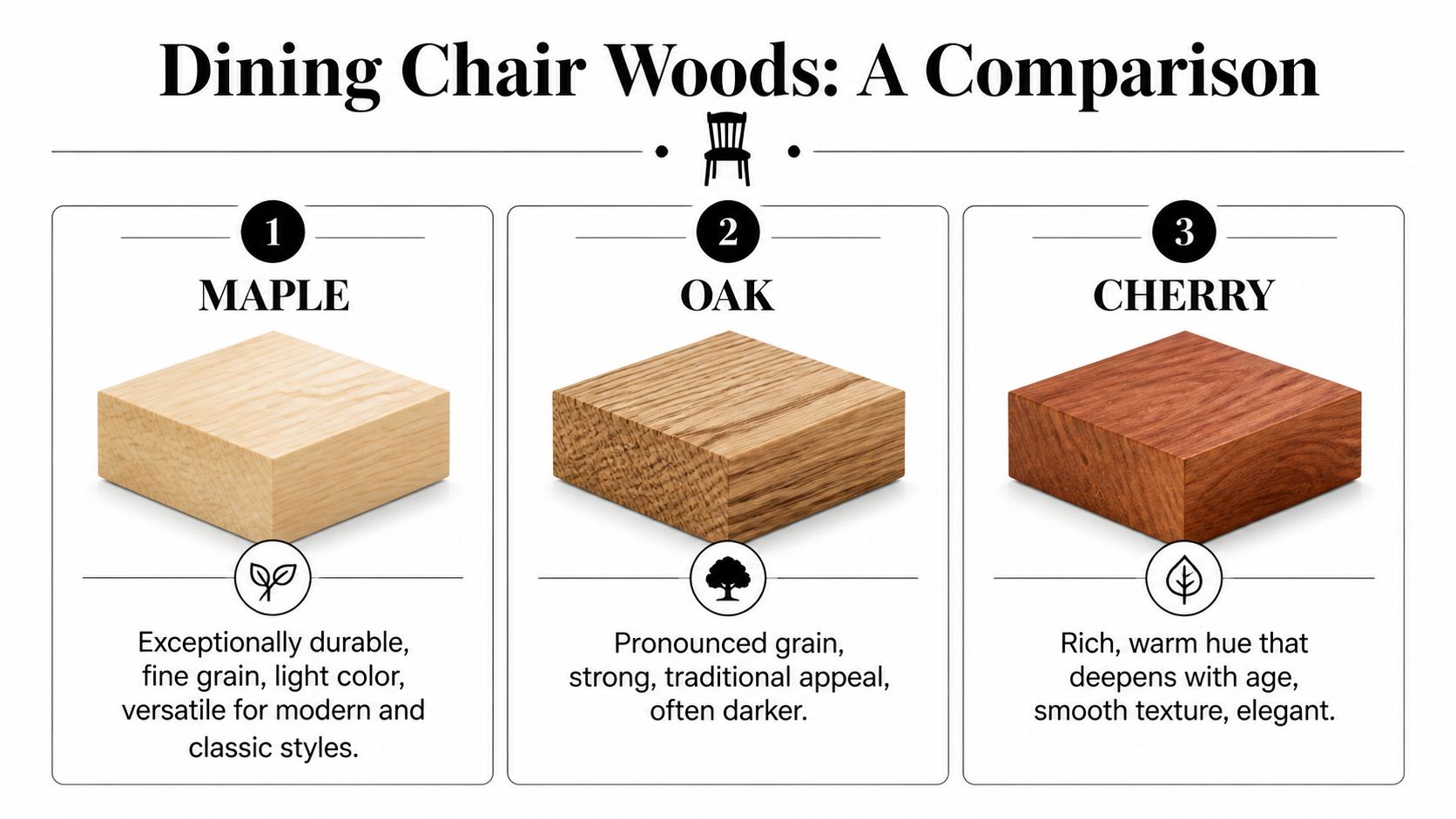
When people compare wood chairs, the three names that come up most often are maple, oak, and cherry. Each one has a loyal following, and each creates a different mood in a dining room.
Maple
Maple is the practical favorite for many homes. With a Janka hardness of 1,450 lbf, it offers strong dent resistance, and its patina develops more slowly than cherry’s, making it a dependable long-term choice according to Thos. Moser’s wood species overview.
Best for people who want:
- A smooth, subtle grain
- Strong day-to-day durability
- A style that can swing modern, transitional, or classic
Oak
Oak has a more visible grain pattern and often feels more traditional or rustic. If you like furniture that shows off texture, oak usually delivers that more quickly than maple does.
Oak often suits:
- Traditional dining rooms
- Rustic or lodge-inspired spaces
- Buyers who want pronounced wood character
Cherry
Cherry brings warmth and elegance. Its color deepens over time, and many people love that evolving look. Others don’t. That’s the key distinction.
Cherry often fits:
- Formal dining rooms
- Classic interiors
- Buyers who enjoy a richer, more dramatic wood tone
A simple side-by-side view
| Wood | Look | Best fit | Watch for |
|---|---|---|---|
| Maple | Smooth, refined, versatile | Busy family dining rooms and timeless interiors | Less dramatic grain if you want bold texture |
| Oak | Strong grain, traditional feel | Rustic and classic spaces | More visible texture than some buyers want |
| Cherry | Warm, elegant, deepening color | Formal or traditional rooms | Color changes more noticeably over time |
If you're comparing woods across the whole home, not just chairs, this explainer on the type of wood for kitchen cabinets gives another useful way to think about appearance and function.
For shoppers who want a different hardwood look entirely, sheesham hardwood furniture is another category worth studying because it has a much bolder grain personality than maple.
Cherry often wins on romance. Oak often wins on texture. Maple often wins when someone wants the safest balance of durability and flexibility.
That’s why maple keeps showing up in homes where people want one decision they won’t regret later.
How to Choose the Perfect Maple Chair
Shoppers sometimes think choosing a maple dining room chair comes down to style alone. In reality, the best choice sits at the intersection of comfort, construction, and how your household lives.

Start with comfort, not color
Finish matters, but comfort decides whether you’ll enjoy the chair every day.
Ask yourself:
- How long do people stay seated? Quick meals and long holiday dinners call for different comfort levels.
- Who uses the chairs most? Kids, older adults, and frequent guests may all need different support.
- Does the seat feel stable when you shift? A chair can look solid and still feel awkward.
This is especially important for accessibility. Some shoppers need a seat that’s easier to get in and out of, a wider sitting area, or arms for additional support. Those details don’t sound glamorous, but they make the difference between “pretty” and “truly works for us.”
Check the build before the finish
One of the strongest signs of quality is the joinery. Mortise-and-tenon joinery in solid maple dining chairs creates a mechanical bond that can resist racking forces up to 500 lb of lateral load, outperforming screws or staples, according to Gallery Furniture’s Morgan chair details.
That’s a technical way of saying the chair is better prepared for real-life movement. People don’t sit perfectly still. They lean, twist, scoot, and pull themselves up from the table. Better joinery helps the chair stay tight and quiet over time.
If you want a maple dining room chair that still feels solid years from now, ask how the joints are made before you ask about stain color.
Think through your room in practical terms
A smart chair choice usually answers these questions clearly:
Is the scale right for the table?
Bulky chairs can crowd a smaller dining room fast.Do you want all wood or some upholstery?
Upholstery softens the look and feel, but wood seats may be easier for some households.Do you want a matched set or a mixed look?
Maple plays well with contrast. You can use side chairs around the table and a pair of armchairs at the ends.Do sustainability matters to you?
If it does, ask where the wood came from and whether reclaimed options are available. That question is often overlooked, but it shouldn’t be.
The best chair doesn’t win on one feature. It wins because it fits your home without asking you to work around it.
Bringing Your Maple Chairs Home
Once you’ve chosen the right chairs, a few simple habits help them stay looking good. Maple doesn’t demand fussy care, but it does appreciate consistency.
Dust with a soft cloth. Wipe spills promptly with a damp cloth rather than a soaking wet one. Skip harsh cleaners that can cloud or strip the finish. If you want a deeper care routine, this guide on how to care for wood furniture is a practical place to start.
Living with them day to day
Maple chairs work best when you treat them like useful furniture, not fragile display pieces. Use felt protection where appropriate, lift rather than drag when possible, and check fasteners or joints if a chair ever starts to feel loose.
If you move homes, proper packing matters too. A clear guide on how to pack furniture for a move can help protect wood furniture from avoidable scuffs and pressure damage in transit.
The bigger value of a good chair
A good maple dining room chair earns trust slowly. It looks right when the room is newly finished, then keeps doing its job through ordinary years of use. That’s what people usually mean when they call a furniture purchase an investment. Not that it’s fancy, but that it keeps proving itself.
For many households, maple lands in the sweet spot because it offers three things at once:
- Durability for everyday living
- Design flexibility across many home styles
- A timeless look that doesn’t go out of place quickly
That combination is hard to beat. When people choose carefully, they usually don’t need to replace maple dining chairs because they wore out. They replace them only if their taste changes.
At Gates Home Furnishings, we’ve helped Southern Oregon families furnish their homes since 1946, when George Gates built the business on a promise of Service and Value. If you’re shopping for a maple dining room chair, we invite you to visit our 30,000 sq. ft. Grants Pass showroom and sit in the options for yourself. You can explore everyday dining sets, premium brands, and our Unique Finds in reclaimed wood and one-of-a-kind statement pieces. We also make the purchase easier with Gates Easy Pay, including $0 down, 6-month interest-free, and no-credit-needed options, and our White-Glove Delivery team handles professional setup instead of just dropping boxes at the door. If you’re in Grants Pass, Medford, Ashland, Central Point, or anywhere in the Rogue Valley, visit our Grants Pass showroom or browse our collection online.