
How to Clean Microfiber Couch Without Ruining It

A gray mark appears on a microfiber sectional in Grants Pass, and the dish soap is already beside the sink. It looks like a small cleanup job, but the wrong cleaner can leave a ring that's more noticeable than the original stain. The safest first move isn't spraying the mark. It's finding the upholstery tag.
For anyone wondering how to clean microfiber couch upholstery without ruining its feel, the decision starts with the manufacturer's care code. That code determines whether water, solvent, or dry maintenance belongs anywhere near the fabric.
Check the Care Code Before You Touch the Couch
Before choosing a cleaner, find the sewn-in care label. Look beneath the seat cushions or along the sofa deck; if it isn't there, check the underside of the frame. Photograph the full label so you can refer to its instructions while selecting a method.
The label, not the word microfiber, sets the cleaning rules. Upholstery made from fine synthetic fibers can still differ in backing, dyes, coatings, and construction. Those differences affect how the fabric responds to water and cleaning products, even when two couches look alike.
Care labels commonly use W, S, W/S, and X to indicate water-based cleaning, solvent cleaning, either method, or dry maintenance. Follow the manufacturer's complete instructions when they provide more detail than the code. The upholstery materials guide can help put fabric names and construction in context, but the care label remains the decision point.
Microfiber Couch Care Codes and Permitted Cleaning
| Care code | Permitted cleaning | How to apply | Avoid |
|---|---|---|---|
| W | Water-based upholstery shampoo or foam | Apply sparingly, work in small sections, pretest | Saturating the fabric, solvent-only products |
| S | Water-free upholstery solvent only | Ventilate the room, keep away from flames | Water, steam, soaking |
| W/S | Water-based or solvent-based product | Pretest, use a controlled application, minimize liquid | Soaking, excess liquid, assuming unlimited cleaning |
| X | Vacuuming or light brushing only | Use a soft upholstery attachment and gentle brushing | Any liquid, foam, steam, or solvent |
A W code permits an appropriate water-based cleaner, not a soaked cushion. Keep moisture at the surface, since liquid driven into the backing or padding can complicate cleaning. Upholstery foam is easier to control than pouring cleaning solution over a seat.
An S code calls for a water-free upholstery solvent approved for the fabric. A household spray that contains water does not qualify because its packaging mentions upholstery. Ventilate the room and keep solvent away from flames while using it.
What the Code Doesn't Promise
W/S allows a choice between compatible water-based and solvent-based products. It does not make every cleaner suitable. Pretest first, and keep the application controlled; extra product can leave more residue without improving the result.
An X code means vacuuming or light brushing for home maintenance. Don't apply a homemade liquid spot treatment, foam, or alcohol. If a mark resists gentle maintenance, get the fabric assessed rather than trying an unapproved cleaner.
Before opening a product, check the instructions and make a simple plan:
- Find the tag: Check beneath cushions, on the sofa deck, and under the frame.
- Record the code: Save a clear photograph of the complete care instructions.
- Match the method: Choose a product only if it fits the permitted cleaning category.
When the Care Tag Is Missing or Unreadable
Rubbing alcohol isn't a universal microfiber fix. Advice that treats every suede-like couch the same skips the most important question: what does the manufacturer permit?
A missing tag is common enough to deserve a separate decision path. A secondhand sofa may have lost its label, an outlet piece may have incomplete paperwork, or an older couch may have been reupholstered. With an altered piece, the original model information may no longer describe the fabric currently installed.
The Cleaning Microfiber Upholstery guidance provides background on microfiber care, but a general cleaning suggestion can't establish compatibility for an unidentified sofa. Alcohol may suit some S-coded fabrics. It isn't a safe default when the code is unknown.
Identify the Upholstery Before Testing a Cleaner
The code table provides a decision framework, but a blank space where the code should be doesn't mean every method is available. Until reliable instructions are found, no liquid is the conservative choice.
A practical identification sequence keeps the investigation manageable:
- Photograph the couch: Capture the whole piece, any maker's labels, and any model or order information. Search for matching manufacturer documentation.
- Inspect less obvious locations: Look along seams, beneath the frame, and around cushion platforms for a hidden label.
- Check whether the fabric was changed: Replacement covers or reupholstery can make original care information unreliable.
- Test only a supported method: Once documentation identifies a suitable approach, use an inconspicuous area before proceeding.
- Stop at an adverse change: Dye transfer, a changed nap, or a developing ring means the proposed treatment shouldn't continue.
A hidden-spot test is a final check on a supported method. It isn't a substitute for identifying the fabric, especially when a cleaner could affect backing materials that aren't visible.
An unknown care code is a reason to pause, not a reason to choose the mildest-looking bottle.
Keep Unidentified Pieces on Dry Maintenance
When reliable instructions remain unavailable, maintenance should stay limited to a soft vacuum attachment and gentle brushing. Persistent stains belong with an upholstery professional who can assess the material before selecting a treatment.
This matters for vintage, outlet, and reclaimed pieces because the item's history can be incomplete. A removable cushion cover doesn't automatically mean machine washing is permitted, and a zipper isn't a washing instruction.
The full cleaning workflow should begin only after a safe method is known. Keeping an unidentified couch usable with careful dry maintenance is preferable to turning a small stain into an altered panel.
How to Clean Your Microfiber Couch Step by Step
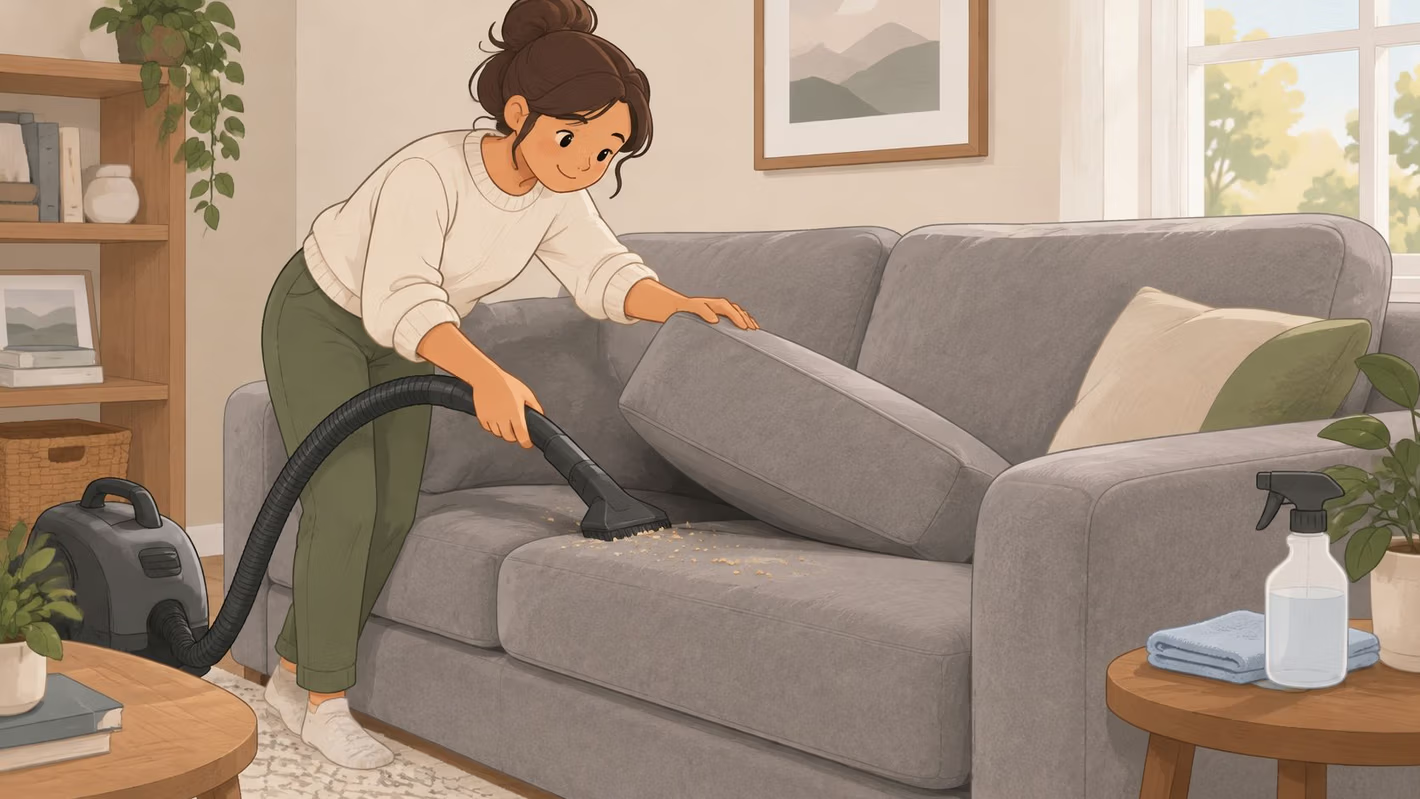
Once you know which cleaning method the care code permits, work in small, controlled stages. Gather an upholstery vacuum attachment, clean white cloths or a white sponge, a soft brush, and the approved cleaner. Keeping moisture and pressure under control helps prevent rings, flattened fibers, and cleaner residue.
A Controlled Cleaning Sequence
Vacuum the entire couch. Use the upholstery attachment on seats, backs, arms, seams, and beneath removable cushions. Clearing crumbs and grit first reduces the chance of pushing debris into the fabric during spot treatment.
Choose a cleaner that matches the care code. Use a manufacturer-approved water-free upholstery solvent when solvent cleaning is required. For water-cleanable fabric, foam made from a mild, dilute solution lets you control moisture more easily than a wet sponge.
Test a hidden area, then let it dry. Apply the permitted treatment to a concealed cushion edge or another inconspicuous upholstered area. Check the dry result before continuing. Stop if you see color transfer, a ring, stiffness, or a change in texture.
Apply cleaner to a white cloth or sponge. Use only enough to treat the fabric. Pouring cleaner directly onto the couch can send excess moisture into the backing, where it is harder to remove. A white cloth also makes transferred soil or dye visible.
Treat a small area at a time. Blot gently from the outside of a mark toward its center to contain the soil. As the cloth picks it up, switch to a clean section rather than rubbing with the soiled surface.
Let each treated panel dry completely. Air circulation from a fan or an open window can help, when conditions permit. Wait until the surface is dry before deciding whether it needs any further treatment.
Brush the nap lightly once dry. A soft brush can lift flattened fibers and restore an even direction. Keep the pressure gentle, since aggressive brushing can leave a worked patch beside the surrounding upholstery.
Judge the Dry Result, Not the Wet Patch
After drying, check that the panel looks even, has no darker perimeter, and feels consistent with the surrounding fabric. Damp microfiber can appear darker, so assess the result only when the upholstery is dry.
Patience is part of the cleaning process. A wet panel needs drying time before any further product. If a ring or texture change remains after drying, reassess the method instead of increasing the cleaner's strength.
Gates' information about performance fabric furniture can help explain fabric features, but the care code remains the guide for cleaning a particular couch. Fabric designed for everyday use still needs a method suited to its label.
Stain-by-Stain Methods That Work on Microfiber
The stain determines the first move, but the care code still sets the boundary. The following options apply only when the manufacturer permits the product and method. No household ingredient overrides an X label.
First Move for Common Microfiber Couch Stains
| Stain | First step | Permitted codes | Avoid |
|---|---|---|---|
| Fresh food or beverage | Blot with cool water and a drop of mild dish soap, only where approved | W, W/S | Hot water, rubbing |
| Oil or grease | Lift excess gently; use cornstarch only if manufacturer-approved, then vacuum away | W, W/S, S, subject to product approval | Water first on oil marks |
| Pet urine | Blot, then apply a compatible enzyme cleaner after a pretest | W, W/S | Ammonia, bleach |
| Ink or marker | Dab from the outside inward with approved solvent on a cotton swab | S, W/S | Alcohol on unknown codes |
| Dried mud | Let dry, brush off, then vacuum before any permitted liquid treatment | All codes | Scrubbing wet mud |
| Set-in or repeated stain | Stop treating it and book an upholstery professional | Any | Repeated DIY treatments |
The microfiber cleaning guidance from Bob's Dry Clean emphasizes dry debris removal, gentle handling, minimal product, and avoiding water-based and solvent-based products on the same spot. It also identifies vacuuming and light brushing as the appropriate routine approach for X-coded upholstery.
Food, Grease, and Pet Accidents Need Different Decisions
For a fresh food mark, solid material should be lifted away before treating the remaining discoloration. On compatible water-cleanable fabric, a little mild soap in cool water may be enough. A foamy, lightly loaded cloth is preferable to a dripping one, and any manufacturer-approved upholstery product should be used according to its instructions.
Grease creates a different problem. Adding water first doesn't provide a useful universal solution, especially on solvent-only fabric. A dry absorbent such as cornstarch should be considered only when the manufacturer permits it, since powder left in the nap creates another cleanup task.
For pet urine, the liquid cleaner must be both upholstery-compatible and appropriate for the care code. An enzyme product intended for another surface isn't automatically suitable for a sofa. If odor or contamination appears to extend into the cushion rather than remain on the face fabric, surface treatment may not resolve the problem.
Know When the Treatment Is No Longer Helping
Ink requires particular restraint. A small approved-solvent application on a cotton swab offers more control than spraying a broad area, but spreading color is a reason to stop immediately. Unknown ink and unknown upholstery are a poor combination for experimentation.
The Gates upholstery stain-removal guide provides additional context for choosing a stain-specific response. A stronger cleaner shouldn't be the automatic next step when a mild treatment fails.
Stop rule: A spreading mark, dye on the cloth, or a newly rough patch is evidence to stop, not scrub harder.
Friction can change the nap enough to leave a visible patch even after the original stain fades. Water-based and solvent-based treatments also shouldn't be stacked on the same spot in an attempt to force a result.
A stain is lifting when the mark lightens as soil transfers onto the cloth and the dry upholstery remains free of a new ring. For X-coded couches, no liquid DIY treatment is appropriate. Difficult stains require professional assessment.
Drying, Odor Control and Routine Care Schedule
After cleaning, check the fabric and seams before using the couch. The surface can feel dry while moisture remains deeper in the cushion, so wait until the treated area is dry throughout.
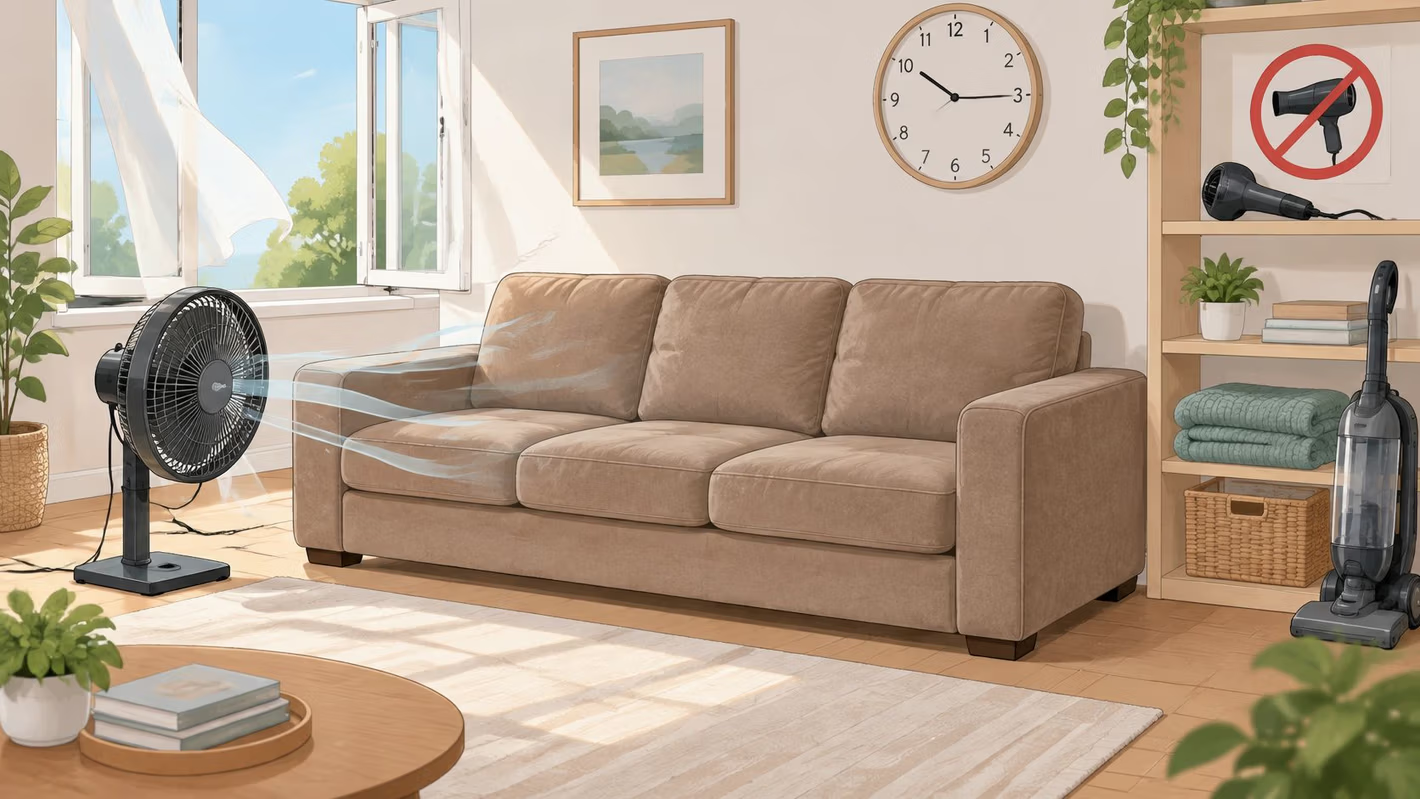
Set a fan to move air gently across the upholstery. Open windows to improve airflow when practical. Avoid a high-heat hair dryer or clothes dryer, since concentrated heat can affect the fabric's finish.
Address the Odor Before Adding Fragrance
Remove loose debris and locate the odor source before adding fragrance. Material trapped beneath cushions, a recent spill, and odor within the padding need different responses.
Baking soda is a dry powder, but it still needs to be permitted by the manufacturer's care code. If allowed, test it on a hidden area and vacuum it up thoroughly. Don't work it into X-coded fabric on the assumption that every dry substance is suitable for dry maintenance.
The fabric odor eliminator safety tips provide context for using a spray. Check that any product matches the couch's care instructions, and don't mix cleaners.
If odor remains after loose soil is removed, address the source instead of adding more scent.
A Practical Household Care Schedule
A simple routine limits loose soil and reduces the need for repeated rescue cleaning. Adjust it to how the couch is used and to the manufacturer's instructions:
- Regular vacuuming: Clean high-use seats, arms, seams, and cushion gaps when dust, crumbs, or pet hair collect.
- Cushion care: Rotate cushions periodically. Flip them only if their construction allows it.
- Prompt spill response: Treat fresh spills promptly, using a method allowed by the care code.
- Pet maintenance: Trim claws and use washable pet blankets to reduce avoidable wear on favorite resting spots.
- Sun exposure: Keep upholstery out of prolonged direct sunlight to help preserve its color.
Check fabric compatibility before applying a protection product. Read the guidance on upholstery protection spray before treating finished fabric.
Routine light care helps prevent soil from building up and keeps the nap from looking neglected. A dulled surface, flattened texture that resists gentle brushing, or lingering odor after vacuuming calls for a deeper assessment. These signs alone don't mean the couch is suitable for wet deep cleaning.
Book a Professional Clean or Browse Our Collection
A set-in stain, an unreadable care code, or a change in the fabric's texture can call for a professional upholstery assessment. Ask the technician to identify the fabric, inspect its construction, and test a concealed area before choosing a cleaning method. If the code is missing, describe what you know about the couch and avoid approving a treatment until the technician explains how it suits the fabric.
Choose the Right Kind of Help
Household cleaning and upholstery treatment serve different needs. Southern Oregon households looking for routine home cleaning can review cleaning services sydney, though sofa-treatment methods should be confirmed with the provider. For set-in stains or uncertain fabric, choose someone prepared to assess the upholstery before cleaning.
If replacing the couch makes more sense, consider care requirements alongside comfort. Gates Home Furnishings designers offer guidance on fabric selection and room layouts. The guide to pet-friendly furniture fabrics can help you prepare questions about everyday wear before shopping.
Test Comfort and Ask About Care
Gates Home Furnishings is locally owned and operated, and has served Grants Pass, Medford, and the Rogue Valley since 1946. Its 30,000-square-foot showroom in Grants Pass gives shoppers a place to compare comfort in person. The business carries curated furniture collections and Unique Finds, including reclaimed wood and teak pieces.
Ask about cleaning instructions before choosing upholstery. Fabric type and the manufacturer's care guidance affect which cleaning methods are suitable, so check the tag and keep its instructions for future spills. Gates Easy Pay offers $0 down and 6 equal payments, as well as no-interest options if paid in full within the promotional period. No-credit-needed financing and lease-to-own programs are also available.
Service continues after purchase:
- Professional setup: In-home delivery includes assembly and placement.
- Post-delivery attention: Gates Home Furnishings inspects the furniture and cleans and corrects any minor defects.
- Mattress haul-away: When delivering a new mattress or foundation, the team takes away the old one if it is safe and sanitary to do so.
Gates Home Furnishings offers fabric-selection guidance and hands-on comfort testing. Visit the Grants Pass showroom or browse the collection online, and bring a care-tag photo or questions about pets, spills, and upholstery maintenance.
