How to Break In a New Mattress Perfectly


A new mattress usually feels different on night one than it did in the store. That surprises a lot of people. You finally have it set up, the bedroom looks finished, and then the first sleep tells you the bed is firmer, springier, or just unfamiliar.
That doesn’t mean you chose wrong. In most cases, it means the mattress is still brand new, and your body is adjusting right along with it. We’ve helped Southern Oregon families with that transition since 1946, when George Gates built this business on a simple promise of Service and Value. The same advice still holds up today. Give the mattress time, use the right break-in habits, and judge comfort after the materials have had a fair chance to settle.
Your New Mattress Has Arrived Now What
The day a new mattress arrives is exciting. Our White-Glove Delivery team has placed it where it belongs, handled setup, and hauled away the old mattress so you don’t have to wrestle with it yourself.

Then comes the part many people don’t expect. The mattress may feel a little stiffer than the one you tested. That’s normal because the mattress in your home is factory-fresh, while the one on a showroom floor has already had plenty of use.
What break-in really means
Breaking in a mattress is the period when the comfort layers start responding to your body weight, body heat, and sleeping habits. At the same time, your muscles and joints are learning a new support pattern. That two-way adjustment is why the first few nights can feel odd even when the mattress is a good fit.
A proper setup matters right away. The foundation, frame, and bedding all affect how the mattress performs in those first weeks. If you want the rest of your bed to support the process, our guide to bedding, mattress protectors, and comforters is a good place to start.
Practical rule: Don’t judge a new mattress by the first night. Judge it by how it feels after consistent use.
What to do first
Keep the first steps simple:
- Sleep on it nightly: Regular use is what starts the adjustment process.
- Keep the room comfortable: Temperature can affect how some materials respond.
- Use the right base: A poor foundation can make even a good mattress feel off.
- Hold off on quick conclusions: A mattress often needs time before it shows its true feel.
This is one of the most common conversations we have with neighbors in Grants Pass, Medford, and across the Rogue Valley. A new mattress isn’t supposed to feel identical on day one. It’s supposed to settle into the comfort you bought.
The First 90 Days Your Mattress Break-In Timeline
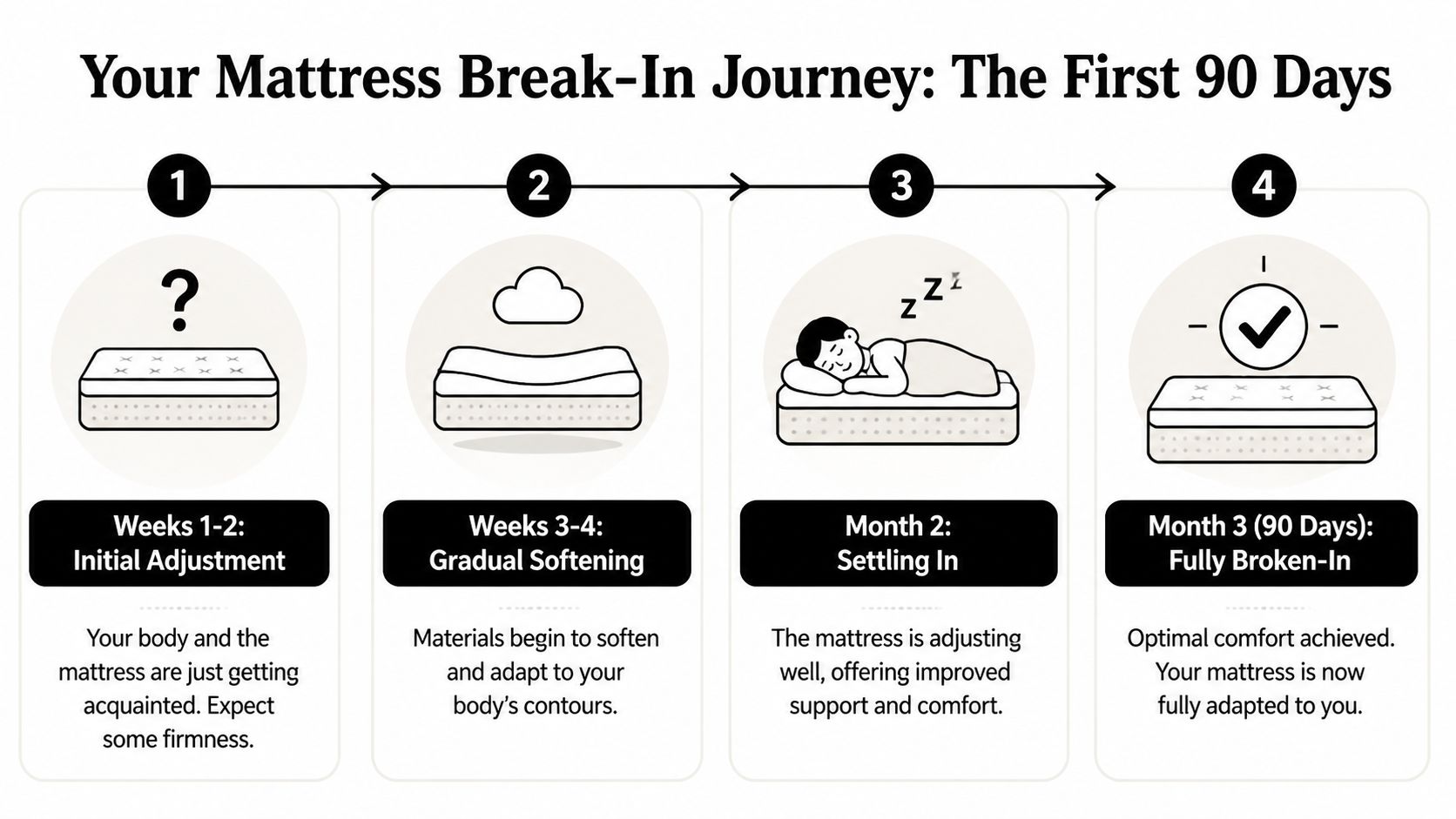
The first week after delivery is usually the most uncertain. A mattress can feel firmer, flatter, or just different than it did in our Grants Pass showroom, even when it is the right model for your body. That early mismatch does not mean something is wrong. It usually means the materials and your body are still getting acquainted.
According to Mattress Firm’s break-in guide, most mattresses settle in over about 30 to 90 days, with latex often adjusting faster and memory foam commonly taking longer.
Mattress break-in timelines by type
| Mattress Type | Average Break-In Period |
|---|---|
| Latex | 2 to 4 weeks |
| Innerspring | 30 to 60 days |
| Hybrid | 30 to 60 days |
| Memory foam | Average of 60 days |
What that timeline usually feels like
Days 1 through 14 are the stretch where customers ask the most questions. You may notice more firmness than you expected, especially if your old bed had softened over the years. Your shoulders, hips, and lower back are adjusting too, so part of the break-in happens in the mattress and part happens in you.
By weeks 3 and 4, the comfort layers often start loosening up under regular use. Pressure points tend to calm down, and the surface usually feels less stiff and more familiar. This is often the point where people stop noticing the bed every time they lie down.
Month two is more about consistency than change. The mattress keeps settling into its intended feel, and your sleep posture has usually adapted to the new support. If you are still trying to sort out whether your needs are more about cushioning, alignment, or temperature, our sleep quality assessment for pressure relief and support needs can help narrow that down.
By the end of the full break-in window, you should have a fair read on comfort.
Why one mattress settles faster than another
Material choice matters. Foam-heavy mattresses usually need more regular pressure before they relax into their designed feel. Latex has a springier response, so it often feels more settled sooner. Innerspring and hybrid models still need time, but the main shift often comes from the top comfort layers rather than the coil unit underneath.
I have seen this play out for years with families across Grants Pass, Medford, and the Rogue Valley. Two beds can feel close in the showroom and then behave very differently after a month at home. That is normal, and it is one reason we tell customers to judge a mattress over weeks, not one weekend.
One more real-world factor is the room itself. If dust, dryness, or seasonal allergies are interrupting your sleep while you are adjusting to a new bed, that can make it harder to tell whether the mattress is the issue. Our partner’s guide to better allergy sleep is a helpful place to start.
Actionable Steps for Optimal Comfort
If you want to know how to break in a new mattress without damaging it, the answer is simple. Use steady, even pressure and stay consistent. Don’t try dramatic shortcuts.
According to Saatva’s mattress break-in recommendations, sleeping on the mattress every night, walking on it gently for several minutes daily, and rotating it 180 degrees every two to four weeks for the first three months can help it wear more evenly. The same guidance says jumping is not recommended because it can damage internal components.
Start with the step that matters most
Sleep on it every night. That’s the foundation of the whole process.
Some materials need regular body heat and sustained pressure to start relaxing. A mattress that gets occasional use in a guest room won’t settle the same way as one used every night. If your room environment affects your rest as much as your bed does, this guide to better allergy sleep is also worth a read, especially during dusty or high-pollen stretches in Southern Oregon.
Safe ways to help the mattress along
Different constructions respond best to different kinds of pressure. People sometimes make mistakes regarding this.
- For foam and latex mattresses: Walk gently across the surface in clean socks, or use your body weight to press and knead the surface evenly.
- For hybrid mattresses: Gentle walking can help, but keep pressure even and controlled.
- For innerspring mattresses: Crawl on hands and knees instead of concentrating force in one small spot.
Worth remembering: Gentle, even pressure helps. Sharp impact does not.
Rotation matters more than people think
For the first part of ownership, rotate the mattress from head to foot on a regular schedule. This helps the materials settle more evenly, especially if one sleeper is heavier or one side gets more use.
A good support system matters too. An uneven frame can make a mattress feel wrong before the mattress itself has had a chance to break in. If you’re pairing your bed with a more flexible sleep setup, our article on adjustable bed frames and sleep comfort can help you think through fit and support.
What not to do
Some habits slow the process down or create problems you didn’t have before:
- Don’t jump on the mattress: It can stress the internal build.
- Don’t rotate randomly: Put it on a schedule and stick with it.
- Don’t pile on thick toppers immediately: If you change the feel too much on day one, it becomes harder to tell how the mattress itself is adjusting.
- Don’t ignore the base: Slats, platform support, and adjustable foundations all affect feel.
The trade-off is straightforward. Gentle consistency takes more patience, but it protects the mattress and gets you a more honest result.
Troubleshooting Common New Mattress Issues
Even when the mattress is performing normally, a few early concerns tend to pop up. Most of them are temporary. The key is knowing which ones are part of the normal adjustment period and which ones deserve a closer look.
It feels firmer than the one in the store
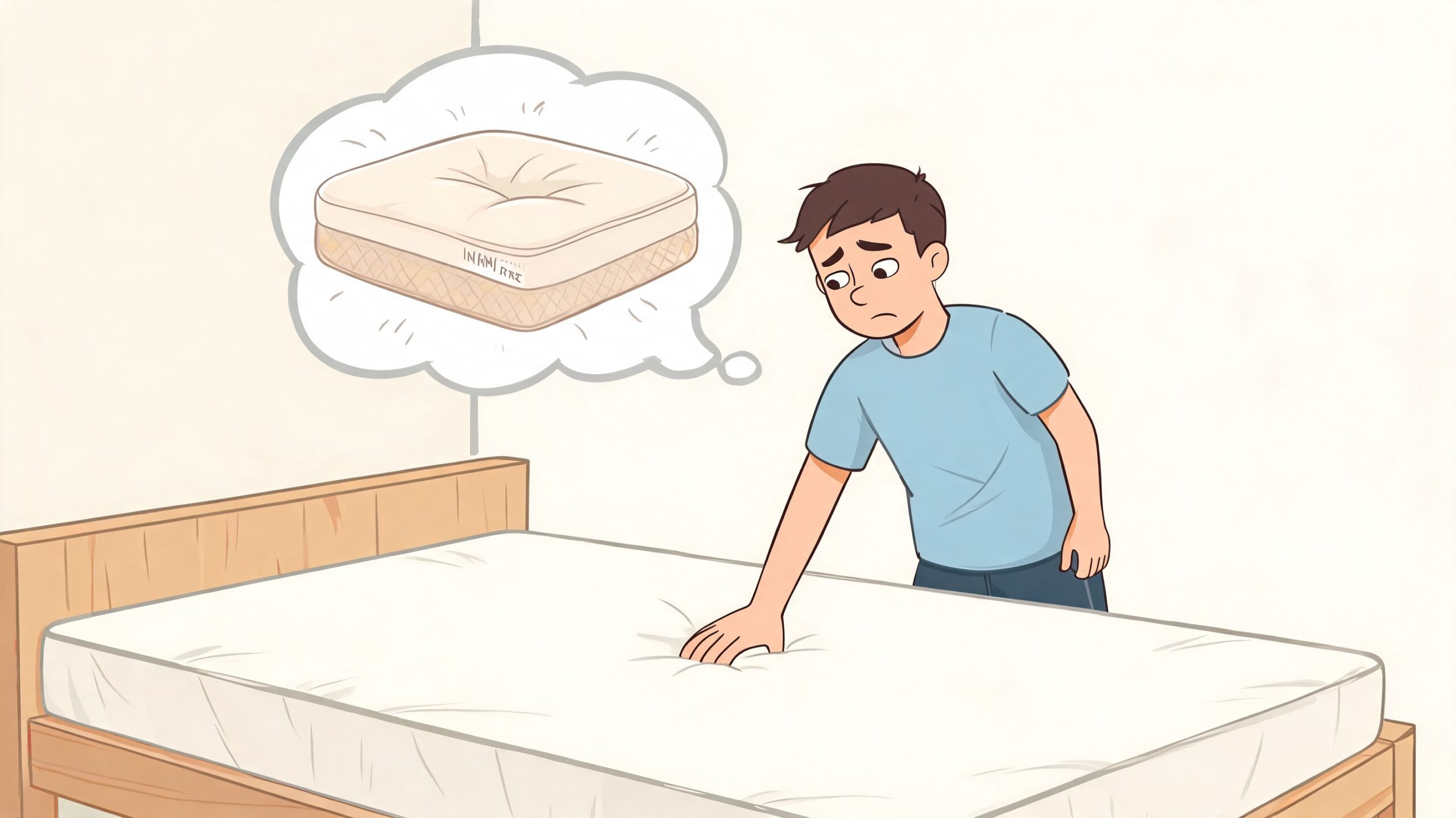
This is the most common complaint, and it usually has a simple explanation. Floor models have already been tested by many shoppers. Yours hasn’t.
Material type also affects how long that feeling lasts. Bilt-Rite Furniture’s break-in overview notes that innerspring mattresses need 2 to 4 weeks for coils to lose factory stiffness, while memory foam can require up to 90 days to fully decompress and conform. The same source also points out that warmer room temperatures make foam more pliable.
You notice a mild new-mattress smell
A fresh mattress can have a temporary odor after unpacking. In most homes, the practical fix is simple. Let the room breathe, keep airflow moving, and give the bed some time before dressing it too heavily with thick layers.
That smell is different from a defect. A temporary “new product” scent fades. Visible damage, unusual lumps, or a smell that seems tied to moisture or contamination deserves attention.
If a mattress is new, “different” is normal. “Damaged” is not.
Your shoulders, hips, or low back feel strange
A new support surface can shift where your body carries pressure. That doesn’t always mean the mattress is wrong. Sometimes your body is unwinding from an older mattress that had already developed soft spots or uneven support.
A few practical checks can help:
- Check your pillow setup: Neck angle can change how the mattress feels through your shoulders and back.
- Confirm the frame is level: A support issue underneath can mimic a comfort problem.
- Give your body time: New pressure patterns often settle before long.
- Review summer sleep variables: Heat can change perceived firmness, so our piece on mattress myths and sleeping better in warmer months may help if the bedroom itself is part of the issue.
When concern is reasonable
If comfort isn’t improving at all, or if the mattress develops visible sagging, bunching, or uneven areas, that moves beyond ordinary break-in. At that point, it makes sense to ask questions instead of waiting and hoping.
When to Seek Help and The Gates Service Promise
A mattress should start feeling more familiar as the first few weeks turn into the first couple of months. If you have given it regular use, rotated it as recommended, and checked that the foundation is solid and level, ongoing pain or visible changes in the surface deserve attention.
Reach out if you see sagging, bunching, sidewall bowing, or a dip that keeps getting worse. The same goes for discomfort that has not improved after the full break-in window, especially if you have already ruled out pillow height, bed frame issues, and heavy bedding that can change how the surface feels.
That is usually the point where a quick outside opinion helps. Some problems come from the setup under the mattress. Some are comfort adjustments that still need a little more time. Some are true defects. If you want us to help sort that out, use our mattress service request form, and our team will walk through the next step with you.
Our commitment to your comfort is why we build these services into the Gates experience. It is not only about selling a mattress. It is about helping you get the rest you paid for, from the day the bed arrives to the point where it finally feels like yours. That includes delivery teams who set the mattress up correctly, conversations with real people who know the products, and practical help if something does not feel right.
Customers from Grants Pass and across the Rogue Valley often just need reassurance that a new mattress is acting like a new mattress. Other times, they need help documenting a concern or figuring out whether the mattress, frame, or room setup is the actual cause. We handle those calls every week in the showroom, and that steady follow-through is a big part of why local families keep coming back.