Arranging Furniture in a Living Room with a Fireplace: Your 2026 Guide to a Stylish Space

When you're arranging furniture in a living room with a fireplace, the hearth usually serves as the natural anchor for your entire design. That doesn't mean every sofa has to stare at it, but it does mean every decision — where the biggest seat goes, where the rug sits, where the traffic flows — should start from that fixed point.
Your Fireplace Is the Heart of Your Living Room
Here's the sequence we use again and again, whether the room is a Mitchell Avenue bungalow or a new build outside Grants Pass:
- Call the focal point. For most rooms it's the fireplace. If a wall of windows competes with it, decide which one wins before you move anything.
- Measure your clearances and walkways. Aim for 30 to 36 inches on main paths, and 14 to 18 inches between the sofa and the coffee table. This guide to living room clearances and spacing lays out the same numbers we use on the floor.
- Place the largest seating piece first. The sofa or sectional sets the axis of the room; everything else negotiates with it.
- Balance secondary seating around conversation and TV sightlines. Keep the main grouping within roughly 8 feet so people can talk without raising their voices.
After years of rearranging vignettes in our showroom, the layouts that fail most often do it the same three ways: the hearth gets blocked by nothing but distance (seating pushed against the far wall), pathways get squeezed under 30 inches, or chairs end up so far apart that conversation dies. If you fix those three things, the room almost always works.
Whether you have a traditional hearth or a newer option like a new fireplace mantel, these four steps are the same. And lighting is the quiet half of layout — once your furniture plan is set, layering ambient, task, and accent sources is easier if you follow Golden Lighting's page on lighting a living room in layers.
How We Chose These Fireplace Layout Ideas
These recommendations aren't pulled from a trends report. They're built on the criteria we apply when solving real layouts:
- Room shape and fireplace placement: A centered wall, corner, or open-plan anchor each calls for a different starting axis.
- Traffic flow: Major walkways should hold at least 36 inches; a layout that forces people to sidle between the sofa and coffee table gets rejected.
- Seating distance: The main group should sit within about 8 feet of one another so conversation stays natural, which is why wall-hugging furniture weakens a fireplace room even when it technically fits.
- TV sightlines: If a television lives in the room, we check whether seating can face the fire and glance at the screen without craning.
- Firebox clearance: Anything flammable stays at least 36 inches back from an active hearth.
A layout earns a spot below only if it checks all five boxes for a common room type.
A well-arranged room feels effortless. Treating the fireplace as the anchor gives the space a clear purpose and simplifies every other decision.
Choosing the Right Anchor Furniture for Your Fireside Layout
Before you start pushing furniture around, let's talk about the star of the show: your anchor piece. This is almost always your sofa or sectional. It's the biggest, most important piece of furniture in the room, and where you decide to put it sets the tone for everything else, especially when a fireplace is involved.
Getting the scale right is probably the single most important decision you'll make. A huge, overstuffed sectional can completely overwhelm a small hearth, while a more delicate sofa might look lost and lonely in front of a grand, floor-to-ceiling stone fireplace.
This is why we've always stood by our 30,000-square-foot showroom in Grants Pass. Seeing a sofa online is one thing, but sitting on it, feeling the fabric, and getting a sense of its real-life presence is something else entirely. It's where our promise of "Service and Value," which we've held since 1946, comes to life.
Finding the Perfect Scale and Style
We always encourage our neighbors, from Medford all the way to Central Point and Ashland, to come in and "test drive" high-quality pieces from trusted brands like La-Z-Boy and Flexsteel. When you see them in person, you can instantly connect the proportions to your own living room. Is the back too high? Is the depth right for your family to lounge comfortably? Answering these questions now saves a lot of headaches later on.
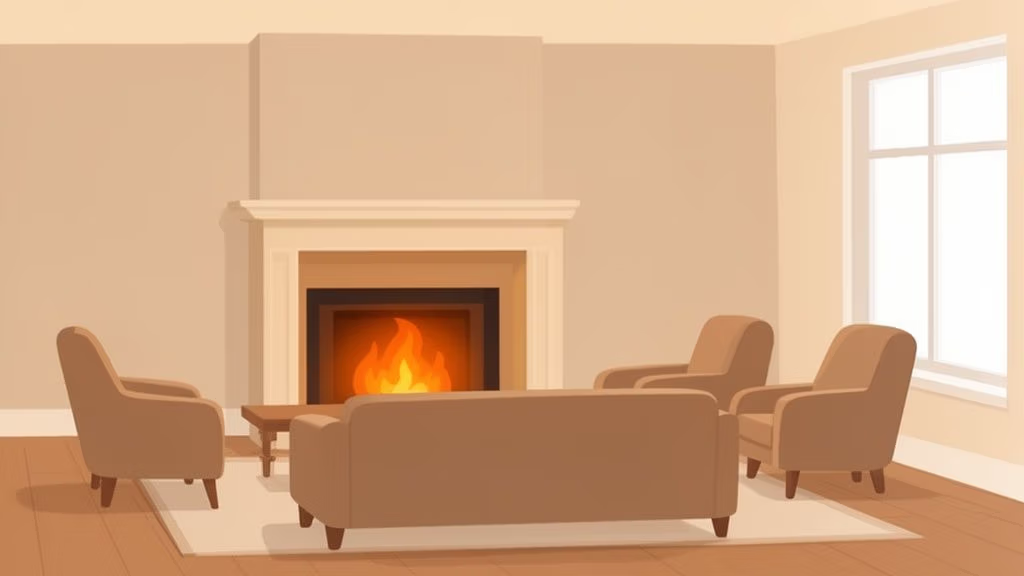
For many homes here in the Rogue Valley, a classic 'U-shape' layout around the fireplace is a fantastic starting point. This usually means placing your sofa directly facing the hearth, then adding a loveseat or a pair of armchairs on either side. It creates a wonderfully intimate conversation zone that just naturally draws people in. Not only does this setup feel warm and inviting, but it can also boost your home's perceived value by creating a cozy, well-designed space.
Beyond the Sofa: Your Secondary Anchors
While the sofa gets most of the attention, don't underestimate the power of a great secondary piece. Our Unique Finds collection really shines with beautiful reclaimed wood coffee tables and one-of-a-kind teak consoles that can act as stunning centerpieces in front of the fire, adding a layer of Southern Oregon character you just won't find in a big-box store.
A well-chosen anchor piece does more than just fill a space; it invites people in. It tells them where to gather, relax, and connect. That's the secret to a living room that truly feels like home.
And for some extra guidance on picking out that perfect primary piece, don't miss our guide on how to choose the right sofa for your living room.
Proven Layouts for Common Living Room Shapes
Every living room has its own shape and quirks, so we organize our advice by scenario instead of by trend. Start with one question: do you want a symmetrical or asymmetrical arrangement? Symmetry (sofa centered on the hearth, matching chairs flanking it) reads calm and formal; asymmetry (sectional on one side, a single recliner on the other) solves awkward walls and improves flow. Once you've chosen, pick the pattern below that matches your room.
This flowchart can help you figure out where to start with that main anchor piece.
Sofa Facing the Fireplace
The simplest pattern, and often the best. Center your sofa directly across from the hearth, with the coffee table 14 to 18 inches from the sofa's front edge and everything sitting on one large rug. Add two chairs on the open sides of the grouping to close the conversation circle. It preserves a wide walkway behind the sofa, keeps every seat on the focal point, and works best in square to moderately rectangular rooms with a centered fireplace.
U-Shaped Conversation Layout
Face the sofa toward the fire and run a loveseat or two armchairs perpendicular on each side, forming a U around the hearth. Center the coffee table on the hearth axis, not the room's midpoint, so the whole group reads as tied to the fireplace. Leave at least one 36-inch opening at the U's mouth for entering and exiting. This is the pattern we recommend most for families who entertain — my own favorite version floats a matching pair of swivel chairs on the sides so guests can turn toward the TV without moving furniture afterward.
L-Shaped Sectional with a Corner Fireplace
Don't fight the angle. Anchor the sectional to the corner's diagonal so the chaise side angles toward the fire, then float a single armchair opposite on the same diagonal. Center the coffee table on the diagonal axis of the corner, and keep the rug rotated to match so the grouping feels intentional. This layout suits great rooms where the fireplace sits off-center, and it frees up the two true corners for lamps or a reading chair.
Fireplace Plus TV on an Adjacent Wall
Split the room into two zones: the fireplace group (sofa plus two chairs) on one axis, and the TV wall perpendicular, covered by a low console that won't outshine the mantel. Angle one or two of the chairs so they catch the screen at a slight turn — a swivel chair makes this effortless. Keep the main sofa facing the hearth so the fire stays primary, and use the perpendicular axis only for screens. This is the arrangement we suggest when movie night and fireside evenings share one room.
Long, Narrow Room with a Fireplace
Create two zones instead of one. Anchor the main conversation group at the fireplace end — loveseat and a pair of chairs, coffee table centered between them — then set up a secondary zone at the far end with a reading chair, lamp, and small side table. Leave the middle of the room as open pathway, and keep both groups within their own conversation radius rather than stretching one big semicircle down the room's length. This breaks the "bowling alley" effect that single-axis layouts create in narrow rooms.
Open-Plan Living Room Anchored by a Rug
Your furniture defines the living area, so start with a rug large enough that at least the front legs of every seat rest on it. Float the sectional with its back to the dining area or kitchen, facing the fireplace, and let the rug's edge mark the "room." Angle one chair or bench across the group's open side to complete the boundary. We find this is the scenario where pushing furniture against walls fails hardest — inside our own open-plan display area, the anchored, floated grouping consistently draws people in, while the wall-hugging one gets walked past.
Looking for even more inspiration beyond these six? Check out our guide on more living room arrangement ideas.
Can You Put Furniture in Front of a Fireplace?
It depends on whether the fireplace works. A decorative or nonworking fireplace (gas insert disabled, concealed unit, or ornamental surround) can absolutely anchor furniture — a coffee table or bench placed in front of it is a common and attractive choice. An active fireplace is different: keep any flammable, upholstered piece at least 36 inches back from the opening because of heat and spark risk. Metal or stone tables can sit closer, but never block the firebox opening or screen.
Remember, the best layout isn't just about what looks good — it's about what works for your family's lifestyle. It should feel natural, comfortable, and welcoming from the moment you walk in.
Once you've settled on the perfect layout, our White-Glove Delivery team makes it a reality. We don't just drop boxes on your porch; our professionals handle all the heavy lifting, assembly, and precise placement, bringing your vision to life without you having to lift a finger. We also offer mattress haul-away for your convenience.
How to Balance Your Fireplace and Television
It's the great debate in modern living rooms: where on earth do you put the television when a beautiful fireplace is already the star of the show? For so many families we work with across Grants Pass and Medford, figuring out how to make these two focal points coexist is the key to a room that feels both cozy and ready for movie night.
The idea is to arrange your furniture so the fireplace stays the heart of the room, but you don't have to crane your neck to see the TV. You have three solid options here, and we've seen them all work beautifully.
The Most Common Solutions
- TV Above the Fireplace: This is probably the most popular choice because it's a huge space-saver. It keeps both focal points stacked neatly in one place. Just be careful with ergonomics—mounting the TV too high is a recipe for neck strain.
- TV on an Adjacent Wall: Placing the TV on a wall next to the fireplace creates two distinct zones. This often results in a more balanced, asymmetrical layout that feels really natural and improves the flow of the room.
- TV on the Opposite Wall: In longer, more rectangular rooms, this layout can be fantastic. It lets your main seating face the fireplace directly, and you can easily turn to watch TV, creating separate areas for conversation and entertainment.
If you want to dive deeper into finding the best viewing height and avoiding those pesky neck aches, check out our complete guide to finding the optimal TV positioning.
Choosing the Right Furniture for the Job
The media console and seating you pick can make or break the whole setup. If you put the TV on its own wall, a low-profile media console from a trusted brand like Ashley won't try to steal the spotlight from your mantel. Or, have a look at our Unique Finds—a reclaimed wood console adds tons of character while keeping the whole look cohesive.
The right arrangement shouldn't feel forced. A well-placed TV supports the room's main purpose—gathering by the fire—rather than fighting against it. It's all about creating harmony, not competition.
It's amazing what a difference the right layout makes. Recent data shows that using multifunctional furniture to balance a TV and fireplace can increase a room's functionality by 40%. Here in the Rogue Valley, where 67% of homeowners tell us comfort is their top priority, we often suggest placing a sectional perpendicular to the fireplace. It's a strategy backed by 60% of design experts and can reduce TV-viewing neck strain by up to 35%. You can learn more about how furniture trends are shaping today's homes by exploring global living room market reports.
We know that getting the perfect setup is a big decision. That's why we created Gates Easy Pay, with flexible options like $0 down, 6-month interest-free financing, and even no-credit-needed programs. It's all part of the commitment to "Service and Value" we've stood by since 1946.
Adding the Final Touches That Unify Your Space
Once the big pieces are placed, the zone around the fireplace itself deserves its own plan. A rug large enough that the front legs of your sofa and chairs all rest on it remains the single most common fix we recommend — undersized rugs make a fireplace grouping float.
How to Organize the Fireplace Zone
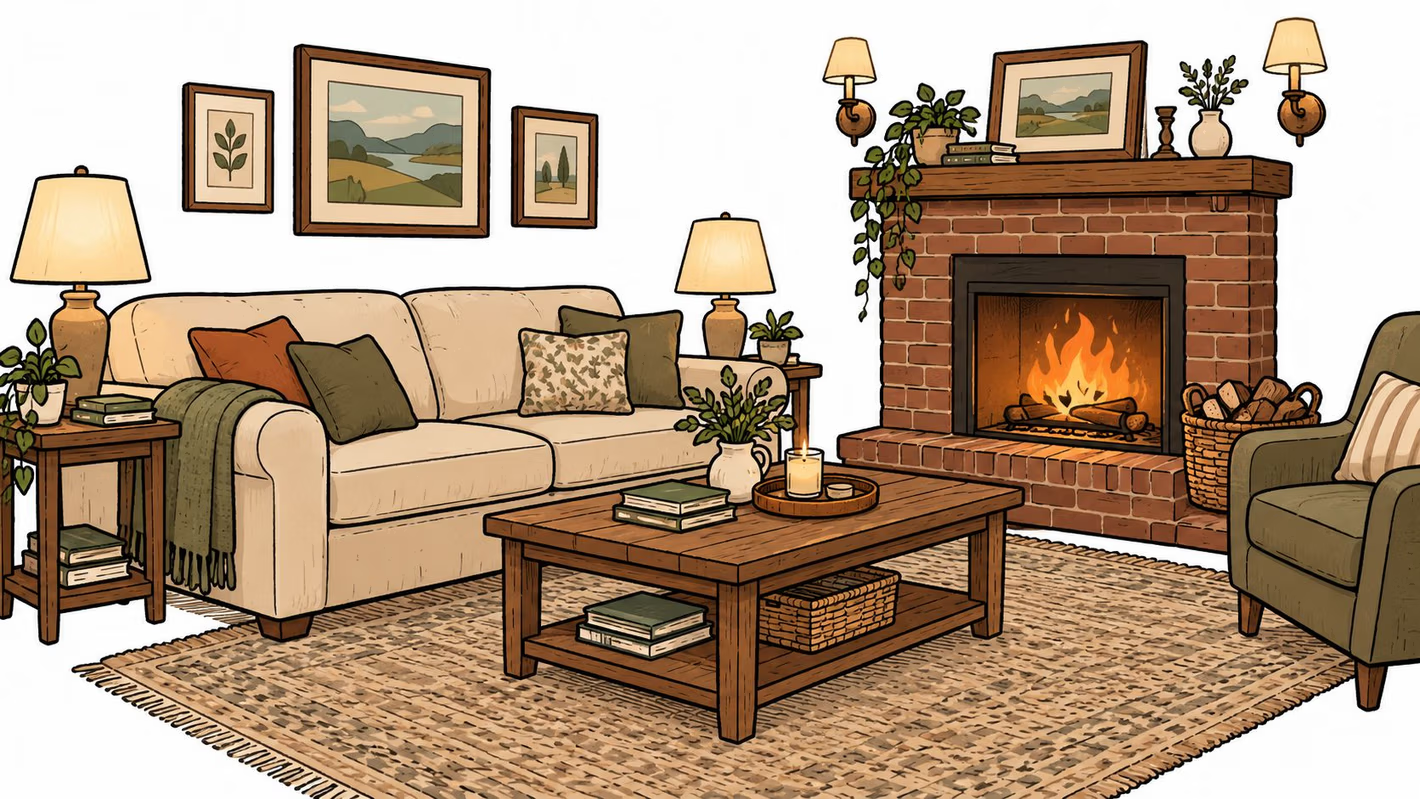
Keep the mantel to a few scaled items — one art piece or mirror, flanked by two or three objects of honest weight — and edit anything smaller than your hand from eye level. On each side of the fireplace, either go symmetric (matching lamps, matching cabinets, or a pair of accent chairs) for a formal look, or asymmetric (a tall bookcase or stacked logs on one side, a low basket and one chair on the other) for something more current. Keep baskets, log holders, and tools flanking the firebox in a pair, not scattered, and choose accent chairs placed at an angle to the hearth so they read as part of the grouping rather than extra clutter. The rule of thumb we use: every surface within arm's reach of the fire earns its place or gets removed. These same spacing and scale habits trace back to long-standing interior-design ergonomics, which treat circulation and reach distances as measured choices rather than visual guesses.
Staging Checklist for Selling or Photographing the Room
If the room is destined for a listing or a photo shoot, the numbers make a strong case for care: staging helped 83% of buyers' agents visualize the property as a future home, and the living room was the most frequently staged area in 91% of staged homes, according to the National Association of REALTORS® 2025 Profile of Home Staging. Work through this list before any camera arrives:
- Clear excess accessories and personal clutter from the mantel and hearth surround.
- Limit mantel decor to two or three well-scaled items.
- Angle seating toward the hearth so the fireplace reads as the anchor in every shot.
- Use a rug large enough to connect the entire seating grouping.
- Remove anything that blocks the firebox or pinches the walkways below 36 inches.
Making a Fireplace Look Nice Year-Round
The trick is to style for the season, not the holiday. In winter, lean into the fire itself with lanterns and a stack of logs; in summer, dress the surround with lighter textures — ceramic vases, a dried or faux botanical arrangement, even a rolled throw on a bench to keep the firebox visually softened when it's off. Swap mantel objects twice a year, keep the hearth line clean, and the fireplace stays a feature in July as much as in January. And as you finalize the details, remember to protect hardwood floors from furniture to keep them looking beautiful for years to come. For inspiration on finishing the arrangement, see our guide to styling the perfect coffee table.
Let's Create Your Perfect Fireside Living Room
Arranging furniture around your fireplace is about creating a space that feels like home. It should be a place for warmth, connection, and making memories. These ideas can help you get started.
Our family has been helping our neighbors in Grants Pass, Medford, and all across Southern Oregon find that feeling for over 75 years. It all started with the original promise our founder, George Gates, made back in 1946: to provide exceptional "Service and Value." It's a promise we still stand by today.
Of course, beyond just where you put the furniture, an inviting fireside living room needs that overarching sense of comfort. If you're looking for more ways to create a welcoming atmosphere, you can find some great tips on how to make your home cozy.
Your living room should be a reflection of you—a comfortable, functional space that serves your family's needs and tells your story. It's not about following rigid rules, but about creating a feeling of welcome.
We'd love to help you bring your vision to life. Bring your room measurements and a few photos into our 30,000-square-foot showroom in Grants Pass. Our friendly experts can help you find the perfect sofa from Flexsteel, a buttery-soft recliner from La-Z-Boy, or even a one-of-a-kind treasure from our Unique Finds collection.
With options like our flexible Gates Easy Pay financing and professional White-Glove Delivery service, your dream living room is a lot closer than you might think. We invite you to visit our Grants Pass showroom or browse our collection online today.
Frequently Asked Questions
How Should I Arrange My Furniture Around My Fireplace?
Treat the fireplace as your primary anchor and place your largest piece — the sofa or sectional — facing it, then build chairs on the sides to close the conversation circle. Keep the whole grouping within about 8 feet so people can talk comfortably, and hold main walkways at 36 inches or wider; guidance on designing the perfect living room layout follows the same rules. The main exception is a corner fireplace, where the anchor axis is the diagonal rather than the wall.
Can You Put Furniture in Front of a Fireplace?
Yes, if the fireplace doesn't work; no, if it does. A decorative or disabled fireplace can hold a coffee table or bench right in front of it. For an active fireplace, keep upholstered furniture at least 36 inches back from the opening for heat and spark safety.
What Should Go on Each Side of a Fireplace?
Symmetric options are a pair of matching lamps, cabinets, or accent chairs; asymmetric options are a tall bookcase or stacked logs on one side balanced by a low bench with a basket on the other. Either way, keep both sides proportionate to the fireplace, keep tools and log storage paired near the firebox, and leave the sightline to the surround uncluttered. Avoid two completely different tall objects — that's what reads as clutter rather than intention.
How Do You Stage a Living Room with a Fireplace?
Clear clutter from the mantel down to two or three scaled items, angle the seating toward the hearth, and make sure a rug connects the whole grouping with front legs on it. Keep walkways at least 36 inches and the firebox completely unobstructed. Stage it this way and the fireplace — the single most photographed feature in most staged living rooms — does the selling for you.
How Far Should My Furniture Be from the Fireplace?
Keep flammable furniture — sofas, armchairs, anything upholstered — at least 36 inches from the fireplace opening to maintain adequate heat clearance. Non-combustible pieces like a metal coffee table have more flexibility, but still keep 18–24 inches between the coffee table and sofa for legroom. Our White-Glove Delivery team applies these clearances on every in-home placement.
What's the Best Way to Handle a Corner Fireplace?
Don't push furniture against the walls. Embrace the angle and treat the fireplace as the room's diagonal focal point, floating your sectional to face it so the grouping sits centered in the floor space. A walk through our 30,000-square-foot showroom can really help you picture this kind of layout, especially with sectionals from brands like Flexsteel.
Is It Okay to Put My TV Above the Fireplace?
You can, with two caveats: comfort and heat. Ideally the screen's center sits near seated eye level — a tilting mount helps with both viewing angle and heat deflection, and your mantel should be deep enough to push heat up and away from the electronics. If your mantel is shallow, an adjacent-wall media console is usually the more ergonomic, balanced solution.