Organic Modern Bedroom Furniture: A Local Buyer’s Guide


You know the moment. A homeowner stands in a bedroom with a mood board in hand, the colors look right, the room is still quiet and clean, yet the space doesn't feel settled. That's usually where organic modern bedroom furniture starts making sense, because the style is not just about beige walls or a few wood accents. It's a balance of natural materials, human-scaled curves, and functional silhouettes, which is why it changes how a bedroom feels as much as how it looks.

For a lot of shoppers in Grants Pass and across Southern Oregon, the challenge is that the room photo online looks effortless, but the actual bedroom has corners, outlet locations, drawer clearances, and a mattress that needs to be comfortable every night. That's where the Gates approach stays practical, because our family business has been built around Service and Value since Est. 1946, and that mindset matters when a piece has to live in your home, not just in a photo.
Organic modern also reaches beyond style words. It asks whether the bed sits low enough to feel calm, whether the nightstand fits beside it, whether the dresser opens cleanly, and whether the materials will hold up over time. In that sense, the look is a design language with construction consequences, and that's what makes it worth evaluating carefully before buying. For a broader overview of the style, this organic modern design guide gives helpful context.
Our showroom conversations usually come down to four threads, natural materials, room scale, mattress pairing, and local service. Once those pieces line up, the style stops being vague inspiration and starts becoming a room that works.
What Organic Modern Bedroom Furniture Really Means
Organic modern bedroom furniture creates a calm room through proportion, texture, and useful forms. Wood grain, soft curves, quiet hardware, and clean surfaces provide character without making the space feel staged. A low bed, a tapered-leg nightstand, and a restrained dresser can establish the room more effectively than a collection of decorative accents.
The look is about more than color
Cream, sand, brown, and muted green can support the style, but the finish and construction determine how those colors read. In a showroom, compare a sand-finish oak nightstand with quiet hardware against a high-gloss chest. Even at the same dimensions, visible grain absorbs attention while reflective surfaces and prominent hardware add visual weight. This comparison helps explain the historical blend of clean lines, practical function, and organic or biomorphic shapes associated with the mid-century modern period, generally dated from about 1933 to 1965 (Britannica).
The furniture should also make sense in daily use. A softened bed edge is easier to live with in a tight Southern Oregon bedroom, while a dresser with visible grain can bring warmth without requiring additional decoration. These choices leave more visual breathing room, much like keeping a walking path clear instead of filling every open area.
Practical rule: If a bedroom feels crowded even when it is not full, check the furniture's visual weight before adding storage or accessories.
Construction deserves equal attention. Ask whether the piece uses kiln-dried solid wood, how its joints are made, and whether the finish suits indoor air concerns. Wood continues to respond to moisture, so a well-made piece needs room to move rather than being treated like a perfectly fixed material. That matters in a Southern Oregon home, where seasonal changes can affect furniture over time.
Organic modern furniture can suit a small bedroom or a larger primary suite because it relies on proportion rather than a matching set. Use the organic modern design guide to compare room arrangements, then judge each piece by its scale, surface, storage, and long-term care requirements.
The Design Roots Behind the Look
A low platform bed, tapered legs, and a rounded dresser corner can make a bedroom feel lighter without sacrificing usefulness. These features come from mid-century modern design, whose influence is commonly placed between 1933 and 1965 (Britannica). Organic modern furniture borrows that vocabulary, then softens it with natural surfaces and more relaxed proportions.
Scandinavian craft gives the style its warmth
Scandinavian design adds the tactile side of the look. Handcraft, wood, and leather became important materials, with beechwood, birch, teak, oak, and walnut valued for their grain, texture, and ability to age visibly. Those choices help explain why a bedroom can feel warm without relying on ornate decoration. The wood species and finish do more of the visual work.
This history also clarifies the appeal of restrained curves. A curved dresser front, softened headboard edge, or slender nightstand leg can provide interest while leaving clear space around the furniture. In the 1940 Museum of Modern Art “Organic Design in Home Furnishings” competition, Charles Eames and Eero Saarinen won for a collaborative chair design, an example of organic form gaining recognition within modern design (Britannica).
The same logic helps vintage pieces remain useful in a current bedroom. A teak chest or walnut bed can still look appropriate when its proportions suit the room, even if the surrounding finishes have changed. Organic modern design depends less on novelty than on relationships between height, width, leg placement, and visual weight.
Those relationships matter in Southern Oregon homes, where furniture also has to handle changing indoor moisture. Check whether a low profile and tapered leg are made from solid kiln-dried wood with movement-tolerant joinery, rather than veneer over particleboard. The historical form may look right, but its construction determines whether it can keep that character over time.
Choosing Materials That Actually Last
A bed can look perfectly suited to an organic modern room on delivery day and still disappoint after a few seasons. The difference usually sits beneath the finish: the wood species, the substrate, the drying process, the joinery, and the documentation for composite materials. In Southern Oregon, seasonal changes in indoor humidity make those details part of the design decision, not a technical footnote.
Reclaimed wood offers a resource-efficiency benefit. Reuse and recycling can reduce demand for virgin materials and ease pressure on forests, as described in the FSC circularity report. Its previous life also gives each piece distinctive marks, but shoppers should ask whether the wood was inspected, repaired, and finished for indoor use. A reclaimed headboard or dresser can bring character without requiring every surface to look uniform.
Solid wood, teak, and engineered wood each solve different problems
Teak combines workability with resistance to wear. Its documented Janka hardness value is approximately 1,070 pounds-force, and its heartwood is rated highly durable against decay fungi and termites. Natural oils also help limit moisture absorption (Teak material reference). Those properties suit statement nightstands, benches, and smaller bedroom case pieces, especially where touch and daily contact are frequent.
Solid oak and walnut offer visible grain and a settled, familiar presence. They work well for beds, dressers, and nightstands that should feel warm without becoming rustic. Wood tone changes how large or bright a room feels, so the examples in this guide to maple cabinet finishes and pairings can help shoppers compare undertones, even though the application is a kitchen.
Engineered substrates, including MDF, particleboard, and hardwood plywood, can support a clean silhouette beneath veneer. Their performance depends on panel quality, edge protection, joinery, and emissions controls. Under EPA TSCA Title VI, covered composite-wood limits are 0.05 ppm formaldehyde for hardwood plywood, 0.11 ppm for MDF, 0.13 ppm for thin MDF, and 0.09 ppm for particleboard. Products made or imported in the United States after March 22, 2019 must be certified by an EPA-recognized third-party certifier (EPA formaldehyde standards). Ask for documentation rather than judging safety by a natural-looking finish.
Moisture movement deserves equal attention. The USDA Forest Products Laboratory notes that hardwood lumber used for furniture, cabinets, and millwork is typically kiln-dried to about 6–8% moisture content, because wood continues to move as humidity changes (USDA Forest Products Laboratory). A Southern Oregon bedroom may experience enough seasonal variation to expose weak construction. Floating panels, elongated fastener holes, and breadboard ends give wood room to expand and contract instead of forcing it to split or warp.
| Material | Best Use in Bedroom | Durability Note | Indoor-Air Consideration |
|---|---|---|---|
| Reclaimed wood | Statement beds, dressers, unique nightstands | Strong visual character when responsibly sourced and well repaired | Check its previous use, finish, and any added composite parts |
| Solid teak | Accent pieces, benches, nightstands, smaller case goods | Naturally durable and resistant to moisture absorption | Ask about finishes and adhesives |
| Solid oak or walnut | Beds, dressers, coordinated bedroom sets | Long-lasting when kiln-dried and joined for wood movement | Check hidden panels and drawer parts for composite material |
| Engineered wood with veneer | Clean-lined storage and budget-conscious case pieces | Appearance can be refined, but lifespan depends on the substrate and joinery | Request TSCA Title VI documentation for composite panels |
Use three showroom questions before committing:
- What is the visible surface, and what is underneath it? This distinguishes solid wood from veneer over a composite core.
- Was the solid wood kiln-dried, and how does the construction handle movement? The answer should identify the joinery, not just repeat the species name.
- What documentation covers emissions and finish? A natural appearance does not identify the adhesives or coatings inside a piece.
A wood furniture guide for longevity and style provides another reference for comparing species, construction, and expected wear.
Quick showroom test: Drawers should glide evenly, doors should remain aligned, and large tops should be attached so they can move slightly with humidity instead of being held rigidly.
Beds, Nightstands, and Dressers That Fit Your Room
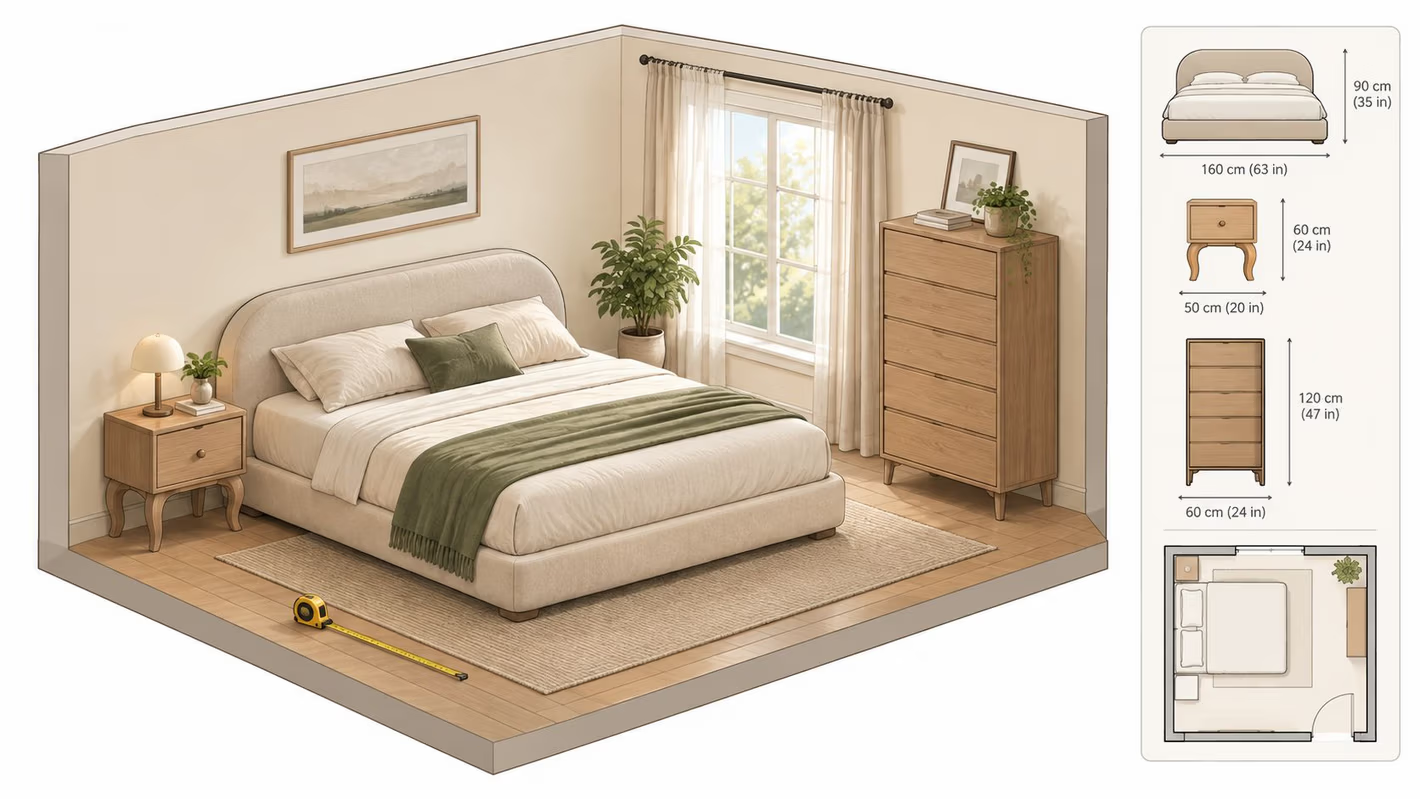
Organic modern rooms feel best when each piece fits the room's real dimensions, not the styled photo version. A bed that's too tall, a nightstand that lands too low, or a dresser that blocks a door swing can throw off the whole arrangement. The right scale keeps the room calm and makes daily use easier.
Start with the bed, then work outward
The bed usually anchors the style, so it deserves the first pass. In a bedroom with a thicker mattress, a low platform frame can still look balanced if the mattress height doesn't push the overall profile too high. In a room with low ceilings, a shorter headboard and a simpler base often feel more natural than a tall, heavy frame.
Nightstands need a different kind of attention. The top should be close enough to reach from a seated or lying position without stretching, and the depth has to leave enough walking room at the side of the bed. A piece that looks compact online can still block the path to a closet or bathroom door once it's in place.
Dressers are where people often make the easiest mistake, because wide drawers look tempting without considering traffic flow. A dresser should fit the wall, but it also needs to clear doors, allow full drawer extension, and leave space for everyday movement. In a smaller Southern Oregon bedroom, a slightly narrower piece often works better than a larger one that dominates the room.
Gates' Unique Finds matter here because reclaimed wood and teak pieces can bring character that big-box inventory usually can't match. That uniqueness works best when the silhouette still respects the room's scale, which is why a one-of-a-kind piece should be measured with the same care as a standard dresser.
For shoppers comparing bed styling, a luxury bed fabric guide can also help with upholstery choices when the frame includes fabric or a softer headboard treatment. The point isn't to make the bed louder, it's to make the whole room feel intentional.
Bring this checklist to the showroom floor
- Check bed height with your mattress in mind. The final profile should feel easy to get into, not overly tall.
- Measure the side clearance around nightstands. Doors, drawers, and walking space should all remain usable.
- Confirm dresser swing and drawer extension. A beautiful dresser still fails if it blocks circulation.
- Look at the wood tone in room light. Organic modern relies on how materials read in the space, not just under showroom lighting.
For shoppers building a complete room, the bedroom furniture set guide can help frame the basics before mixing in unique pieces.
Pairing the Bed With the Right Mattress
A low-profile organic modern bed can look balanced in the showroom, then feel awkward at home if the mattress changes its proportions. Mattress choice affects comfort as much as the frame, and sleepers do not respond to firmness in the same way. In a 2011 study of 128 healthy adults, participants used seven mattresses at home for about four weeks each. Mattress firmness significantly affected 9 of 11 key sleep measures, while the most suitable mattress varied among individuals (RTI study).
Firmness should be tested, not assumed
A second trial involving 313 adults with chronic nonspecific low-back pain compared medium-firm and firm mattresses. The medium-firm group showed greater improvement in pain and disability than the firm group (Springer PDF reference). The result supports testing different feels rather than choosing by appearance or a firmness label alone.
Before comparing feels, confirm the frame's slat spacing, foundation height, and headboard proportion. Then test two firmness levels for shoulder, hip, and lower-back support. These details connect the mattress to the organic modern design: a thick mattress can overwhelm a low headboard, while a thin mattress on a tall frame may make the room feel top-heavy.
Lie down long enough for your shoulders and hips to relax. Notice whether your lower back feels supported without pressure building at the shoulders or pelvis. Try the second firmness level as well, since initial comfort may not reflect how your body feels after a full night.
Gates' Mattress Gallery and Sleep Care approach support in-person testing, including premium options carried in the Grants Pass Mattress Gallery showroom. Bring your bed dimensions and note your usual sleep position so the mattress, frame, and room proportions work together.
For a broader framework covering feel, support, and room fit, use this mattress selection guide.
Simple rule for showroom testing: Comfort first, appearance second. A well-proportioned bed still fails if the mattress does not let your body rest.
Indoor Air, Sustainability, and Long-Term Care
A bedroom can look calm and still place demands on indoor air, resources, and daily maintenance. The EPA reported that furniture and furnishings generated 12.1 million tons of U.S. municipal solid waste in 2018, equal to 4.1% of total municipal solid waste. 80.1% of that material was landfilled (EPA durable goods data). Durable, repairable furniture can remain useful through more than one decorating cycle, reducing the need for early replacement.
Better stewardship starts at the purchase step
Ask what finish was used, whether the top can be refinished, and whether drawer parts are available. Those answers reveal how the piece may be maintained years after delivery. A repairable nightstand is like a replaceable part in a well-made appliance. One worn component does not have to end the useful life of the whole piece.
Materials discussed earlier, including kiln-dried solid wood, moisture movement, and composite-wood standards, still matter here. Reclaimed wood may need particular attention to its finish and surface condition, while teak and other durable woods benefit from care suited to their grain and construction. Keep the questions practical: What should be used for dusting? Which cleaners should be avoided? Can scratches or water marks be repaired locally?
Indoor air deserves equal attention. If a bedroom piece uses composite wood, ask whether it meets the EPA's TSCA Title VI requirements rather than relying on broad “natural” language. The standard provides a concrete benchmark for regulated composite panels. That matters in a sleeping space, where furniture remains close to occupants for long periods.
New furniture should settle in a ventilated room before regular use. Southern Oregon homes also benefit from stable indoor humidity, since wood responds to changing room conditions. Dust with a soft cloth, avoid excessive moisture, and address spills promptly. These small habits protect both solid and reclaimed wood.
A guide to plants that purify bedroom air can complement healthier bedroom habits. Plants do not replace careful material choices or ventilation, but they can support a calmer room routine.
Gates' Unique Finds suit this approach when provenance, construction, and repairability matter as much as appearance. Before buying, inspect the joints, drawer movement, finish, and available care instructions. The goal is furniture that continues working well, not furniture that looks right on delivery day.
Shopping Organic Modern Furniture in Grants Pass
The easiest way to shop this style is to treat the showroom visit like a fitting, not a browsing trip. Start with the bed, then walk the room perimeter with your measurements, because a calm-looking piece can still fail if it blocks a closet door or crowds a nightstand. In a 30,000-square-foot showroom in Grants Pass, there's room to test comfort, compare finishes, and see how reclaimed wood or teak reads in person.
What to do on the floor
- Test the bed with the mattress in mind. Sit, lie down, and check whether the height feels easy.
- Open every drawer and door. Organic modern should look quiet, but it also needs smooth daily use.
- Compare finishes beside each other. Natural grain and subtle color shifts matter more than a catalog image.
- Ask about delivery details up front. Assembly, setup, and removal should be part of the purchase conversation.
Shoppers coming from Medford, Central Point, Ashland, or elsewhere in the Rogue Valley usually find that in-person testing removes a lot of guesswork. That's especially true when the room needs a one-of-a-kind piece from our Unique Finds selection or a more straightforward bedroom grouping that still keeps the organic look. If a budget needs a little flexibility, Gates Easy Pay includes $0 down, 6-month interest-free, and no-credit-needed options so the project doesn't have to stall.
The service side matters just as much. White-glove delivery means the team doesn't just drop boxes at the door. It includes professional assembly and mattress haul-away, which makes the move-in process cleaner and easier for households that don't want to wrestle with packaging and setup.
For shoppers who want a local starting point, our natural furniture guide for Oregon homes can help frame the broader style before the showroom visit. Gates has been serving the region with Service and Value since 1946, and that still shows up in how the buying experience is handled.
Visit our Grants Pass showroom to test organic modern bedroom furniture in person, compare reclaimed wood and teak pieces, and see how the right bed and mattress work together in a real room. If it's easier to start from home, browse the collection online at Gates Home Furnishings and plan the next step with our team.