Dining Room Furniture with Storage: A Smart Buyer’s Guide

A dining table should handle meals, homework, and the occasional board game. In many Grants Pass homes, it ends up handling all of that plus school papers, charging laptops, unopened mail, craft supplies, and whatever hasn't found a permanent home. The salt shaker sits beside a stack of envelopes, while one chair becomes a coat rack.
That isn't a failure of housekeeping. It's usually a storage problem. Dining room furniture with storage gives everyday items a proper landing place, so the table can return to its main job. The right buffet, bench, server cabinet, or extension table won't just add capacity. It will solve a specific problem without swallowing the room.
When the Dining Table Becomes the Junk Drawer
A Grants Pass household might start the morning with breakfast dishes on the table, move a laptop into the center for remote work, then clear one corner for dinner. By evening, mail has joined the laptop, a child's backpack is tucked beneath a chair, and serving pieces are still hiding in a kitchen cabinet. The table has become useful for everything except eating comfortably.
The fix usually isn't a larger dining set. It's a storage piece placed where the clutter collects. A narrow server can catch mail and chargers near the entry to the dining area. A buffet can hold table linens, platters, and everyday dishes. A storage bench can absorb blankets, toys, or extra serving pieces while providing a place to sit.
Practical rule: Storage should sit close to the task it supports. Plates belong near the dining table, not across the house in a cabinet that nobody wants to unload.
The best choice depends on the household. A family that hosts holiday meals needs different storage from a renter furnishing a compact dining nook. Someone who sets the table every night needs drawers that open easily, while an occasional entertainer may value a handsome cabinet that anchors an open-concept room.
A quiet solution for busy rooms
The category has deep roots. Britannica's history of the sideboard traces the piece to the Middle Ages, when it served as an alternative to the side table. Earlier European court versions appeared in the 16th century, while the modern form became established in the early 19th century as part of mass-produced dining-room suites. Over time, sideboards evolved to store plates, decanters, side dishes, and other meal accessories in cupboards and drawers. Read the history of the antique buffet and sideboard for useful context.
That long history still makes practical sense. The dining room needs surfaces for serving and concealed places for the items that support a meal. A well-chosen piece keeps those supplies nearby while giving the room visual order.
Storage should match real habits
A household doesn't need every type of cabinet. It needs the one that removes the most repeated friction.
- For mail and daily clutter: Choose a server or shallow sideboard with accessible drawers.
- For serving pieces: Select a buffet with adjustable shelves and a broad top.
- For growing families: Consider a storage bench that hides less attractive essentials.
- For frequent hosts: Look at an extension table with a self-storing leaf and built-in drawers.
- For limited floor space: Use a hutch-top sideboard to build upward rather than outward.
The goal is simple. The table should be ready for dinner without a twenty-minute clearing operation.
The Main Types of Dining Room Storage Furniture
Each storage piece has a job, and the right choice depends more on the room's constraints than on the label printed on the showroom tag. A buffet, server, bench, hutch, or table drawer can all store dining essentials, but they create different visual weight and solve different household problems.
Buffets and sideboards
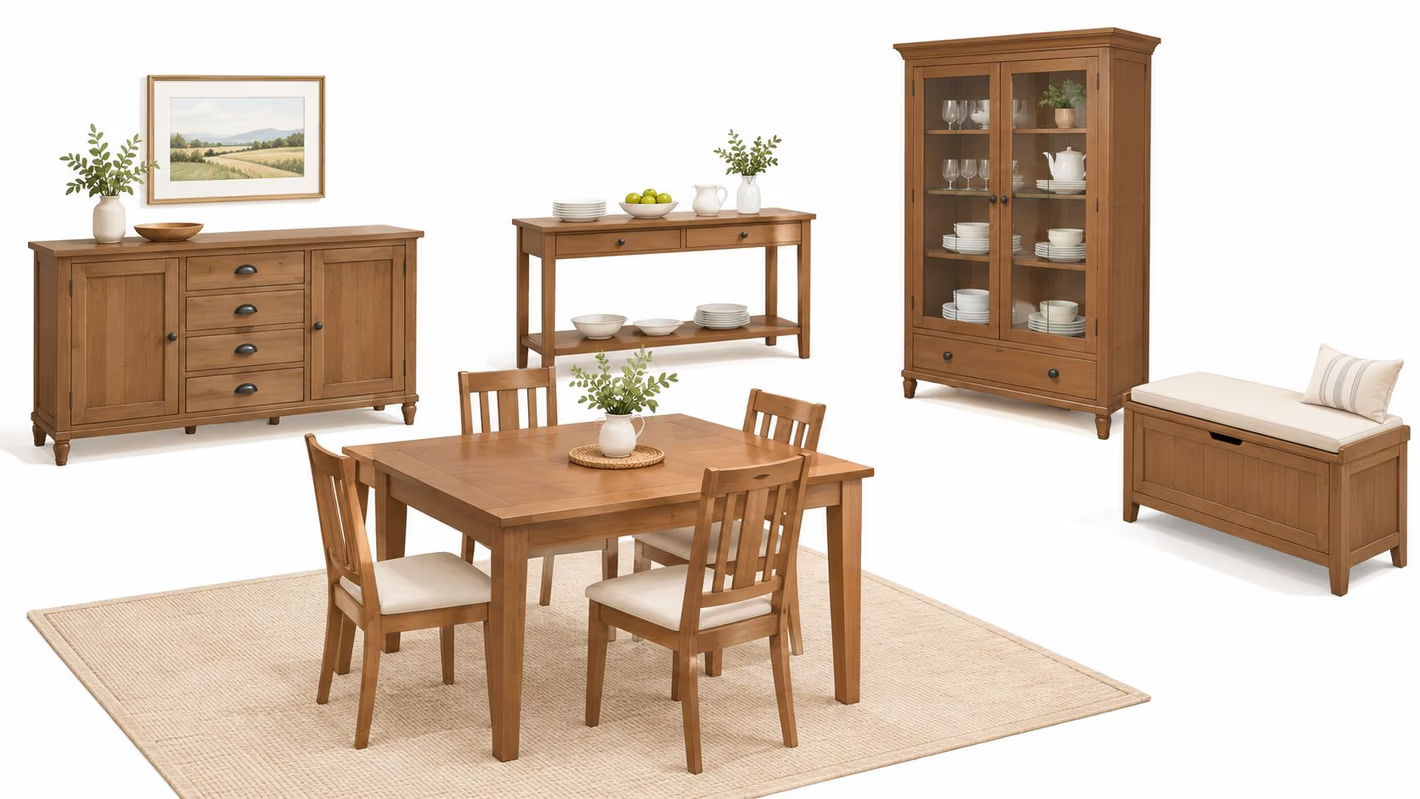
A buffet or sideboard is the dependable anchor for a dedicated dining room. Cabinets hold platters, bowls, and serving appliances, while drawers keep linens, flatware, candles, and trivets organized. The broad top also works as a staging area during dinner, which matters when the dining table is already full.
This is the strongest option for homeowners with a separate dining room or an open-concept space that needs visual grounding. A shallow version suits a narrow room, while a heavier reclaimed-wood piece can define the dining zone in a larger ranch-style home.
A useful sideboard guide for dining room storage can help shoppers compare cabinet layouts, drawer arrangements, and proportions before visiting the showroom.
Server tables
A server table offers a lighter footprint and a more flexible working surface. It can sit against a wall, behind a sofa, or at the edge of a dining nook, making it a practical choice for apartments, rentals, and compact Southern Oregon homes.
Servers work well for coffee supplies, mail, placemats, and smaller serving pieces. Their open or shallow design keeps sightlines clearer than a tall cabinet, but they may not provide enough concealed volume for a household with extensive dishware.
Extension tables with drawers
An extension table with hidden drawers solves two problems at once. It accommodates additional guests when needed, and it gives everyday items a discreet place to disappear. Self-storing extension leaves are especially useful because the table doesn't require a separate closet or garage location for the extra section.
This is the smart compromise for a household that hosts often but lacks a dedicated dining room. The table remains compact for weekday meals, then expands for family gatherings without forcing the owner to buy both a large table and a separate storage cabinet.
Storage benches and hutch-top sideboards
A storage bench is the practical favorite for families. Lift-up seats or cubbies can hold toys, blankets, cushions, and serving platters, while the bench adds seating along one side of the table. It works particularly well in breakfast nooks, under windows, or against a short bump-out.
A hutch-top sideboard takes the opposite approach. It uses vertical space for glassware, display pieces, linens, and less frequently used dishes. This suits a smaller room with limited floor area, though the upper section adds visual height and should be balanced with the rest of the room.
Matching Each Piece to Your Space and Habits
The right piece isn't the one with the most doors. It's the one that stores what the household reaches for while preserving comfortable movement around the table.
A buffet provides the most useful combination of drawers, cabinets, and serving surface, but it can dominate a narrow dining room. A server table takes up less visual space and works well for daily drop zones, though it won't handle a large collection of platters. A storage bench adds function without requiring another wall, but its contents need to be edited regularly because deep hidden compartments can become catchalls.
Storage Piece Match-Up
| Piece | Best For | Space Needed | Trade-Off |
|---|---|---|---|
| Buffet or sideboard | Dishware, linens, platters, and entertaining supplies | A substantial wall with room for doors and drawers to open | Offers excellent capacity but can feel heavy in a small room |
| Server table | Mail, placemats, chargers, and daily serving items | A clear wall or narrow dining-zone edge | Keeps sightlines open but provides less enclosed storage |
| Extension table with drawers | Frequent hosts without a dedicated dining room | Open floor around the table for expansion and chairs | Combines two functions but needs careful planning around the leaf path |
| Storage bench | Families needing seating plus concealed storage | A short wall, nook, or window area | Highly useful for everyday life, though hidden storage can collect clutter |
| Hutch-top sideboard | Homes short on floor footprint | Vertical clearance and a wall that can support visual height | Adds substantial display storage but may overwhelm low-ceilinged rooms |
The practical trade-off
Households that entertain formally may prefer a china cabinet or hutch because glassware and serving pieces stay visible and organized. Families with children often get more value from a bench, where toys and blankets can disappear quickly without making the room feel precious.
For shoppers in Medford, Central Point, Ashland, and the broader Rogue Valley, outlet and discontinued inventory can also solve awkward proportions. A shallow sideboard or compact server may fit a narrow room better than a full matching collection, while a special-value piece can make the layout work without expanding the furniture footprint.
The decision rule is straightforward. Small room, frequent daily clutter, choose a server or bench. Dedicated room, regular entertaining, choose a buffet. Limited floor space, choose a hutch. Frequent guests without a separate dining room, choose an extension table with drawers.
Sizing and Layout That Actually Works
Measure first and shop second. A storage piece that looks modest on a showroom floor can make a dining nook feel blocked once chairs, open drawers, and walking paths are added.
For a buffet or sideboard, practical furniture guidance commonly places the width around 48 to 72 inches, the depth around 16 to 22 inches, and the height around 30 to 36 inches. The same guidance recommends at least 36 inches of clear floor space in front for chair pull-out and traffic flow. Review this buffet cabinet sizing guide before choosing a piece for a tight room.
A reliable measuring process
- Measure the smallest wall first. Round the room dimensions to the nearest inch, then subtract 36 inches from the smallest wall to estimate the maximum table diameter that still permits chairs to pull back comfortably.
- Mark the footprint with painter's tape. Outline the table, chairs, buffet, and bench on the floor. This exposes conflicts that a tape measure alone won't reveal, especially in galley-style dining spaces common in older Southern Oregon homes.
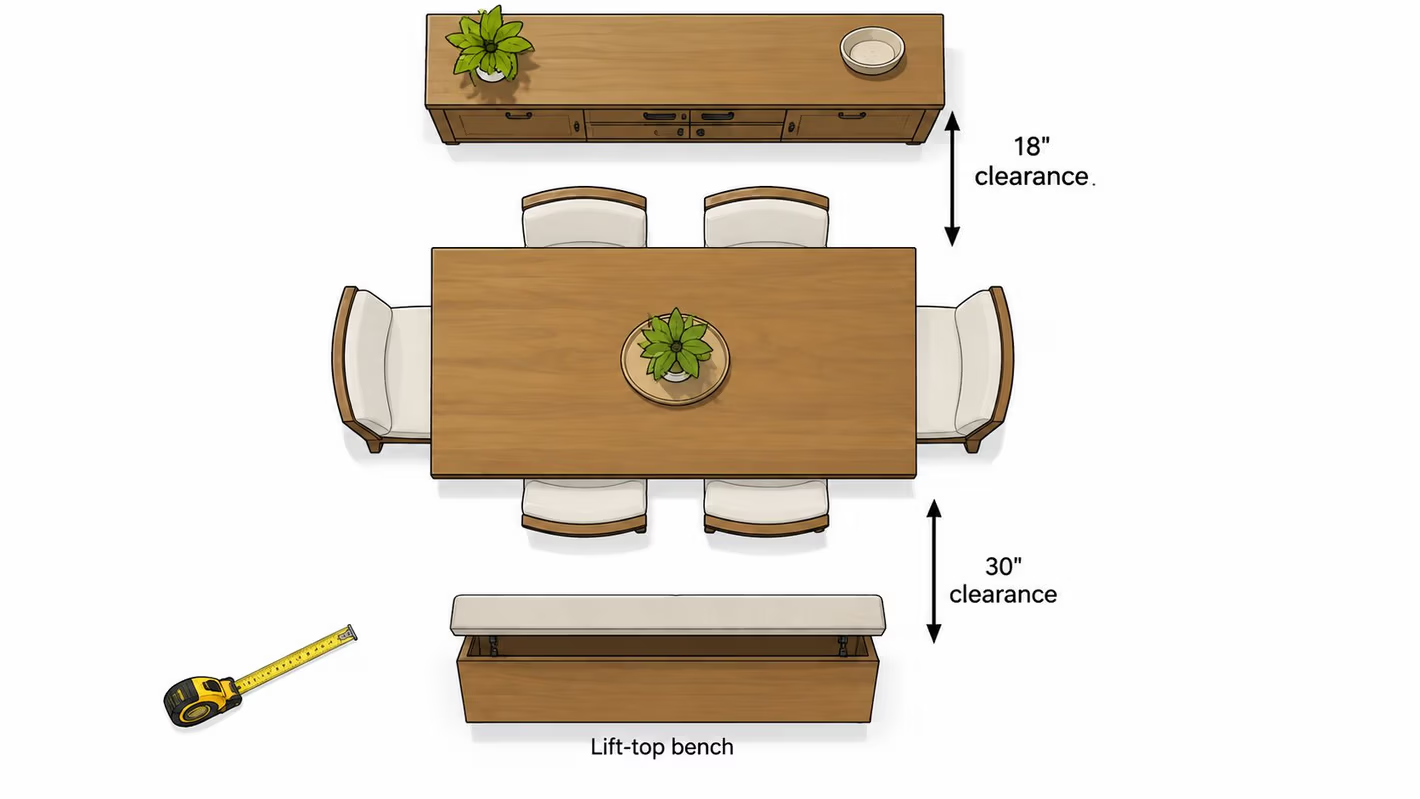
- Protect drawer clearance. A buffet needs roughly 18 inches from the table edge to open drawers fully without constant collisions.
- Plan behind a bench. A lift-up bench seat needs at least 30 inches behind it so people can sit and stand without scraping the wall.
- Account for expansion. Extension tables need a clear leaf path. The storage drawer may remain accessible when the table is closed but become difficult to use once the table expands for a holiday meal.
For table proportions, a resource on standard dining table dimensions can provide a useful starting point before comparing actual table shapes and chair spacing in person.
Server tables work best along a wall that measures 60 inches or longer, while compact storage benches can shine beneath 48-inch bump-outs. The exact fit still depends on doors, trim, outlets, and chair width, so showroom testing remains valuable. Gates' dining table size guide offers another practical reference for narrowing the choices before a floor-plan visit.
Materials, Finishes, and What Lasts
A dining storage piece takes daily abuse. Drawers open with one hand while the other carries plates, serving tops collect rings and spills, and chairs or vacuum cleaners eventually bump the base. Construction details matter more than a fashionable finish.
Solid wood usually costs more at the outset, but its grain can deepen and develop character over time. Kiln-dried hardwoods such as oak, maple, or teak make strong choices for load-bearing frames and tops. In Southern Oregon's humidity swings, a solid wood top with a slight bevel gives the material room to move rather than forcing a rigid edge that may crack.
Engineered cores wrapped in real veneer can offer a lighter, more stable alternative. They're particularly sensible for drawers and cabinets that need smooth operation without adding unnecessary weight. The important distinction is between a quality veneer construction and a thin decorative surface over weak components.
Construction signals worth checking
- Dovetailed drawer boxes: The interlocking corners resist pulling apart under repeated use.
- Mortise-and-tenon rails: These joints provide a strong connection where the frame carries weight.
- Full-extension soft-close glides: They let the drawer open fully and close with controlled movement.
- Plywood cabinet bottoms: They generally handle daily loading better than particleboard in hidden compartments.
- Catalyzed lacquer: This finish offers stronger resistance to rings and wine spills than a simple wax rub.
- Hand-rubbed oil: It hides small scratches gracefully but needs occasional re-oiling.
A drawer should feel solid before it looks beautiful. Open it fully, check whether it sags, and listen for whether the hardware runs smoothly.
| Material | Durability | Price Range | Best Use |
|---|---|---|---|
| Solid hardwood | Strong, repairable, and capable of developing character | Higher initial investment | Long-term buffets, tables, and heirloom-style pieces |
| Real wood veneer over an engineered core | Stable and lighter, with a genuine wood surface | Moderate to higher | Cabinets and drawers that need controlled weight |
| Painted wood or composite construction | Depends heavily on the frame and interior components | Broad range | Coordinating cabinetry and practical family dining rooms |
| Reclaimed wood or teak | Distinctive character with durability that varies by construction | Varies by piece | Statement storage and rooms needing warmth or individuality |
A detailed guide to choosing hardwood for longevity and style can help shoppers evaluate grain, construction, and finish as a single system rather than judging a cabinet by color alone.
Styling Storage Pieces as Design Anchors
A storage cabinet shouldn't look like an apology for clutter. It should earn its floor space by anchoring the room, supporting the color story, and making everyday service easier.
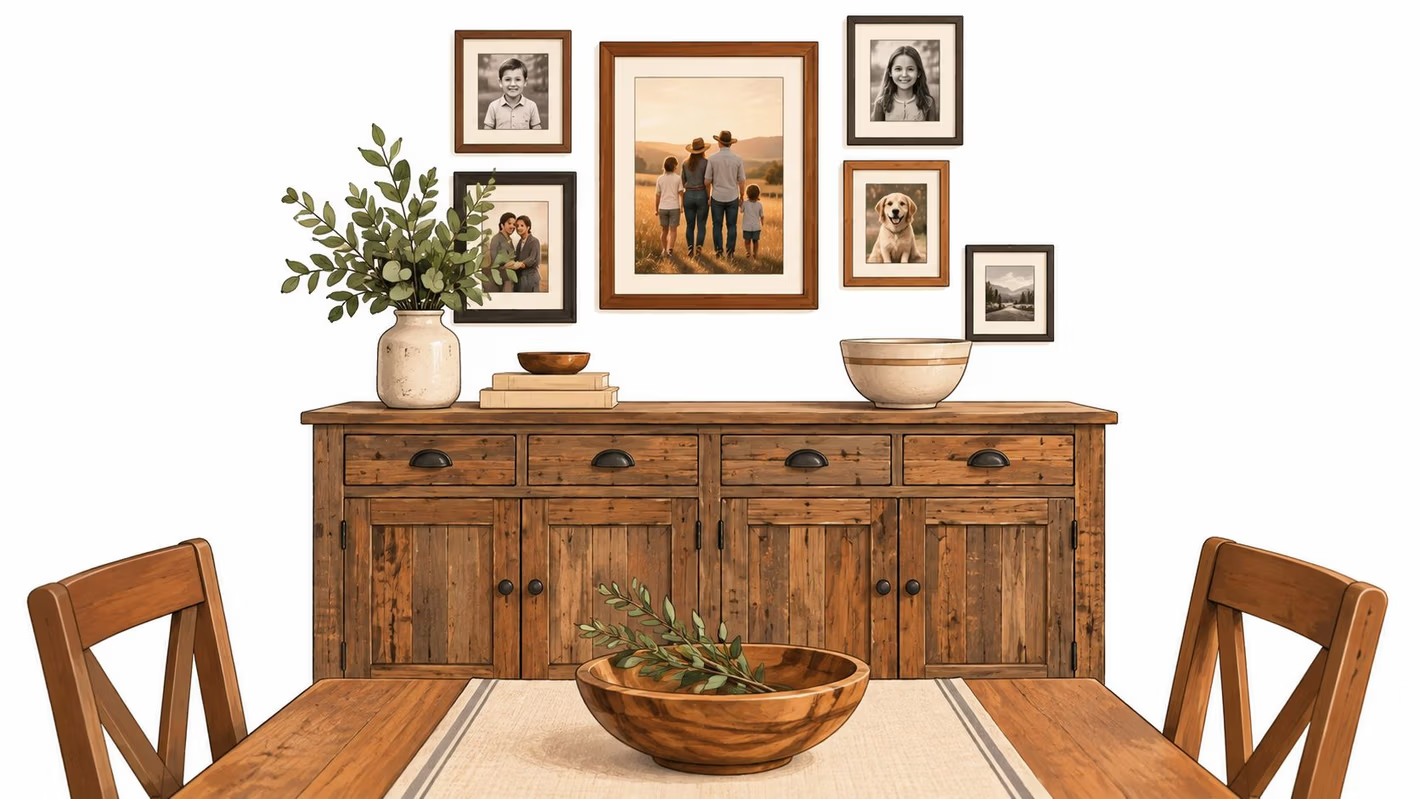
A reclaimed wood buffet beneath a gallery wall of family photos can give an open-concept ranch a clear dining identity. Teak brings a warmer, more sculptural presence, while a painted cabinet can connect the dining area to nearby kitchen or living-room cabinetry. The strongest rooms usually mix one warm wood tone with painted pieces rather than matching every surface.
Build a useful vignette
The top of a sideboard needs layers, not a crowded collection of small objects. A tall vase or lamp at the back creates height, a mirror or mid-height artwork fills the wall plane, and a low tray handles keys, mail, or the small items that otherwise migrate to the table.
Seasonal changes can stay simple. An outlet-found piece of stoneware or a woven basket can replace the tray without requiring a complete restyle. A single sculptural centerpiece and a low-profile runner keep an extension table useful between meals.
Storage benches also benefit from texture. Pairing hidden compartments with a chunky jute rug and linen cushions softens the silhouette and keeps the seating from reading like utility furniture. The bench becomes part of the room's composition instead of a box pushed beneath the table.
For more practical ideas, the guide to decorating a storage cabinet can help balance display pieces with the storage function underneath.
Choose pieces with personality
Big-box uniformity isn't the only route to a coordinated dining room. Gates Home Furnishings' Unique Finds include reclaimed wood, teak, and one-of-a-kind statement pieces that can give a Grants Pass or Rogue Valley home a more personal center of gravity. Outlet finds can also provide the right proportion when a standard collection is too deep, too tall, or too formal.
The best design anchor is the piece that looks intentional from across the room and remains useful up close.
Financing, Delivery, and the Gates Difference
A dining storage purchase involves more than choosing a finish. The buyer also needs a realistic plan for payment, transport, setup, and the route from the front door to the dining room.
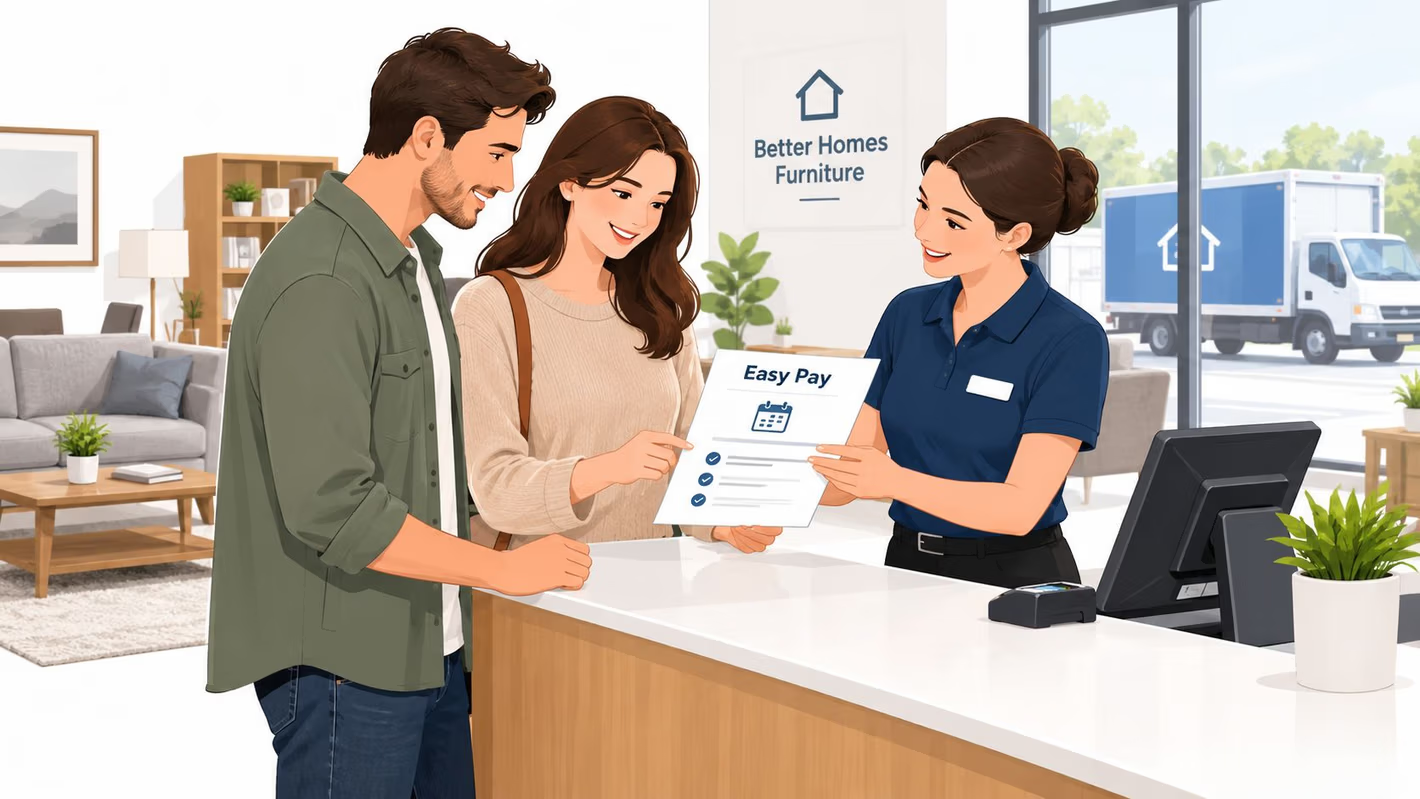
Gates Easy Pay offers specific options that should be reviewed at checkout, including $0 down, 6-month interest-free terms, and no-credit-needed options. Promotional terms, approval requirements, and repayment conditions can vary, so shoppers should confirm the exact agreement and understand what happens if the promotional balance isn't paid within the stated period. A general overview of furniture financing options can help prepare buyers for that conversation.
Delivery should include the difficult part
White-glove delivery isn't a box left at the curb. The service framework includes scheduled room-of-choice delivery, in-home placement, unboxing, assembly or installation, packaging removal, and optional old mattress or box-spring haul-away. Gates' professional in-home delivery emphasizes assembly and setup, so the customer isn't left turning a dining purchase into a weekend project.
That matters for a large table, a hutch-top sideboard, or any cabinet that needs careful leveling. It also matters for protecting floors, door trim, and walls during the move. For readers coordinating a move or clearing older furniture, this Melbourne furniture removal guide offers a useful checklist mindset for planning removal, access, and storage logistics, even though the service area is different.
Prepare the route before delivery
- Measure doorways: Include the clear opening, not just the frame measurement.
- Check stair turns: A straight hallway may still fail at the first landing.
- Confirm elevator clearance: This matters for apartments and upper-level rentals.
- Move fragile items: Clear artwork, lamps, and floor decor before the delivery team arrives.
- Coordinate other work: Delivery windows should account for painters, flooring installers, and room repairs.
In-store pickup can make sense for a smaller bench, compact buffet, or outlet piece that fits safely in a truck or SUV. For larger dining furniture, scheduled professional placement usually protects both the piece and the room.
Gates Home Furnishings has served Grants Pass, Medford, and the Rogue Valley since 1946, founded by WWII veteran George Gates Jr. on the promise of “Service and Value.” That philosophy remains most useful when staff help a customer think through the entire purchase, not just the cabinet finish.
Smarter Storage, Better Meals, Less Clutter
The biggest storage piece isn't automatically the smartest purchase. A wall of cabinetry can hold plenty, but it may make a dining room feel narrow, formal, or difficult to use every day. In a smaller Southern Oregon home, a narrow server or storage bench may solve the actual problem while keeping walkways open.
A quick self-audit will reveal what the room needs. Count the items that repeatedly land on the table, then match them to the storage format:
- Mail and chargers: Look for a shallow drawer that opens easily from the dining area.
- Backpacks and craft supplies: Choose deeper concealed storage, often in a bench or lower cabinet.
- Placemats and napkins: Use a smaller drawer close to the table.
- Platters and serving bowls: Reserve adjustable shelves or a broad buffet cabinet.
- Extra seating needs: Choose a bench that stores cushions or blankets when not in use.
The market remains strongly storage-led. The cabinets-and-storage segment represented 56.2% of the global living and dining room market in 2025, according to Grand View Research's market report. That demand makes sense, but it shouldn't pressure a household into buying more storage than the room can carry.
Start with one anchor piece
A smaller number of accessible storage points often works better than a large cabinet that requires constant sorting. Start with one piece that solves a repeated annoyance, such as a bench with hidden cubbies or a narrow server for mail and placemats. Add another layer only when the same problem continues after the first solution is in place.
The physical showroom matters because storage furniture needs to be tested. Gates Home Furnishings operates a 30,000-square-foot showroom in Grants Pass, where shoppers can sit at tables, open drawers, inspect shelves, compare finishes, and judge whether a cabinet feels visually heavy. The showroom serves shoppers from Medford, Central Point, Ashland, and throughout Southern Oregon who want to handle furniture before committing.
Gates Home Furnishings offers dining tables, benches, buffets, cabinets, Unique Finds in reclaimed wood and teak, and flexible Gates Easy Pay options including $0 down, 6-month interest-free, and no-credit-needed choices. Visit Gates Home Furnishings in Grants Pass to walk the showroom, open every drawer, test the fit, and choose dining room furniture with storage that makes the next meal easier.