
Dining Room Table Leaves: A Complete Buyer’s Guide

A dining table can feel perfectly sized on an ordinary evening, then suddenly seem much too small when Thanksgiving guests arrive in Grants Pass. Four people fit comfortably, but extra chairs, serving dishes, and family plates turn the same room into a puzzle. A table with the right leaf system solves that problem without forcing the household to live with an oversized table every day.
Dining room table leaves have helped Southern Oregon families make that adjustment for generations. Gates Home Furnishings has served the region since 1946, when George Gates Jr. founded the business on the promise of “Service and Value.” The guide below explains how leaves work, where the designs came from, how to measure for compatibility, which mechanisms are more dependable over time, and when replacement or custom fabrication makes sense.
Why Table Leaves Matter for Everyday Entertaining
A table leaf is an extra panel that expands a table's length. When the table is closed, the panel may sit in a closet, beneath the tabletop, or inside the table frame. When guests arrive, the table separates at a designed opening, and the leaf fills the gap.
That simple idea gives one table two useful personalities. On a normal evening, a compact table leaves more room for chairs and walkways. During a holiday meal, it creates space for additional place settings without requiring the dining room to remain arranged for a large gathering all year.
A Rogue Valley homeowner might use the closed table for weekday dinners, homework, or morning coffee. When Thanksgiving arrives, the same table can expand for relatives traveling from Medford, Central Point, Ashland, or elsewhere in Southern Oregon. The important question isn't just whether a table has a leaf. It's whether the leaf is easy to use, properly supported, compatible with the table, and practical for the room.
The everyday benefit
A permanently large table can crowd a smaller dining area, especially in a rental or an older Grants Pass home with a compact floor plan. A table with an extension system lets the household choose the footprint that matches the occasion.
The right design also reduces the need for improvised seating. Instead of pushing together separate tables or placing chairs at awkward angles, guests can sit around one coordinated surface. That improves serving space and keeps the room feeling intentional.
Readers planning a more flexible dining area can also find useful inspiration in these design tips for effortless entertaining. The table is only one part of the arrangement, but its extension mechanism often determines whether the room works comfortably when company arrives.
What makes a leaf practical
A buyer should judge more than the closed appearance. The useful questions include:
- Daily footprint: Does the table leave enough space for ordinary chair movement when it's closed?
- Opening effort: Can one person operate the mechanism without forcing, lifting, or twisting?
- Storage: If the leaf is removable, is there a suitable place to keep it?
- Support: Does the extended span have the structure needed to remain stable?
- Compatibility: Will the leaf align with the tabletop's thickness, finish, edge, and hardware?
The showroom team has helped local families think through these details since 1946. A table leaf isn't merely an accessory. It's a small piece of furniture engineering that decides how comfortably a dining room shifts from everyday use to a full house.
Understanding the Three Main Types of Table Leaves
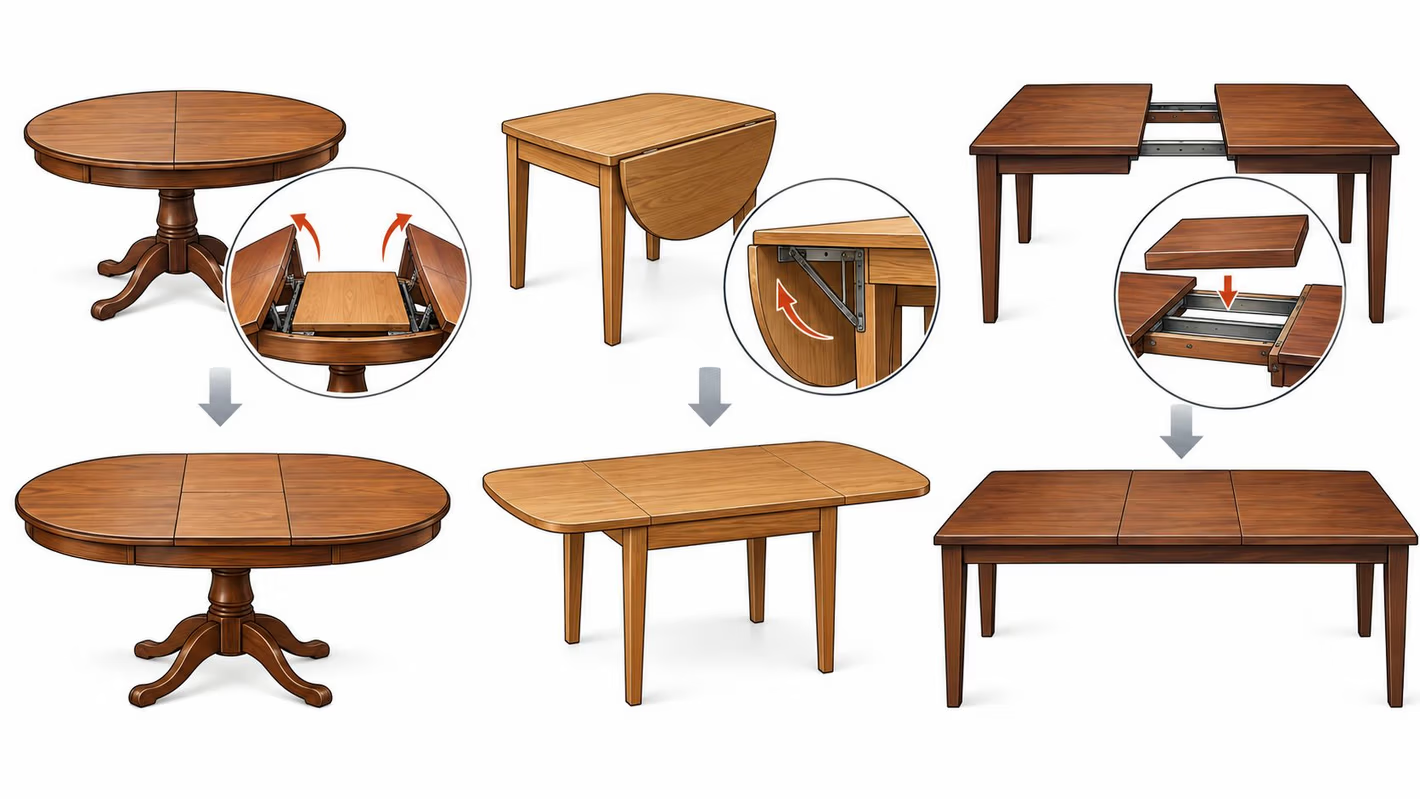
Most buyers run into four practical configurations: butterfly leaves, drop-in leaves, removable leaves, and self-storing leaves. The names sound close, but the mechanics are not the same. The key question is simple, where does the leaf live, and how does it fit into the table when the room needs more surface area?
Butterfly leaves
A butterfly leaf folds in half and stores inside the table frame. When the tabletop opens, the folded panel rises into the center gap and unfolds, then the table closes back around it so the leaf becomes part of the surface. That means the extension stays with the table, which is handy if we do not want to carry a separate panel to a closet or garage.
The tradeoff is reliability over time. Hinges, tracks, supports, and locks all have to stay aligned, or the motion becomes stiff and the seam starts to show. For a shopper, that matters because the more moving parts a system has, the more there is to check during daily use.
The mechanism is built into the table itself, so storage is easy. The question is whether the hardware still moves cleanly after years of opening, closing, and settling.
Drop-in leaves
A drop-in leaf is a separate panel placed into the opening after the table halves are pulled apart. The panel may be stored elsewhere, or a table may provide a built-in place for it. The leaf drops into the gap, lines up with the top, and is held in place by the table's own structure.
This style is common on round or oval tables, where the inserted panel helps preserve the shape of the tabletop. A visible seam may remain where the leaf meets the original surface, so matching thickness and finish become part of the decision.
The separate panel spans the opening created by the two table halves, so its width and thickness must match the gap exactly. If those measurements are off, the fit feels awkward right away.
Removable leaves
A removable leaf comes out of the table completely and is stored separately. The table sections slide apart, the panel is set into the opening, and the sections close against it. This is the most straightforward setup, and many families like it because the parts are simple to understand.
The main question is storage. If the leaf lives in a closet, under a bed, or in another room, we need a safe place with enough flat space to keep it from warping or getting damaged. We also need to confirm that the leaf still matches the table's edge profile, finish, and hardware.
Self-storing leaves
A self-storing leaf rides on internal tracks and locks into place, with the panel kept inside the apron or beneath the tabletop. That keeps the table looking cleaner because there is no loose panel to carry around. It also reduces the chance of misplacing a leaf between holidays, dinner parties, or family gatherings.
The moving parts matter here. A well-made self-storing system should glide smoothly and lock squarely, but wear in the runners or a base that shifts over time can make the fit less precise. For that reason, buyers should look beyond the convenience factor and ask how the mechanism will hold up after repeated use.
Shoppers comparing expandable dining tables should check the mechanism as carefully as the finish. In Grants Pass and across the Rogue Valley, that usually means measuring the opening, checking compatibility, and asking in person how the leaf is stored before deciding which style will hold up best.
A Short History of the Extendable Table
The need for flexible dining space is older than modern open-plan homes. In 16th-century Europe, tables were often fixed in size, while households still needed to accommodate feasts, visitors, and rooms with limited space. Early drop-leaf and draw-leaf solutions appeared around the 1500s, giving families a way to create a larger surface only when necessary. This development is documented in the history of dining table extension designs.
A drop-leaf table used hinges to raise or lower sections at the sides. A draw-leaf design brought additional panels out from beneath the main top. Both approaches addressed the same practical problem: a household needed flexibility, but it didn't want a permanently oversized table occupying valuable floor space.
A major milestone came in 1835, when Robert Jupe patented an improved expanding circular table. His design used triangular leaves that were inserted into the opening top as the table expanded. The approach created a larger circular surface and represented a significant step beyond simpler hinged panels.
By the mid-19th century, mechanical extension had become an important advance over earlier self-storing leaves. Runners, sliding sections, inserted panels, and improved locking systems allowed tables to support changing household sizes and entertaining habits.
Modern extension tables are descendants of that long process of problem-solving. A butterfly leaf may look contemporary, but its purpose is familiar. It helps a table remain compact when the household is small and capable when the dining room fills with guests.
How to Measure Your Table and Confirm Leaf Compatibility
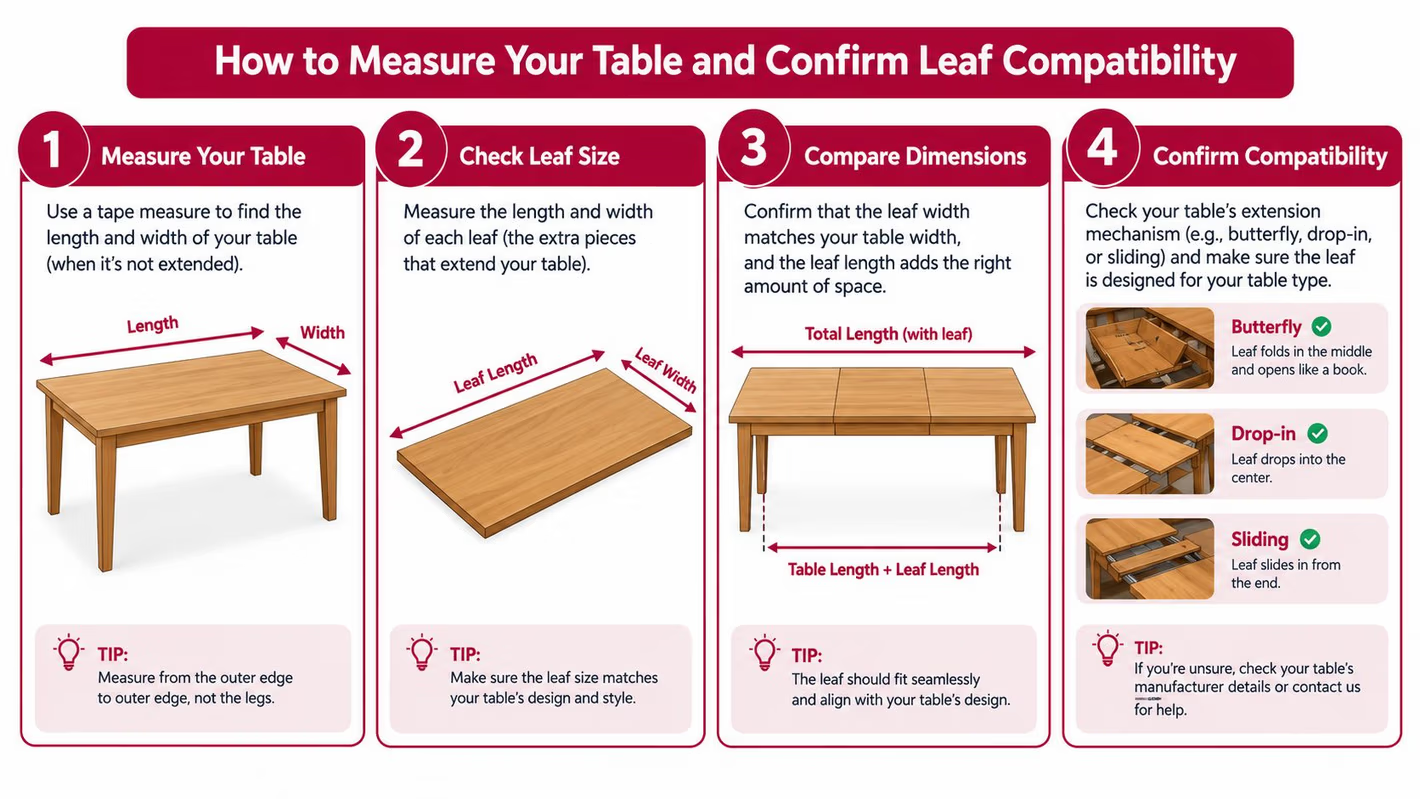
A replacement leaf isn't compatible merely because it looks close in a photograph. The panel must fit the opening, match the tabletop's thickness and edge, and work with the table's hardware. A careful measurement routine can prevent a costly mistake.
Start with the table opening
Clear the tabletop and open the table as it would be opened for a leaf. Measure the full distance between the two tabletop sections. Measure from the actual joining edges, not from the outside corners or decorative trim.
Record the measurement in more than one place if the opening appears uneven. A table that has shifted out of square may show different readings from one side to the other. That difference can signal a structural or hardware issue rather than a simple leaf-sizing problem.
Next, measure the width and thickness of any existing leaf. The replacement panel needs to fill the opening without forcing the table sections apart. A panel that is slightly too narrow can leave a gap, while one that is too wide can prevent the table from closing correctly.
Inspect the edges and hardware
A leaf's edges must meet the tabletop in the same way as the original design. Check whether the edges are straight, beveled, rounded, or shaped with a specific profile. Also inspect the underside for pins, clips, brackets, dowels, or track components.
The apron height matters because the leaf may need to clear the table's supporting frame during installation. On a self-storing table, examine the tracks and locking points. On a removable design, check how the leaf connects to the table and whether the support rails remain level when extended.
Most important measuring tip: Measure the table's actual opening and existing leaf, then bring clear photos of the edges, underside, and hardware. Never order from the table's advertised length alone.
Measure the room in both positions
The table has to fit twice, closed and fully extended. A common planning guideline is to leave at least 90 cm of clearance on each side for chairs and movement, as explained in this extendable-table space guide. That clearance helps ensure the leaf can be used without trapping chairs against walls or blocking nearby paths.
Use painter's tape to mark the closed and extended footprints on the floor. Place chairs around both outlines and walk the routes to the kitchen, doorway, and other furniture. A table can fit dimensionally yet still make the room uncomfortable once chairs are occupied.
A useful showroom checklist includes:
- Opening measurement: The distance between the separated tabletop sections.
- Leaf dimensions: Width, length, and thickness of the existing panel.
- Edge profile: The shape and finish of the joining edges.
- Hardware details: Pins, clips, locks, rails, and support legs.
- Room clearance: The available space around the table in its extended position.
- Photographs: Clear images of the top, underside, edges, base, and hardware.
The furniture measuring guide can help organize the process. Bringing those notes and photographs to the 30,000-square-foot Grants Pass showroom gives the team useful information before a shopper makes a trip from Medford, Central Point, Ashland, or another Rogue Valley community.
How Many Leaves You Need and Which Mechanism Lasts
Leaf quantity depends on the table's starting size, the desired seating capacity, and the room's available clearance. A formal dining table often needs to be at least 66 inches long to seat six people properly, while an extendable table may reach about 120 inches or more when fully opened. These dimensions are covered in this dining-room measurement reference.
The practical method is to start with ordinary use. A household that generally seats four may need one extension panel for occasional guests. A family that regularly hosts larger dinners may need a table designed for multiple leaves, provided the room and support structure can accommodate the full span.
Convenience versus simplicity
Removable leaves have a clear mechanical advantage. They usually involve fewer moving parts, which can make them easier to understand, maintain, and repair. The inconvenience is storage. A separate leaf needs a dry, protected place where it won't be knocked over or exposed to conditions that differ sharply from the dining room.
Self-storing and butterfly systems eliminate that storage chore. The leaf remains with the table, and expansion is usually faster. The added hinges, tracks, latches, and internal supports also create more potential failure points. Current buying guidance identifies this as an important tradeoff, particularly as self-storing butterfly-style and concealed-extension designs become more popular for compact homes and apartments. The reliability discussion is outlined in this extendable-table buyer guidance.
| Leaf Type | Setup Convenience | Storage | Long-Term Reliability |
|---|---|---|---|
| Removable leaf | Straightforward, but requires retrieving and fitting the panel | Stored separately | Mechanically simpler and generally more durable over time |
| Butterfly leaf | Fast once the table is unlocked and opened | Folds inside the table | Convenient, but hinges and internal hardware add complexity |
| Self-storing leaf | Smooth when tracks and locks remain aligned | Inside the apron or beneath the top | Clean and practical, but dependent on accurate joinery and stable construction |
| Drop-in leaf | Requires opening the table and positioning a separate panel | Usually stored away from the table | Simple panel design, with fit and support determining performance |
Look below the tabletop
Large or multiple-leaf tables need support sized for the fully opened span, not just the closed table. Reinforced aprons, locking devices, drop-down support legs, and sliding rails can help prevent sagging, instability, and misalignment.
A well-built extension table can support roughly 150 to 250 pounds of evenly distributed load when the leaf is properly locked and supported, according to this table-leaf support guidance. That figure isn't a reason to overload a table. It illustrates why support hardware deserves the same attention as the finish and tabletop.
Shoppers can examine a butterfly extension table to see how integrated convenience works in practice. The most dependable choice is the one whose mechanism matches the household's habits without asking the structure to do more than it was designed to handle.
Replacement Leaves, Custom Fabrication, and New Tables
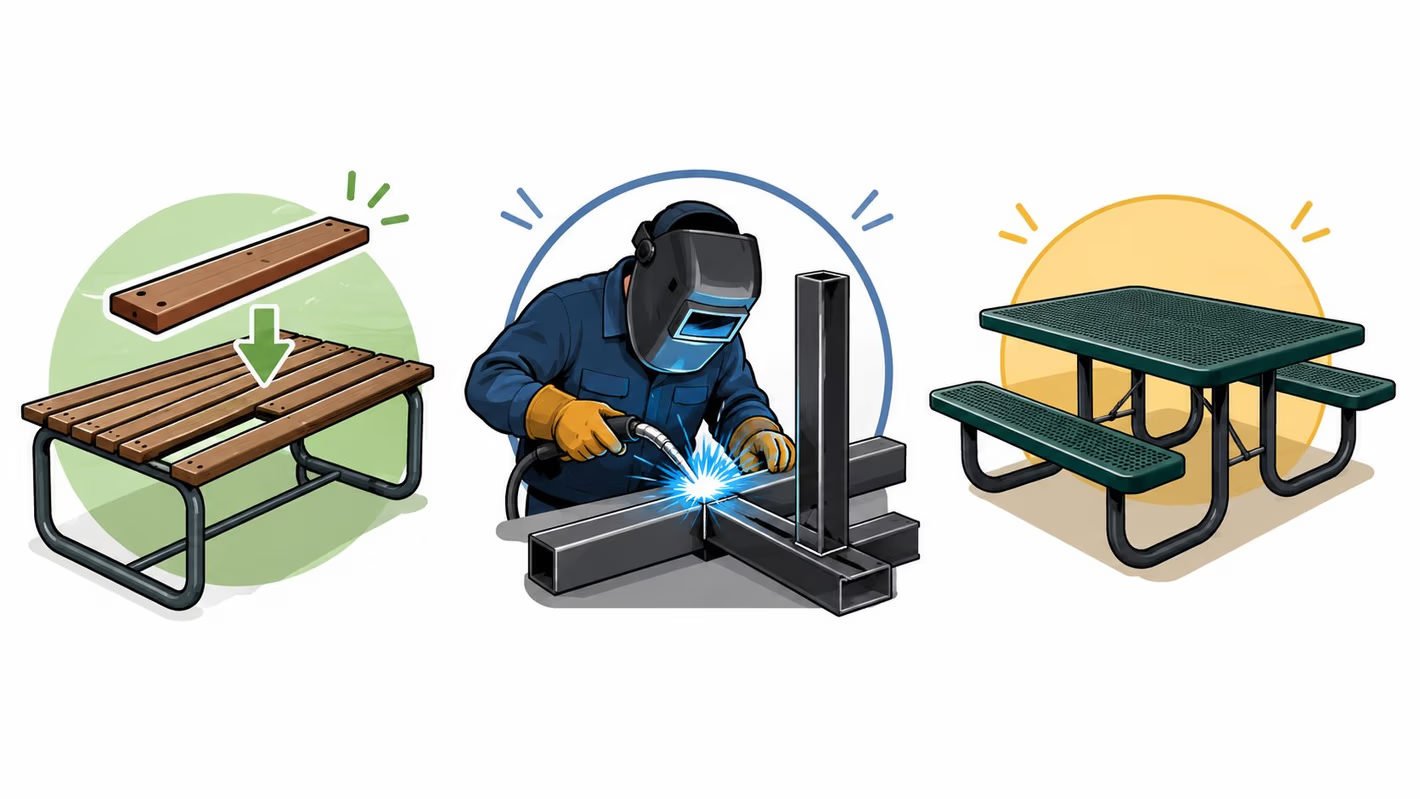
A missing or damaged leaf does not always mean the whole table needs to go. We usually have three practical paths, finding a matched replacement, commissioning a custom panel, or choosing a new extendable table.
When a replacement panel makes sense
A replacement leaf works best when the table base is sound, the top is stable, and the hardware still works. The new panel has to match the wood species, thickness, width, edge profile, and finish. A close color match alone is not enough if the panel sits high, rocks at the seam, or leaves an obvious gap.
Finish matching can be tricky because wood changes with age and light exposure. Even when the same species is used, a new panel may read brighter or less settled than the original. We can help judge whether the repair should blend in softly or stand out as a clear replacement.
When custom fabrication is worthwhile
A local woodworker may be the better path for an heirloom table, a discontinued design, or an unusual shape. Custom fabrication can recreate a missing panel, but the work starts with careful review of the existing joinery and hardware.
The woodworker may need to source a species with a similar grain pattern, recreate a shaped edge, and tint the finish so it sits naturally beside the older tabletop. An exact invisible match is not always possible, especially when the original wood has aged. The strongest result comes from setting expectations early and treating structural fit as the first priority, with color match following behind.
When a new table is the better solution
A new table makes more sense when the mechanism is damaged, the table no longer fits the household, or a replacement would cost too much for the table's condition. Solid hardwood remains a durable option, while reclaimed wood and teak can bring visible character and a distinctive surface.
The Unique Finds collection regularly includes one-of-a-kind reclaimed wood and teak statement pieces that feel different from standardized furniture. Those pieces can suit shoppers who want the dining room to have its own identity instead of a predictable matching set.
Shoppers can open and close several extension mechanisms side by side before choosing. The collection includes established furniture makers alongside distinctive pieces selected for their materials and character.
A showroom test can show problems that photographs miss. We can check whether the sections move evenly, whether the leaf locks securely, whether the base stays stable, and whether the extended size makes sense for the room. Shoppers can also compare the feel of solid construction with the visual texture of reclaimed or teak surfaces before arranging delivery.
Local Help, Delivery, and Financing in Southern Oregon
A table leaf decision often becomes easier with local help. Shoppers from Grants Pass, Medford, Central Point, Ashland, and the wider Rogue Valley can bring measurements and photographs to the showroom for practical guidance on fit, storage, and room clearance.
The dining collection includes extension tables for households that need flexible seating, while the showroom makes it possible to test the action rather than relying only on product photographs. The team can also discuss custom-order possibilities when a standard size, finish, or mechanism doesn't suit the room.
Local service continues after the purchase. With professional furniture delivery and assembly, the delivery team handles in-home placement, assembly, and setup instead of just dropping boxes at the door. White-glove service is especially useful for a large extension table that needs careful alignment and a stable final position.
Gates Easy Pay provides flexible financing options, including $0 down, 6 equal payments, no-interest options when paid in full within the promotional period, and no-credit-needed programs. Those choices can help a household furnish the dining room now while selecting a table that fits the space and the way the home is used.
Gates Home Furnishings offers dining tables with extension leaves, in-person mechanism testing, local white-glove delivery, and flexible Gates Easy Pay options for Southern Oregon households. Visit Gates Home Furnishings in Grants Pass with room measurements and photos, or browse the dining collection online to find a table that works for everyday meals and larger gatherings.
