How to Choose Living Room Furniture: A Southern Oregon Guide

Choosing living room furniture usually starts the same way. You stand in the room, look at the blank wall, the old hand-me-down sofa, or the layout that never quite worked, and think, “Where do I even start?”
That moment is familiar in homes across Grants Pass, Medford, Ashland, Central Point, and the wider Rogue Valley. Some people are furnishing a first apartment. Some are replacing a worn-out recliner. Others are finally ready to turn the living room into a place where family wants to spend time.
We’ve helped Southern Oregon families do that for generations. Since 1946, when George Gates Jr. founded the business on a simple promise of Service and Value, the job has stayed the same. Help people choose furniture that fits their homes, their routines, and their budgets, then make the process easier from first measurement to final setup.
Your Living Room's Next Chapter Starts Here
A living room rarely needs “more furniture.” It needs the right furniture.
We see that in all kinds of homes around Southern Oregon. A couple in a newer open-concept home wants seating that defines the room without closing it off. A family in Medford needs a sofa that can handle movie nights, homework, and the dog claiming the corner cushion. A downsizer in Grants Pass wants supportive seating that feels polished, not clinical.
The hard part is that all three shoppers can walk into a store and be drawn to the same beautiful sofa. Only one of them should buy it.
That is why how to choose living room furniture is less about chasing a look and more about making a series of good decisions in the right order. Start with how the room gets used. Measure what the room and the entry path will allow. Choose one anchor piece that earns its footprint. Then layer in tables, chairs, storage, and finishing pieces that support the way you live.
We still believe in the same basics George Gates built the business on in 1946. Listen first. Give practical advice. Treat furniture as part of daily life, not just display. That approach matters whether you are shopping for a La-Z-Boy recliner, a Flexsteel sofa, an Ashley sectional, or one of the reclaimed wood statement pieces people come in looking for after they have seen too many rooms that all feel the same.
A well-furnished living room should feel easy. It should invite people in, hold up to real use, and make sense every time you walk into it.
Define Your Room's Purpose Before Its Style
The fastest way to make an expensive mistake is to shop by appearance alone.
Furniture experts recommend starting with the room’s primary function and one or two supporting functions, because those decisions shape everything from layout to fabric choice to cushion feel. They also recommend tougher materials for high-traffic spaces, including solid wood frames, high-density foam cushions, and performance fabrics or stain-resistant materials like leather when the room works hard every day (Povison’s living room layout guidance).
Ask what the room must do every day
Before you save photos or compare sectionals, answer these questions:
What happens here most often
TV watching, visiting with friends, reading, napping, gaming, kids’ play, or a little of everything.Who uses the room most
Adults only, kids, pets, overnight guests, or multiple generations.How formal is the space
Some living rooms need to look sharp every day. Others need to survive snack spills and wrestling matches.What bothers you in your current setup
Not enough seating, nowhere to set a drink, poor sightlines to the TV, no storage, or furniture that looks good but feels terrible.
If the room’s main job is family living, choose for durability first and style second. If it is mostly a quiet front room for guests, you have more freedom to choose delicate textures and lighter-use materials.
Tip: If you cannot describe the room’s main job in one sentence, you are probably trying to make one space do too much without the right multifunctional pieces.
Match materials to real life
A lot of shoppers think fabric choice is mostly about color. It is not.
For a busy household, the safe bets are materials that recover well, resist visible wear, and clean up without drama. Leather can be a strong option when you want wipeable surfaces and a clean, fitted appearance. Performance fabrics make sense when you want softness without worrying over every spill. High-density cushions tend to hold shape better in rooms where people sit in the same spot every night.
Formal rooms are different. If the furniture sees occasional use, you can consider richer textures and more delicate upholstery. Velvet can be beautiful. It is just not the first thing we point a family of five toward when the dog has free run of the room.
Comfort style matters too
Two people can want “a comfortable sofa” and mean completely different things.
One person wants a deeper seat to stretch out for a full movie. Another wants firmer support and an easier sit-to-stand height. Seniors often notice this right away when they try several recliners side by side. Younger buyers usually discover it after they have owned the wrong sofa for six months.
A quick way to narrow the field:
| Household need | Usually works well | Usually disappoints |
|---|---|---|
| Family room with heavy daily use | Durable upholstery, resilient cushions, easy-clean surfaces | Delicate fabric picked for looks alone |
| Conversation-focused room | Sofa with upright support, chairs that face inward | Oversized pieces that push everyone too far apart |
| Lounging and TV room | Deeper seating, recline options, sectional layouts | Stiff formal seating with no place to relax |
| Small multipurpose room | Storage ottomans, compact arms, flexible seating | Bulky frames that waste footprint |
Function first does not kill style. It protects it. When furniture suits the way you live, the room keeps looking good longer because people use it naturally instead of fighting it.
Measure Twice Furnish Once With a Solid Floor Plan
Most furniture problems are measurement problems in disguise.
A sofa can fit the wall and still be wrong for the room. A sectional can clear the front door and still block traffic to the hallway. The fix is simple. Measure the room, measure the fixed features, and measure the path the furniture has to travel before you fall in love with anything.
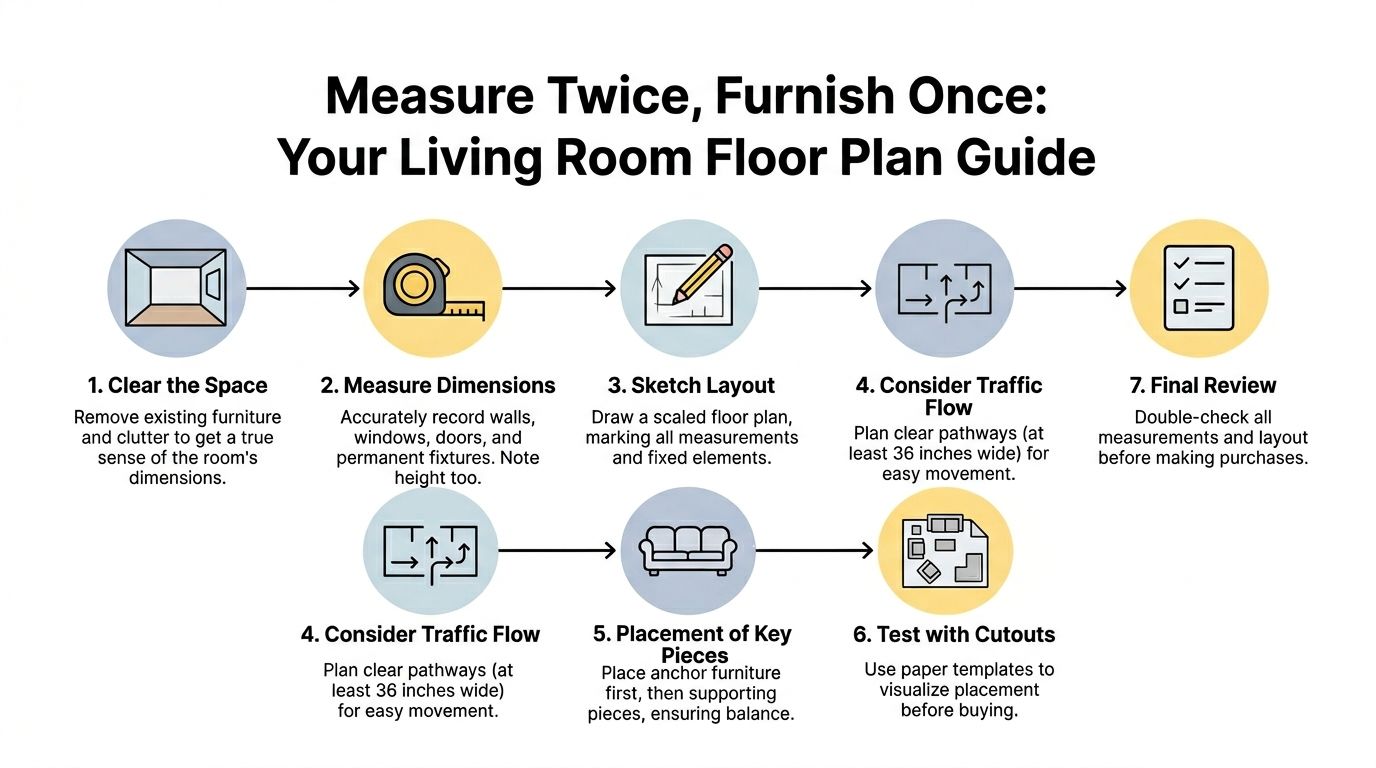
Designers use a practical measurement process that starts with room dimensions, then maps windows, doors, fireplaces, outlets, vents, and switches before building a to-scale floor plan. They also note that major walkways need 30 to 36 inches of clearance, coffee tables should sit 14 to 18 inches from the sofa, accent chairs should be 3.5 to 10 feet from the sofa, and area rugs should leave 12 to 24 inches from walls (Willis Furniture’s layout guide).
What to measure before you shop
Take a tape measure, your phone, and a notepad. Record:
Room dimensions
Measure each wall, not just the longest points. Older homes often hide small differences.Fixed features
Windows, door swings, fireplaces, floor vents, outlets, and light switches all affect placement.Ceiling height and visual constraints
Low ceilings can make tall-backed furniture feel heavy fast.Entry path
Measure front doors, interior doors, stairwells, landings, and tight turns.
That last one gets skipped all the time. A sofa that fits the room but cannot make the hallway turn is still the wrong sofa.
Make the floor plan real
You do not need design software. Graph paper works. So does a simple phone sketch if you are careful.
Then mark furniture dimensions on the actual floor with painter’s tape. This is one of the most useful tricks we know because it turns abstract inches into something your body can react to. You can walk the traffic path, test the distance to the coffee table, and see whether a recliner has room to fully open.
Key takeaway: People usually regret furniture that interrupts movement more than furniture that is slightly smaller than they imagined.
If you are still learning the measurement side, this guide on how to measure furniture gives a helpful checklist to use before you order.
Don’t forget the moving day reality
Even good measurements do not replace smart handling. If you plan to shift existing pieces out before new furniture arrives, this article on how to move heavy furniture without injury or damage is worth a quick read. It covers practical basics that help prevent scraped walls, pinched fingers, and strained backs.
A room should have enough space to function after the furniture arrives, not just enough space to technically contain it. That difference is what separates a room that feels calm from one that always feels in the way.
Choosing Your Anchor The Perfect Sofa or Sectional
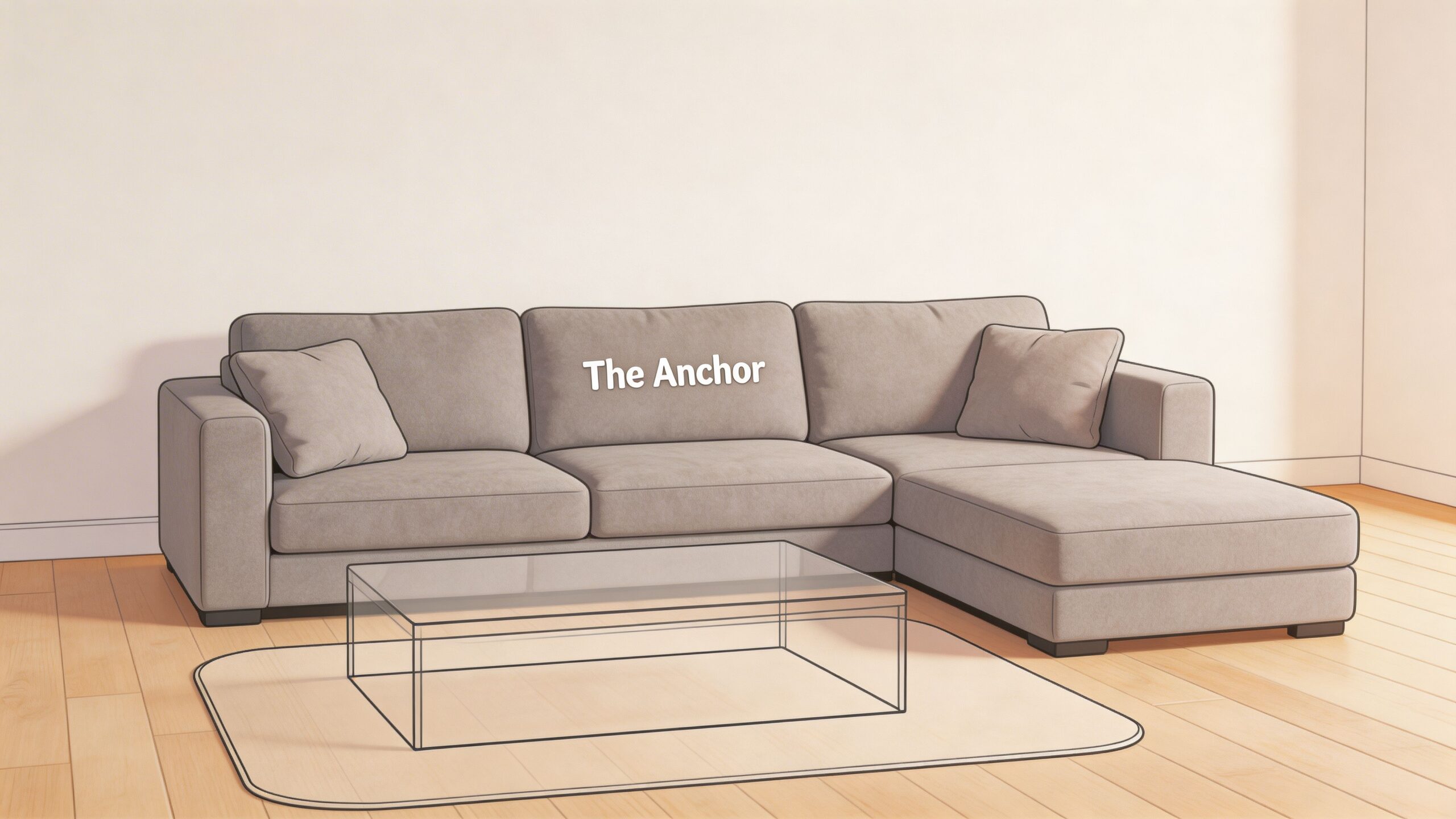
The sofa usually makes the room.
That tracks with the market too. Sofas and couches held about 30 to 32% of the living room furniture market in 2023, which is one reason they remain the piece most households prioritize first (GM Insights living room furniture market analysis).
Know which sofa type fits your life
A lot of frustration comes from choosing the wrong category, not the wrong model.
Standard sofa
This is the safest choice for many rooms. It leaves you more freedom to add chairs, move tables around, and update the layout later.
It works well when:
- you want flexibility
- your room is modest in size
- you may move within a few years
It disappoints when:
- everyone wants to recline at once
- you need maximum seating from one footprint
- the room really calls for corner seating
Reclining sofa
Comfort is the obvious draw. The trade-off is bulk.
Reclining sofas need breathing room, often look heavier from the side, and can limit coffee table placement if the seat depth is generous. They make sense in TV-first rooms and for shoppers who care more about body support than a formal silhouette.
Sectional
A sectional solves several problems at once. It can define an open space, increase seating, and create a stronger lounge feel.
It works best when the shape matches the room. If the section is wrong-handed, too deep, or too long on one side, it can dominate the room in a bad way. Modular sectionals are useful when flexibility matters because you can rework the configuration later.
Check the construction, not just the cover
Two sofas can look nearly identical online and feel completely different after a year of use.
Look at these details:
Frame quality
Solid, stable construction matters more than decorative trim.Seat support
Sit in one spot for a few minutes. Good support should feel stable, not hollow.Cushion feel
Some people want sink-in softness. Others want support that helps them stand up easily.Arm shape
Wide arms can be useful for lounging, but they also eat into seat width.Back height
Low backs look sleek. They do not suit everyone, especially taller shoppers.
The comfort test still matters most
The comfort test still matters most. Online shopping hits a wall here. Photos can show scale and color. They cannot tell you whether a seat hits your legs correctly, whether the back supports your shoulders, or whether the cushion springs back the way you want.
That is why trying sofas in person still matters. In our 30,000 sq. ft. showroom in Grants Pass, shoppers can compare sit, depth, support, and motion features across brands like La-Z-Boy, Flexsteel, and Ashley instead of guessing from a product shot. If you want extra reading before you visit, this sofa buying guide for your living room covers the main decision points.
Tip: Sit the way you live. Lean back. Put your feet up if it reclines. Test the arm height. If you only perch for ten seconds, you will miss what matters.
A beautiful sofa that nobody enjoys using is not the right anchor. The right one makes the rest of the room easier to finish.
Building Around Your Anchor With Supporting Pieces
Once the sofa is right, the room gets much easier.
The supporting pieces should do one of three things. Improve function, add contrast, or bring in character. If a piece does none of those, it is probably just taking up space.

Design trends also continue to favor pieces that work harder. Multifunctional furniture is rising as living spaces shrink, including storage ottomans, reconfigurable sectionals, and tables with hidden tech ports. Bold color is also returning, with jewel tones and bright hues showing up more often (Elle Decor on couch trends for 2026).
Choose chairs that belong in the conversation
Accent chairs should not feel like leftovers.
They need to relate to the sofa in scale and comfort, even if the style is different. Designers often keep seat heights within a close range so the arrangement feels balanced and easy to use. In plain terms, if your sofa sits low and loungey, a rigid, upright chair can feel disconnected unless that contrast is intentional.
Good pairings often look like this:
| If your sofa is… | Pair it with… | Avoid… |
|---|---|---|
| Boxy and modern | Softer wood or upholstered chair | Another bulky blocky piece beside it |
| Plush and rounded | Cleaner-lined accent chair | Too many rounded pieces with no contrast |
| Reclining and casual | Supportive swivel or stationary chair | Formal occasional chair nobody uses |
| Neutral in color | Chair with pattern or richer tone | Matching set look that feels flat |
Pick tables for use, not just symmetry
A coffee table should serve the seat around it.
If you always host snacks, puzzles, or game night, you need enough usable surface. If the room is tight, a round or oval coffee table usually moves better through a traffic path than a hard-cornered rectangle. End tables earn their keep when they support daily habits, like a lamp, a drink, reading glasses, or a charging spot.
If you want ideas for proportion and styling, this guide to the perfectly styled coffee table is a practical place to start.
Bring in storage where clutter starts
The best storage pieces solve the mess you already have.
- Storage ottoman for blankets, remotes, or kids’ toys
- Console behind the sofa for lamps and drop-zone use
- Media cabinet that hides devices without looking oversized
- End table with drawer for the small things that migrate across the room
If your room has wood flooring, rug choice matters almost as much as furniture scale. This piece on choosing an area rug for your hardwood floors is useful if you want to think through texture, protection, and overall fit before you buy.
Add one piece with personality
Many rooms either come alive or look copied from a catalog at this stage.
A reclaimed wood console, a teak accent table, or a one-of-a-kind statement cabinet can keep the room from feeling too matched. We regularly see shoppers relax once they stop trying to make every piece part of a set. A room feels more finished when materials vary a bit and everything is not the same wood tone, fabric texture, and shape.
What does not work is random mixing. Contrast needs a reason. Maybe the sofa is soft, so the coffee table brings structure. Maybe the room is neutral, so the chair supplies color. Maybe the architecture is plain, so a distinctive wood piece adds warmth.
That is how supporting pieces should behave. They should support, not compete.
Solutions for Awkward Southern Oregon Layouts
Awkward rooms are common. Most furniture advice still acts like every living room is a neat rectangle.
That does not line up with real homes. A 2023 Houzz report, inferred from forum volume, indicates 20 to 30% of homeowners face non-rectangular rooms in major US markets, which helps explain why so many shoppers struggle with angled walls, narrow spaces, and odd corners (Houzz discussion on angled living room arrangements).
Odd angles need cooperative furniture
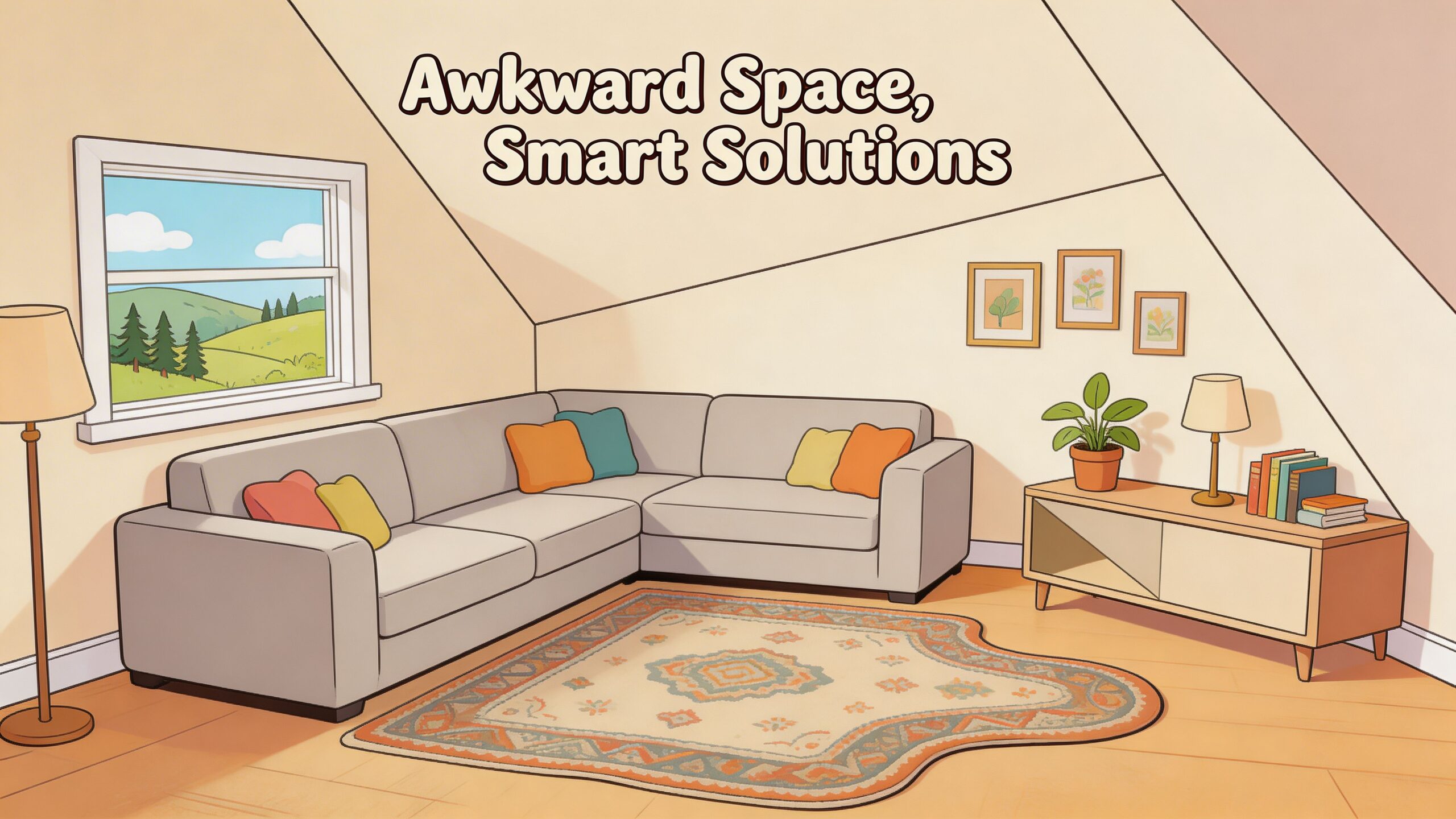
An angled wall does not mean you should force every piece to square off against it.
In many cases, an L-shaped sectional is the cleanest answer because it uses the room’s shape instead of fighting it. The key is choosing a configuration that fits the angle and does not create a dead corner. If the sectional is too massive, the room starts to feel trapped.
For tricky planning, this guide on placing furniture in a living room can help you think through orientation before you commit.
Narrow rooms need softer shapes
Long, narrow rooms usually suffer from two common mistakes. People choose furniture that is too deep, or they line everything up flat against the walls and leave a bowling alley in the middle.
A few smarter moves:
Use a slimmer sofa profile
Tight arms and a shallower frame can save valuable floor space.Consider a curved or softened silhouette
It can ease the tunnel effect in a room that feels rigid.Choose leggy pieces
Visible floor under chairs and tables helps the room feel lighter.Skip oversized coffee tables
The center piece should help circulation, not interrupt it.
Open plans need floating groups
A lot of newer homes in the Rogue Valley have broad, open living areas with no obvious walls to anchor furniture. In that setting, pushing everything to the perimeter often makes the room feel unfinished.
Floating the seating group usually works better. Put the sofa where it defines the edge of the living zone. Add a console behind it if needed. Use a rug large enough to visually hold the grouping together. The furniture becomes the architecture.
Tight corners need selective pieces, not tiny sets
People often solve awkward spaces by buying undersized furniture everywhere. That is usually the wrong fix.
A better approach is selective fitting. Use one appropriately scaled anchor piece, then choose smaller supporting pieces where the room pinches. Narrower consoles, compact recliners, and reclaimed wood accent pieces with unusual proportions can help in these situations. They fill hard spots without the cost and delay of full custom work.
Awkward rooms are not bad rooms. They just punish generic choices faster. When the furniture responds to the architecture, those same rooms often end up feeling more interesting than the easy ones.
Making Your Dream Room a Reality on Your Budget
Budget matters. It should be part of the selection process, not an awkward afterthought.
That is especially true now. 40% of U.S. furniture buyers use financing, and no-interest promotional financing rose 18% in major markets after 2025 economic shifts, which tells you practical buying strategy is a real part of furniture shopping for many households (National Retail Federation media center).
Spend most where use is highest
If the sofa gets used every day, that is where more of the budget should go.
You can save selectively on supporting pieces, especially if you are patient about filling in the room over time. A strong plan is often better than trying to buy every matching piece at once. Start with the anchor, add the tables you need, then layer in the extras that give the room personality.
Financing can be a planning tool
Used carefully, financing helps buyers avoid one of the most common mistakes. Settling for furniture they do not really want because the upfront number feels too steep.
At Gates Home Furnishings, Gates Easy Pay includes $0 down, 6-month interest-free, and no-credit-needed options, which gives shoppers a few different ways to time a purchase around real household budgets rather than forcing a rushed compromise. If you are comparing approaches, this article on the best places to buy living room furniture can help you think through value beyond sticker price.
Don’t overlook outlet and clearance strategy
Outlet shopping works best when you know what matters and what can flex.
Be firm on:
- overall dimensions
- comfort
- construction
- fabric suitability
Be flexible on:
- exact shade
- minor styling details
- whether the piece was your original first choice
That mindset is how shoppers find strong value in high-turnover clearance areas. If you walk in only looking for one exact silhouette in one exact fabric, outlet shopping will feel frustrating. If you understand your essential requirements, it can be one of the smartest ways to furnish a room well.
Tip: “Affordable” furniture is not always the lower ticket item. It is the piece that holds up, fits the room, and does not need replacing too soon.
A good budget plan protects both your room and your peace of mind. It lets you buy intentionally instead of reactively.
Your Beautiful Living Room Is Waiting
A good living room comes together in a clear order. Know what the room needs to do. Measure carefully. Choose a sofa or sectional that earns its place. Add supporting pieces that improve use, not clutter it. Then make the purchase in a way that fits your budget.
That process is not flashy, but it works.
It is also the same kind of practical thinking that has guided our work since 1946, when George Gates Jr. built the business around Service and Value. Good furniture advice should make your decision easier, not more confusing. Delivery should finish the job properly too, which is why professional White-Glove service matters. Furniture should be placed, assembled, and set up, not dropped in boxes at the curb.
Your living room does not have to stay in the “almost there” stage.
Visit Gates Home Furnishings to browse online or stop by our 30,000 sq. ft. Grants Pass showroom and test comfort for yourself. Whether you are furnishing a family room in Medford, updating a cozy space in Ashland, or solving a tricky layout anywhere in Southern Oregon, we’re here to help you find furniture that fits your home, your style, and your budget.