Your Guide to At-Home Sleep Quality Assessment

It’s a common myth we hear all the time: clocking in eight hours of sleep is the golden ticket to a great day. But as your neighbors here in the Rogue Valley, we know it's a lot more complicated than that. True, deep rest isn't just about the number of hours you spend in bed; it's about the quality of that time.
This is where a sleep quality assessment comes into play. Think of it as your personal toolkit for figuring out if your sleep is genuinely restorative or if you're just spending time unconscious.
Going Beyond Hours Slept to True Restful Sleep
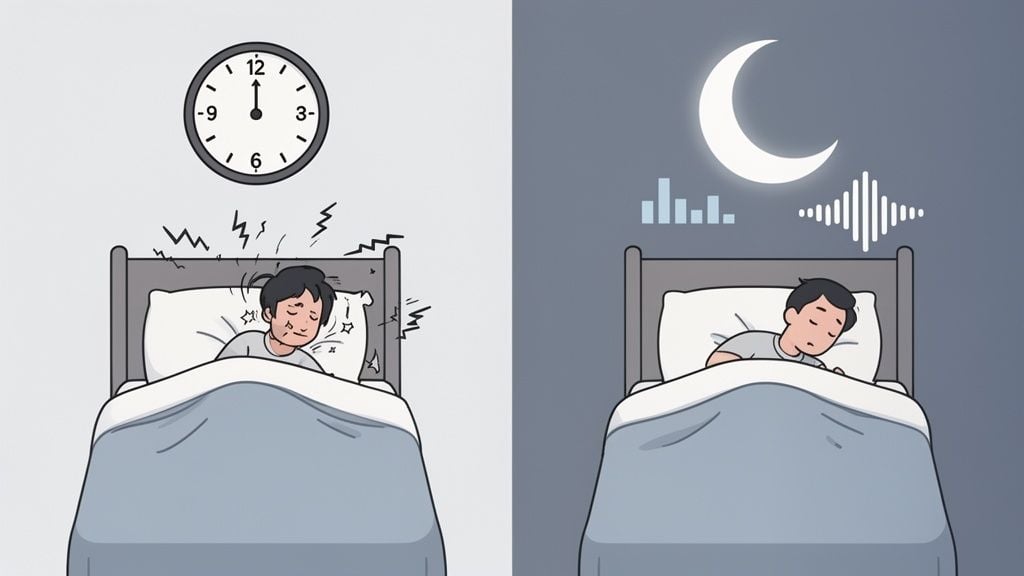
You can spend a full eight hours in bed, but if that sleep is light or constantly interrupted, you'll still wake up feeling just as drained as if you'd only slept a few hours. Since our founding back in 1946, we at Gates Home Furnishings have stayed true to George Gates’ original promise of "Service and Value." Today, that promise means helping our friends and neighbors in Grants Pass, Medford, and beyond get the kind of deep, restorative rest they need to thrive.
We’ve seen firsthand how shifting the focus from sleep quantity to sleep quality can transform someone's daily life. It’s not just about feeling less tired—it’s about having more energy, a sharper mind, and a brighter mood.
Why Quality Trumps Quantity
It's a surprisingly common problem. You might be getting the "right" amount of sleep, but still feel off. In fact, a recent global sleep survey found that while people get around 7 hours of sleep on average, a whopping 81% report dealing with sleep-related issues during a typical week.
This huge disconnect between time spent in bed and actual restfulness happens because sleep isn't just an on/off switch. It’s a dynamic cycle with different stages, each with a critical job to do. Getting enough deep and REM sleep is absolutely essential for your body to repair itself and your brain to process memories and emotions. You can learn more about what REM sleep is and why it matters in our dedicated guide.
To really see the difference, it helps to break down what we're talking about.
Sleep Quality vs. Sleep Quantity at a Glance
| Aspect | Sleep Quantity | Sleep Quality |
|---|---|---|
| What It Is | The total amount of time you spend asleep. | How well you sleep; feeling refreshed upon waking. |
| How It's Measured | Hours and minutes. | Sleep latency, sleep efficiency, and time in sleep stages. |
| The Goal | Meeting the recommended 7-9 hours for adults. | Maximizing restorative deep and REM sleep. |
| Common Pitfall | Getting enough hours but still feeling exhausted. | Getting too little sleep, which harms quality by default. |
As you can see, simply hitting a number on the clock isn't enough if that time isn't spent in restful, uninterrupted sleep cycles.
At Gates, we see it all the time: a customer comes into our 30,000-square-foot showroom completely exhausted despite getting "enough" sleep. More often than not, the real culprit is an old, unsupportive mattress that's preventing them from settling into those deeper, more restorative stages of sleep.
Achieving truly restful sleep often takes a more rounded approach. Combining better sleep habits with things like sleep, nutrition, and therapy for faster recovery can make a world of difference. Even small, informed changes to your routine and sleep environment can lead to huge improvements in how you feel every single day.
How to Conduct a Self-Guided Sleep Audit
Before you even think about fancy gadgets, the best way to get a real handle on your sleep quality starts with something much simpler. It's all about becoming an investigator of your own habits and connecting the dots between your day and your night.
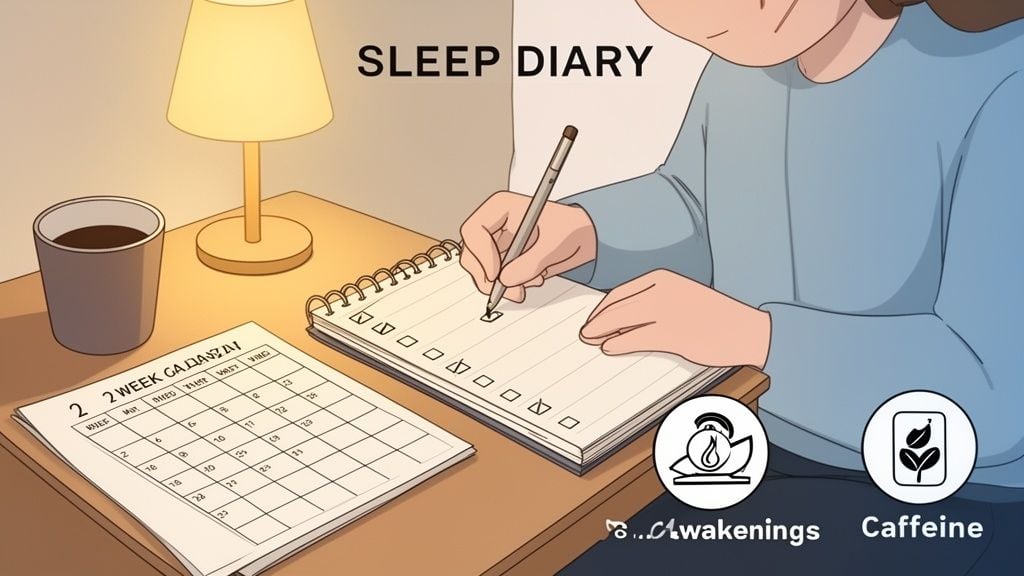
Think of it as being your own sleep detective for a couple of weeks. Your primary tool isn't a high-tech device, but a simple sleep diary. This can be a dedicated notebook by your bed or even just the notes app on your phone.
Keeping Your Sleep Diary
To spot any real trends, you'll want to be consistent for at least 14 days. This timeframe is long enough to show you how your sleep patterns shift between the work week and the weekend. Every morning, just take a few minutes to jot down some key details from the night.
Here’s a good list of clues to start tracking:
- Bedtime & Wake-Up Time: Be specific. What time did you get into bed, and what time did you actually get up for the day?
- Sleep Latency: Take a guess at how long it took you to drift off. Was it a quick 15 minutes, or did you find yourself tossing and turning for an hour?
- Nighttime Awakenings: Did you wake up during the night? Note how many times and roughly how long you were awake.
- Morning Feeling: On a simple scale of 1 to 5, how did you feel when you woke up? (1 = totally exhausted, 5 = refreshed and ready to go).
Next, you’ll want to tie this information to what you did during the day. Be sure to log these things, too:
- Daily Habits: Did you exercise, and at what time? Note when you had any caffeine or alcohol.
- Naps: Did you take a nap? If so, for how long and what time of day was it?
- Stress Levels: Just make a quick note—was your day low, medium, or high stress?
After two weeks, you'll have a fantastic personal logbook. You might start seeing clear patterns, like how that 3 PM coffee corresponds with waking up at 2 AM, or how a stressful day at work makes it harder to fall asleep. This is the first, most important step in understanding what’s really going on.
Since we opened our doors in 1946, our philosophy has always been centered on 'Service and Value.' We believe empowering our neighbors in Grants Pass and Medford with knowledge is a core part of that service. A sleep diary is the most valuable free tool you have.
Taking Your Assessment a Step Further
Once you've got your diary going, you can add another layer to your assessment with a validated questionnaire. One of the most common and respected tools is the Pittsburgh Sleep Quality Index (PSQI). You can easily find versions of it online with a quick search. It asks straightforward questions about your sleep over the last month and generates a score.
Now, this isn't a medical diagnosis, but a high score is a clear signal that your sleep quality might be poor and is worth looking into. For instance, if your diary shows you’re tossing and turning constantly and your PSQI score is high, it’s a strong hint that your mattress might not be providing the support you need anymore. If that sounds familiar, you might want to read our guide on the top signs that indicate it’s time to replace your current mattress.
This whole self-guided process gives you specific information to work with. It helps turn that vague feeling of being "tired all the time" into real, actionable insights you can use to get better rest.
Using Wearable Tech for Deeper Sleep Insights
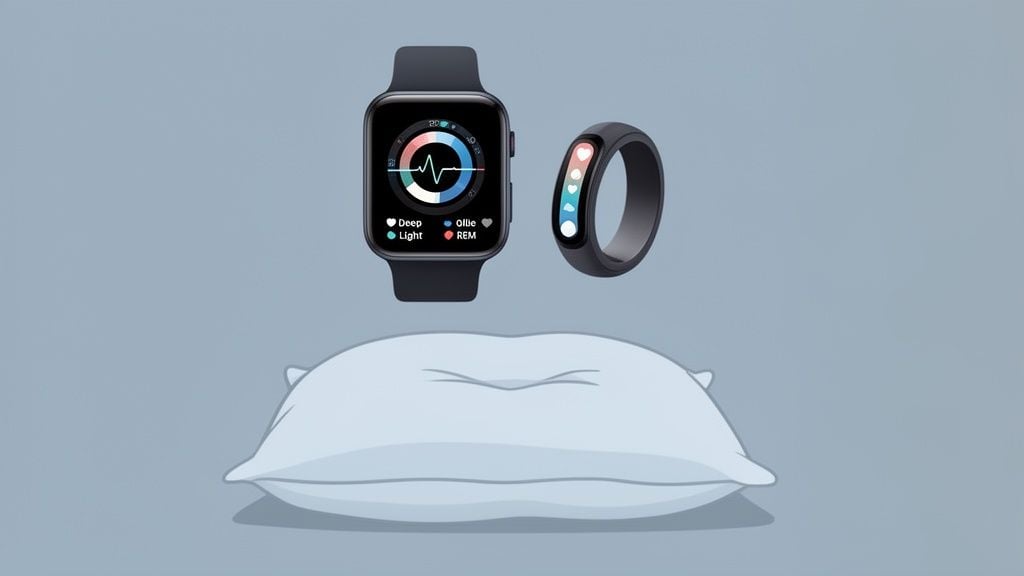
For our data-loving neighbors in Grants Pass and Medford, wearable tech like smartwatches and smart rings can give you an inside look at what’s really going on when you’re asleep. These handy gadgets track things like your sleep stages, heart rate, and even your breathing patterns, giving you an objective look to go along with your sleep diary.
While the technology is incredible, the real magic happens when you line up that data with how you actually feel in the morning. Your tracker might give you a high score, but if you’re still waking up groggy and sore, that’s telling you a very important story. Think of the data as a guide, not the final word.
It’s no secret that getting good sleep is a struggle for many. It's become such a widespread problem that chronic insomnia now affects roughly 1 in 3 adults. We all know quality sleep is key to a long, healthy life, but actually fixing the problem is another matter. You can discover more about the global impact of poor sleep in recent health studies, and it’s a real eye-opener.
Making Sense of Your Sleep Data
When you first open your sleep report, all the charts and numbers can feel a little intimidating. Don't worry, most trackers are looking at a few key things. Here’s what we suggest you focus on:
- Sleep Stages: Check out the time you spend in deep sleep and REM sleep. These are the powerhouse stages for physical and mental recovery. Seeing consistent numbers here night after night is a fantastic sign.
- Time Asleep vs. Time in Bed: Is there a big gap between these two? It could mean you're tossing and turning more than you realize, even if you don't fully remember waking up.
- Resting Heart Rate: A lower, steady heart rate during sleep is generally a good indicator that your body is truly relaxing and repairing itself.
Our philosophy, going all the way back to George Gates' 1946 promise of "Service and Value," is about offering real, practical advice. Your wearable is a fantastic starting point, just like a sleep diary. It gives you clues, not a diagnosis.
Positive Trends and Potential Red Flags
After tracking your sleep for a few weeks, you'll start to see patterns. The key is knowing what to look for—both the good signs and the things that might need a closer look.
Positive trends to watch for:
- Consistent Sleep and Wake Times: Your body thrives on routine. Sticking to a schedule will almost always lead to better sleep scores from your device.
- Minimal Awakenings: It's normal to wake up a few times, but your data should show these moments are few and far between.
- High "Sleep Score": Most apps boil everything down to a single score. If you're consistently getting a high number, your sleep habits are likely working for you.
Potential red flags to note:
- Very Low Deep or REM Sleep: If your tracker consistently shows you're not getting enough of these crucial stages, it could point to a problem with your sleep environment or overall comfort.
- High Number of Awakenings: Frequent interruptions chop up your sleep cycles and are a major reason people don't feel rested, even after 8 hours.
- Irregular Breathing Data: This is a big one. If your device flags any breathing disturbances, that’s a significant warning sign that you should absolutely discuss with a doctor.
When you put this data together with your sleep diary, you get a powerful, complete picture. For instance, if your tracker shows fragmented sleep on the same nights your diary says you felt stiff and restless, that’s a huge clue that your mattress might be the culprit.
This is where you need a hands-on solution. Nothing beats coming down to our 30,000-square-foot showroom in Grants Pass to actually feel the difference a new mattress can make. We can walk you through options from trusted brands like Beautyrest and Ashley to find the perfect fit for your body and your sleep.
Auditing Your Bedroom for Better Sleep
So, you’ve gathered all that data with your sleep diary and wearable tech. The next piece of the puzzle is looking at the room where you actually sleep. Your bedroom is the foundation of a good night's rest, and you’d be surprised how small things like a blinking light or a drafty window can get in the way of quality sleep.
Let’s walk through a simple audit of your space to help you turn it into a true sleep sanctuary.
At Gates Home Furnishings, we still stand by the “Service and Value” promise our founder, George Gates, made back in 1946. For us, that means helping our Southern Oregon neighbors understand how their environment affects their rest. A quick bedroom audit can uncover some surprising ways your space might be working against you.
Optimizing Light, Noise, and Temperature
The first part of your audit looks at the three big environmental factors that can make or break your sleep. These are often easy fixes, but they can have a huge impact on how deeply you rest.
- Light Control: Even a tiny sliver of light from a streetlamp or a phone charger can mess with your body's melatonin production. The goal is a pitch-black room. For the best results, a resource like this Ultimate Guide to the Best Blackout Curtains for Your Bedroom can help you find options that guarantee total darkness.
- Noise Management: The Rogue Valley is a pretty peaceful place, but unexpected sounds are a fact of life. A white noise machine or even a simple fan can create a consistent, soothing hum that helps mask things like traffic or a neighbor's dog.
- Temperature Regulation: Most sleep experts agree that a cool room—ideally between 60 and 67 degrees Fahrenheit—is best for sleeping. Your body temperature naturally drops when it's time for rest, and a cool room helps that process along.
By getting these three areas right, you’re sending a clear signal to your brain that it’s time to power down and recover. We have even more ideas on how to create a personal sanctuary in your bedroom in our detailed guide.
The Most Critical Element: Your Mattress
While light, noise, and temperature matter, nothing in your bedroom is more critical for high-quality sleep than your mattress. An old, sagging, or unsupportive mattress can cause constant tossing and turning, morning pain, and broken sleep, no matter how perfect the rest of your room is.
If your sleep diary is full of notes about morning stiffness or your tracker shows you’re waking up a lot, your mattress is the first place you should look.
This is exactly why we invite our neighbors from Grants Pass, Medford, and Ashland to visit our 30,000-square-foot showroom. You simply can't do a proper mattress assessment by clicking a mouse. You have to feel the support and comfort for yourself.
Trying a mattress in person is the only real way to know if it fits your body and sleep style. Our Gates Sleep Care system takes the guesswork out of the equation, pairing your specific needs with top brands like Beautyrest and Flexsteel. We can even help you complete the room with one of our Unique Finds, like a gorgeous reclaimed wood or teak bed frame.
We believe everyone deserves to sleep well, and our family is here to help yours find the perfect solution.
Turning Your Sleep Assessment into Action
So, you’ve spent some time keeping a sleep diary, and maybe you've even been nerding out on the data from your fitness tracker. You’re sitting on a goldmine of personal information about your sleep. But what do you do with it? The real magic happens when you turn those notes and numbers into a plan for better rest.
If you’re trying to figure this out, you’re definitely not alone. A 2023 survey from the Sleep Foundation revealed that 37% of Americans feel their sleep has actually gotten worse. The big complaints? Waking up all the time and struggling to fall asleep in the first place. It shows just how many of us are looking for real solutions.
Healthy Signs vs Red Flags
What does "good sleep" even look like in your data? Generally, you want to see yourself falling asleep in under 30 minutes and waking up feeling pretty refreshed most mornings. A bad night here and there is totally normal, but the good should definitely outweigh the bad.
On the other hand, some patterns are clear red flags that something needs to change. Keep an eye out for these signals in your notes:
- It takes forever to fall asleep: If you’re consistently staring at the ceiling for more than 30 minutes, something is keeping you from winding down.
- You wake up more than once or twice: Waking up frequently, especially if you can’t get back to sleep easily, is a classic sign of poor-quality, fragmented rest.
- Loud, non-stop snoring: This is more than just a nuisance for your partner. It can be a symptom of a serious condition like sleep apnea and is something you should absolutely bring up with your doctor.
- You wake up sore and stiff: If your mornings start with an aching back, neck, or hips, that’s a huge clue that your mattress isn’t giving you the support you need anymore.
This little decision tree can help you start zeroing in on which part of your bedroom might be the culprit.
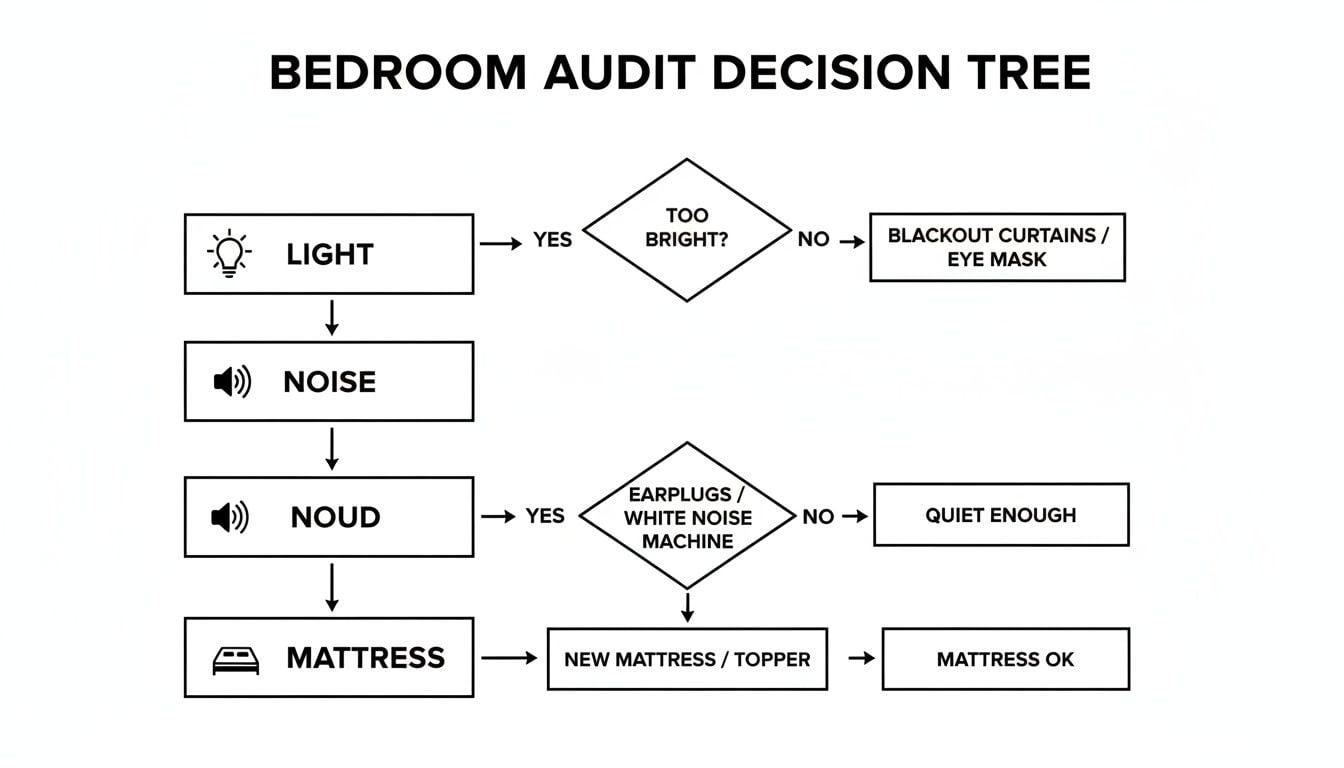
As you can see, the big three—light, noise, and your mattress—are the foundation of a great night's sleep.
While medical red flags always warrant a visit to your local healthcare provider, issues related to comfort and support are our specialty. Our family has been helping the Rogue Valley solve these problems since George Gates first promised "Service and Value" in 1946.
Your Next Step Starts in Our Showroom
If your sleep detective work is pointing a finger at your mattress, your next stop should be the Gates Mattress Gallery. Come visit us in our 30,000-square-foot showroom right here in Grants Pass, and bring your notes with you! Our non-commissioned experts can use the clues from your sleep diary to guide you toward the perfect fix.
Before you come in, you can check out our guide on choosing a mattress to get some ideas.
We believe getting better sleep shouldn't be stressful, which is why we offer Gates Easy Pay. With flexible options like $0 down, 6-month interest-free, and no-credit-needed programs, you can invest in your health today.
Once you find the one, our White-Glove Delivery team takes care of the rest. We don't just drop boxes; we’ll handle the professional setup and even haul your old mattress away. You don’t have to spend another night on a mattress that's working against you.
Common Questions About Sleep Quality Assessment
Once you decide to take charge of your rest, a lot of questions tend to pop up. We hear them all the time from our customers in Grants Pass, Medford, and all across the Rogue Valley. As part of our commitment to "Service and Value"—a promise George Gates made when he founded our store back in 1946—we believe in giving you clear, helpful answers.
Here are a few of the most common questions we get about figuring out your sleep quality.
How Long Should I Track My Sleep for an Accurate Assessment?
We always recommend tracking your sleep for at least two full weeks. A couple of nights just won't give you the full picture.
Tracking for two weeks is the sweet spot. It helps you see the real patterns, including the important differences between how you sleep on a busy weekday versus a more relaxed weekend. This timeframe turns those vague feelings of being tired into solid, personalized data you can actually work with.
Can a New Mattress Really Make That Much Difference?
Oh, absolutely. We see it happen every single day in our showroom. Your mattress is the single most important piece of equipment you have for getting high-quality sleep. If your mattress is over eight years old, has visible sags, or just isn't right for your body and sleep style, it could easily be the main reason you're dealing with pain and broken rest.
A new, supportive mattress from a trusted brand like La-Z-Boy or Beautyrest can be genuinely life-changing. It helps with spinal alignment, relieves pressure points, and lets your body finally sink into the deep, restorative sleep it needs.
My Partner Snores Loudly, What Should We Do?
Loud, persistent snoring is more than just an annoyance; it can disrupt sleep for everyone in the room and often points to a potential health issue like obstructive sleep apnea. While some of the solutions we offer, like an adjustable bed base that elevates the head, can bring significant relief, this is a sign you shouldn't ignore.
The best first step is to encourage your partner to talk about the snoring with a local healthcare provider. A medical sleep quality assessment is really important for their long-term health—and for your shared peace at night. For more ideas on creating a better sleep environment, you can check out our 4 sleep hygiene tips for a better night's sleep.
How Can I Afford a Quality Mattress on a Tight Budget?
We firmly believe everyone in our Southern Oregon community deserves the health benefits that come from a great night's sleep. That’s the "Value" part of the promise we were founded on. To make sure cost is never a barrier, we created Gates Easy Pay.
This program offers incredibly flexible financing, with options like $0 down, 6-month interest-free, and no-credit-needed programs. Our friendly team right here in Grants Pass can walk you through the different plans to find one that fits your budget perfectly. You should never have to compromise on your well-being.
Ready to turn your sleep assessment into action? At Gates Home Furnishings, our family is dedicated to helping yours find the perfect solution for better rest.
Visit our Grants Pass Showroom to experience our Gates Sleep Care system or browse our complete collection online today.